
Northern fulmar
Fulmarus glacialis
Fulmars glide on stiff wings along cliffs and over open water, and no sighting is ever a promise.
Least Concern (IUCN, 2018) means it is not at high risk of extinction at present, as it has a very large range and population.
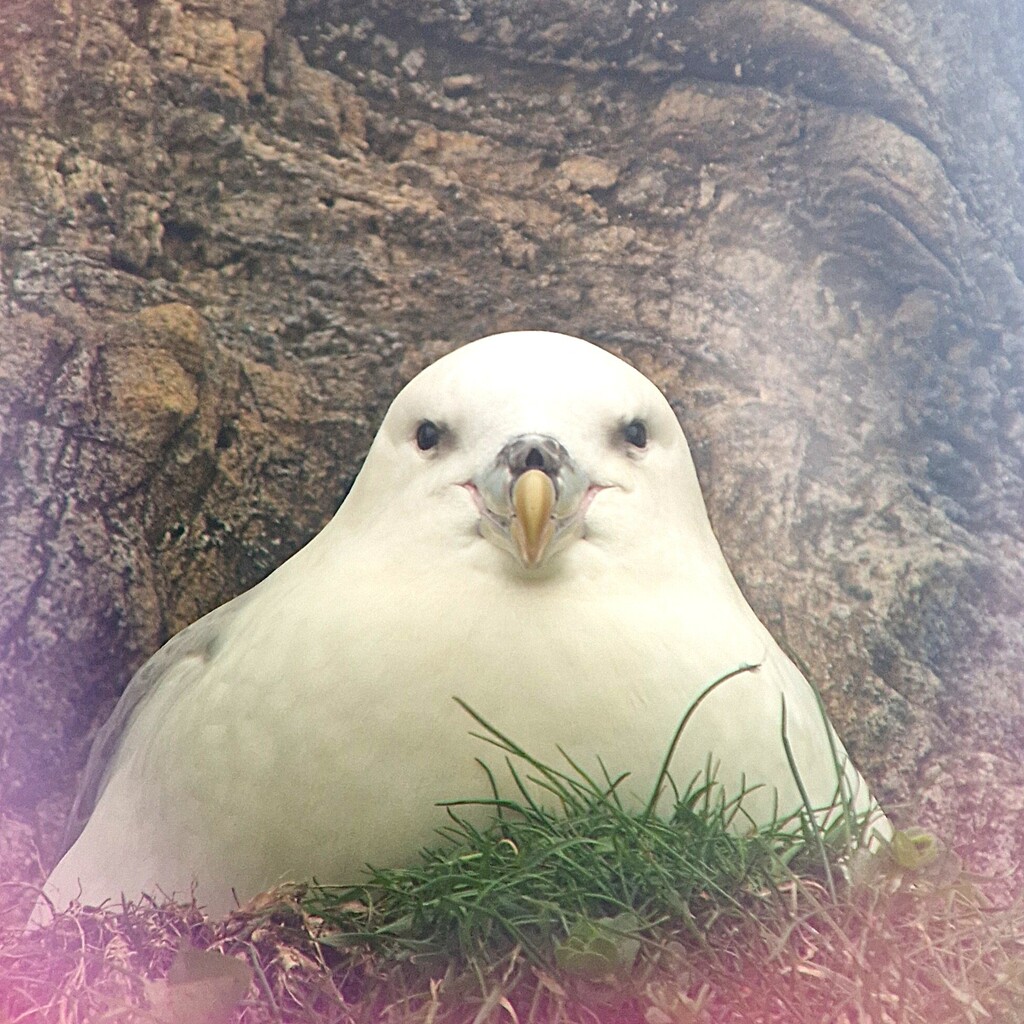
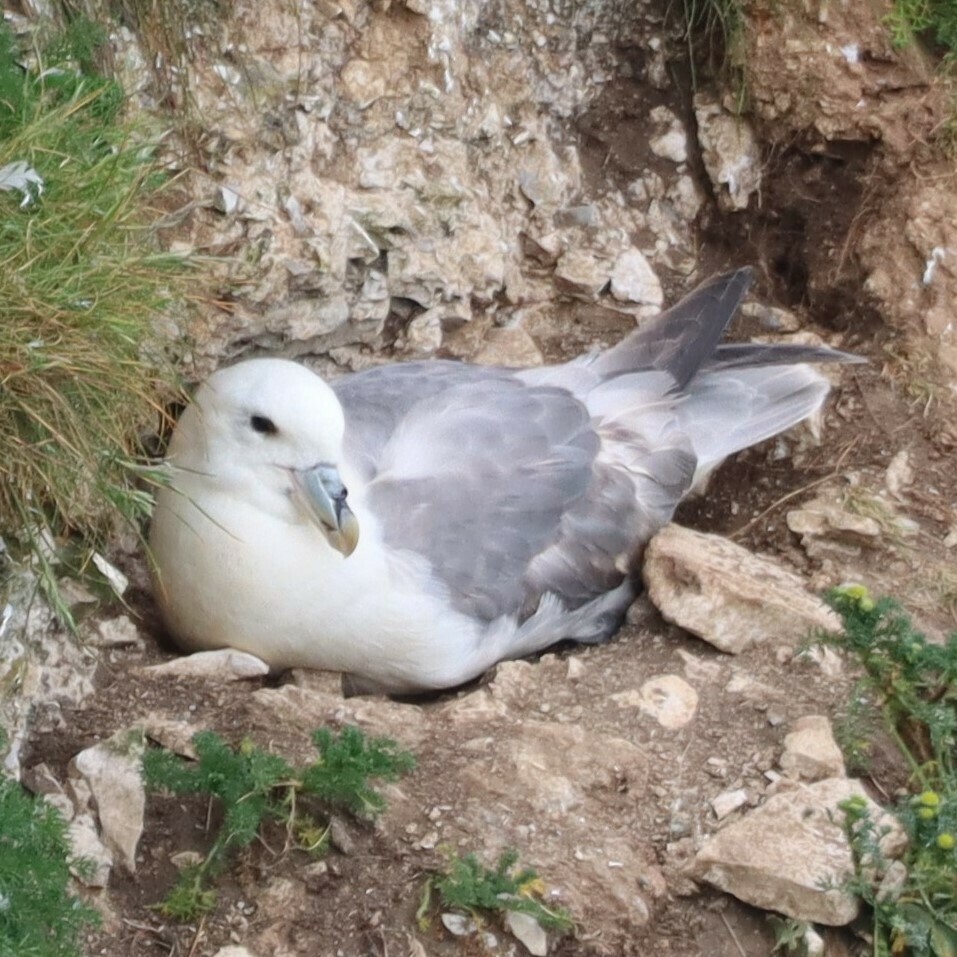
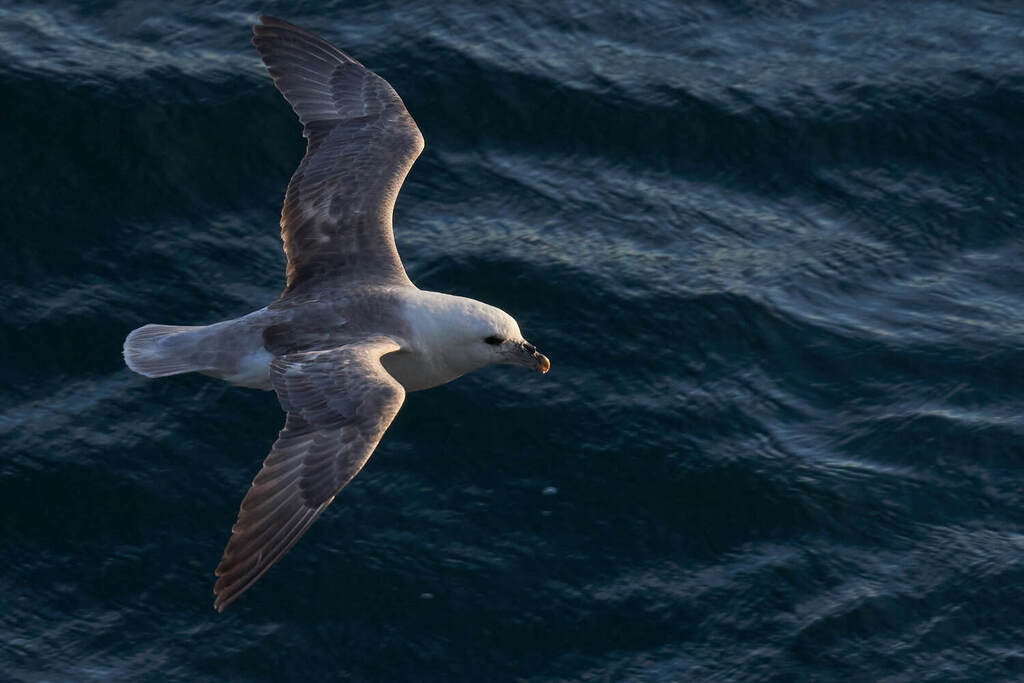
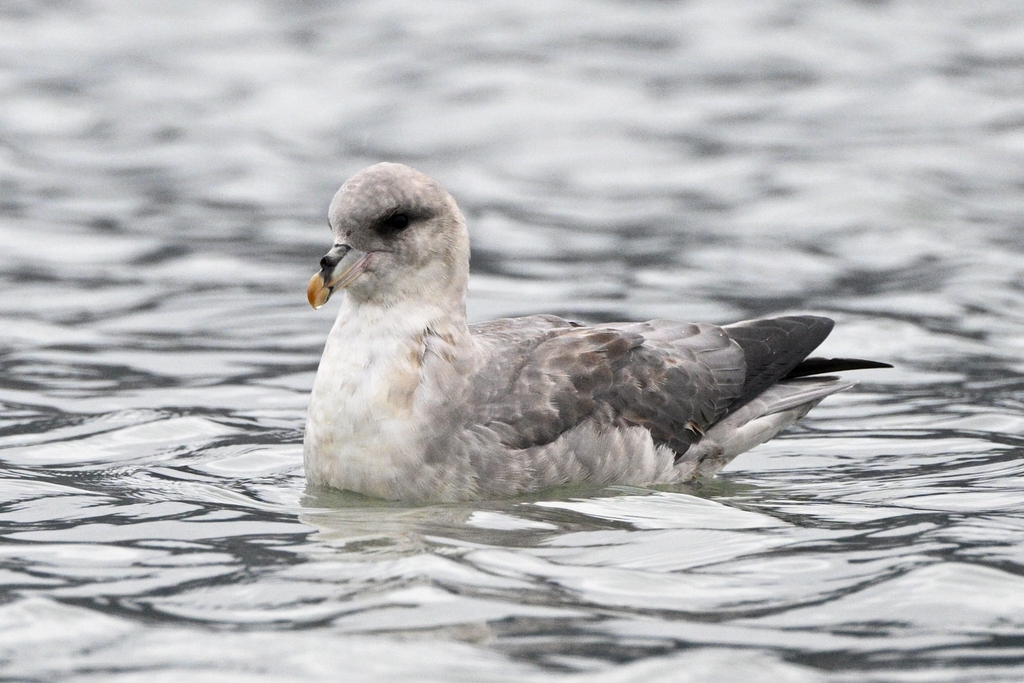
Photos show the species, not always the places on this page.
Length
About 46 cm (18 in) long; wingspan about 102 to 112 cm (40 to 44 in). RSPB gives 45 to 50 cm
Weight
About 450 to 1,000 g (1.0 to 2.2 lb). BTO gives an average of 772 g (1.7 lb)
Next to a person
About as long as an adult forearm and hand plus a little more, with a wingspan a little wider than a standard door, and about as heavy as a bag of sugar
What it eats
Shrimps, fish, squid, plankton, jellyfish and carrion, and they also follow ships for scraps. They seize food at the surface or dive up to about 4 m. A 2008 to 2013 study cited by Wikipedia found microplastics in the stomachs of 89.5 percent of the fulmars examined.
Around people
Calm, give space
How it lives
Fulmars breed on coastal cliffs in colonies. They start breeding at 6 to 12 years old and lay a single white egg that is incubated for about 50 to 54 days. Chicks fledge after about 70 to 75 days, and in the UK they leap from the cliff in July. A lifespan of 31 years is not uncommon, and BTO lists a record of nearly 42 years. Adults and chicks defend themselves by spitting a foul-smelling oil.
Where it goes
Fulmars spend most of their lives at sea and come to coastal cliffs to breed in summer. The Atlantic form that nests in the high Arctic stays at high latitudes in winter. The Pacific form winters south to Japan and Baja California. Audubon says birds reach New England on the Atlantic side and southern California on the Pacific side. In the UK it is present all year around Scotland, Wales, Ireland and parts of England (BTO).
We only draw a journey on the map when scientists have tracked it or clearly documented it. For this animal we have not found one yet.
Populations
Least Concern globally (IUCN, 2018). Estimates differ: Audubon gives about 14 million birds, and Wikipedia gives 15 to 30 million mature individuals. Iceland holds the largest population, 1 to 2 million pairs, and Wikipedia lists it as decreasing. Breeding populations in France, Germany, Denmark, Norway and Svalbard are listed as increasing. The UK had about 350,000 breeding pairs in 2015 (BTO). That is up 77 percent between the 1969 to 1970 and 1985 to 1988 censuses, steady until the early 2000s, and slightly lower since. It is Amber-listed in the UK and Vulnerable on the European list.
Meet it respectfully
Watch from a cliff path or a boat that keeps its distance. Nesting fulmars defend themselves with oil, so give them space and never approach a nest. Never chase, touch, feed or bait fulmars, and do not throw food from boats. Follow your guide and any local rules. Sightings are never promised.
Fun fact
Tap the bulb to light it up.
When threatened at the nest, a fulmar spits a foul-smelling oil at the intruder, and chicks can do it too.
Fulmars look like gulls but are related to albatrosses.
A fulmar can live for decades. BTO lists a record of 41 years, 11 months.
Northern fulmar in the Ocean Atlas
Places we have researched where this animal is recorded. It is never guaranteed, and some places are for watching from the boat only.
Travel with usComing soonTrusted referralExploringOn pause, story onlyEthics pass
Country colour: pink where we travel, blue where we are exploring or refer, grey for story only.
 Belgium
 Canada
 Denmark
 Faroe Islands
 France
 Germany
 Greenland
 Iceland
 Ireland
 Japan
Japan Mexico
 Netherlands
 Norway
 Portugal
 Russia
 Spain
Spain Sweden
 United Kingdom
 United States
Sources for this page
- RSPB, Fulmar
- BTO, Fulmar BirdFacts
- Wikipedia, Northern fulmar
- Audubon, Northern Fulmar
- GBIF, IUCN Red List category (BirdLife International, 2018)
Facts checked 5 October 2026. Photos: Unsplash licence, or Creative Commons as shown on each photo.
Work in ocean travel?
We are always happy to hear from exceptional local operators, accommodation, conservation organisations and destination experts. If your work fits responsible, small-group ocean travel, we would love to learn more.
Partner with Ocean CallingSwim with humpback whales in Moʻorea, September 2027
from CHF 4,500