
Roughtail stingray
Bathytoshia centroura
One of the largest stingrays of the Atlantic, often lying quietly under a thin layer of sand. No sighting is ever a promise.
Vulnerable (IUCN, 2019) means it faces a high risk of extinction in the wild unless fishing pressure eases.
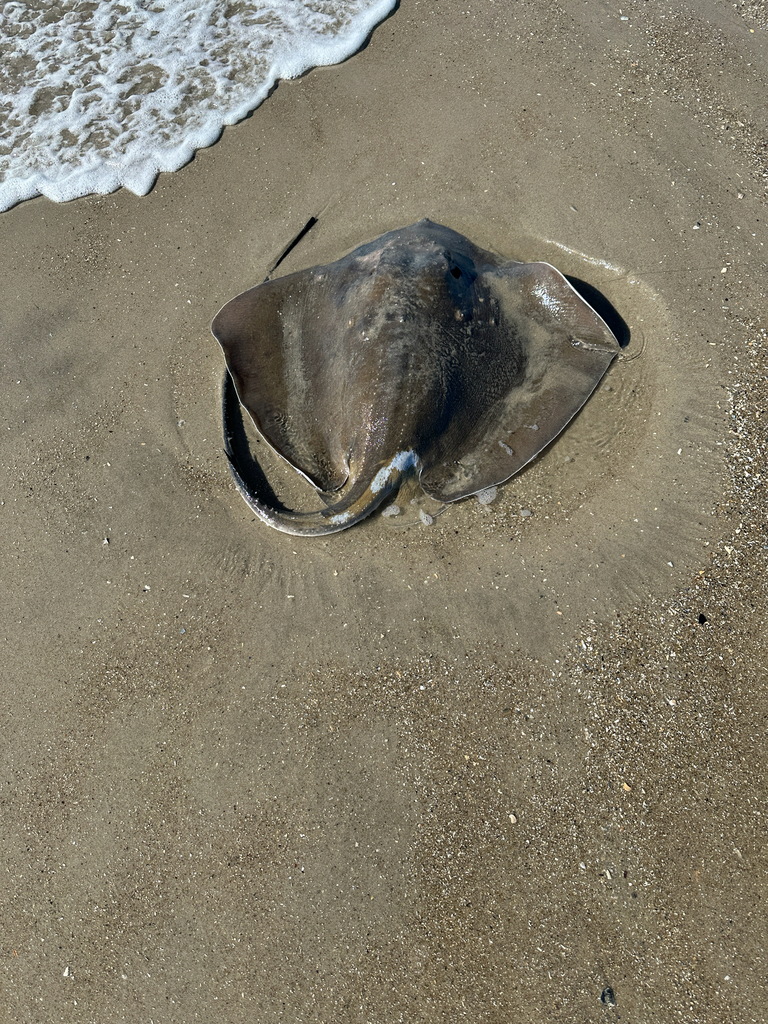
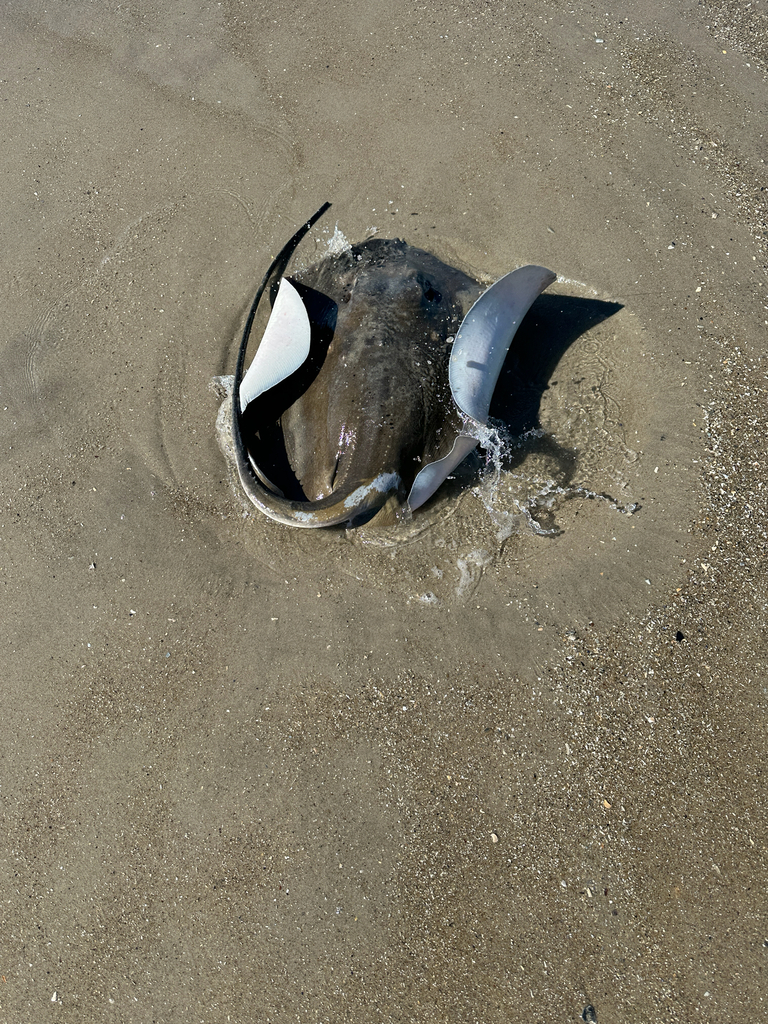
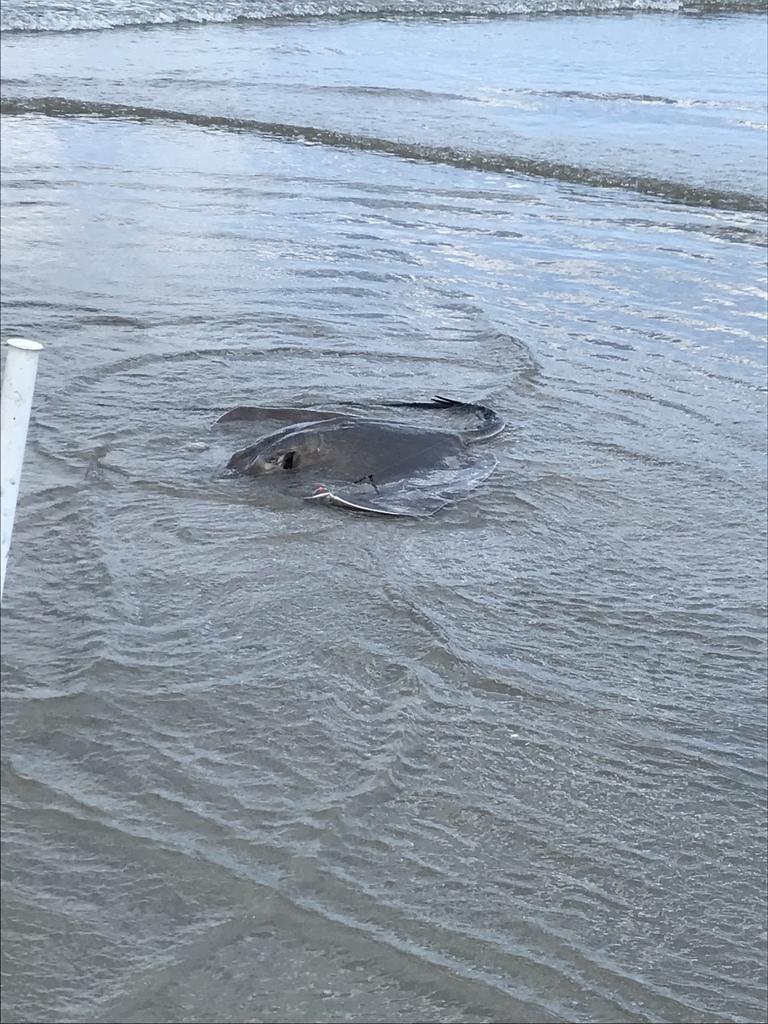
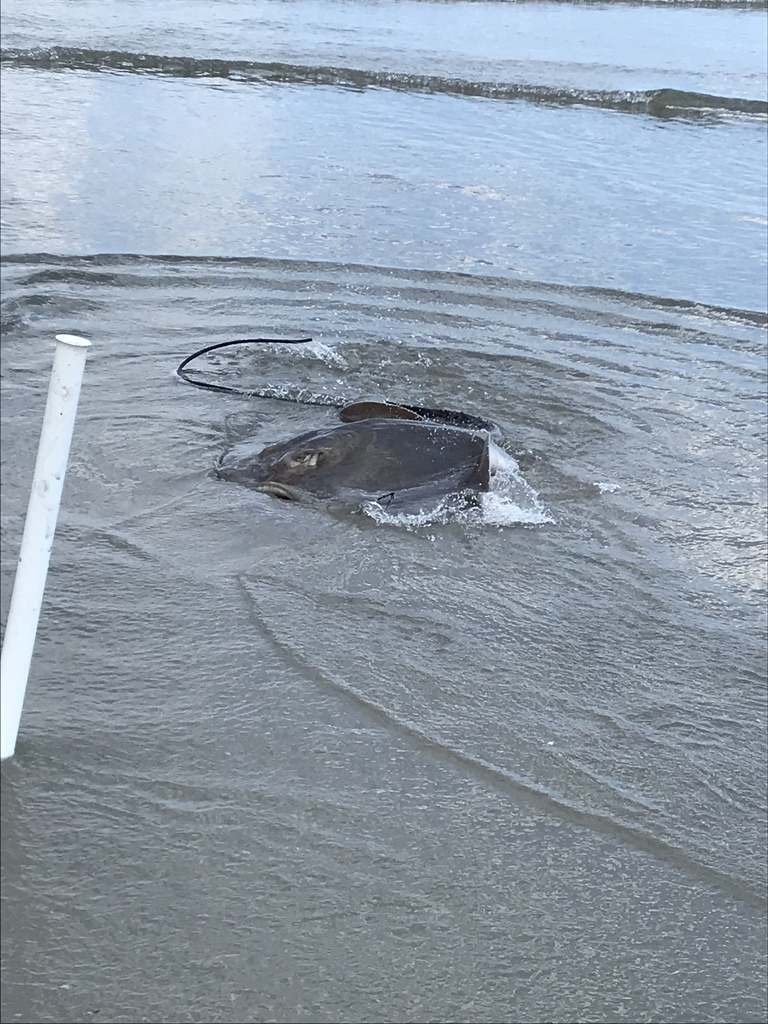
Photos show the species, not always the places on this page.
Length
Disc width up to about 2.2 m (7 ft 3 in) (Elasmodiver, EBSCO); FishBase lists up to 3 m (9 ft 10 in) total length and a common width of about 1.25 m (4 ft 1 in); Wikipedia gives up to 2.6 m (8 ft 6 in)
Weight
Up to about 300 kg (660 lb) in FishBase and EBSCO; Wikipedia gives up to 360 kg (800 lb)
Next to a person
A big adult can be wider than a person is tall, and as heavy as several adults
What it eats
Fishes, including sharks and rays, crustaceans and cephalopods (Elasmodiver). EBSCO notes that its flat teeth crush hard shells. Wikipedia calls it a generalist predator of bottom-living invertebrates and bony fishes.
Around people
Calm, give space
How it lives
It lives on sand and mud from about 3 to 270 m, usually at 15 to 50 m, and spends a lot of time lying buried in the sediment. Young are born live. Sources differ on the details: FishBase and Elasmodiver give a gestation of about 4 months and litters of 2 to 4 or 2 to 6, while Wikipedia describes 4 to 6 young after 9 to 11 months. Newborns are about 34 to 37 cm across. FishBase gives a size at maturity of about 116.5 cm (range 66 to 160 cm).
Where it goes
Wikipedia reports seasonal migrations along the United States coast. Sources read give no other migration routes.
We only draw a journey on the map when scientists have tracked it or clearly documented it. For this animal we have not found one yet.
Populations
Assessed as Vulnerable worldwide in 2019. Wikipedia says fishing pressure is heaviest in the southwestern Atlantic. FishBase records minor commercial fisheries, with the wings sold fresh, smoked or dried and salted, and used for fishmeal and oil. It lives in the western Atlantic from the United States and Gulf of Mexico south to Argentina. FishBase notes that eastern Atlantic populations are now classed as a separate species, Bathytoshia lata, so records from West Africa may belong to that species. No regional population counts were found in the sources read.
Meet it respectfully
Rays this size lie buried and still, so look before you wade. Watch from a calm distance and give the animal room to leave. Never chase, touch, feed or bait one. Follow your guide, and follow local rules where they apply.
Fun fact
Tap the bulb to light it up.
Its back and tail carry many thorns, and the tail is about twice as long as the body.
Newborn rays are already about 34 to 37 cm across.
The venomous spine can be up to about 40 cm long, but Wikipedia describes the ray as not aggressive.
Roughtail stingray in the Ocean Atlas
Places we have researched where this animal is recorded. It is never guaranteed, and some places are for watching from the boat only.
Travel with usComing soonTrusted referralExploringOn pause, story onlyEthics pass
Country colour: pink where we travel, blue where we are exploring or refer, grey for story only.
 Cameroon
 Côte d'Ivoire
 Gabon
 Ghana
 Guinea
 Liberia
 Nigeria
 Sierra Leone
 Spain
 United States
Sources for this page
- FishBase, Bathytoshia centroura
- Wikipedia, Roughtail stingray
- Elasmodiver, Roughtail stingray
- EBSCO Research Starters, Roughtail stingray
- IUCN Red List record via GBIF
Facts checked 5 October 2026. Photos: Unsplash licence, or Creative Commons as shown on each photo.
Work in ocean travel?
We are always happy to hear from exceptional local operators, accommodation, conservation organisations and destination experts. If your work fits responsible, small-group ocean travel, we would love to learn more.
Partner with Ocean Calling