
Saltwater crocodile
Crocodylus porosus
A long low shape in the mangrove water, usually unseen until it moves. No sighting is a promise, and this is an animal to watch only from a safe distance.
Least Concern (IUCN) means it is not at high risk of extinction. It has been listed this way since 1996, after numbers recovered from the hunting of the 20th century.
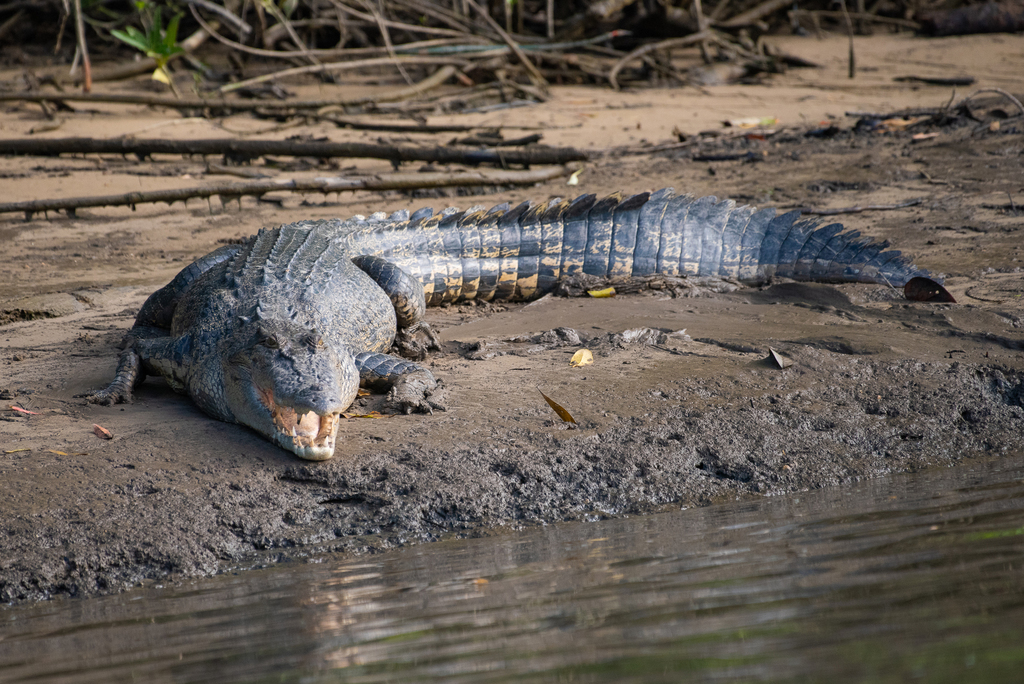
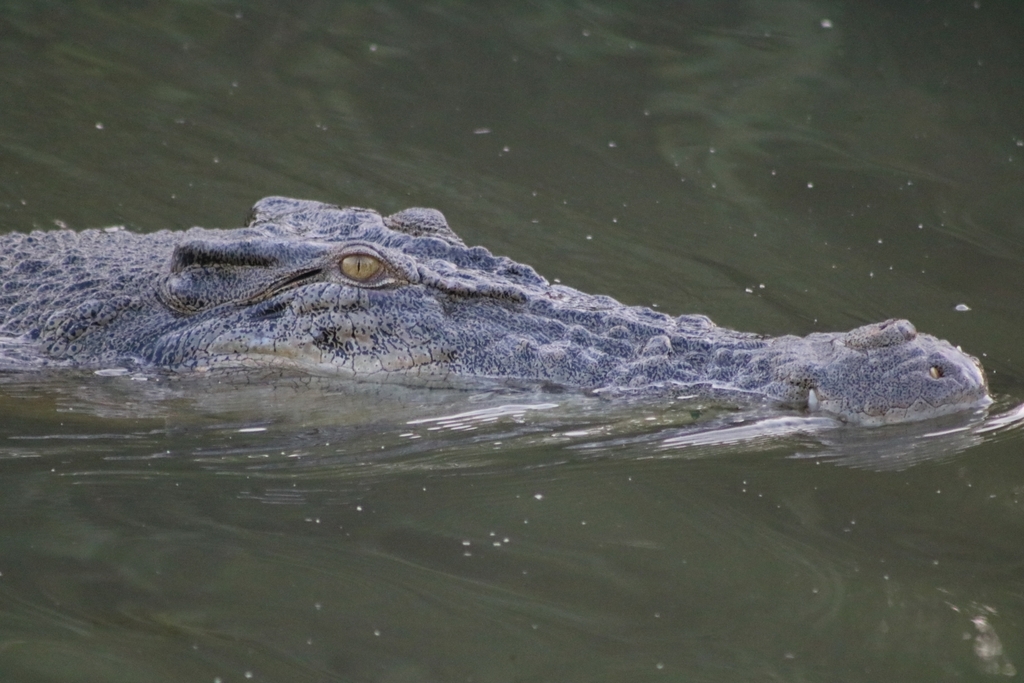
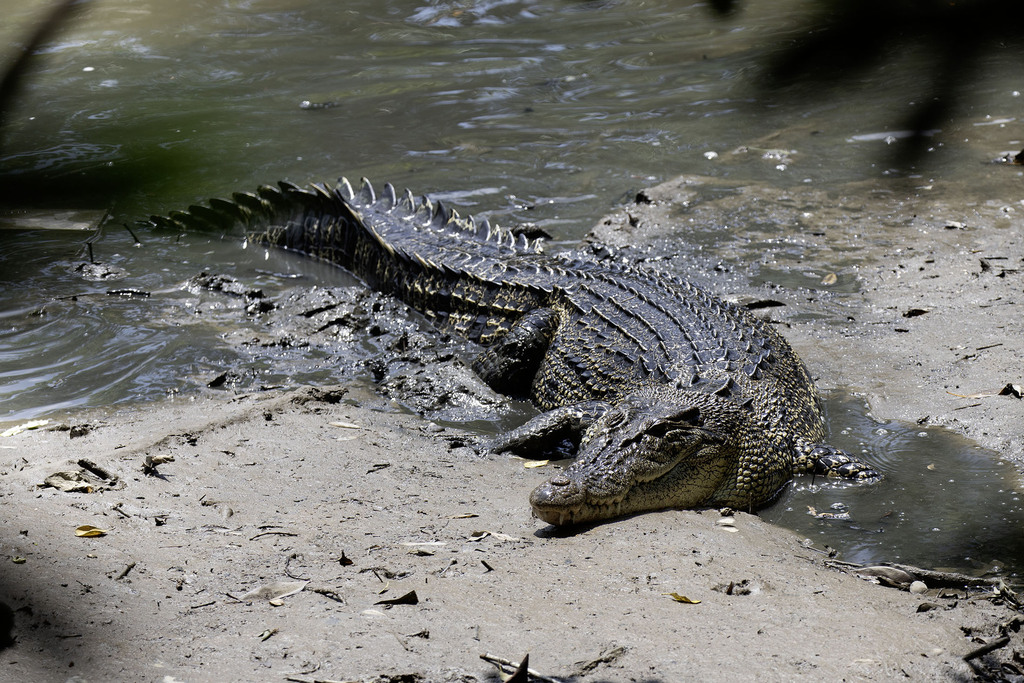
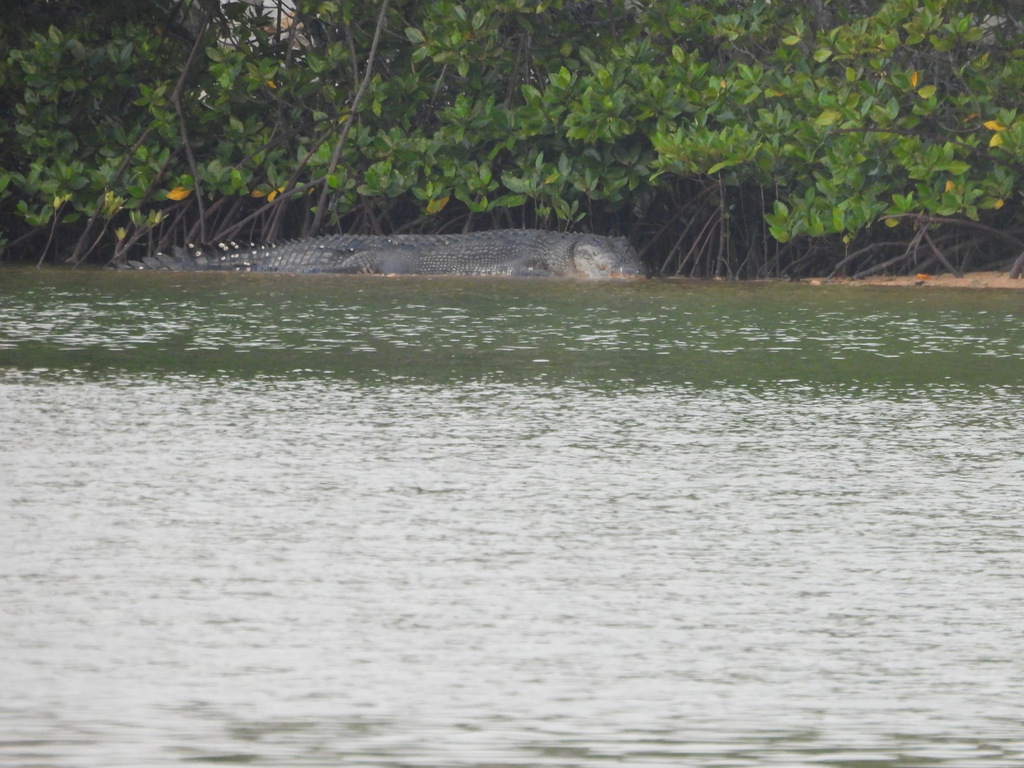
Photos show the species, not always the places on this page.
Length
Males usually about 3.5 to 5 m (11.5 to 16.4 ft), with large old males above 6 m (19.7 ft); largest confirmed about 6.3 m (20.7 ft). Females usually about 2.7 to 3.1 m (8.9 to 10.2 ft)
Weight
Males about 200 to 1,100 kg (440 to 2,430 lb), up to about 2,000 kg (4,400 lb) for the largest. Females about 76 to 103 kg (168 to 227 lb). Weights of very large animals are poorly documented
Next to a person
A typical adult male is about two to three times as long as an adult person is tall, and weighs as much as several people
What it eats
An ambush predator. Young crocodiles eat insects, frogs, crustaceans and small fish. Adults take fish, crabs, turtles, snakes, birds and mammals that come to the water. It will take almost any animal that enters its territory, and people are sometimes taken.
Around people
Dangerous, keep far away
How it lives
Saltwater crocodiles live in brackish mangroves, river mouths, lagoons and freshwater rivers. Females mature at about 2.1 m, around 12 to 14 years old, and males at about 3.3 m, around 16 years old. A female lays about 40 to 60 eggs, sometimes up to 90, during the wet season, and the eggs take about 90 days to hatch. Only about 1 in 100 hatchlings is thought to reach adulthood. Lifespan in the wild is estimated at more than 70 years, though the oldest ages are unverified.
Where it goes
Saltwater crocodiles can use ocean currents to travel long distances at sea. One tagged crocodile travelled 590 km in 25 days and another 411 km in 20 days. Many others stay in the same river, lagoon or mangrove area.
We only draw a journey on the map when scientists have tracked it or clearly documented it. For this animal we have not found one yet.
Populations
Least Concern worldwide. Hunting for skins cut numbers sharply: in Australia the population fell by about 95 percent by 1971, then recovered after protection in the early 1970s, and an estimated 100,000 to 200,000 adults live there now. In Solomon Islands, hunting and skin exports were banned in 1993 and the population has recovered rapidly. A nationwide survey in 2017 to 2018 by the government and WorldFish recorded 83 fatal attacks, about 37 percent of attacks, and found that on average about five people a year are killed. In some other countries, data are limited and some areas have few large adults.
Meet it respectfully
Saltwater crocodiles are dangerous, so this is an animal to see from a safe distance. Do not swim, wade, paddle or wash in mangroves, estuaries, lagoons or river mouths where they may live, and do not stand near the water's edge. Watch from a boat with a guide who knows the water. Never feed, bait, lure, chase or approach a crocodile. Advice from Solomon Islands research includes avoiding murky water and deep pools, working in groups, and staying away from crocodile habitat in the afternoon and evening, when attacks are more likely. Follow local guidance and village customs.
Fun fact
Tap the bulb to light it up.
It is the largest living reptile.
It can ride ocean currents far out to sea. One tagged crocodile covered 590 km in 25 days.
In Solomon Islands, many villages treat crocodiles as sacred animals and have taboos against killing them.
Saltwater crocodile in the Ocean Atlas
Places we have researched where this animal is recorded. It is never guaranteed, and some places are for watching from the boat only.
Travel with usComing soonTrusted referralExploringOn pause, story onlyEthics pass
Country colour: pink where we travel, blue where we are exploring or refer, grey for story only.
 Australia
 Bangladesh
 Brunei
 India
India Indonesia
 Malaysia
 Palau
Palau Papua New Guinea
 Philippines
 Singapore
 Solomon Islands
 Sri Lanka
 Thailand
 Timor-Leste
Sources for this page
- Wikipedia, Saltwater crocodile, 2026
- IUCN Red List via GBIF, 2026
- CMS, Crocodylus porosus, 2026
- Animal Diversity Web, University of Michigan, 2026
- WorldFish, Human-crocodile conflict in Solomon Islands, 2019
- Current Conservation, van der Ploeg, 2023
- Oryx, Living with saltwater crocodiles, 2026
- Crocodiles of the World, 2026
Facts checked 5 October 2026. Photos: Unsplash licence, or Creative Commons as shown on each photo.
Work in ocean travel?
We are always happy to hear from exceptional local operators, accommodation, conservation organisations and destination experts. If your work fits responsible, small-group ocean travel, we would love to learn more.
Partner with Ocean CallingNew: tiger sharks in Fuvahmulah, January or March 2027
from CHF 2,900