
Socotra cormorant
Phalacrocorax nigrogularis
A dark seabird of the Gulf, nesting on low desert islands. No sighting is ever a promise, and its nesting islands are best left undisturbed.
Vulnerable (IUCN, 2019 listing by BirdLife International) means it faces a high risk of extinction in the wild, because it breeds in few places and its numbers have fallen.
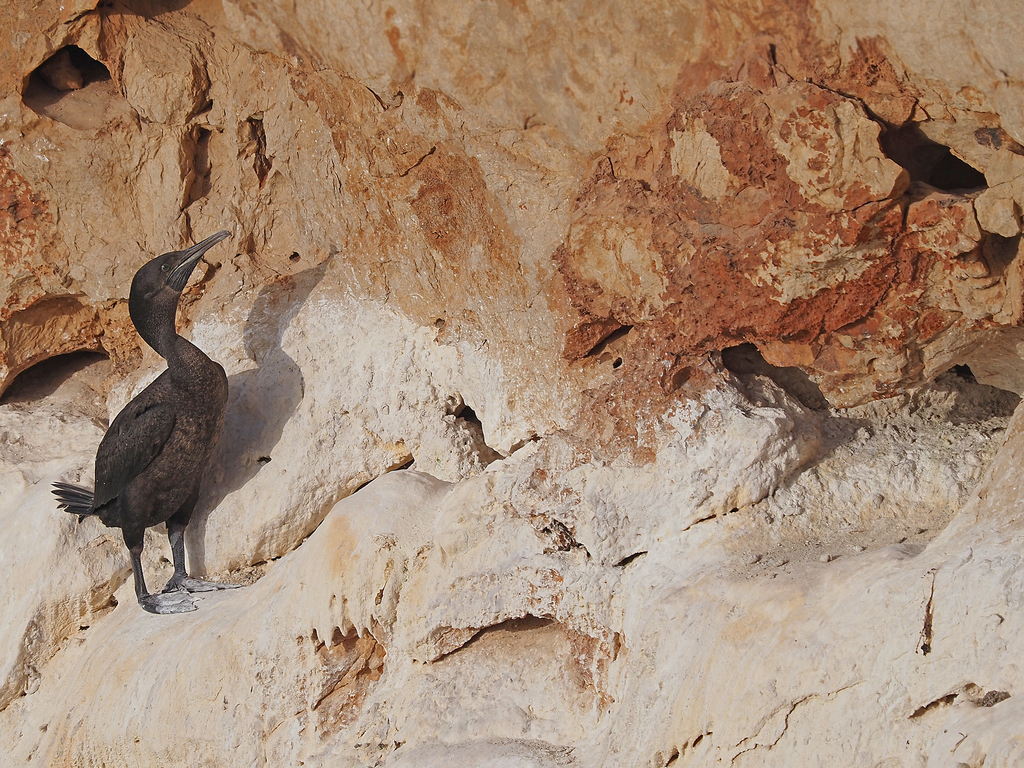
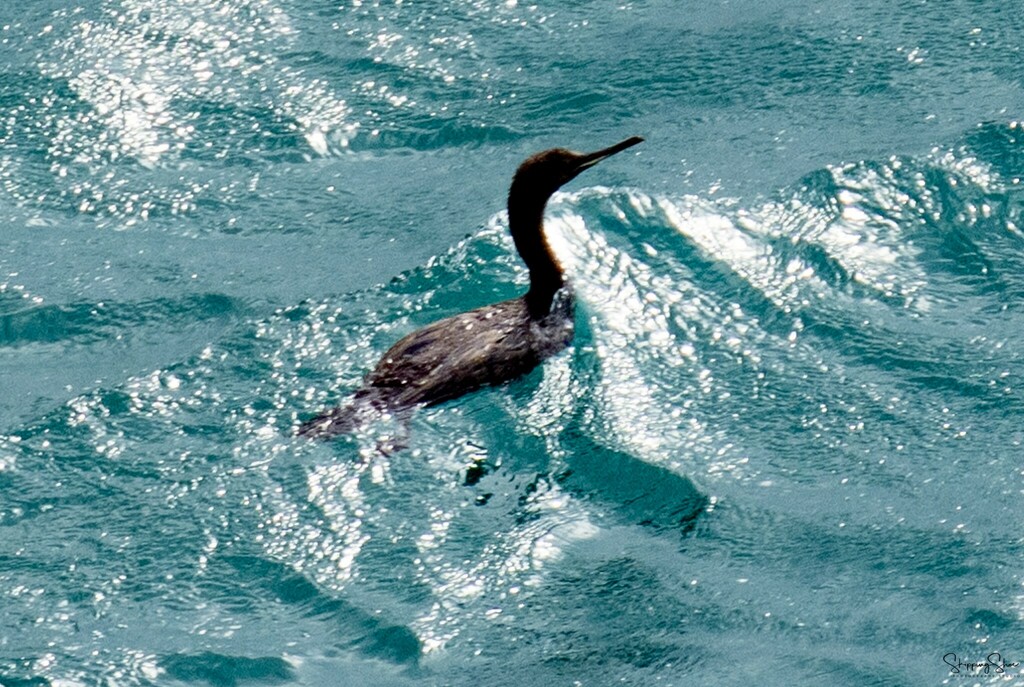
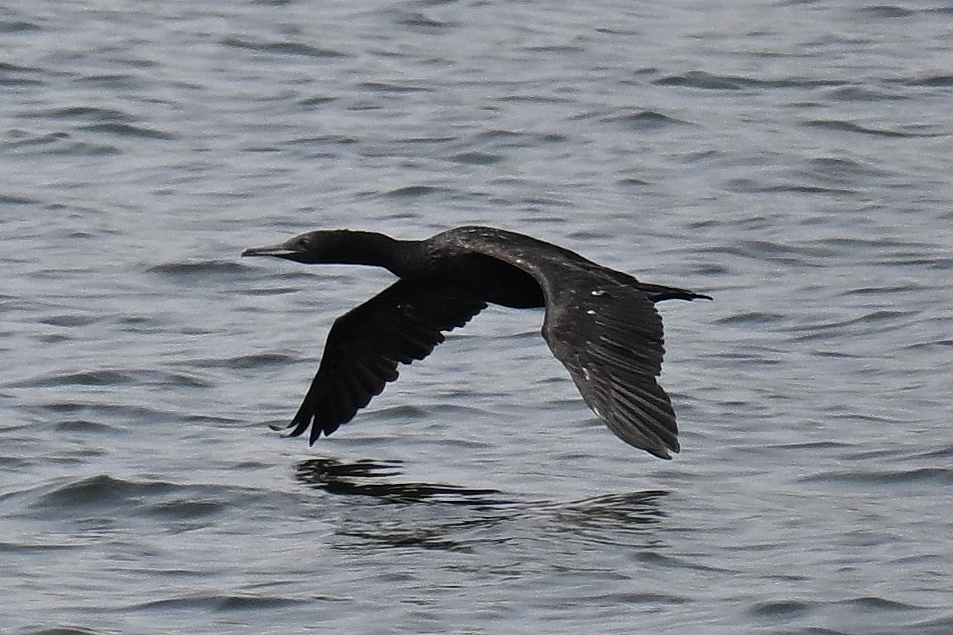
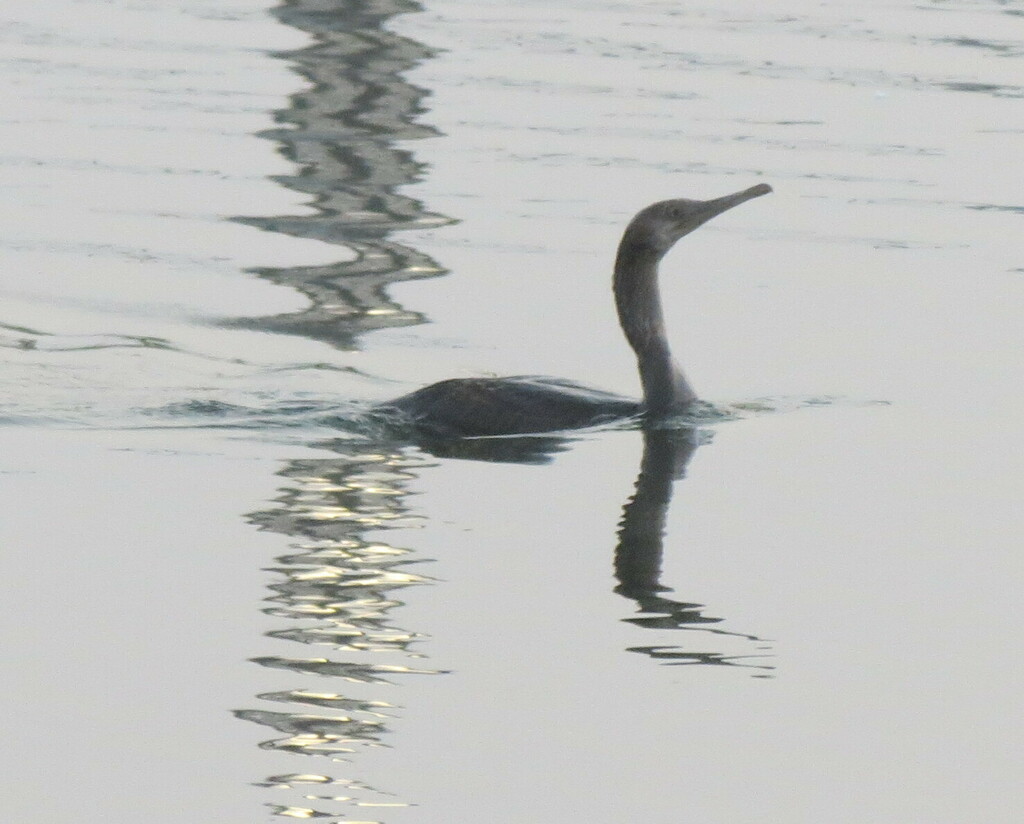
Photos show the species, not always the places on this page.
Length
About 80 cm (31 in) long, with a wingspan of about 130 cm (51 in)
Weight
No weight is given in the sources checked
Next to a person
About half the height of an adult, with a wingspan roughly as wide as a doorway
What it eats
Fish, caught by diving. Detailed prey lists are scarce. Older reports mention dives of up to 3 minutes, and birds have been seen feeding in flocks at mid-water depths. The Gulf holds both open-water and bottom-living fish that sustain the colonies.
Around people
Calm, keep distance
How it lives
It is highly gregarious and gathers in large flocks all year, with roosts of up to 250,000 birds reported. It nests only on flat, low islands in the Arabian Gulf and the Gulf of Oman, in dense colonies. A study at Siniya Island in the United Arab Emirates recorded laying between 13 September and 6 October (2011 to 2015), with an average of about 2.2 to 2.8 eggs per nest. Eggs took about 24 to 27 days to hatch, chicks hatched in November and fledged by late January. Timing may differ at other colonies.
Where it goes
Most birds stay in the Arabian Gulf, where the colonies form one interbreeding population. A smaller group breeds in the Arabian Sea off Oman and is genetically different. Outside the breeding season, birds disperse; in Kuwait they are uncommon visitors, mostly in summer, and a few reach the Red Sea coast.
We only draw a journey on the map when scientists have tracked it or clearly documented it. For this animal we have not found one yet.
Populations
Vulnerable on the IUCN Red List (BirdLife International listing, 2019), mainly because it breeds in few places and has declined fast. The global breeding population is about 110,000 pairs, about 86% of them in the Arabian Gulf, and about 10,000 pairs breed on the Arabian Sea coast of Oman. A 2026 genetics paper quotes a fall from 450,000 to 750,000 birds in 2000 to about 220,000 in 2018. Sources disagree on the biggest colony. Wikipedia reports 200,000 to 300,000 adults recorded at the Hawar Islands (Bahrain) in 1992 and about 30,000 pairs there (undated), while Kuwait Birds says the Gulf of Salwa in Saudi Arabia holds over half of the world population today. Threats named are coastal development, disturbance at nesting sites, oil and other marine pollution, introduced predators, egg collection and competition with fisheries.
Meet it respectfully
Watch from a distance and never go ashore at a nesting island. Disturbance at colonies is named as a threat. Do not chase, feed or flush birds from the water or from roosts, and keep boats well back from flocks. At Hawar, access beyond the main island is severely restricted, so follow the guidance of the authorities and your guide. Never expect to see this bird, because its colonies are on remote islands.
Fun fact
Tap the bulb to light it up.
The Hawar Islands in Bahrain became a Ramsar wetland site on 27 October 1997, and access to every island except Hawar itself is severely restricted.
Roosting birds pack tightly together, taking up the smallest possible ground space, possibly to keep their feet in each other's shade.
Colonies in the Arabian Gulf form one population with extensive gene flow, but they have lower genetic variety than the Arabian Sea colony.
Socotra cormorant in the Ocean Atlas
Places we have researched where this animal is recorded. It is never guaranteed, and some places are for watching from the boat only.
Travel with usComing soonTrusted referralExploringOn pause, story onlyEthics pass
Country colour: pink where we travel, blue where we are exploring or refer, grey for story only.
 Bahrain
 Iran
 Kuwait
 Oman
 Qatar
 Saudi Arabia
 United Arab Emirates
 Yemen
Sources for this page
- Wikipedia, Socotra cormorant, 2026
- Wikipedia, Hawar Islands, 2026
- Wikipedia, Wildlife of Bahrain, 2026
- Waterbirds, Breeding population biology in Socotra cormorants in the UAE, 2017
- bioRxiv, Socotra cormorants in the Arabian Gulf, 2026
- Kuwait Bird Records, Socotra cormorant, 2026
- IUCN Red List, via GBIF, 2026
Facts checked 5 October 2026. Photos: Unsplash licence, or Creative Commons as shown on each photo.
Work in ocean travel?
We are always happy to hear from exceptional local operators, accommodation, conservation organisations and destination experts. If your work fits responsible, small-group ocean travel, we would love to learn more.
Partner with Ocean Calling7-day freediving course in Coron, Palawan
CHF 1,480