
Tucuxi
Sotalia fluviatilis
A grey fin and a quick breath in a wide brown river. Tucuxi come and go as they please, and no sighting is ever a promise.
Endangered (IUCN, assessed 2020) means the tucuxi faces a very high risk of extinction in the wild.
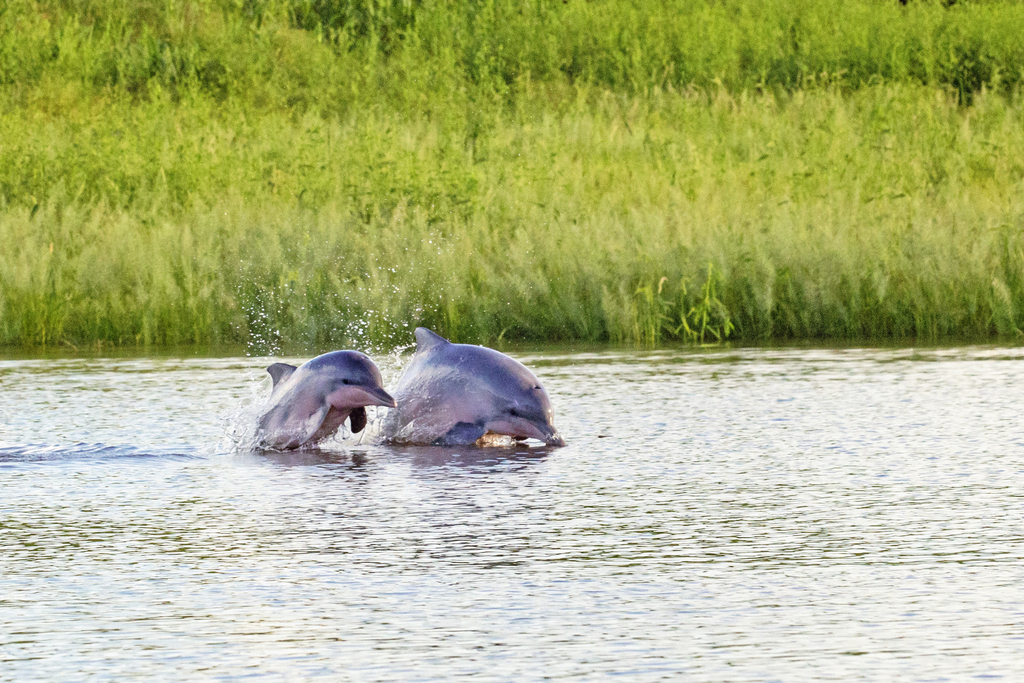
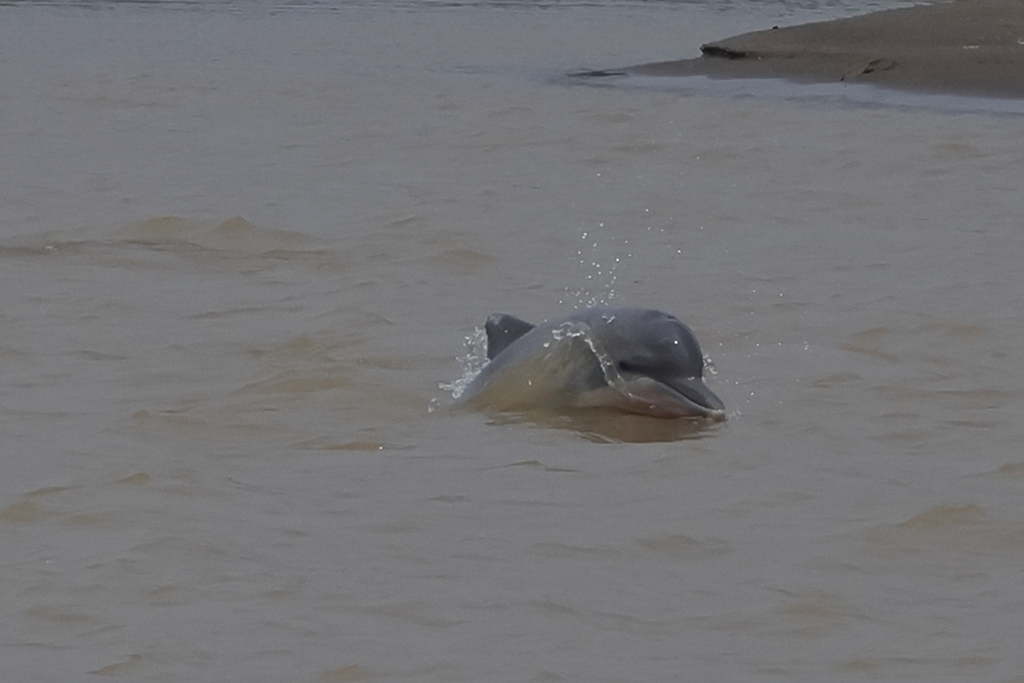
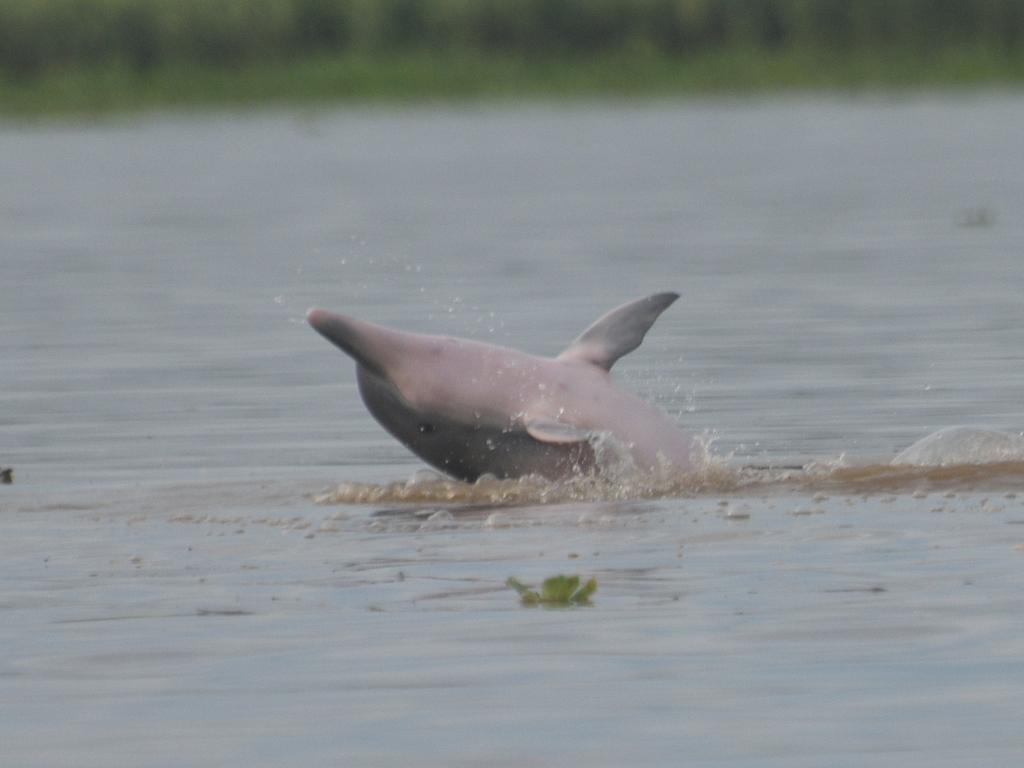
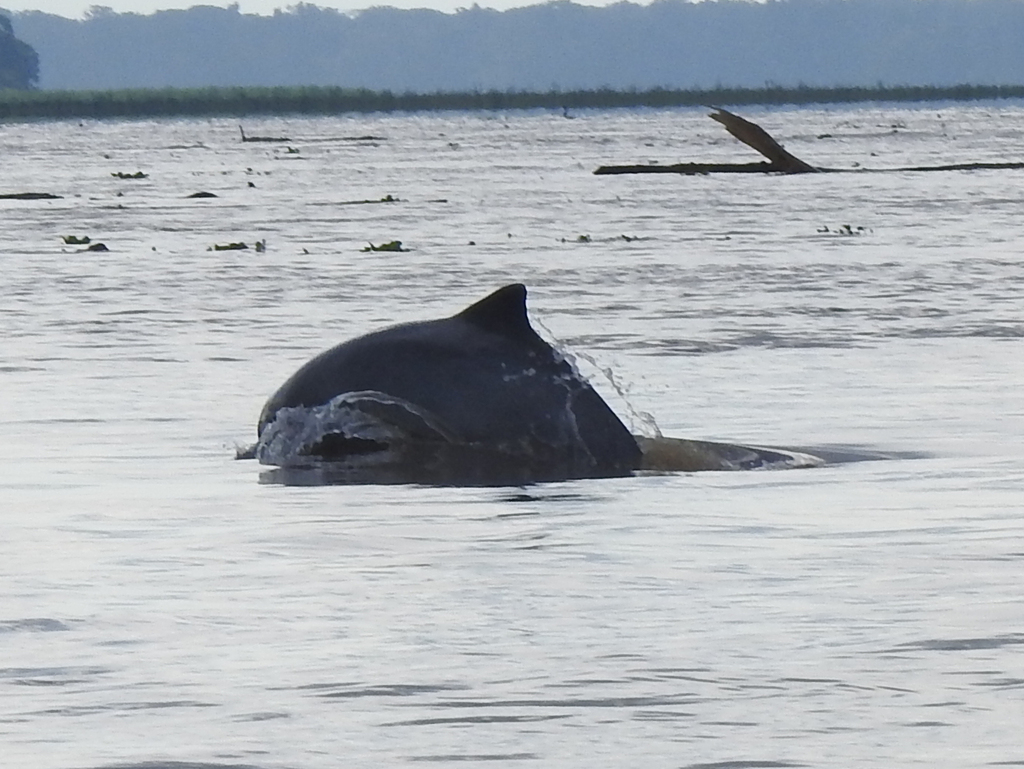
Photos show the species, not always the places on this page.
Length
Around 1.5 m (4.9 ft) on average; individuals measured between about 0.86 and 2.06 m (2.8 to 6.8 ft)
Weight
About 50 to 55 kg (110 to 121 lb) on average; one source gives a maximum of about 53 kg (117 lb), so figures vary
Next to a person
About as long as an adult is tall, and about as heavy as a small adult
What it eats
Fish, mostly small schooling fish. About 30 fish species are recorded in its diet. Some sources also list crustaceans, squid and octopus. Tucuxi hunt in tight groups, often chasing fish in quick dashes just below the surface.
Around people
Calm, give space
How it lives
Tucuxi are social. Groups are usually 1 to 6 animals, but groups of 30 or even 40 have been recorded. Dives are short, about 30 seconds to a minute. Wild animals can live to about 35 years, and the oldest recorded was 36. The sources I read give no reliable breeding details.
Where it goes
The tucuxi lives in the main channels of large Amazon rivers, usually wider than about 200 m, where the water is deep and fast. It avoids flooded forest, side channels and the stretches above natural rapids. The sources I read do not describe a set migration route.
We only draw a journey on the map when scientists have tracked it or clearly documented it. For this animal we have not found one yet.
Populations
No estimate exists for the whole species. Local counts differ widely: about 9,000 in Brazil's Purus River, against 1,545 in Colombia, 1,319 in Peru and 19 in Ecuador in an older assessment text. The IUCN lists the tucuxi as Endangered. A 2025 conservation summary dates that assessment to 2020; older records list it as Data Deficient. Since the tucuxi and the coastal Guiana dolphin were split into two species, the tucuxi is the freshwater one.
Meet it respectfully
Let the dolphins decide the distance. Keep the boat slow and steady, cut the engine near a group and never chase, circle, touch, feed or bait them. Fishing nets, boat traffic and noise are named threats, so quiet, predictable boats help. I did not read local rules for tucuxi watching, so follow your guide and local regulations.
Fun fact
Tap the bulb to light it up.
The tucuxi is the only river dolphin that jumps clear of the water.
The coastal and estuary form is now a separate species, the Guiana dolphin. It is larger, up to about 121 kg against about 53 kg for the tucuxi.
Its whistles are among the highest-pitched of any dolphin.
Tucuxi in the Ocean Atlas
Places we have researched where this animal is recorded. It is never guaranteed, and some places are for watching from the boat only.
Travel with usComing soonTrusted referralExploringOn pause, story onlyEthics pass
Country colour: pink where we travel, blue where we are exploring or refer, grey for story only.
 Brazil
 Colombia
 Ecuador
 French Guiana
 Peru
PeruSources for this page
- Wikipedia, Tucuxi
- Animal Diversity Web, University of Michigan
- River Dolphins, Tucuxi
- Wikipedia, Guiana dolphin
- IUCN Red List record (older text), Zenodo
- Palm Oil Detectives, 2025
- GBIF, IUCN Red List category lookup, 2026
Facts checked 5 October 2026. Photos: Unsplash licence, or Creative Commons as shown on each photo.
Work in ocean travel?
We are always happy to hear from exceptional local operators, accommodation, conservation organisations and destination experts. If your work fits responsible, small-group ocean travel, we would love to learn more.
Partner with Ocean CallingShop with Ocean Calling
Visit the Ocean Calling storefront on Amazon.
As an Amazon Associate I earn from qualifying purchases. You are not only choosing products that respect the ocean, you are also helping us keep going: paying our local partners fairly and keeping our retreats ethical, sustainable and honestly priced for you. 💗