
Ethical Diving in Raja Ampat: Tags, Homestays and Manta Rules
You land in Sorong, take a ferry for two hours, and then someone asks to see your park tag. It feels like a small thing. It is actually the first step of ethical diving in Raja Ampat.

Can you dive Raja Ampat in a way that is kind to the reef and to the people who live there? Yes, and most of the ethics sit in a few small choices: the fee you pay, the village you sleep in, and how much space you leave a manta. None of them is hard. They just need to be done on purpose.
The tag you pay for before you dive
Raja Ampat is a marine park, and visitors pay to be in it. In practice this means a tag or card that your operator or homestay helps you buy, and that you may be asked to show at checkpoints, including the post at Manta Sandy.
Here I have to be honest about the amount. I found no single official fee schedule, and the guides disagree. Several recent guides say the marine park fee for international visitors rose from IDR 700,000 to IDR 1,000,000 in August 2026, valid for one year. Some also describe a separate visitor levy from the regency, reported at around IDR 1,000,000 per visit, and one page gives yet another figure. The sources also disagree on whether the year starts when you buy the tag or when you first enter. Please check the current fee and validity with your operator or the park office before you travel.
What the money is for, and what we do not know
The idea is simple: people who enjoy the reefs help to pay for guarding them. Raja Ampat has a network of marine protected areas covering more than a million hectares, with five locally endorsed areas and two national ones, according to the Bird's Head Seascape fact sheet.
What I could not verify is exactly how each rupiah is shared between the park authority, the regency and the villages. So I will not tell you that "your money goes to the reef". I will tell you that the fee is legitimate, that it is the rule, and that asking for a receipt is a polite and fair question.
Community homestays: sleeping in the village
Many visitors dive from liveaboards or resorts, but Raja Ampat also has family homestays on the islands, built on Papuan family land and run by the families themselves. Before COVID there were close to 200 of them, according to one guide, and around 70% had to close when tourism stopped. I found no current count, so I will not give one. The Raja Ampat Homestay Association helps connect guests with homestays across the islands, and research from IPB University describes community-based homestays as an important model for local tourism.
There is a conservation side too. Some homestay families keep sasi, a traditional temporary closure of an area, around their land, which creates a small reserve where guests can snorkel. People interviewed in one study reported less dynamite fishing near homestays. I would hold that lightly: it is a report, not a measurement.
It is not perfect. The same sources say that many of the better-paid jobs, like dive guide or boat captain, often go to Indonesians from outside West Papua. They also say waste is a real problem, because homestays have very little waste infrastructure. So if you stay in a homestay, take your rubbish out when you can, bring a reusable bottle, and ask who is employed as a guide. A refillable bottle and a few packing cubes help here more than they sound.
Is the coral in Raja Ampat healthy?
This is a famous place for a good reason. Surveys in 2002 by The Nature Conservancy and partners counted 537 coral species, around 75% of all known species, and later work gives higher counts, around 550 to 574. Fish counts differ a lot between sources, so I will not quote one.
It is also under pressure, and the pressure is not mainly divers. At the end of 2024 the Bird's Head Seascape team reported a significant bleaching event, with stress and some coral death in parts of the Dampier Strait, while most areas were unaffected or only lightly affected. They noted that Raja Ampat had mostly escaped earlier warming events thanks to currents and upwelling, but that this one looked more serious. Crown-of-thorns starfish are monitored and sometimes removed, and the park authority says the causes of outbreaks here are not yet clear.
Nickel mining is the other worry. In 2025 NGO reports described sediment from mining smothering reefs, and Mongabay reported that the government allowed PT Gag Nikel to restart on Gag Island in September 2025, after a suspension in June. The government says monitoring will increase. NGOs say damage is already happening. This is contested, and I do not know how it will end. What it means for you: your fee and your homestay are only a small part of a bigger picture, so choose operators who talk openly about it.
Manta rays at Arborek and Manta Sandy
Our Ocean Atlas lists both reef and oceanic mantas for Raja Ampat, with calmer seas and more mantas reported from late October to April. Manta Sandy, near Arborek village, is the best known site. After divers were seen chasing mantas, a Manta Task Force with trained volunteers from Arborek was set up in June 2017, and the site has had access rules since then.
The rules I could confirm: operators must book in advance, divers check in at the Manta Sandy post, show their tag and wait for permission. There is a boundary line of rubble that divers must not cross, and boats slow right down near the entry point. The sources disagree on the diver limit: 20 at a time in one, 20 to 50 divers a day in another. None gives a fixed distance from the animals. The Raja Ampat Sea Centre reported up to nine boats and 50 divers at the site at once, and uneven enforcement of the line. If you want a quieter way to learn how mantas use cleaning stations, our piece on manta cleaning station behaviour explains it, and Komodo's manta sites show the same questions in another park.
Wildlife encounters are unpredictable. Diving with manta rays should always follow local regulations and experienced professional guidance.
Wobbegongs and walking sharks
Raja Ampat also has small, strange sharks that need no crowd control. The tasselled wobbegong lies flat on the reef with a fringe of skin flaps around its face, and it is rated Least Concern. The Raja Ampat epaulette shark, Hemiscyllium freycineti, is a "walking shark": it moves over the bottom using its fins, and it is known only from the Raja Ampat islands. The IUCN rates it Near Threatened, and a 2024 assessment of walking sharks found five of the nine species Vulnerable. The threats named include habitat damage, climate change, small-scale fishing and, more recently, tourism development.
These animals are easy to love and easy to harm. They rest on the bottom, so there is a temptation to touch, lift or crowd them for a photo. Please do not. Watch from a body length away or more, skip the flash if you can, and let the guide decide how long a group stays. There is more on our walking shark page and wobbegong page.
Getting there, honestly
Most people fly to Sorong, in West Papua, usually through Jakarta or Makassar, since there is no direct flight from Bali. The flight from Jakarta takes about four and a half hours. From Sorong, a fast ferry to Waisai, on Waigeo, takes about two hours. The timetables I found disagree on days and times, so confirm with your homestay or operator. All of this is a long way, with a real carbon cost, so go for longer rather than shorter. See our wider piece on ethical ocean travel in Indonesia beyond Bali.
What not to do
Do not touch or stand on coral, and do not chase a manta to get closer. If it comes towards you, stay still. Do not cross the Manta Sandy line. Try to put less cream in the water: wear a rash guard, and where you still need cream, use a little mineral sunscreen. Do not feed fish, do not buy shells, coral or turtle souvenirs, and do not leave rubbish in a village that has nowhere to put it. And do not book with anyone who promises a manta or a shark "every time". Nobody can promise that.
Ocean Calling does not run retreats in Raja Ampat. We keep to places where we can vet operators and rules closely, with small groups of up to 6 people. If this made you curious about meeting the ocean this way yourself, you can explore our retreats.
Questions people ask
How much is the Raja Ampat marine park fee?
Recent guides say IDR 1,000,000 for international visitors since August 2026, valid for about one year, up from IDR 700,000. A separate regency levy is also reported. I found no official schedule, so please confirm both amounts and the validity before you travel.
Do I need a guide to dive at Manta Sandy?
Operators must book ahead, and divers check in at the Manta Sandy post. In practice you go with a dive operator, who handles the booking and the tag. Rules and diver limits differ between sources, so ask your operator for the current ones.
Are homestays really better for the community?
They keep money with Papuan families, and some keep sasi closures around their land. But many dive guide and captain jobs still go to people from elsewhere, and waste is a problem. Choose homestays that employ local guides and manage rubbish.
Is the coral in Raja Ampat healthy?
Largely yes, and it is among the richest reefs known. But a significant bleaching event was reported at the end of 2024, with damage in parts of the Dampier Strait, and runoff from nickel mining is a concern. Conditions vary by site.
Can I touch or hold a walking shark?
No. Walking sharks are small and calm, but handling them stresses them and can harm their skin. The Raja Ampat species is rated Near Threatened. Watch from a distance and follow your guide.
When is the best time to go?
Our Ocean Atlas notes calmer seas from late October to April, with mantas often seen December to March. Animals move, so it is never a promise.
Wildlife encounters are never guaranteed and never forced. Ocean Calling works only with vetted, ethical local operators, and every animal is free to approach, or not, entirely on its own terms.
Sources & further reading
- Update on Official Fees in Raja Ampat: Marine Park Permit and Visitor Entry Ticket. Raja Ampat Biodiversity Nature Reserve, 2026.
- Raja Ampat Entry Fees and Registration: What to Do Before You Go. Ocean Earth Travels, 2026.
- Komodo & Raja Ampat Park Fees 2026, Plus Visa Rules. Neptune Liveaboards, 2026.
- Raja Ampat MPA Network Fact Sheet. Bird’s Head Seascape (Conservation International), 2012.
- Diving Manta Sandy: here’s what you need to know. Bird’s Head Seascape.
- Manta Sandy. Duikersgids.
- Manta Sandy and diver crowding. Raja Ampat Sea Centre.
- Raja Ampat curbs diving to protect mantas. The Jakarta Post, 2016.
- Warming waters trigger coral bleaching in areas of Raja Ampat. Bird’s Head Seascape.
- Crown of Thorns Starfish. Raja Ampat Marine Park Authority.
- Nickel mining threatens Indonesia coral haven, NGOs warn. The Jakarta Post, 2025.
- Indonesia reopens Raja Ampat nickel mine despite reef damage concerns. Mongabay, 2025.
- The Development Strategy of Community-based Homestay Tourism Business in Raja Ampat Regency. Sodality, IPB University.
- Raja Ampat Homestays. Divernet.
- Massive shark sanctuary declared in the Coral Triangle. Mongabay, 2010.
- Recent study about extinction risk of the Bird’s Head walking sharks. Bird’s Head Seascape.
- Tourism, climate puts Indonesia’s ‘walking shark’ under pressure. Asia News Network, 2026.
- How to Get to Raja Ampat. Divernet.
- Sorong-Waisai ferry schedule. Ocean Earth Travels, 2026.
Further reading on Ocean Calling: Indonesia · Reef manta ray · Manta Point vs Manta Bay · When wildlife rules are still taking shape, we wait · Ocean Atlas
Gili Trawangan: turtles, statues and a reef that grows back
Snorkelling retreat · Gili Trawangan, Lombok, Indonesia
Turtle reefs and reef restoration, 8–14 June 2027. If you love turtles, this retreat is on reefs where they live.
Explore in the Ocean Atlas
Places in this article
Animals in this article
 Reef manta rayMobula alfredi
 Oceanic manta ray (giant manta)Mobula birostris
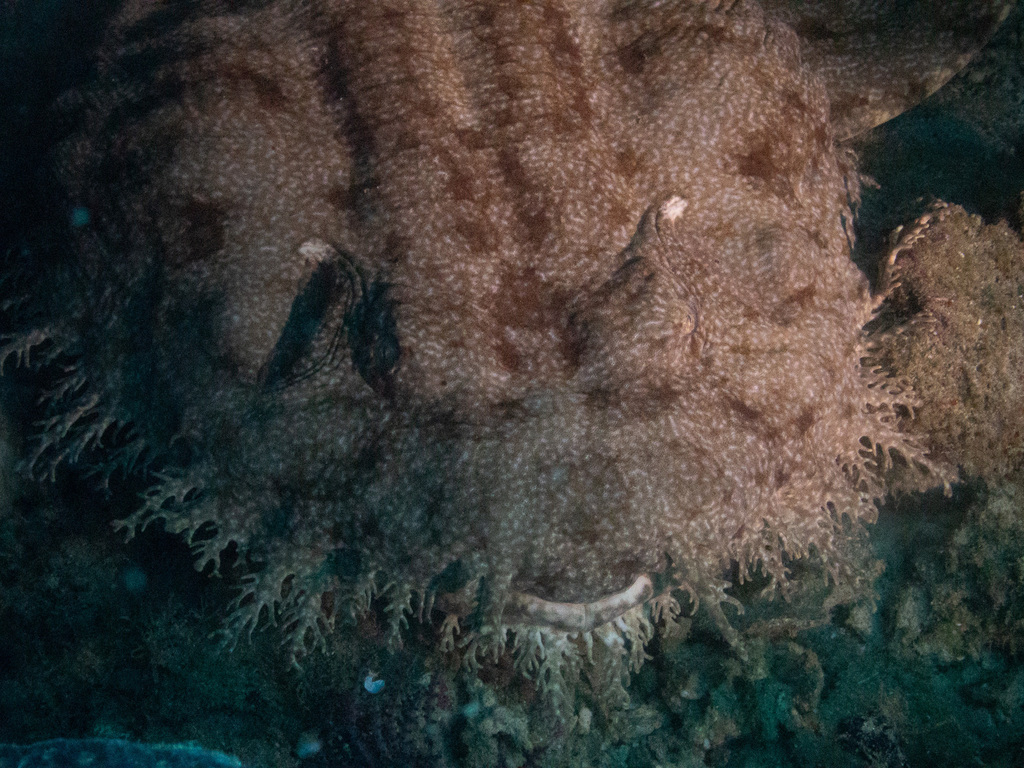 Tasselled wobbegongEucrossorhinus dasypogon
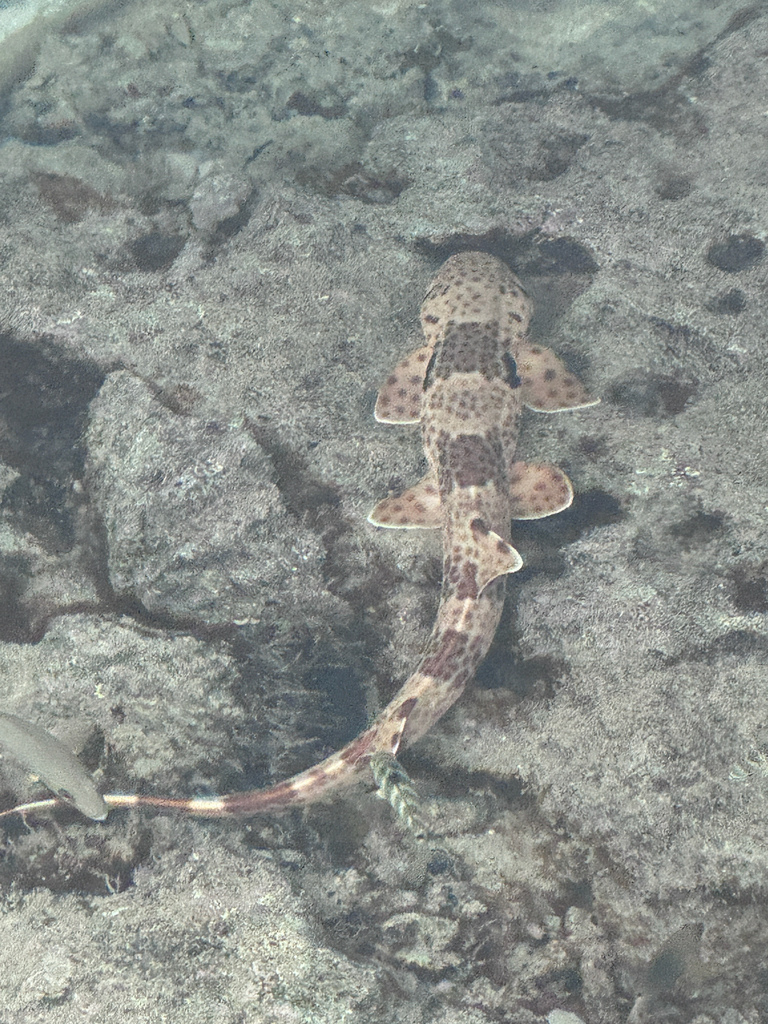 Raja Ampat epaulette shark (walking shark)Hemiscyllium freycineti