
A Slow Ocean Day in Sri Lanka, Imagined Honestly
Two monsoons, a blue whale that may or may not come, and a reef still healing from 1998. This is how we would shape one ocean day in Sri Lanka, and why it is an idea, not a trip you can book.
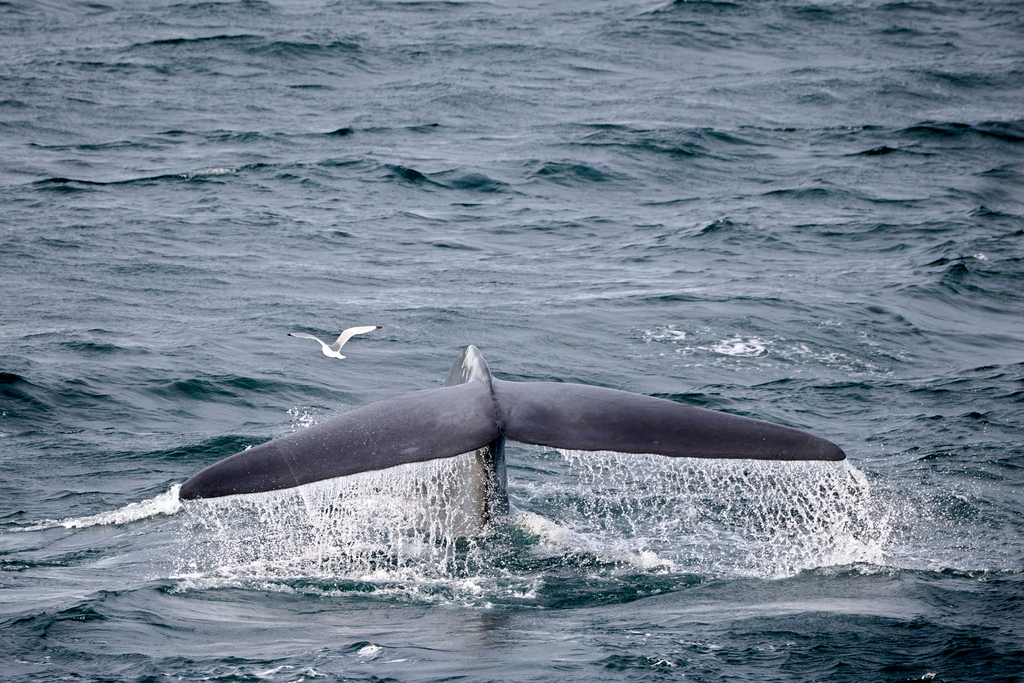
The boat leaves Mirissa while the sea is still flat and grey. Somebody asks the skipper if we will see a blue whale today. He shrugs and says, "Maybe." That one word is the most honest thing anyone will say all morning, and it is where our version of a Sri Lanka ocean day begins.
So what would a slow day on the ocean in Sri Lanka look like? Slower than most people imagine. The sea decides the start time, a boat may come back with no whale at all, and the best hour is often the quiet one after lunch. One thing first, because it matters: Ocean Calling does not run a trip to Sri Lanka. The island is on the "exploring" list of our Ocean Atlas page for Sri Lanka. What you read here is a story about how we would shape a day there, built on the same rules we use everywhere and on what we could verify about this island. It is not an offer.
Sri Lanka does not announce itself like some ocean places do. There is no single postcard reef, no one headline animal. What it has instead is a strange gift of geography: two monsoons that reach the island from opposite sides, at different times of the year. That is why an ocean day here is less about "the season" and more about choosing the right coast at the right time.
Morning: tides, not alarms
We would not build the day around a fixed wake-up time. Mornings follow the water: light wind, a calm sea, and whatever a licensed local operator says is safe that day. On the south coast, around Mirissa or Weligama, that usually means leaving early, while the surface is still smooth and before the afternoon breeze builds.
The bigger rhythm is the monsoon. Sri Lanka's Department of Census and Statistics, following the meteorological department, divides the year into four climate seasons: the first inter-monsoon in March and April, the southwest monsoon from May to September, the second inter-monsoon in October and November, and the northeast monsoon from December to February. In simple words, the southwest monsoon brings rough water to the south and west coasts, so those coasts are usually visited in the other half of the year, while the east coast around Trincomalee is mostly visited in the middle of the year. Read this as a tendency, not a promise. Our guide to the best time to visit Sri Lanka goes coast by coast.
Before any boat, there is a short briefing and a quick look in the bag. A small roll-top dry bag keeps a phone, a warm layer and some cash dry when the spray comes over the side.
Late morning: the whales, and the harder story behind them
The south coast became famous because blue whales could be seen surprisingly close to shore. A study published in 2023 in the Journal of Marine Science and Engineering (Liyanage and colleagues) used sightings recorded from whale-watching boats in 2015: 729 blue whales over 177 sighting days. Encounters per day were highest in April and December. From January to April the team recorded 13 mother and calf pairs and one pregnant female off Mirissa, which suggests calving may peak around March and April.
The story has changed since then. In April 2025, Mongabay reported that blue whale sightings off Sri Lanka have fallen fast in recent years. The researchers quoted there point to several pressures at once: warming in the North Indian Ocean that may have pushed whales toward other waters, a very busy shipping lane, pollution, and disturbance from whale-watching boats. We saw bigger "percent decline" figures repeated online, but we could not trace them to a survey report we could read, so we leave them out. What is clear is that nobody should promise a sighting.
So we would not. The law here is worth knowing too. Whale and dolphin watching in Sri Lanka is regulated under the Sea Mammals (Observation, Regulation and Control) Regulations, No. 1 of 2012, made under the Fauna and Flora Protection Ordinance and published in the Gazette Extraordinary No. 1774/27 of 6 September 2012, and the Sri Lanka Coast Guard was given the job of monitoring whale-watching boats from Mirissa. The licence conditions in the gazette are clear: boats slow down gradually from 400 metres, switch off the engine at 100 metres from a whale, and never come closer than 100 metres. For other sea mammals the limit is 50 metres. Local reporting in 2025 still described boats getting within a few metres of whales. Rules can be updated, so please check the current rule before you travel. Our article on Sri Lanka's whale watching law keeps the detail.
Below the surface: a reef that is still healing
The reef part of the day is quieter and more forgiving. Hikkaduwa, on the southwest coast, is a protected marine area and one of the best-known snorkelling reefs on the island. It also has a hard history. During the 1998 El Niño, observers on the NOAA coral-list reported more than 70% bleaching at the Hikkaduwa sanctuary in April 1998. Estimates of the damage afterwards vary a lot: one figure that is often repeated says live coral cover dropped from about 47% to 13%, while Sri Lankan press reports from the 2000s described even heavier losses. The exact numbers change from source to source, but every account agrees the reef was badly hit and has been recovering slowly.
For a guest, that history changes how you float over it. You keep your hands to yourself, you never stand on coral to fix your mask, and you stay at a respectful distance from turtles or anything else that comes close. A well-fitting low-volume mask and snorkel helps here, simply because a mask that does not leak means fewer stops and less kicking near the reef.
Afternoon: slow, on purpose
Afternoons on the trips we do run are on purpose a little unglamorous. Lunch, a debrief, a rest in the shade, and sometimes a short skill session in calm water for anyone working on breathing or buoyancy. This is where "small group" earns its name. With a maximum of six guests, there is room to notice who needs an easier day and who wants another swim, and anyone can skip any activity without explaining why.
The sun is strong this close to the equator, so covering up is the easy first step: a long-sleeved top in the water, a hat on the boat, and if you use sunscreen, a mineral sunscreen put on well before you get in.
Why choose fewer boats over closer whales?
This is the ethical layer, and it is the part we care about most. Back in 2020, Mongabay published a commentary asking Sri Lanka's whale-watching industry to operate more responsibly, describing crowding around whales and boats without proper safety equipment. The 2025 reporting about boats coming within a few metres shows the problem has not gone away. A day built around ethics therefore looks a bit boring from the outside: an operator who respects the 100-metre rule, engines slow near any whale, no chasing, no "repositioning for the photo", and leaving when other boats crowd in.
If we see nothing, that is also an answer. It means the animal moved on without being followed. Wildlife encounters are unpredictable. Whale and dolphin watching should always follow local regulations and experienced professional guidance, never a guest's wish to get closer. We also want to be honest about travel itself: flying to Sri Lanka has a real carbon cost, and slower, longer stays in one place are one way to make that trip count for more.
Evening: where the conversation turns
Evenings are often when the real questions come. Not "what will we see tomorrow", but "what happens to this place if nothing changes". We do not have tidy answers, and we try not to pretend we do. What we can offer is transparency: who the operator is, what licence they hold, what the rules say, and what is realistic to see compared with what is being marketed. Our guide on how to choose ethical wildlife experiences covers the questions most people ask before booking anything.
If this made you curious about a day like this, you can explore the trips we run today, while Sri Lanka stays on our list of places we are still learning about.
Questions people ask
Does Ocean Calling run a trip to Sri Lanka?
No. Sri Lanka is listed as "exploring" in our Ocean Atlas. This article is a story about how we would shape a day there, using the same principles as our real trips. It is not something you can book.
When is the sea calmest on Sri Lanka's south coast?
The southwest monsoon runs from May to September and makes the south and west coasts rough, so most ocean days there happen outside those months. Conditions still change week to week, so keep some flexibility.
Are blue whales guaranteed off Mirissa?
No. A 2023 study recorded 729 blue whales from whale-watching boats in 2015, but Mongabay reported in 2025 that sightings have fallen fast in recent years. No honest operator can promise a sighting.
How close can boats go to whales in Sri Lanka?
Under the Sea Mammals (Observation, Regulation and Control) Regulations, No. 1 of 2012, a boat must switch off its engine at 100 metres from a whale and never come closer than 100 metres. For other sea mammals the limit is 50 metres. Check the current rule before you travel.
What happened to the reef at Hikkaduwa?
It bleached heavily during the 1998 El Niño. Observers reported more than 70% bleaching in April 1998, and later estimates of coral loss vary by source. Recovery has been slow, which is why no-touch snorkelling matters so much there.
Wildlife encounters are never guaranteed and never forced. Ocean Calling works only with vetted, ethical local operators, and every animal is free to approach, or not, entirely on its own terms.
Sources & further reading
- Coast Guard monitoring of whale watching at Mirissa under the Sea Mammals Observation, Regulation and Control Regulations No. 1 of 2012. Sunday Observer (Sri Lanka), 2014.
- Report on whale-watching operators, the 100-metre rule and swim-with-whales tours in Mirissa and Trincomalee. The Morning (Sri Lanka), 2025.
- Liyanage et al. Seasonal Occurrence of the Indian Ocean Blue Whale (Balaenoptera musculus indica) off South Coast of Sri Lanka. Journal of Marine Science and Engineering 11(8):1523. MDPI, 2023.
- Blue whale decline in Sri Lanka tied to climate and human activity. Mongabay, 2025.
- To flourish, Sri Lanka's whale watching industry must operate responsibly (commentary). Mongabay, 2020.
- Statistical Abstract 2024, Chapter 1: Area and Climate. Department of Census and Statistics, Sri Lanka, 2024.
- Bleaching in South Asia (Hikkaduwa observations, April 1998). NOAA coral-list archive, 1998.
- Hikkaduwa coral reef feature. Sunday Observer (Sri Lanka), 2004.
- Hikkaduwa National Park. Wikipedia (secondary), accessed 2026.
- Sea Mammals (Observation, Regulation and Control) Regulations, No. 1 of 2012, Schedule III. Gazette Extraordinary of the Democratic Socialist Republic of Sri Lanka No. 1774/27, 6 September 2012 (FAOLEX copy of the gazette).
Further reading on Ocean Calling: More from the journal · Wildlife & the law · See the retreats · Ocean Atlas
Find the retreat that fits you
Small groups of up to six guests, unhurried days and local experts. Tell us how you feel in the water and we will point you to the right trip.
Explore in the Ocean Atlas
Places in this article