
Best Time to Visit Sri Lanka for Ocean Travel
Sri Lanka does not have one season. It has two monsoons on opposite clocks, and the quiet weeks between them. Here is how to read them, coast by coast.
A friend once asked me, "When is the season in Sri Lanka?" It sounds like a simple question, but the island has no single season. The short answer: the south and west coasts are usually calmest outside the southwest monsoon (May to September), and the east coast is usually planned for the middle of the year. Two monsoons move on opposite clocks, and the quiet shoulder weeks between them are worth knowing about on purpose.
Two monsoons, not one season
This is why Sri Lanka rewards the traveller who looks at a monsoon map, not a generic "best months" list. If you like this way of planning, our pillar guide to ethical ocean travel uses the same instinct for every destination we look at, not only this one.
Sri Lanka's official statistics follow the climate seasons of the Department of Meteorology and divide the year in four parts. The first inter-monsoon comes in March and April. The southwest monsoon runs from May to September. The second inter-monsoon comes in October and November, and the northeast monsoon from December to February. According to the Department of Census and Statistics, the two monsoon periods together bring a little more than half of the island's rain in a year.
The best time to visit Sri Lanka, coast by coast
Divers and boat crews plan around those winds. The southwest monsoon pushes swell and rain onto the south and west coasts, places like Hikkaduwa, Unawatuna, Weligama and Mirissa, so people usually plan these coasts for roughly November to April. The east coast around Trincomalee and Pasikudah is more sheltered from that monsoon, so it is usually planned for the middle of the year. In other words, there are few months when nowhere on the island works. The trick is to know which coast is having its turn.
Please read these as tendencies. The start of each monsoon moves a little from year to year, and a local operator will always know the current week better than any calendar, this one included.
Why the shoulder months are the interesting ones
The shoulder months are the weeks when one wind system hands over to the other, around the two inter-monsoon periods. Conditions can change more, so fewer people book them, and the water can feel less crowded when the weather is kind. But the official data adds something important: the inter-monsoon periods are not dry. The Department of Meteorology notes that inter-monsoon rain often comes as afternoon or evening showers that can fall anywhere on the island, and recent figures from the department put October and November among the wettest months of the year. So the shoulder is a bet, not a promise. It rewards people who leave a little room in the plan.
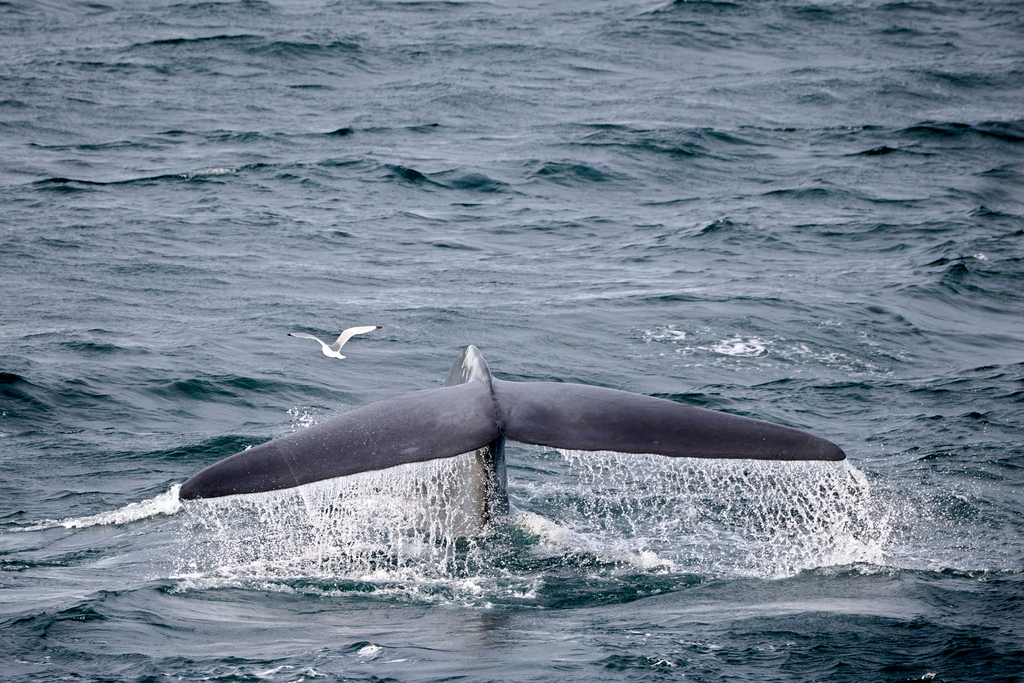
April deserves its own mention, for a reason that has nothing to do with diving. A 2023 study in the Journal of Marine Science and Engineering by Liyanage and colleagues looked at whale-watching sightings from 2015 off Sri Lanka's south coast. It recorded 729 blue whales over 177 sighting days, with the most encounters per day in April and December. Between January and April, the team saw 13 mother and calf pairs and one pregnant female off Mirissa, which suggests that calving may peak around March and April.
How does whale watching in Sri Lanka actually happen?
This is the conservation layer of planning, and it matters as much as the weather. Mongabay reported in April 2025 that blue whale sightings off Sri Lanka have fallen fast in recent years, with researchers pointing to warmer seas, shipping, pollution and disturbance from tourism. Earlier, in 2020, a Mongabay commentary asked the whale-watching industry to work more responsibly, and described crowding around whales and boats without proper safety equipment.
On paper, the law is clear. Whale watching is regulated under the Sea Mammals (Observation, Regulation and Control) Regulations, No. 1 of 2012, published in the Gazette Extraordinary No. 1774/27 of 6 September 2012. The licence conditions say that once sea mammals are seen, a boat slows down gradually until it is 400 metres away. With whales, the engine is switched off at 100 metres, and the boat should never be closer than 100 metres. For other sea mammals, such as dolphins, the limit is 50 metres. Local reporting in 2025 still documented boats getting within a few metres. Check the current rule with the Department of Wildlife Conservation before you travel. Our article on Sri Lanka's whale watching law keeps the detail.
None of this means you should avoid whale watching. It means the operator matters as much as the month. A responsible boat keeps its distance, limits the time near any one animal and never chases. Ask who holds the permit and how many boats usually go out. A reluctant answer is useful information too. Our guide to choosing an ethical dive and boat operator walks through the same questions.
Practical logistics, and an honest note on packing
If your trip is anchored in the south or west, plan around roughly November to April, which overlaps nicely with the blue whale months above. If Trincomalee or Pasikudah is the plan, look at the southwest monsoon months, when the east is usually the calmer side. Heat and humidity stay all year, so light clothes that dry fast matter more than anything heavy. A simple tropical travel kit with packing cubes and a refillable bottle keeps one small bag organised between coasts.
On the boat, a roll-top dry bag keeps a phone and an extra layer safe from spray, and a long-sleeved rash guard does more against the equatorial sun than any cream. And one honest note: a long-haul flight to Sri Lanka has a real carbon cost. Staying longer, moving between fewer places and choosing one coast well is one way to give that cost more meaning.
Monsoon patterns are seasonal tendencies, not promises. If the ocean is the point of your trip, keep a day or two of flexibility in a Sri Lanka itinerary.
Why this island rewards patience
What makes Sri Lanka quietly special is not perfect weather. It does not really have perfect weather, all year. It is that its shape gives a thoughtful traveller a choice that most single-coast places do not. Read the monsoon map instead of a generic calendar, choose the shoulder weeks when you can, and choose the operator who is honest about the whales as much as about the reef. If you want to imagine how a slow day by the sea there could feel, we wrote about an imagined slow ocean day in Sri Lanka. It is a story and an idea, not a trip we run.
Wildlife encounters are unpredictable. Responsible whale watching should always follow local regulations, licensed operators and experienced professional guidance.
If this made you curious, you can explore our upcoming retreats. Sri Lanka is not one of them. It is still on our list of places we are studying.
Questions people ask
What are Sri Lanka's monsoon months?
Official statistics describe four seasons: the first inter-monsoon (March and April), the southwest monsoon (May to September), the second inter-monsoon (October and November) and the northeast monsoon (December to February).
When is the south coast best for ocean trips?
Usually outside the southwest monsoon, so roughly November to April. Treat it as a tendency and confirm conditions with your local operator.
When are blue whales most often seen off the south coast?
A 2023 study of whale-watching data from 2015 found the most encounters per day in April and December, and mother and calf pairs between January and April. Sightings have fallen in recent years, so nothing is guaranteed.
Are the shoulder months dry?
Not necessarily. The Department of Meteorology notes that inter-monsoon rain often falls as afternoon or evening showers anywhere on the island, and October and November can be very wet.
What distance must whale-watching boats keep in Sri Lanka?
Under the Sea Mammals (Observation, Regulation and Control) Regulations, No. 1 of 2012, a boat switches off its engine at 100 metres from a whale and should never be closer than 100 metres. For other sea mammals the limit is 50 metres. Check the current rule before you travel.
Wildlife encounters are never guaranteed and never forced. Ocean Calling works only with vetted, ethical local operators, and every animal is free to approach, or not, entirely on its own terms.
Sources & further reading
- Minister of Agrarian Services and Wildlife, Sri Lanka. Sea Mammals (Observation, Regulation and Control) Regulations, No. 1 of 2012, Gazette Extraordinary No. 1774/27, 6 September 2012 (Schedule III, condition 5). Full text via FAOLEX.
- Coast Guard monitoring of whale watching at Mirissa under the Sea Mammals Observation, Regulation and Control Regulations No. 1 of 2012. Sunday Observer (Sri Lanka), 2014.
- Report on whale-watching operators, the 100-metre rule and swim-with-whales tours in Mirissa and Trincomalee. The Morning (Sri Lanka), 2025.
- Statistical Abstract 2024, Chapter 1: Area and Climate. Department of Census and Statistics, Sri Lanka, 2024.
- Climate of Sri Lanka and the four climatological seasons (Department of Meteorology presentation). Department of Meteorology, Sri Lanka / JMA workshop, 2010.
- Liyanage et al. Seasonal Occurrence of the Indian Ocean Blue Whale (Balaenoptera musculus indica) off South Coast of Sri Lanka. Journal of Marine Science and Engineering 11(8):1523. MDPI, 2023.
- Blue whale decline in Sri Lanka tied to climate and human activity. Mongabay, 2025.
- To flourish, Sri Lanka's whale watching industry must operate responsibly (commentary). Mongabay, 2020.
Further reading on Ocean Calling: More from the journal · Wildlife & the law · See the retreats · Ocean Atlas
Find the retreat that fits you
Small groups of up to six guests, unhurried days and local experts. Tell us how you feel in the water and we will point you to the right trip.
Explore in the Ocean Atlas
Places in this article