
Lovina Dolphins: What to Know Before a Sunrise Boat Trip
You sit in a narrow wooden boat off north Bali, just before sunrise. The sea is flat, the sky turns pink, and then small grey fins appear, spinning out of the water. The Lovina dolphins are real, and very likely to show up. The real question is what happens next, when dozens of other boats see them too.

Should you go dolphin watching in Lovina? You can, if you choose a calm boatman and ask him to keep his distance. The dolphins live close to shore all year, so sightings are very likely. The problem is crowding: in the busiest years studied, up to 83 boats could surround one school. One guest in one boat cannot fix that, but can make one morning calmer.
This is not a story about bad people or bad dolphins. It is a story about too many boats in one small place. To understand it, let us start with who lives out there.
Why are the Lovina dolphins so close to the beach?
North Bali has an unusual underwater shape. The seabed drops to 200 metres between two and five kilometres from shore, and to 500 metres a few kilometres further out. Deep water this close to the beach brings ocean animals within reach of a small boat. The main study on Lovina found the dolphins “predictably” 3 to 4 km from shore.
Over 108 survey days between 2007 and 2010, researcher Dr Putu Liza Mustika recorded eight species of whales and dolphins here. But the one you will almost surely meet is the small dwarf spinner dolphin, often under two metres long. It was seen on most survey days, all year, and was probably resident, unlike the others.
A spinner school here averaged about 10 animals, and around 40% of schools had at least one mother with a calf. IUCN experts recognise the wider waters of Buleleng as an Important Marine Mammal Area. That is a scientific recognition, not a legal protection. And nobody has published how many Lovina dolphins there are.
How a sunrise trip works
Dolphin watching in Lovina began in 1987 and grew out of fishing families. The boats are jukung, narrow wooden outriggers that take up to four guests. Each one is usually owned and driven by one boatman, licensed by one of four local dolphin associations. Apart from these associations, the research describes the business as unregulated.
Boats leave around 6 am, and most are back by 8 am, before the sea breeze rises. In 2010 there were 179 dolphin boats. Between 2007 and 2009, an average of 34.5 went out each day, and up to 98 on a busy high season morning. A later count, in the quiet months of early 2021, found an average of 15.5 a day. No agency records the daily number, so please read these as snapshots, not today's figures.
What the researchers saw on the water
The study used a 50 metre guideline as its reference. But the closest boat was usually about 10 metres from the dolphins in high season, and 30 metres in low season. Most of the problem behaviour was boats speeding towards the school. The rest was cutting through it or blocking its path.
A later study, using a drone and an underwater microphone, reported “a consistent breach of national and international guidelines”, with frequent signs of stress and avoidance in the dolphins.
It is important to be honest about what this proves. The research shows crowding, very close approaches and short-term avoidance. It has not measured an effect on the size or health of the population. But, as the original research puts it, not finding an effect does not mean the animals are not disturbed.
Rules on paper, and rules on the water
All eight species recorded off Lovina are protected under Indonesian national law, and the waters are part of a regional marine conservation area for Buleleng, created in 2011.
Watching rules are another story. A 2020 review found that Indonesia had not yet introduced a national code for whale and dolphin watching. Locally, boatmen agreed in principle around 2010 to switch off engines, keep their distance and not cut across the dolphins' path. In 2017, national and Buleleng offices agreed on a procedure with a 50 metre distance and no feeding. In 2023, the Buleleng tourism office drafted rules with engines off within 25 metres. We found no evidence that any of these is enforced today.
A newer trend worries us more. Some boats now offer “swimming with dolphins”: guests hold rope loops on the outrigger while the boat keeps moving among the other boats. Journalists describe it as risky, and there is still no standard guideline for it. No law or permit allows it. Please do not pay for it.
Why the boatmen are not the villains
Dolphin watching is a real part of the local economy. It brings at least 37,000 overnight visitors a year and at least 46% of direct tourist spending in the area, yet boat fares are only 3% of that money. Most goes to hotels, restaurants and transport. So it is easy to understand why boatmen have not wanted to limit their own numbers.
Here is the hopeful part. In the survey, Western tourists were more satisfied when ten or fewer boats were around the dolphins. A calmer meeting is better for the dolphins, and better for the guests. In 2016, when a hotel association suggested attracting dolphins with sounds or fish bait, the leading researcher called it a form of captivity and asked for better boat management instead. We agree.
Lovina also has a sadder chapter. Five captive bottlenose dolphins from a travelling show were kept in a hotel pool here. One died there in 2019, and the others were removed that year. Three were later released from a sea pen in West Bali in 2022, and one of them died two months later. Wild dolphins belong in the open sea, never in a pool or a show.
How to be the calm boat
If you decide to go, a few words before you leave can change a lot. Ask your boatman to keep a wide distance, slow down early, and switch off the engine when the dolphins are near. Say clearly that you do not want to race towards them, cut in front of them or join a crowd. The 50 metre distance from the 2017 local procedure is a good minimum to ask for. Stay in the boat, never feed them, and let the dolphins choose.
Wildlife encounters are unpredictable. Dolphin watching should always follow local regulations and experienced professional guidance.
November to May can mean fewer boats, but rougher seas. It gets wet on a jukung, so I keep my phone in a small roll-top dry bag and my hands free for the sunrise.
Some places have clearer rules. Hawaiʻi forbids swimming with or approaching Hawaiian spinner dolphins within 50 yards, inside two nautical miles of shore. Sri Lanka keeps boats at least 50 metres from dolphins and does not allow entering the water with them. Our guide to ethical swimming with dolphins explains why the answer to “can I swim with them?” is so often no. And if you want to see how we plan slow, small-group days on the water, you can look at our retreats.
Questions people ask
Will I see dolphins in Lovina?
Very likely, but never certainly. In the main study, boats found whales or dolphins on 58 of the 61 days they were followed. The dolphins decide where they go.
Is swimming with the Lovina dolphins allowed?
We found no law, permit or guideline that allows it, and the rope method used by some boats has no safety standard. Please watch from the boat.
What is the best time of year?
Dolphins are seen all year. June to October is calmer and drier, but in the study years it was also busier, with more boats and closer approaches. November to May is quieter but rougher.
Are the Lovina dolphins endangered?
Spinner dolphins are not globally threatened, but all dolphin species in Indonesia are legally protected. There is no published population estimate for Lovina, so nobody can say how this local group is doing.
Wildlife encounters are never guaranteed and never forced. Ocean Calling works only with vetted, ethical local operators, and every animal is free to approach, or not, entirely on its own terms.
Sources & further reading
- Mustika, P.L.K., 2011. Towards sustainable dolphin watching tourism in Lovina, Bali, Indonesia. PhD thesis, James Cook University.
- Mustika, P.L.K., 2011. Towards sustainable dolphin watching tourism in Lovina, Bali, Indonesia. PhD thesis, James Cook University (PDF copy hosted by Cetacean Sirenian Indonesia).
- Mustika, P.L.K., Birtles, A., Welters, R. and Marsh, H., 2012. The economic influence of community-based dolphin watching on a local economy in a developing country. Ecological Economics 79.
- Westerlaken, R., Hendrawan, I.G. and Kusuma Yuni, L.P.E., 2022. The case of Lovina, Bali: how dolphin-watching procedures put village hospitality revenue at risk. Research in Hospitality Management 12(1).
- Westerlaken, R., 2024. Fostering sustainable dolphin-watching tourism in Lovina, Bali. Journal of Humanities and Applied Social Sciences 7(2).
- IUCN Marine Mammal Protected Areas Task Force. Buleleng Important Marine Mammal Area factsheet.
- Ministry of Environment and Forestry of Indonesia, 2018. Regulation P.106/2018 on protected plant and animal species.
- Sahri, A. et al., 2020. A critical review of marine mammal governance and protection in Indonesia. Marine Policy 117.
- Mongabay Indonesia, 2024. Berenang Bersama Lumba-lumba: Tren Baru Wisata di Bali Utara.
- Mongabay Indonesia, 2016. Perlukah Rumpon untuk Wisata Lumba-lumba di Laut?
- BaleBengong, 2017. Inilah Panduan Melihat Lumba-lumba di Lovina.
- The Bali Sun, 2023. New regulations drafted to improve Bali’s famous dolphin watching tours.
- Mongabay Indonesia, 2019. Dua Dolphin Terakhir Akhirnya Bebas dari Kolam Hotel Melka.
- Dolphin Project, 2022. Free at last.
- Dolphin Project, 2022. Johnny succumbs to respiratory illness.
- IUCN Marine Mammal Protected Areas Task Force. Society Archipelago IMMA factsheet.
- NOAA Fisheries, 2021. Final rule to prohibit swimming with and approaching Hawaiian spinner dolphins.
- Blue World Institute. Code of conduct for dolphin watching.
- International Whaling Commission. Whale Watching Handbook: Sri Lanka country profile.
Further reading on Ocean Calling: Spinner dolphin in the Ocean Atlas · Indonesia in the Ocean Atlas · Ocean Atlas · French Polynesia in the Ocean Atlas · United States and Hawaiʻi in the Ocean Atlas · Croatia in the Ocean Atlas · Sri Lanka in the Ocean Atlas
Swim with humpback whales in Moʻorea: an ethical whale retreat
Whale encounter retreat · Moʻorea, French Polynesia
Time in the blue, on the whales’ terms. This story is about French Polynesia, where we run our whale trip.
Explore in the Ocean Atlas
Places in this article
Animals in this article
 Spinner dolphinStenella longirostris
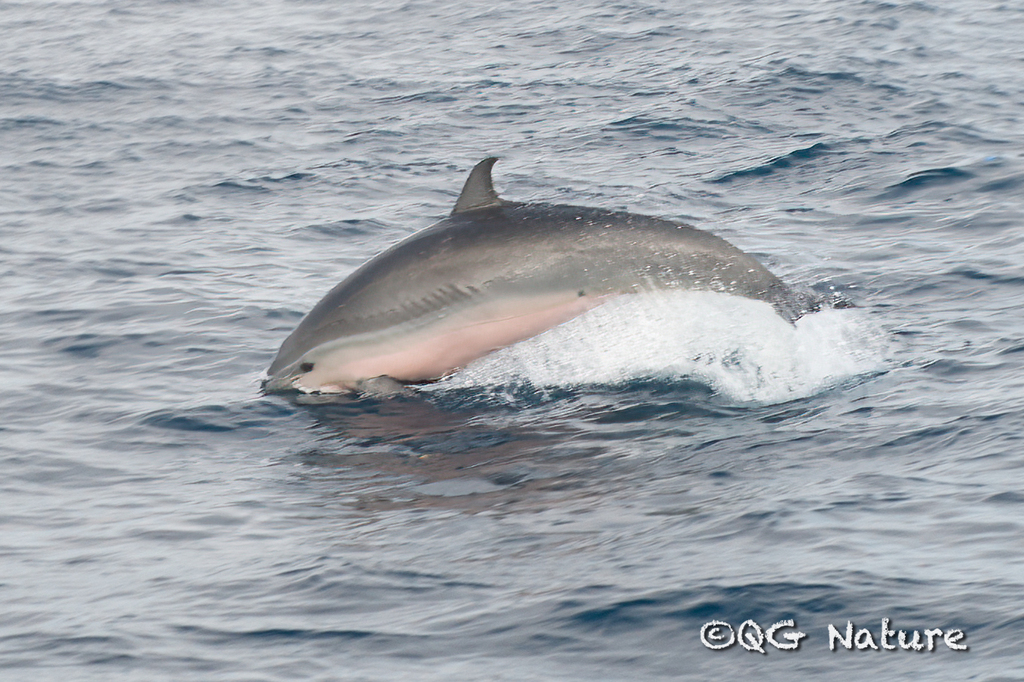 Fraser's dolphinLagenodelphis hosei
 Common bottlenose dolphinTursiops truncatus