
Common bottlenose dolphin
Tursiops truncatus
Curious, cooperative hunters that may ride the bow wave of a boat. Coastal and offshore forms differ. Enjoy them from a distance and never feed them.
Least Concern (IUCN, 2019) means it is not at high risk of extinction worldwide today.


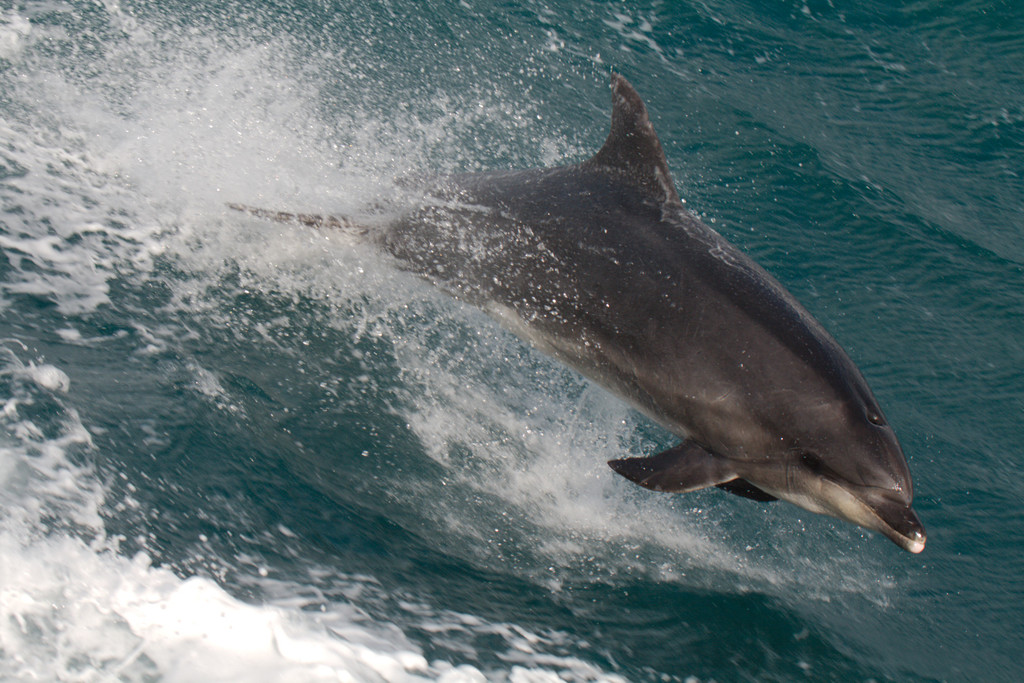
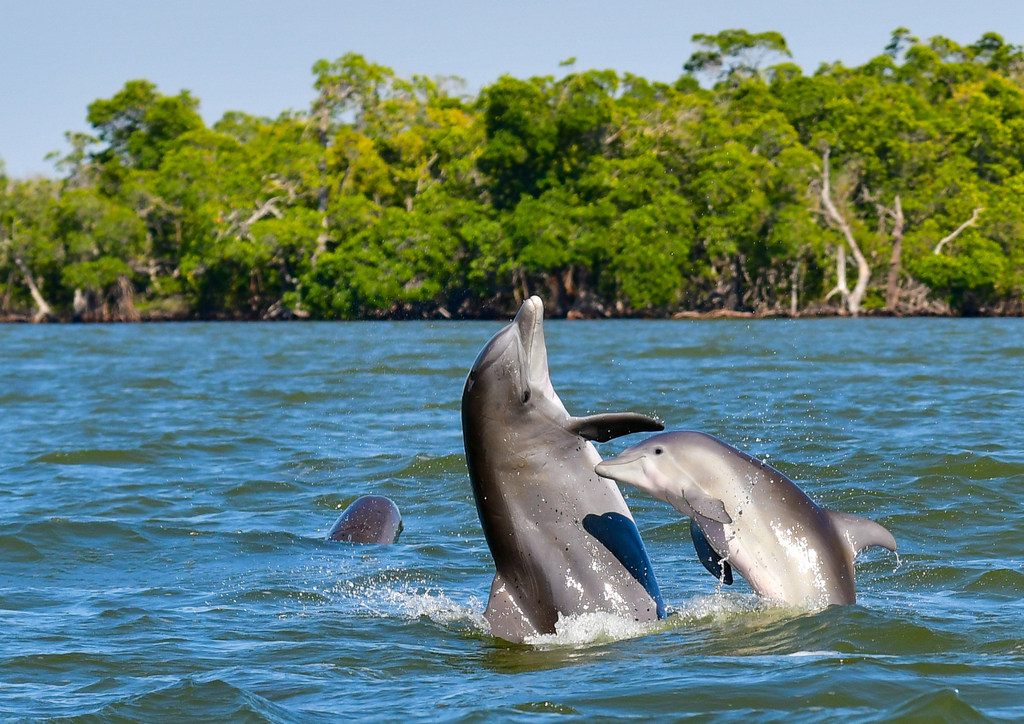
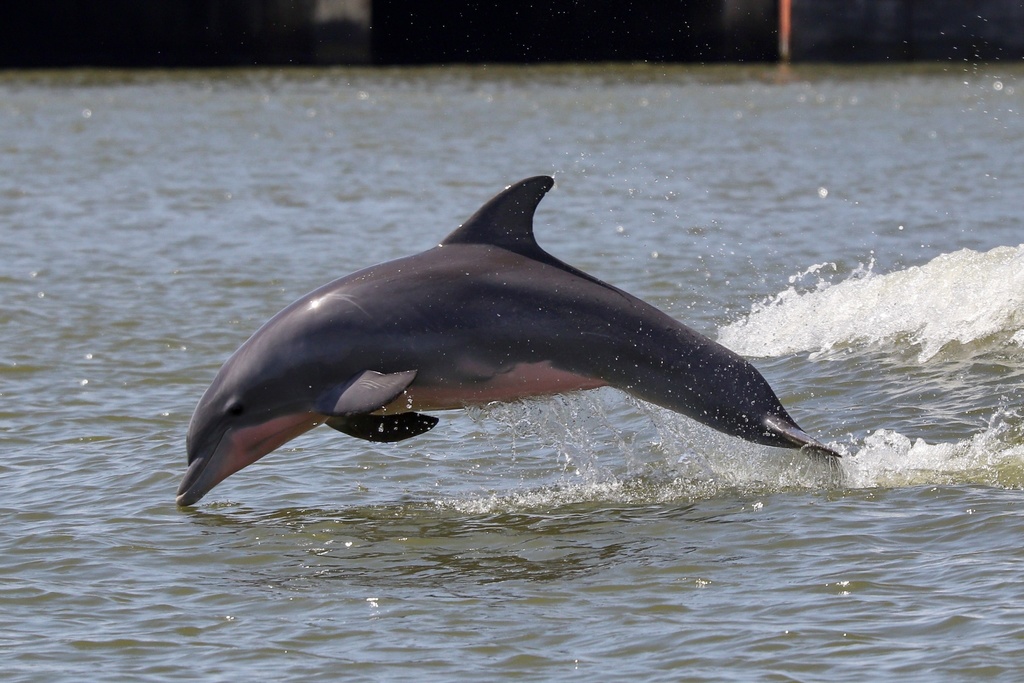
Photos show the species, not always the places on this page.
Length
Usually about 1.8 to 4 m (6 to 13 ft); coastal animals are often smaller than offshore ones
Weight
Usually about 136 to 635 kg (300 to 1,400 lb); coastal animals are often lighter
Next to a person
From about one adult's length to more than twice as long; weighs as much as about two to eight adults
What it eats
Fish, squid, crabs and shrimp.
Around people
Defensive if pressured
How it lives
Bottlenose dolphins often work together to herd fish, then take turns charging through the school, and some trap fish against sandbars or seawalls. They travel alone or in groups that often split up and come back together. Pregnancy lasts about 12 months, calves nurse for about 20 months, and they often stay with their mothers for 3 to 6 years.
Where it goes
Coastal bottlenose dolphins often stay in the same bays and estuaries for years, while offshore animals use deeper water over the shelf edge and open ocean. How far they move depends on the population.
We only draw a journey on the map when scientists have tracked it or clearly documented it. For this animal we have not found one yet.
Populations
Around the world, coastal and offshore forms differ in size, colour, group size and how closely they stay to one area. Along the US East Coast, the nearshore coastal form is now treated as a separate species, Tamanend's bottlenose dolphin. The species is Least Concern worldwide, but Lahille's bottlenose dolphin of the southwest Atlantic is Endangered and several US coastal stocks are depleted. This is a different species from the Indo-Pacific bottlenose dolphin.
Meet it respectfully
In the US, NOAA guidance asks you to stay at least 50 yards (about 45 m) away, watch for no more than 30 minutes, and not swim with, touch or chase wild dolphins; feeding wild dolphins is illegal there. Wild dolphins can bite, especially when fed or harassed, and dolphins used to handouts can become pushy near boats. In other countries, distances and swim rules are set locally. We never feed, touch, chase or block dolphins, and the dolphins choose whether an encounter happens.
Fun fact
Tap the bulb to light it up.
The name comes from the short, thick, bottle-shaped snout.
Newborn calves swim in baby position, close beside the mother, which helps with nursing and saves energy.
They can live at least 40 years, and some females live past 60.
Bottlenose dolphins can recognise the whistles of old companions after more than 20 years apart. This was shown in a study of 53 dolphins at six facilities.
Bottlenose dolphins do not chew. They grip a fish with their teeth, then swallow it whole and head first, so the fish's spines do not catch in their throat.
Source: NOAA Fisheries, Common bottlenose dolphin species profile
Common bottlenose dolphin in the Ocean Atlas
Places we have researched where this animal is recorded. It is never guaranteed, and some places are for watching from the boat only.
Travel with usComing soonTrusted referralExploringOn pause, story onlyEthics pass
Country colour: pink where we travel, blue where we are exploring or refer, grey for story only.
 Albania
 Argentina
 Australia
 The Bahamas
 Belgium
 Belize
 Bermuda
 Brazil
 British Virgin Islands
 Cabo Verde
 Canada
 Caribbean Netherlands
 Chile
Chile Colombia
 Comoros
 Costa Rica
 Croatia
 Curaçao
 Cyprus
 Denmark
 Dominica
 Dominican Republic
 Ecuador
 Egypt
Egypt El Salvador
 Faroe Islands
 France
 French Guiana
 French Polynesia
 Germany
 Greece
 Grenada
 Guam
Guam Guinea
 Guinea-Bissau
 Honduras
 Indonesia
 Ireland
 Israel
 Jamaica
 Japan
Japan Lithuania
 Madagascar
 Martinique
 Mauritius
 Mayotte
 Mexico
 Namibia
 Netherlands
 New Caledonia
 New Zealand
 Nicaragua
 Nigeria
 Northern Mariana Islands
 Norway
 Oman
Oman Panama
 Peru
Peru Philippines
 Portugal
 Réunion
 Russia
 Saint Helena
 Saint Lucia
 Saint Martin
 Saudi Arabia
 Senegal
 Seychelles
 South Africa
 Spain
Spain Sri Lanka
 Suriname
 Sweden
 Taiwan
 Tanzania
 Togo
Togo Tonga
Tonga Trinidad and Tobago
 Tunisia
 Türkiye
 Turks and Caicos Islands
 United Kingdom
 United States
 Uruguay
 US Virgin Islands
 Vietnam
 Wallis and Futuna
 Western Sahara
 Yemen
YemenRead more about the common bottlenose dolphin
Sources for this page
- NOAA Fisheries, 2026
- NOAA Fisheries, 2023
- IUCN Red List, 2018
- IUCN SSC Cetacean Specialist Group, 2026
- Costa et al., 2022
- Society for Marine Mammalogy, species list, 2024
- IUCN Red List, Lahille's bottlenose dolphin, 2025
Facts checked 26 September 2026. Photos: Unsplash licence, or Creative Commons as shown on each photo.
Work in ocean travel?
We are always happy to hear from exceptional local operators, accommodation, conservation organisations and destination experts. If your work fits responsible, small-group ocean travel, we would love to learn more.
Partner with Ocean CallingNew: mobula rays in La Ventana, May 2027
CHF 2,720