The Gentle Giants of Bali: A Guide to Ethical Manta Ray Encounters
Discover how to swim with manta rays in Bali responsibly. This expert guide explores manta ray intelligence, the unique ocean conditions of Nusa Penida, and the 2025-2026 travel regulations for a safe and ethical ocean travel experience.
MARINE LIFE EDUCATION
The Gentle Giants of Bali: A Guide to Ethical Manta Ray Encounters
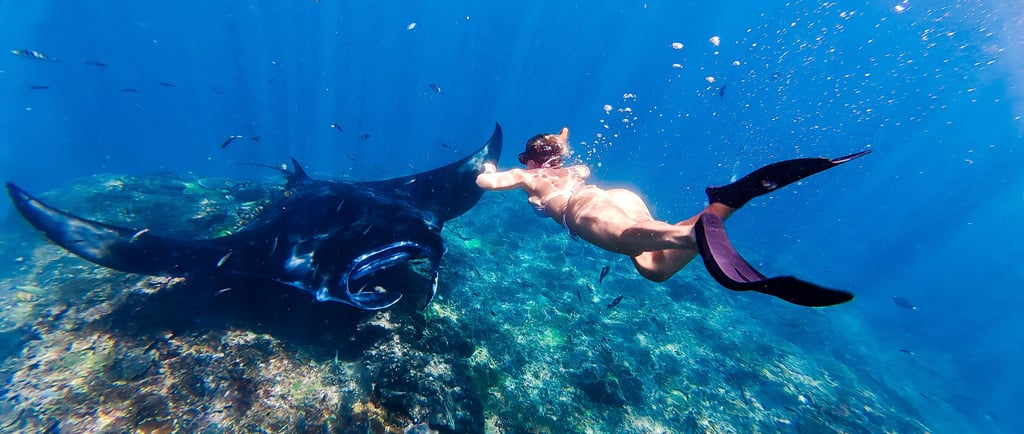
The ocean has a way of reminding us that we are guests in a world far older and more complex than our own. When we talk about ethical ocean travel, we are really talking about building a more respectful relationship with the sea and the life within it. In the waters surrounding Bali and the Nusa Islands, this relationship is most visible during an encounter with the reef manta ray. These animals are not just "sights" to be seen; they are intelligent, social beings that deserve our quiet observation rather than our pursuit.
Choosing a responsible ocean travel experience means looking beyond the surface. It is about understanding that our presence has an impact and that by making intentional, science-informed choices, we can ensure these encounters remain meaningful for us and safe for the animals. This guide explores why manta rays are so special, how to navigate the unique challenges of Bali’s waters, and what it looks like to practice ethical swimming with marine animals in 2025 and 2026.
Beyond the Surface: The Intelligence of the Manta Ray
To understand why ethical diving and snorkeling guidelines are so strict, we first have to appreciate who these animals are. Manta rays are often called the "birds of the sea" because of their graceful, wing-like movements, but their beauty is matched by a surprising level of intelligence. Scientific research has shown that manta rays have the largest brain of any fish species. Their brain-to-body ratio is actually closer to that of dolphins and some primates than to other fish, which points to advanced abilities like memory, problem-solving, and complex social interactions.
Perhaps most incredible is the evidence that manta rays may be self-aware. In studies where they were shown mirrors, they didn't try to "talk" to the reflection as if it were a stranger; instead, they performed repetitive movements to check their own bodies, suggesting they recognized the reflection as themselves. They also live in "fission-fusion" societies, meaning they form long-term friendships and choose who they want to hang out with at specific "hubs" like cleaning stations. When we realize we are swimming with a self-aware animal that has its own social circle, the need for a respectful, non-invasive approach becomes clear.
The Bali Context: A Nursery and a Meeting Point
Bali’s Nusa Penida Marine Protected Area (MPA) is a rare "Hope Spot" where manta rays can be found year-round. The area is divided into two main sites that serve very different purposes. Manta Bay is a shallow, semi-enclosed area that acts as a vital nursery and foraging ground. It is mostly frequented by younger manta rays who come here to feed on the rich plankton brought in by the currents.
Manta Point, located further south, is a deeper and more exposed site used primarily as a cleaning station. Here, mature mantas gather to have parasites removed by smaller fish and to socialize with one another. Because these sites are so critical for the animals’ growth and reproduction, the pressure of unregulated tourism—like boat noise and overcrowding—can cause them chronic stress. In 2025, the local manta population around Nusa Penida has thankfully doubled compared to a decade ago, but this recovery depends entirely on our continued commitment to sustainable travel experiences.
Navigating the Power of the Ocean
While manta rays themselves are harmless—they have no teeth to bite and no stingers to defend themselves—the waters of Nusa Penida are objectively powerful. The island’s southern coast is exposed to the open Indian Ocean, creating strong swells and unpredictable currents. This environment is often described as a "washing machine" because of the way waves and currents can swirl together, making it a challenging place even for confident swimmers.
Safety is a core pillar of responsible wildlife encounters. The currents here can include "down-drafts" that pull toward the bottom or "rip currents" that carry swimmers away from the boat. Because of this, it is essential to wear fins for power, even if you are a strong swimmer, and to always go with an experienced guide who monitors the conditions minute-by-minute. If you are not a confident swimmer, the safest and most respectful choice is often to stay on the boat and enjoy the view of these "flying carpets" from above.
The Code of Conduct: How to Be a Guest
The best manta encounter is one where the animal chooses to interact with you. This is known as "passive interaction". By remaining still and predictable, you become a neutral part of their environment rather than a threat. The global 10-step guidelines, developed through years of research by organizations like the Manta Trust, provide a clear roadmap for how to travel responsibly in the water.
The most important rule is to never touch a manta ray. Beyond being disrespectful, touching them can rub off the protective mucus layer on their skin, leaving them vulnerable to infections. You should also maintain a distance of at least 3 meters (10 feet) and avoid splashing when you enter the water, as loud noises can scare them away from important feeding or cleaning spots. If a manta chooses to swim closer to you, stay calm and enjoy the eye contact—they are often just as curious about us as we are about them.
The New Era of Travel in Bali (2025–2026)
As of 2025, Bali has shifted its focus toward "Quality Tourism," prioritizing high-value, low-impact experiences that respect local culture and nature. This change is supported by several new regulations that travelers should be aware of. Every international visitor is now required to pay the Bali Tourist Levy of IDR 150,000, which is used to fund environmental protection and cultural preservation.
In addition to the levy, there are stricter environmental rules, including a ban on single-use plastic water bottles under one liter. For those visiting the Nusa Penida Marine Protected Area, there is a small local entry fee and a specific marine conservation fee that directly supports reef protection. These measures reflect a growing recognition that Bali’s natural beauty is a treasure that requires active stewardship. By following these rules and choosing licensed, ethical operators, you are directly contributing to the preservation of this incredible island.
Progress Over Perfection
Ethical travel is not about being a perfect tourist; it is about being an intentional one. It is an evolving process shaped by curiosity and a sense of responsibility. We continue to learn from marine experts like Dr. Andrea Marshall and Rili Djohani, whose work with the Marine Megafauna Foundation and the Coral Triangle Center has been instrumental in protecting these waters.
Small, conscious choices—like using reef-safe sunscreen, refusing plastic straws, and supporting local female professionals—add up to a meaningful long-term impact. When we approach the ocean with humility and a desire to learn, we don't just see the manta rays; we begin to understand our place in the wider web of life.
Frequently Asked Questions
What is ethical ocean travel and why does it matter for manta rays?
Ethical ocean travel is an approach to tourism that prioritizes the health of the environment and the well-being of marine life over human entertainment. For manta rays, this is critical because they are highly intelligent, self-aware animals that can be easily stressed by "chasing" or "crowding." By following ethical guidelines, such as maintaining a respectful distance and avoiding physical contact, we ensure that these animals can continue their essential behaviors like feeding and cleaning without being driven away from their habitats.
How do I choose an ethical tour operator for manta swimming in Bali?
Look for operators who provide a thorough safety and "Code of Conduct" briefing before you enter the water. An ethical operator will prioritize small group sizes (ideally 8 guests per guide or fewer), use experienced local guides who understand the currents, and have a clear "No-Touch, No-Chase" policy. They should also demonstrate a commitment to the community and environment, such as being plastic-free on board and supporting local conservation initiatives or NGOs.
What are the main safety risks when swimming at Manta Point or Manta Bay?
The primary risks are environmental rather than from the animals themselves. The waters around Nusa Penida are known for strong swells, "washing machine" surges near the cliffs, and powerful currents, including rip currents and down-drafts. These conditions can be dangerous for those who are not confident swimmers. It is essential to wear fins for maneuverability, stay close to your guide, and be aware of the high boat traffic in the area to avoid accidents during ascent.
Is there a specific season for manta rays in Bali?
Manta rays can be seen year-round in the Nusa Penida Marine Protected Area, which is one of the few places in the world where this is possible. However, the experience can change with the seasons. The dry season (May to October) generally offers the best visibility and calmer surface conditions. During the rainy season (December to March), the seas can be much rougher, and more plastic debris may be washed into the feeding areas by the currents, which can impact the quality of the encounter.
Ocean Calling Commitment
At Ocean Calling Retreats, we believe that travel should be a force for good. We are committed to:
Small group sizes to ensure safety and minimize disturbance.
Respectful wildlife encounters that happen on the animal's terms.
Collaboration with local professionals and marine scientists.
Continuous learning and sharing transparent, science-informed information.
Minimizing our environmental footprint by reducing waste and using reef-safe practices.
© 2026 Ocean Calling Retreats.
All rights reserved.
Ocean Calling Retreats
Ethical ocean retreats for solo travellers. Small-group experiences built on depth, safety, and meaningful connection.
Certifications
All ocean experiences follow strict ethical guidelines.