Ethical Swimming with Dolphins
Learn how ethical swimming with dolphins supports marine conservation through responsible wildlife encounters guided by science-based tourism practices.
Ethical Swimming with Dolphins: When the Ocean Leads the Encounter
Allowing the Encounter to Happen Naturally
The sound of the boat engine faded gradually, replaced by the soft movement of water against the hull. After nearly an hour of scanning the horizon, a subtle shift in attention passed through the group as a dorsal fin briefly appeared before disappearing again beneath the surface.
There was no urgency in the guide’s voice, no pressure to react quickly. The instruction was simple and calm. Enter the water slowly and quietly.
Moments later, the group slipped gently into the sea. No splashing disturbed the surface. Only the quiet rhythm of breathing through snorkels and the steady movement of the ocean remained.
At first, the water appeared empty. The anticipation was present, yet the experience unfolded at its own pace.
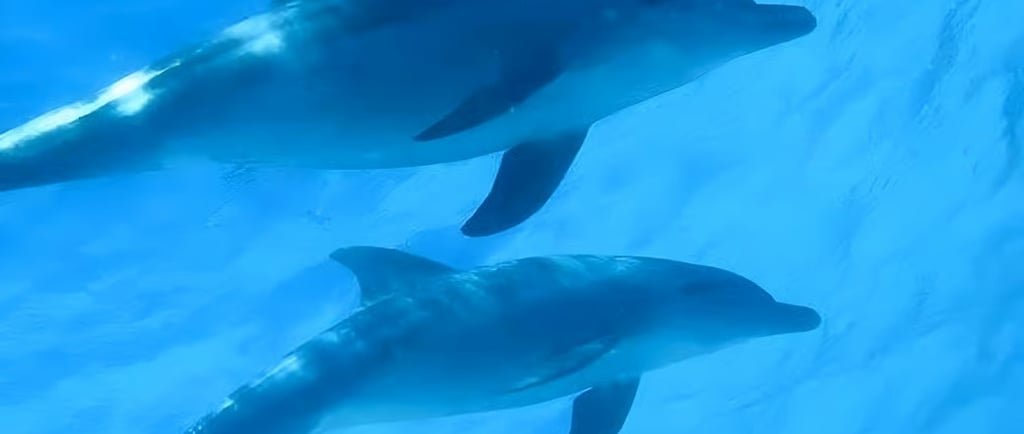
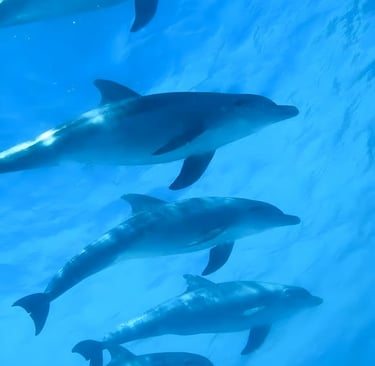
Then, in the distance, a small pod of dolphins became visible. They remained together, moving with coordination and awareness, following patterns shaped by communication and social structure. The group observed without approaching, maintaining distance and allowing the animals to determine the interaction.
After a few minutes, one dolphin briefly shifted direction, showing curiosity before returning to the pod.
The entire encounter lasted only a few minutes.
Yet the experience felt complete.
Why Ethical Dolphin Encounters Look Different From Social Media
Ethical swimming with dolphins often differs significantly from popular imagery that portrays close interaction or physical contact. Responsible wildlife encounters recognise that dolphins are highly intelligent animals with complex communication systems and strong social bonds.
Marine researchers have observed that repeated disturbance can influence feeding behaviour, resting cycles, and migration patterns. Approaching too closely, surrounding animals, or attempting to touch them may disrupt natural activity.
Science-based marine tourism frameworks therefore recommend maintaining respectful distance, limiting group size, and reducing noise in the water environment.
These guidelines are designed to protect behavioural patterns that support survival and social cohesion within dolphin populations.
Natural encounters frequently involve brief observation rather than prolonged interaction.
Brief interactions often feel more authentic.
Authentic encounters often create stronger emotional impact.
Emotional impact often increases environmental awareness.
Awareness often supports responsible travel choices.
Responsible choices often contribute to long-term marine conservation.
How Science-Based Marine Tourism Protects Marine Life
Marine biologists and conservation organisations contribute research that informs responsible tourism practices. Long-term behavioural observation helps identify appropriate distances, encounter duration limits, and sensitive habitat areas requiring additional protection.
Ethical marine tourism operators often collaborate with researchers and local communities to refine these guidelines as new information becomes available.
Collaborative approaches support adaptive conservation strategies.
Adaptive strategies often improve protection of feeding grounds and migration routes.
Protected migration routes support population stability.
Population stability contributes to ecosystem balance.
Balanced ecosystems support biodiversity resilience.
Resilient ecosystems allow future encounters to remain possible.
Science-based tourism allows travellers to participate in ocean experiences without placing unnecessary pressure on wildlife populations.
Participation becomes observation rather than interference.
Observation often increases appreciation.
Appreciation often increases respect.
Respect often influences behaviour.
Behaviour often shapes long-term environmental outcomes.
Why Non-Interference Creates More Meaningful Experiences
Encounters that unfold naturally often feel more memorable because they reflect authentic behaviour rather than conditioned responses. Observing dolphins interacting within their pod reveals communication patterns, coordinated movement, and adaptive awareness of their surroundings.
These moments often encourage reflection on the complexity of marine ecosystems and the importance of maintaining respectful boundaries.
Allowing wildlife to approach voluntarily creates a dynamic that feels reciprocal rather than extractive.
Reciprocal experiences often feel more balanced.
Balanced encounters often reduce ecological stress.
Reduced stress often supports natural behaviour continuity.
Behaviour continuity supports ecosystem stability.
Stable ecosystems allow continued coexistence between marine life and responsible tourism activity.
Ethical travel does not remove the sense of wonder.
It often deepens it.
Preserving the Possibility of Future Encounters
Choosing responsible wildlife experiences contributes to maintaining environmental conditions that allow future travellers to experience similar encounters. Supporting operators who follow science-based guidelines encourages industry-wide adoption of sustainable practices.
Collective behaviour patterns often influence tourism standards.
Tourism standards often influence regulatory development.
Regulation often supports habitat protection.
Habitat protection often supports biodiversity preservation.
Biodiversity preservation supports ecosystem resilience.
Resilient ecosystems maintain the possibility of meaningful human interaction with marine environments.
Ethical ocean travel allows exploration to coexist with responsibility.
Responsibility helps ensure encounters remain available without compromising marine life wellbeing.
Sometimes the most memorable wildlife experiences occur without dramatic interaction.
Sometimes observation alone creates lasting perspective.
And sometimes the most extraordinary moments happen when the ocean determines the terms of the meeting.
© 2026 Ocean Calling Retreats.
All rights reserved.
Ocean Calling Retreats
Ethical ocean retreats for solo travellers. Small-group experiences built on depth, safety, and meaningful connection.
Certifications
All ocean experiences follow strict ethical guidelines.