
American crocodile
Crocodylus acutus
A long grey snout resting low in the mangrove shallows. American crocodiles are wary, and no sighting is ever a promise.
Vulnerable (IUCN, 2022) means it is at high risk of extinction in the wild. It is widespread, but hunting, habitat loss and road deaths have cut numbers in many places.
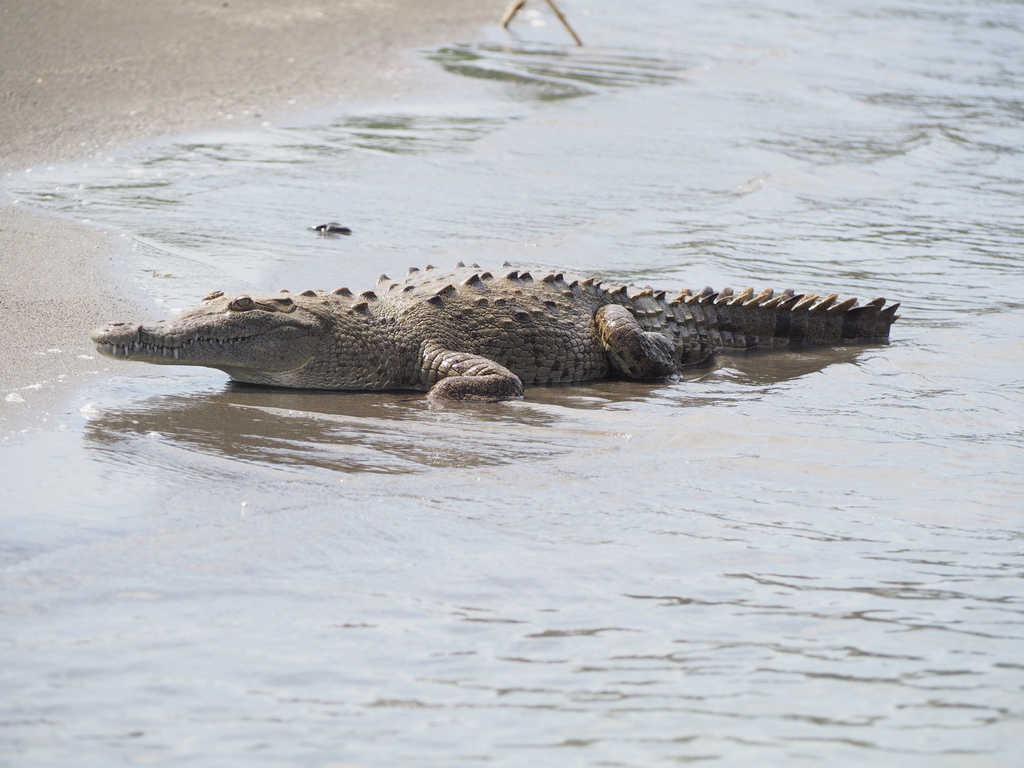
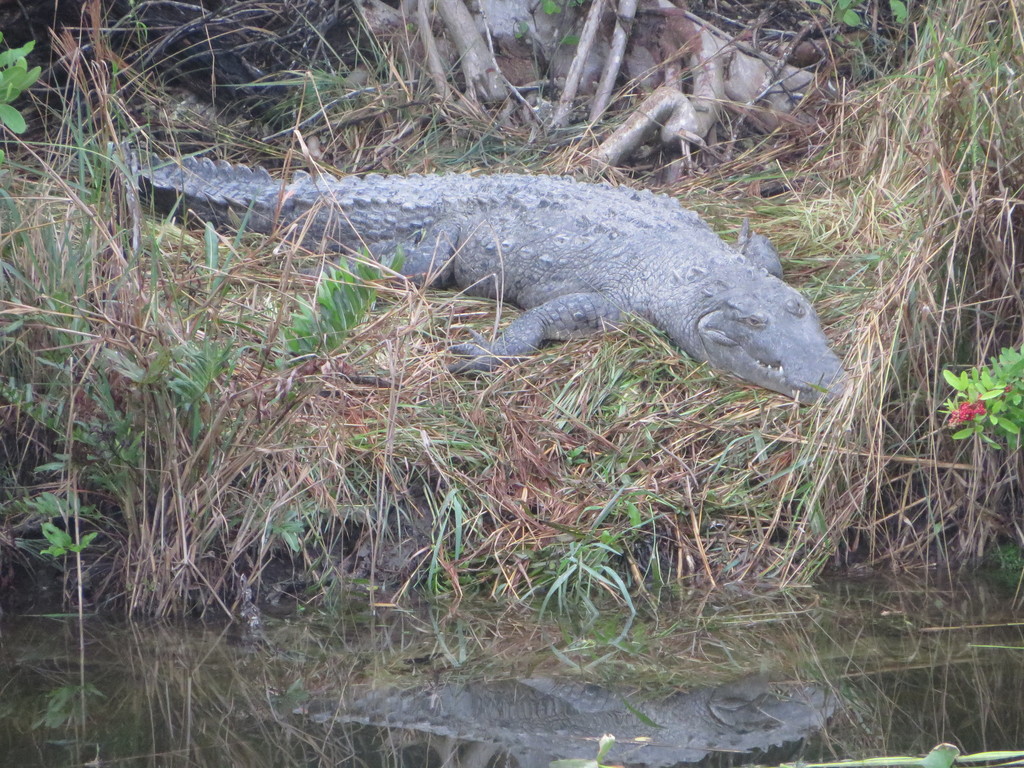
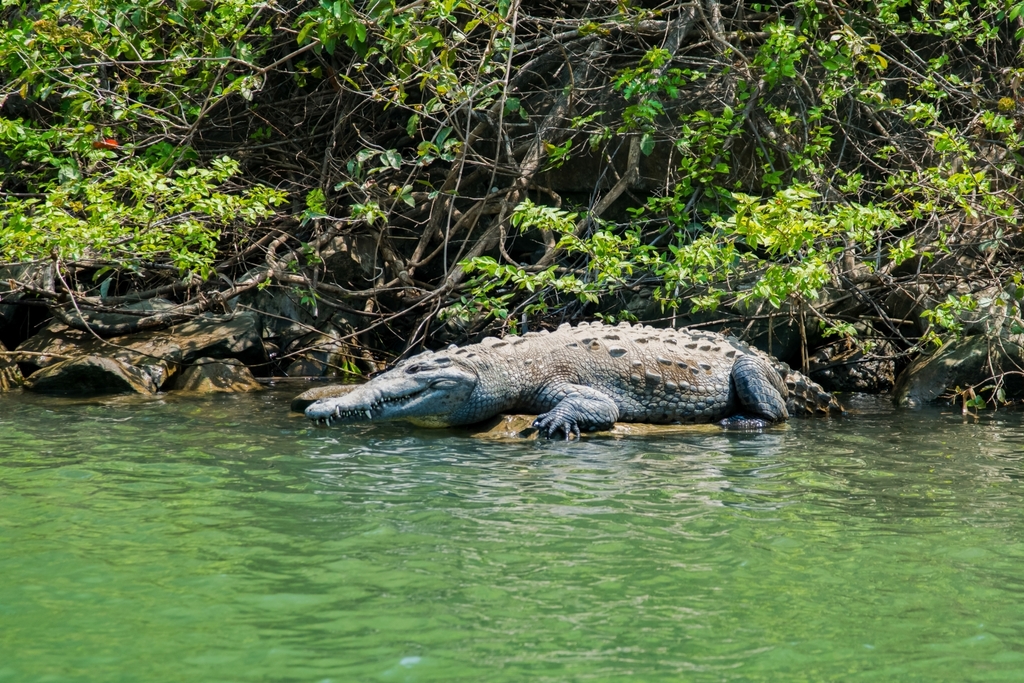
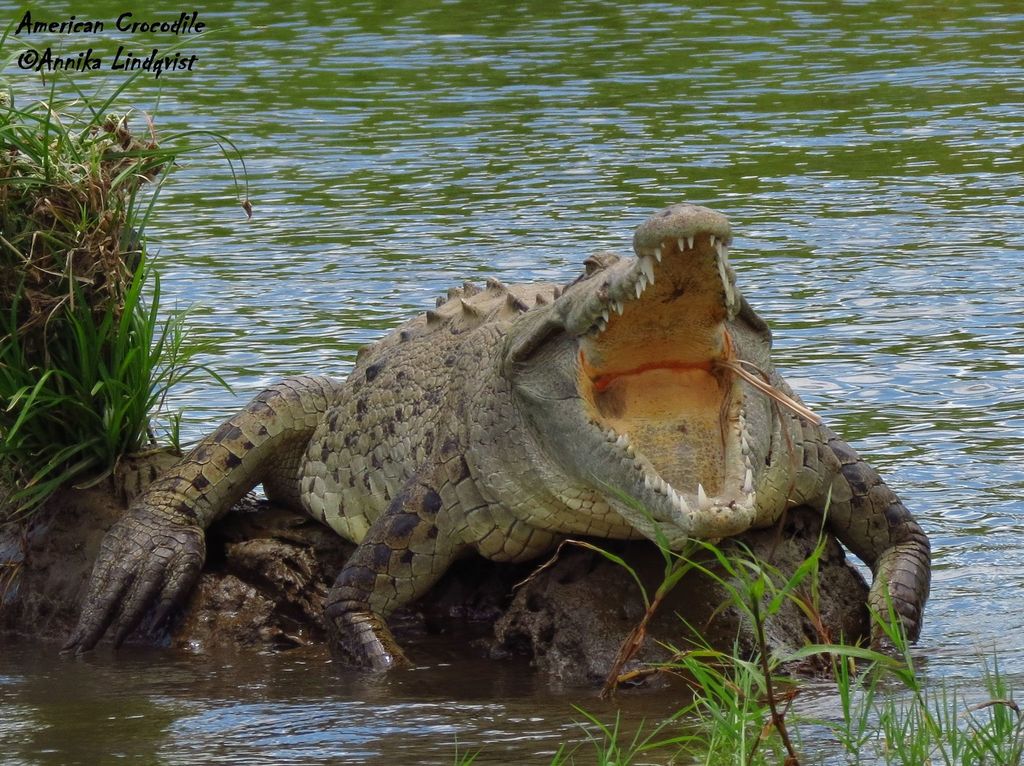
Photos show the species, not always the places on this page.
Length
Adult males are usually about 2.9 to 4.1 m (9 ft 6 in to 13 ft 5 in), and females rarely exceed 3.8 m (12 ft 6 in). A male of 4.83 m (15 ft 10 in) has been measured in Costa Rica. Claims of 6 to 7 m are unverified
Weight
Adult males typically weigh up to about 400 kg (880 lb). The 4.83 m male weighed about 538 kg (1,186 lb). Hatchlings weigh about 60 g (2 oz)
Next to a person
A typical adult male is about twice as long as an adult is tall, and as heavy as several adults
What it eats
An opportunistic predator. Adults take fish, crabs, birds, turtles, snakes and small mammals, while young crocodiles eat mostly aquatic invertebrates and small fish. In Florida, mullet and large crabs are important prey, and in Haiti young crocodiles lived mostly on fiddler crabs.
Around people
Calm, give space
How it lives
American crocodiles do not form social groups, although animals may gather to feed or bask. They mate in late autumn or early winter. In February or March females build nests of sand, mud and plant matter beside the water, dig a hole and lay about 30 to 70 eggs (average clutch 38). The eggs incubate for about 75 to 80 days and hatch near the first summer rains. Hatchlings call from inside the eggs, and the mother opens the nest and carries them to the water in her mouth. Females mature at about 2.8 m (9 ft 2 in). In a long Florida study, hatchling survival was about 25 percent and rose to near 90 percent by year six.
Where it goes
Sources I opened describe a coastal species that moves between mangroves, lagoons, river mouths, cays and open water, and it can cross the sea between islands. Crocodiles seen in Grand Cayman are thought to have swum from Cuba. I did not find movement data specific to Jardines de la Reina.
We only draw a journey on the map when scientists have tracked it or clearly documented it. For this animal we have not found one yet.
Populations
The IUCN lists the American crocodile as Vulnerable (2022 assessment). Wikipedia gives about 5,000 mature individuals as of 2020, and notes that population data are limited outside Florida. In the United States it was moved from endangered to threatened in 2007. In Florida, fewer than 30 nests were counted in the 1970s, and numbers have since grown, but about two thirds of recorded deaths in southern Florida are road collisions. On Hispaniola it survives mainly in two lakes. Cuba also holds the Critically Endangered Cuban crocodile. Genetic work shows the Greater Antillean animals, including those in Cuba, form a distinct lineage from continental ones, with 5.4 percent divergence. Wikipedia notes that Jardines de la Reina has crocodiles, but I did not find a count for the park.
Meet it respectfully
Watch from a boat or the shore with a guide who knows the site, and keep well back, especially near nesting banks. Females guard their nests fiercely, so never approach a nest or hatchlings. Never feed, bait, tease or swim near crocodiles. American crocodiles tend to be shy and move away from people, but they are large wild predators. Follow your guide and local rules.
Fun fact
Tap the bulb to light it up.
It is one of only two crocodile species that commonly live in sea water, helped by salt glands under the tongue. The other is the saltwater crocodile.
While basking, an American crocodile often rests with its mouth wide open, which helps it manage its body temperature.
A 2018 genetic study found that American crocodiles in the Greater Antilles differ from continental ones by 5.4 percent, so the animals may be more than one species.
American crocodile in the Ocean Atlas
Places we have researched where this animal is recorded. It is never guaranteed, and some places are for watching from the boat only.
Travel with usComing soonTrusted referralExploringOn pause, story onlyEthics pass
Country colour: pink where we travel, blue where we are exploring or refer, grey for story only.
 Belize
 Colombia
 Costa Rica
 Cuba
Cuba Dominican Republic
 Ecuador
 El Salvador
 Guatemala
 Haiti
Haiti Honduras
 Jamaica
 Mexico
 Nicaragua
 Panama
 Peru
Peru United States
 Venezuela
Sources for this page
- US Fish and Wildlife Service, 2026
- IUCN Red List, 2022
- GBIF, IUCN Red List category record, 2026
- Wikipedia, American crocodile, 2026
- Briggs-Gonzalez et al., 2021, PLoS ONE
- Milián-García et al., 2018, PeerJ
- Wikipedia, Jardines de la Reina, 2026
Facts checked 5 October 2026. Photos: Unsplash licence, or Creative Commons as shown on each photo.
Work in ocean travel?
We are always happy to hear from exceptional local operators, accommodation, conservation organisations and destination experts. If your work fits responsible, small-group ocean travel, we would love to learn more.
Partner with Ocean CallingNew: tiger sharks in Fuvahmulah, January or March 2027
from CHF 2,900