
Blackchin guitarfish
Glaucostegus cemiculus
A shark-like ray that rests on sandy seabeds in coastal waters. It has become very rare across much of its range, and no sighting is a promise.
Critically Endangered (IUCN, 2019) means it faces an extremely high risk of extinction in the wild. Its numbers have fallen by more than 90 percent over three decades.
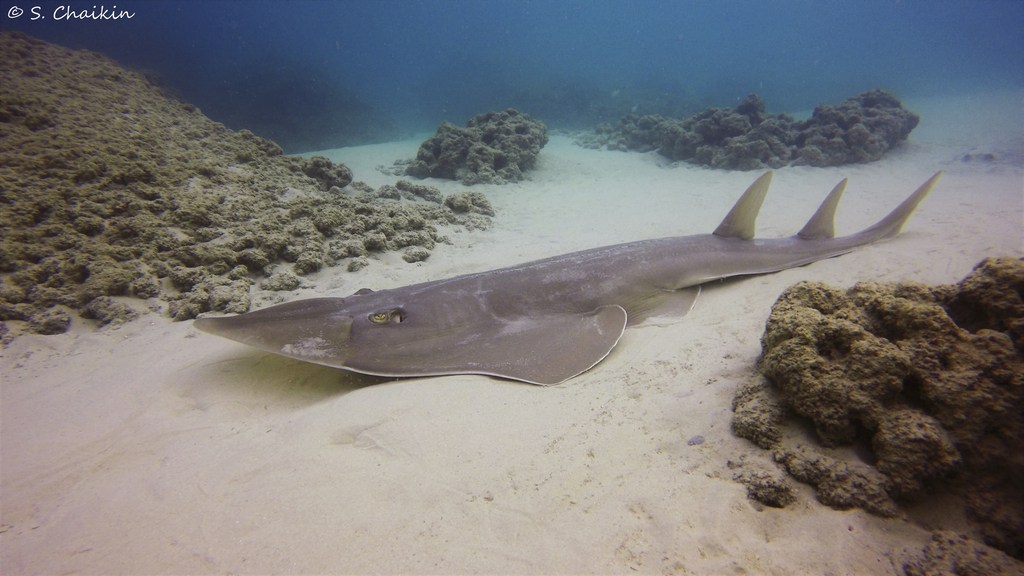
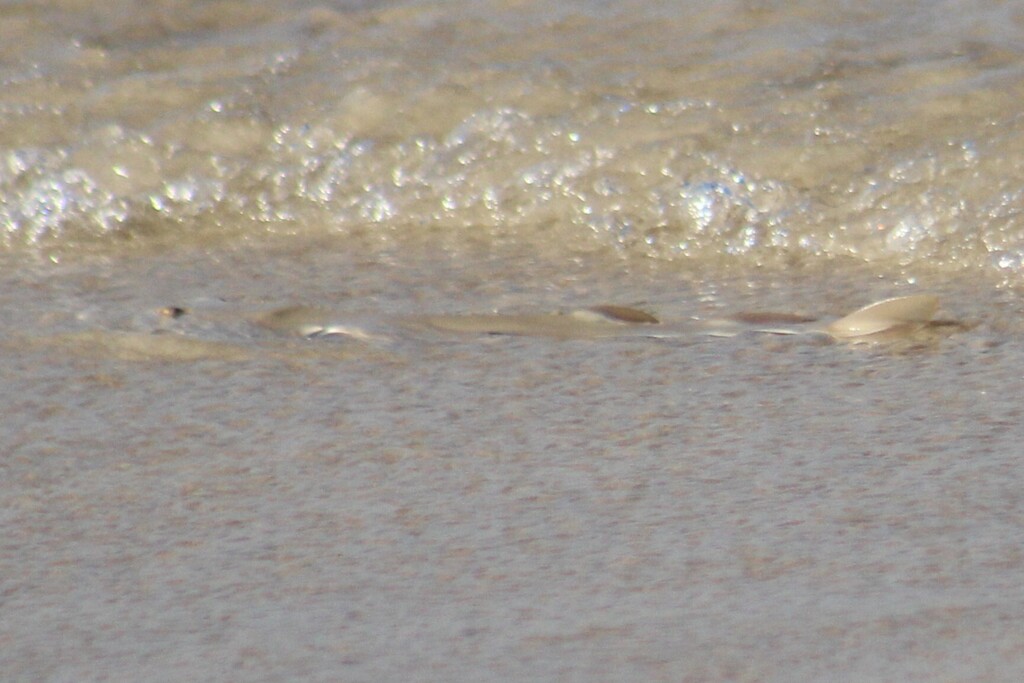
Photos show the species, not always the places on this page.
Length
Grows to about 180 cm (71 in), and larger ones are reported from Guinea and the Gulf of Gabes
Weight
Not given in the sources I read
Next to a person
About as long as a tall adult
What it eats
Shrimps, crabs and other crustaceans, squid and molluscs, found on sandy and muddy seabeds.
Around people
Rare, give space
How it lives
It is a bottom-dweller of coastal and continental shelf waters, down to about 100 m (330 ft). Young develop inside the mother and are born alive. In Senegal, females become mature at about 163 cm and have 4 to 6 young after 5 to 8 months. In Tunisia, females become mature at about 110 cm. It gathers seasonally to mate and give birth, which makes it easy to catch in trawls and gillnets. Since 2017, researchers in Israel have followed juveniles that often strand on its coast.
Where it goes
It gathers at certain seasons to mate and give birth, and researchers are mapping where juveniles go in the eastern Mediterranean. I did not find a described migration route.
We only draw a journey on the map when scientists have tracked it or clearly documented it. For this animal we have not found one yet.
Populations
It lives from northern Portugal to Angola, and in the Mediterranean. IUCN lists it as Critically Endangered (2019), after a fall of more than 90 percent over three decades. It has disappeared from the northern Mediterranean and the Balearic Islands, and catches in Africa are falling too. The eastern and southern Mediterranean remain important. It is listed in CITES Appendix II and on CMS Appendix II (2024). The sources I opened did not give counts for The Gambia or Tunisia.
Meet it respectfully
If you see one resting on the seabed, stay back and do not touch, chase or ride it. Do not stir up sand around it or block its way. Never buy or eat guitarfish fins or meat. I did not read local rules for The Gambia or Tunisia, so follow your guide.
Fun fact
Tap the bulb to light it up.
Females become mature at about 163 cm in Senegal, but at about 110 cm in Tunisia.
Its fins are among the most valuable in the international shark fin trade, which is the main reason it is caught.
It is one of six Critically Endangered species in its family, and the only one in West Africa.
Blackchin guitarfish in the Ocean Atlas
Places we have researched where this animal is recorded. It is never guaranteed, and some places are for watching from the boat only.
Travel with usComing soonTrusted referralExploringOn pause, story onlyEthics pass
Country colour: pink where we travel, blue where we are exploring or refer, grey for story only.
 Angola
 Benin
Benin Cameroon
 Côte d'Ivoire
 Democratic Republic of the Congo
 Equatorial Guinea
 Gabon
Gabon Gambia
 Ghana
Ghana Guinea
 Guinea-Bissau
 Israel
 Liberia
 Mauritania
 Nigeria
 Republic of the Congo
 Senegal
 Sierra Leone
 Togo
Togo Tunisia
Sources for this page
- Wikipedia, Blackchin guitarfish
- Rufford Foundation, Blackchin guitarfish in Ghana
- University of Haifa, Guitarfish project
- CMS, Glaucostegus cemiculus
Facts checked 5 October 2026. Photos: Unsplash licence, or Creative Commons as shown on each photo.
Work in ocean travel?
We are always happy to hear from exceptional local operators, accommodation, conservation organisations and destination experts. If your work fits responsible, small-group ocean travel, we would love to learn more.
Partner with Ocean Calling5-day freediving course in Bali
CHF 1,180