
European shag
Gulosus aristotelis
A dark bird with a green sheen, drying its wings on the rocks. Shags keep their own hours, and every sighting is a privilege, never a promise.
Least Concern (IUCN, 2018) means it is not close to being threatened at present, although its population is decreasing and storms and food shortages can cause heavy losses.
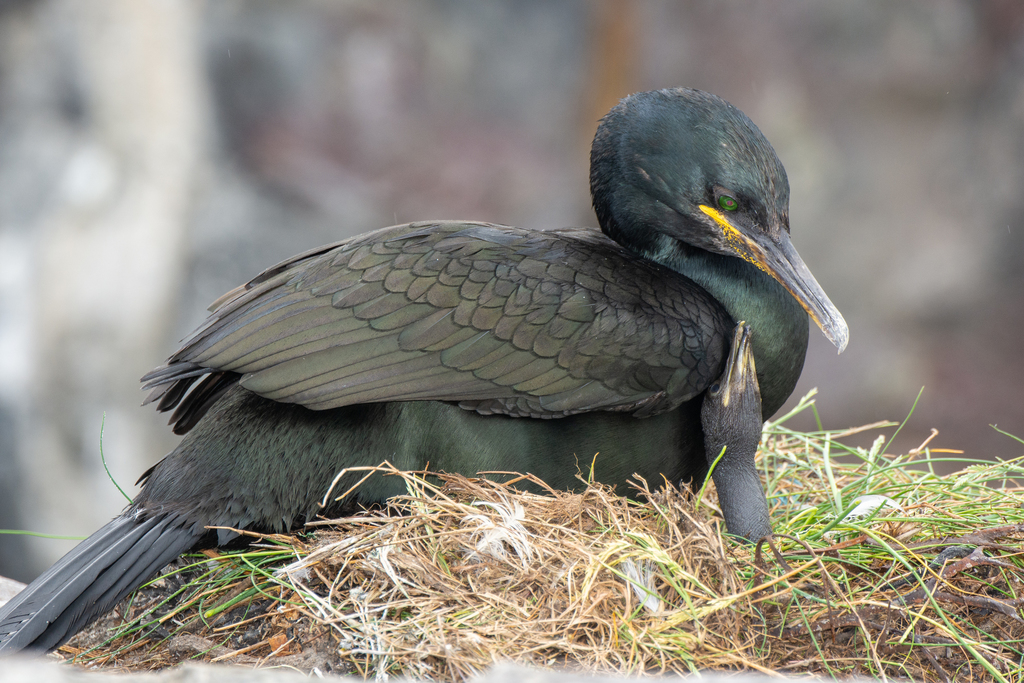
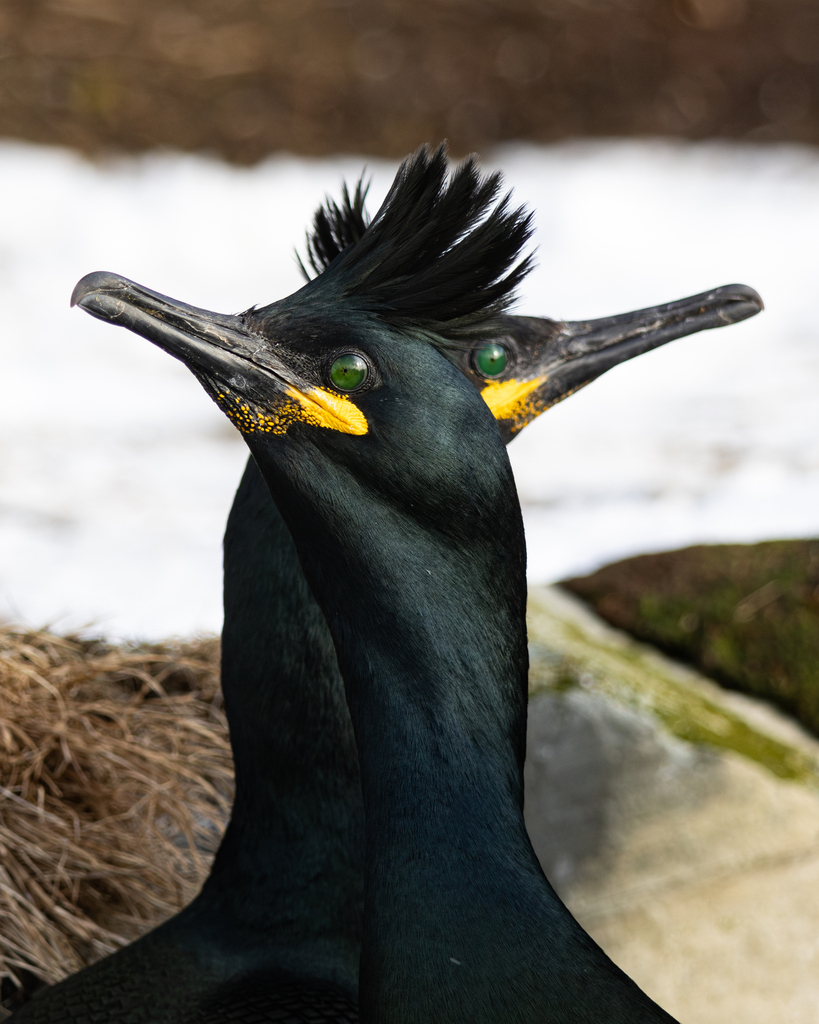
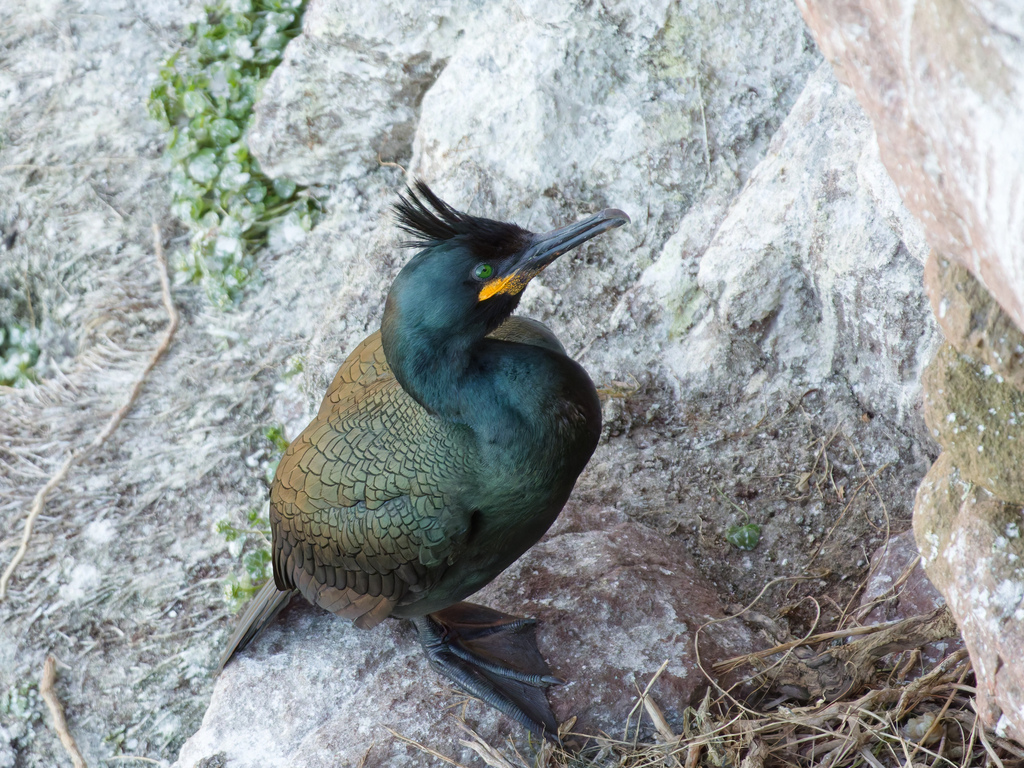
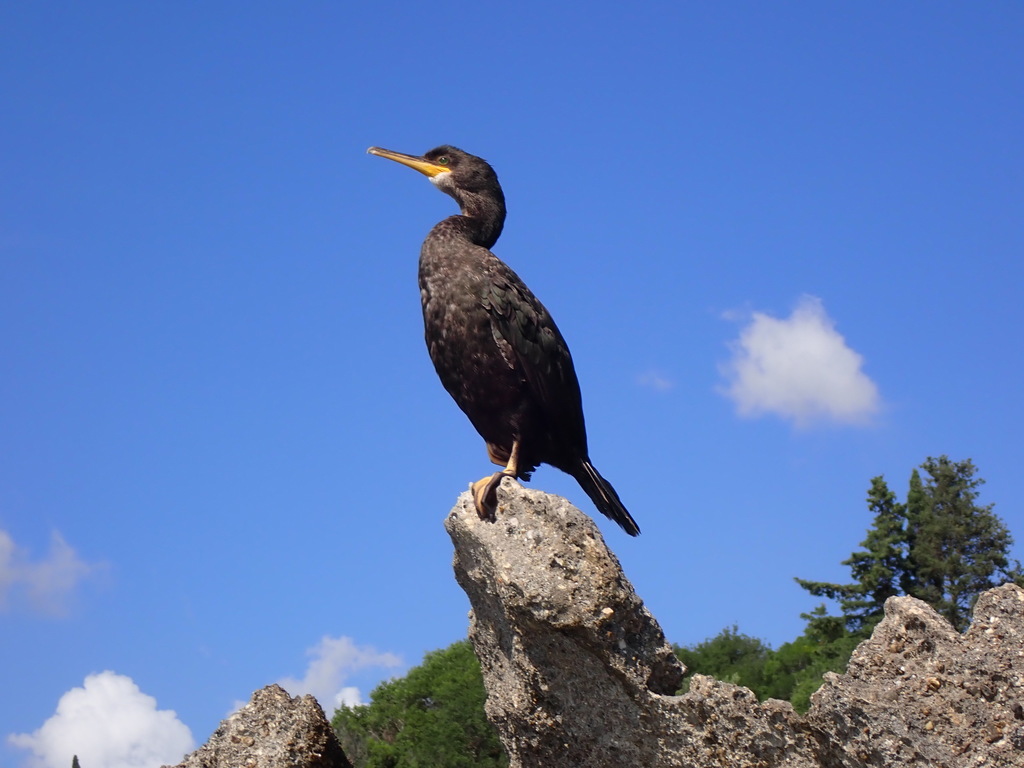
Photos show the species, not always the places on this page.
Length
About 68 to 78 cm (27 to 31 in) long, with a wingspan of about 95 to 110 cm (37 to 43 in)
Weight
Adults average about 1.9 kg (4.2 lb), with a range of 1.54 to 2.1 kg (3.4 to 4.6 lb) in British ringing data
Next to a person
Body about half an adult's height, and about as heavy as a 2 kg bag of sugar
What it eats
Small fish, mainly sandeels, caught by diving from the surface. It feeds mostly near the seabed and only in daylight. Shags have been recorded diving to 61 m, and typical dives on UK coasts last 20 to 45 seconds. At the Isle of May, Scotland, its diet changed between 1985 and 2014 from mostly sandeels to a wider mix of prey.
Around people
Calm, give space
How it lives
European shags are coastal birds that breed in colonies on rocky coasts and return to the same nest sites. Breeding runs from late February to late August, with three eggs, and one parent is always with the eggs or chicks. Birds start breeding at about four years old and typically live about 12 years. The oldest ringed bird in Britain and Ireland reached 29 years, 10 months and 25 days. Their plumage is only partly waterproof, so they often stand with wings held out to dry.
Where it goes
Mostly sedentary. Young birds disperse over short distances after breeding, and some adults make short moves in winter. Ringing shows that British shags mainly stay around British and Irish coasts, in inshore waters. The species lives along the Atlantic coast of Europe from Iceland and Finland to Morocco, and around the Mediterranean and parts of the Black Sea.
We only draw a journey on the map when scientists have tracked it or clearly documented it. For this animal we have not found one yet.
Populations
IUCN (2018): Least Concern, with a decreasing population. The world population is estimated at 230,000 to 240,000 individuals (2015), including 76,300 to 78,500 pairs in Europe. The UK had about 18,000 pairs in 2015 and is Amber listed. Scotland holds about 65% of the birds in Britain and Ireland, and its population fell by 22% between Seabird 2000 (1998 to 2002) and Seabirds Count (2015 to 2021). Storm wrecks cause heavy losses: in 2012 and 2013, study populations in Scotland fell by up to 53%, and State of the Coast Scotland reports an estimated 80% fall on the east coast after a wreck in autumn and winter 2023. Food supply, especially sandeels, and climate change are named as key threats.
Meet it respectfully
Shags rest on rocks and nest on ledges, so enjoy them from a distance with binoculars. Keep boats and kayaks well away from roosts and nesting ledges, and never chase, feed or bait them. Birds that are driven off can leave eggs and chicks exposed, so if a bird lifts its head or moves, you are too close. No sighting can be promised.
Fun fact
Tap the bulb to light it up.
Breeding adults grow a small crest and have a green sheen on their feathers.
European shags have been recorded diving to 61 m deep.
The British and Irish ringing record for a shag is 29 years, 10 months and 25 days.
European shag in the Ocean Atlas
Places we have researched where this animal is recorded. It is never guaranteed, and some places are for watching from the boat only.
Travel with usComing soonTrusted referralExploringOn pause, story onlyEthics pass
Country colour: pink where we travel, blue where we are exploring or refer, grey for story only.
 Albania
 Algeria
 Belgium
 Croatia
 Cyprus
 Denmark
 Faroe Islands
 France
 Germany
 Gibraltar
 Greece
 Iceland
 Ireland
 Israel
 Italy
Italy Libya
Libya Monaco
 Montenegro
 Morocco
 Netherlands
 Norway
 Portugal
 Romania
 Russia
 Slovenia
 Spain
Spain Sweden
 Tunisia
 Türkiye
 Ukraine
 United Kingdom
Sources for this page
- IUCN Red List (BirdLife International), 2018
- Wikipedia, 2026
- BTO BirdFacts, 2026
- State of the Coast Scotland, 2026
Facts checked 5 October 2026. Photos: Unsplash licence, or Creative Commons as shown on each photo.
Work in ocean travel?
We are always happy to hear from exceptional local operators, accommodation, conservation organisations and destination experts. If your work fits responsible, small-group ocean travel, we would love to learn more.
Partner with Ocean CallingShop with Ocean Calling
Visit the Ocean Calling storefront on Amazon.
As an Amazon Associate I earn from qualifying purchases. You are not only choosing products that respect the ocean, you are also helping us keep going: paying our local partners fairly and keeping our retreats ethical, sustainable and honestly priced for you. 💗