
Marbled electric ray
Torpedo marmorata
A marbled ray often rests under a thin layer of sand, so no sighting is ever a promise.
Vulnerable (IUCN, 2020) means it faces a high risk of extinction in the wild. It is mainly caught as bycatch in bottom fishing gear.
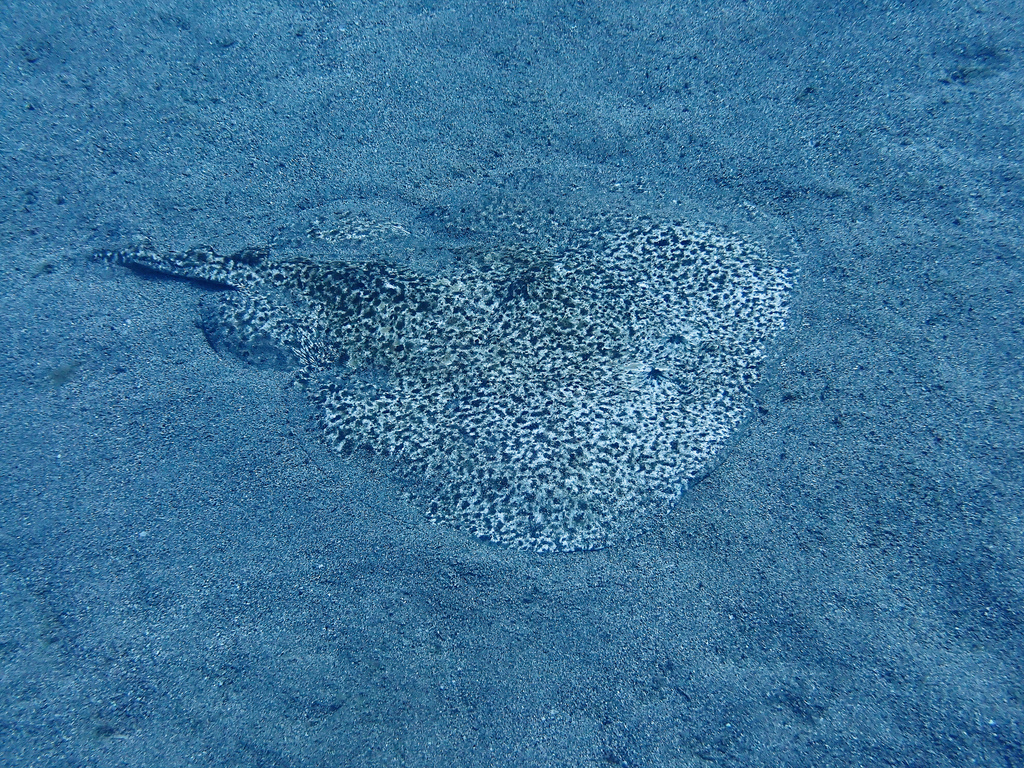
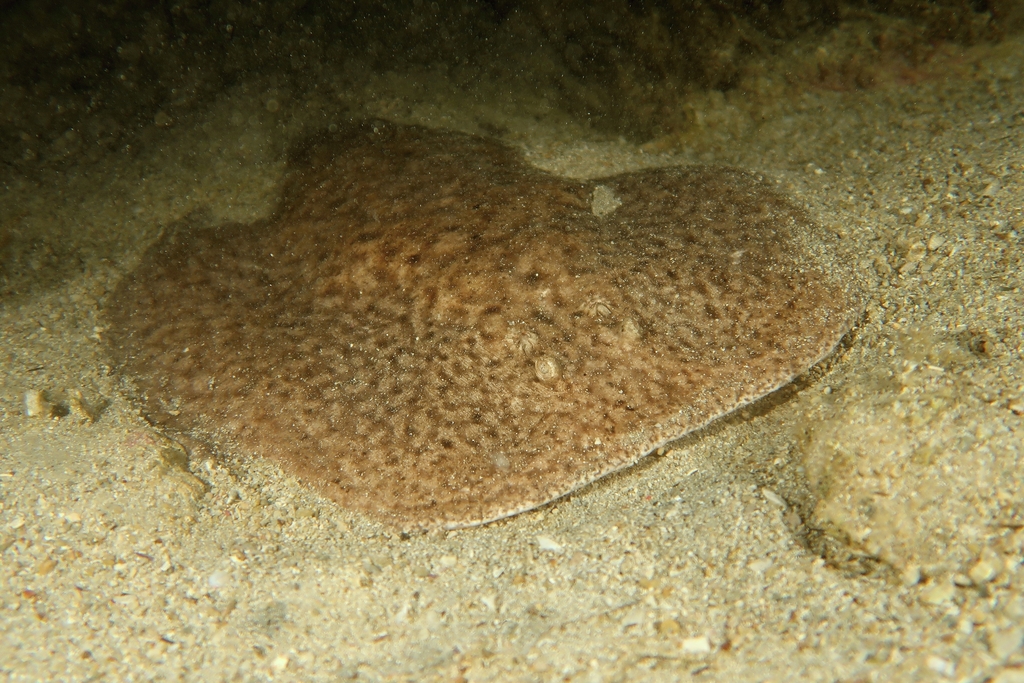
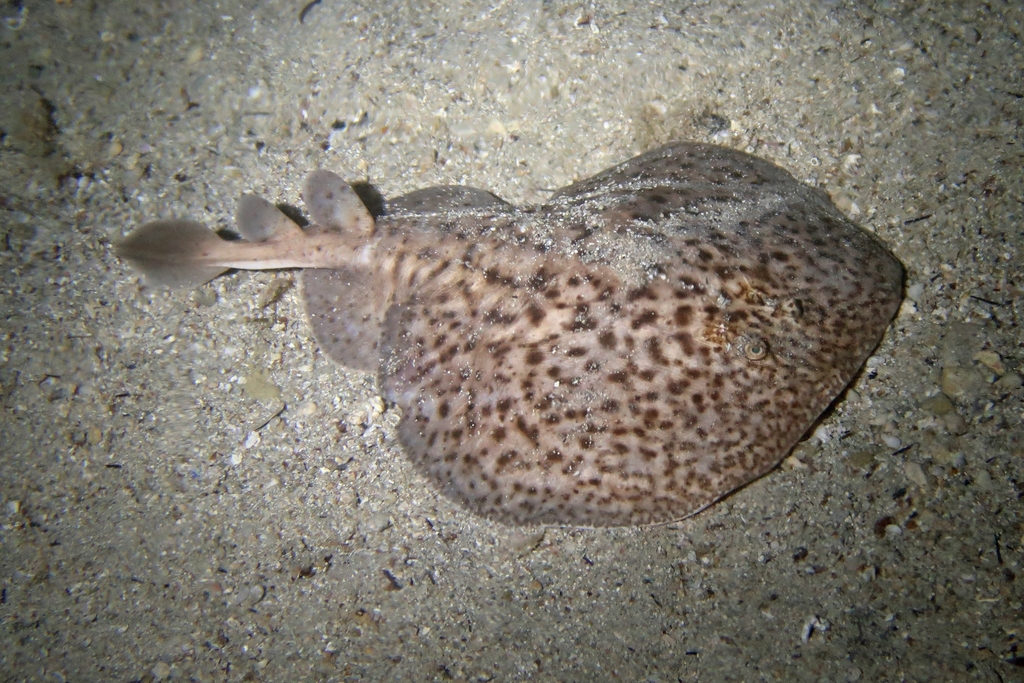
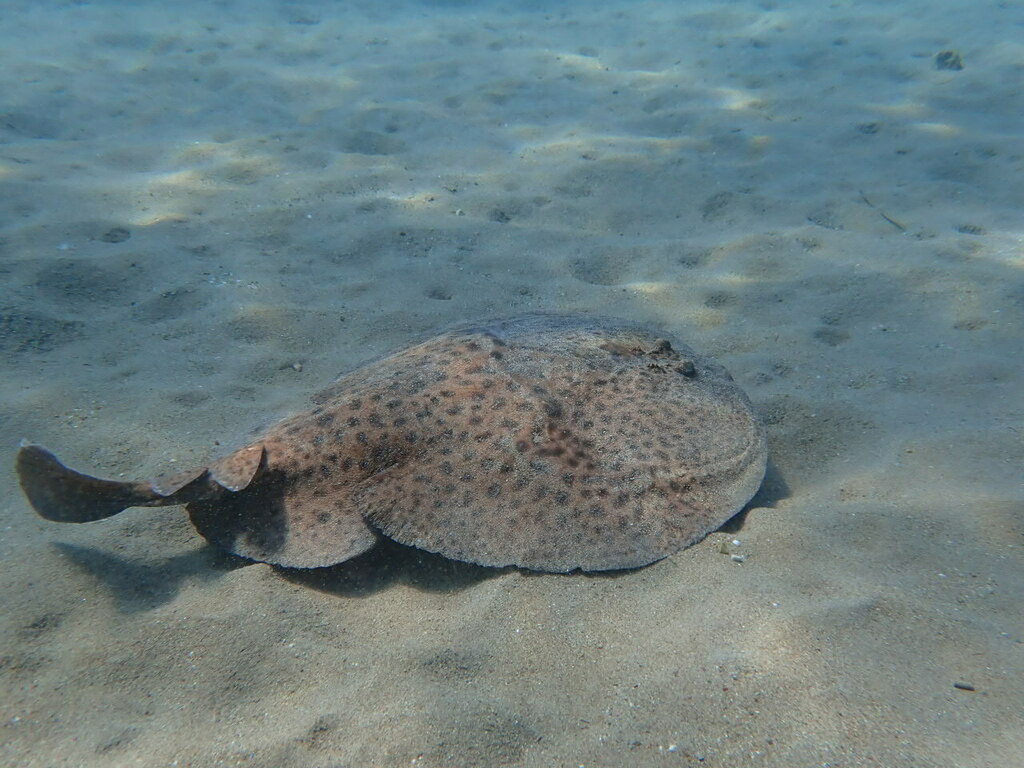
Photos show the species, not always the places on this page.
Length
Males about 36 to 38 cm (14 to 15 in) and females about 55 to 61 cm (22 to 24 in) (Wikipedia). The maximum is about 100 cm (39 in), with a common length of 60 cm (24 in) (FishBase)
Weight
Maximum published weight about 3 kg (6.6 lb) (FishBase)
Next to a person
A female is a little longer than an adult forearm, and the heaviest published weight is about three bags of sugar
What it eats
More than 90 percent small bottom-living fish such as gobies, hake, sea bass, mullets, sea breams and goatfish, plus some squid and cuttlefish (Wikipedia). It stuns prey with an electric discharge.
Around people
Look, never touch
How it lives
It lies partly buried by day with only its eyes and spiracles showing, and hunts at night (Oceana and FishBase). The electric organs can discharge 70 to 80 volts in measurements, with up to 200 volts estimated. Mating is from November to January, and gestation is 9 to 12 months. Litters are 3 to 32 pups, and newborns are 10 to 14 cm long. Males mature at about 5 years and females at about 12 years.
Where it goes
No long migrations are described in the sources opened. It is a nocturnal, solitary ray that buries itself in sand or sediment by day. FishBase says it avoids temperatures above 20 C. Reported depths are 10 to 30 m off Britain and Ireland, 20 to 100 m off Italy and down to 200 m off Tunisia, with a deepest record of 370 m (Wikipedia).
We only draw a journey on the map when scientists have tracked it or clearly documented it. For this animal we have not found one yet.
Populations
Vulnerable (IUCN, assessed August 2020 per FishBase). Wikipedia says it is still the most common electric ray in the northern Mediterranean. It is caught as bycatch in bottom fisheries and is mostly discarded, and the effect on populations is uncertain. Oceana names incidental capture as the main threat. No population number was found in the sources opened.
Meet it respectfully
Look but never touch. A marbled ray can give an electric shock, so never poke, lift or uncover one, and never feed it. Approach slowly with neutral buoyancy and avoid casting a shadow over it, because it is well camouflaged and can be easy to miss on sand. Follow your guide and any local rules. Sightings are never promised.
Fun fact
Tap the bulb to light it up.
By day it lies buried with only its eyes and breathing holes showing.
Its electric shock is described as painful but seldom life-threatening, and measured discharges are 70 to 80 volts.
Since classical times it was used as a remedy for headaches and gout.
Marbled electric ray in the Ocean Atlas
Places we have researched where this animal is recorded. It is never guaranteed, and some places are for watching from the boat only.
Travel with usComing soonTrusted referralExploringOn pause, story onlyEthics pass
Country colour: pink where we travel, blue where we are exploring or refer, grey for story only.
 Cameroon
 Côte d'Ivoire
 Croatia
 France
 Gabon
Gabon Ghana
Ghana Greece
 Guinea
 Guinea-Bissau
 Israel
 Italy
Italy Liberia
 Nigeria
 Portugal
 Senegal
 Sierra Leone
 Spain
Spain United Kingdom
Sources for this page
- Wikipedia, Marbled electric ray
- FishBase, Torpedo marmorata
- Oceana, Marbled electric ray
- Dive Malta, Marbled electric ray
- GBIF, IUCN Red List category
Facts checked 5 October 2026. Photos: Unsplash licence, or Creative Commons as shown on each photo.
Work in ocean travel?
We are always happy to hear from exceptional local operators, accommodation, conservation organisations and destination experts. If your work fits responsible, small-group ocean travel, we would love to learn more.
Partner with Ocean CallingNot sure where to go? Get your Ocean Match
from CHF 19