
Mauve stinger jellyfish
Pelagia noctiluca
A small purple-pink bell pulses through the water, glowing faintly in the dark. Mauve stingers drift as they like, and no sighting is a promise.
Not Evaluated (IUCN, checked October 2026) means the IUCN has not assessed this species, so it has no threat category.
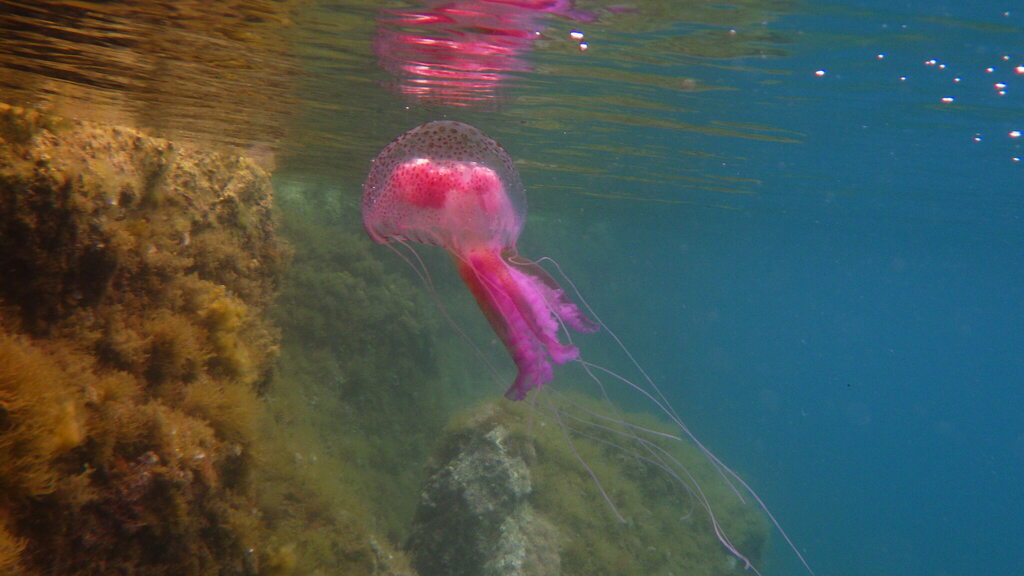
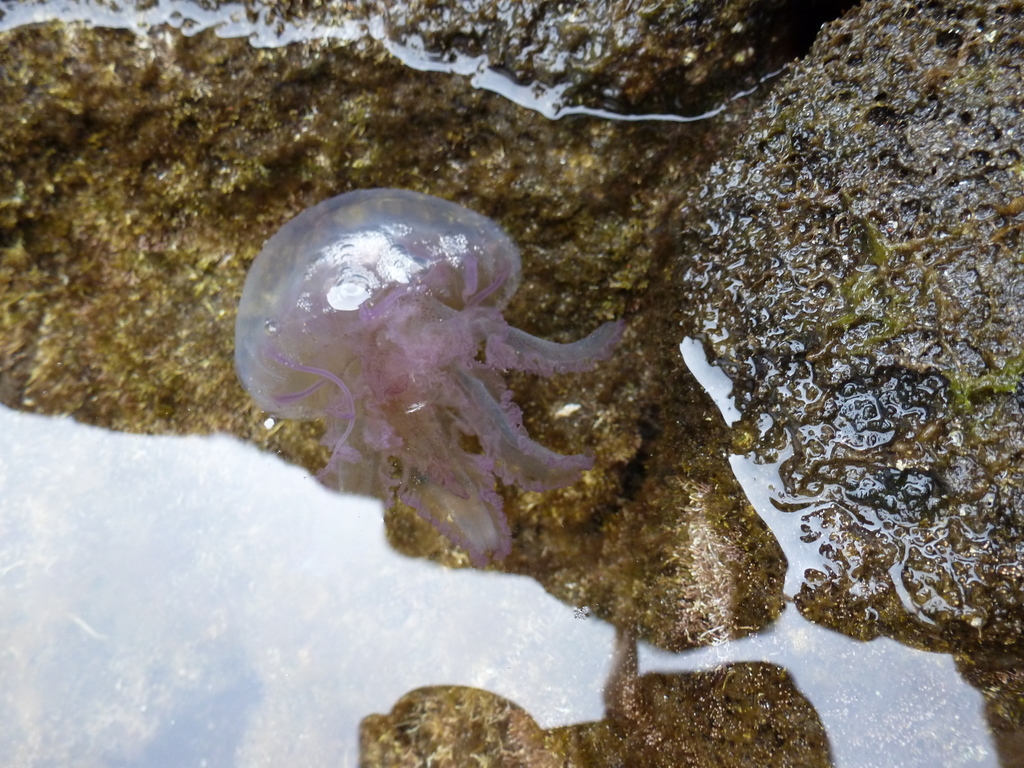
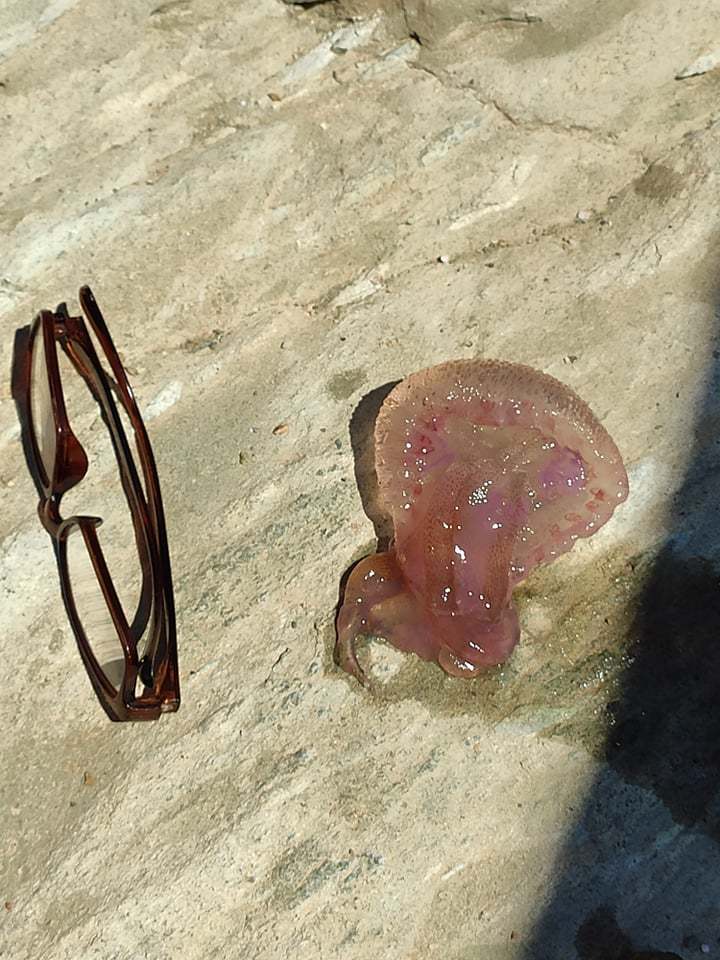
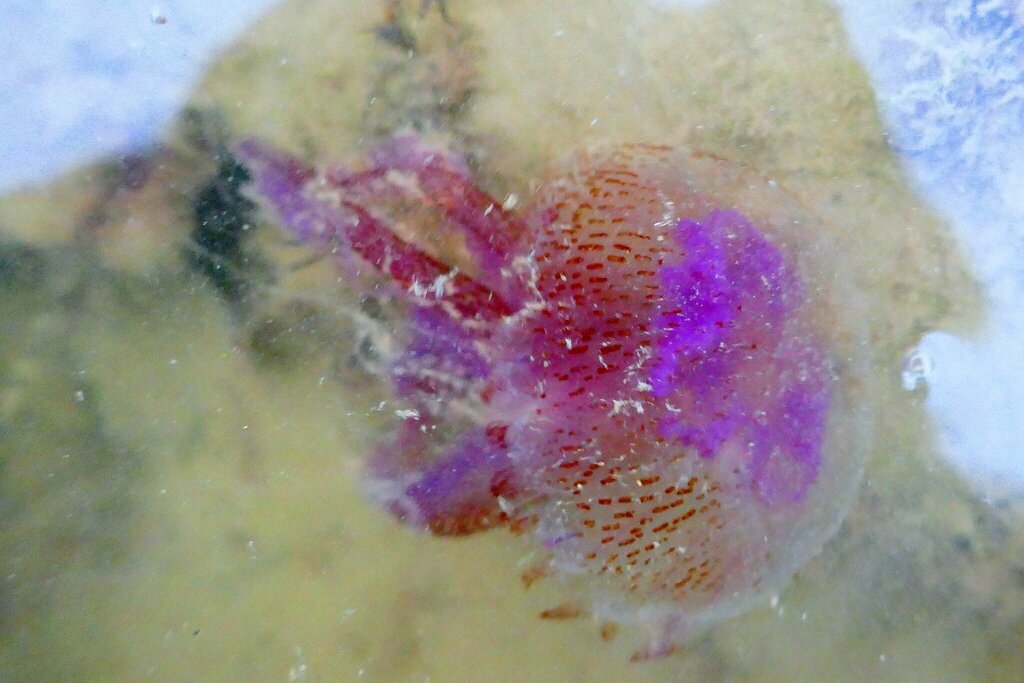
Photos show the species, not always the places on this page.
Length
Bell about 3 to 12 cm (1.2 to 4.7 in) across
Weight
Not given in the sources I read
Next to a person
The bell ranges from about the width of a large coin to about the width of a palm
What it eats
The sources I read do not describe its diet.
Around people
Look only, do not touch
How it lives
Unlike most jellyfish it has no polyp stage. Adults release sperm and eggs into the sea in daylight, and it takes about a month to grow from egg to adult. A typical life is about 9 months. It gives off a glow when the water is disturbed. Both the bell and the tentacles carry stinging cells.
Where it goes
The sources I read describe no set movements. Swarms appear from time to time and can affect beaches and fish farms.
We only draw a journey on the map when scientists have tracked it or clearly documented it. For this animal we have not found one yet.
Populations
It is known best from the North Atlantic, the Mediterranean and the Gulf of Mexico. Records from other oceans may be closely related species that are not yet named. It is a warm-water species of tropical and warm temperate seas. The IUCN has not evaluated it, and I found no population counts.
Meet it respectfully
Enjoy it from a distance. Do not touch, scoop or poke it, in the water or on the beach, because both the bell and tentacles sting. Stings cause pain that can last 1 to 2 weeks. If you are stung, ask a lifeguard or doctor for advice. Local beach flags and guides know when jellyfish are about.
Fun fact
Tap the bulb to light it up.
It has no polyp stage in its life cycle, which is unusual for a jellyfish.
Its name means "night light" and refers to its glow.
Colours range from mauve and purple to pink, light brown and yellow.
Mauve stinger jellyfish in the Ocean Atlas
Places we have researched where this animal is recorded. It is never guaranteed, and some places are for watching from the boat only.
Travel with usComing soonTrusted referralExploringOn pause, story onlyEthics pass
Country colour: pink where we travel, blue where we are exploring or refer, grey for story only.
 Algeria
 Australia
 Bermuda
 Canada
 Colombia
 Croatia
 France
 Greece
 Indonesia
 Ireland
 Israel
 Italy
Italy Malta
Malta Mexico
 Portugal
 Slovenia
 South Africa
 Spain
Spain United Kingdom
 United States
Sources for this page
Facts checked 5 October 2026. Photos: Unsplash licence, or Creative Commons as shown on each photo.
Work in ocean travel?
We are always happy to hear from exceptional local operators, accommodation, conservation organisations and destination experts. If your work fits responsible, small-group ocean travel, we would love to learn more.
Partner with Ocean Calling5-day freediving course in Bali
CHF 1,180