
Melon-headed whale
Peponocephala electra
Melon-headed whales travel in large, close-knit groups across tropical seas. Seeing a big group together is a special moment in deep water.
Least Concern (IUCN, 2019) means it is not at high risk of extinction worldwide today.


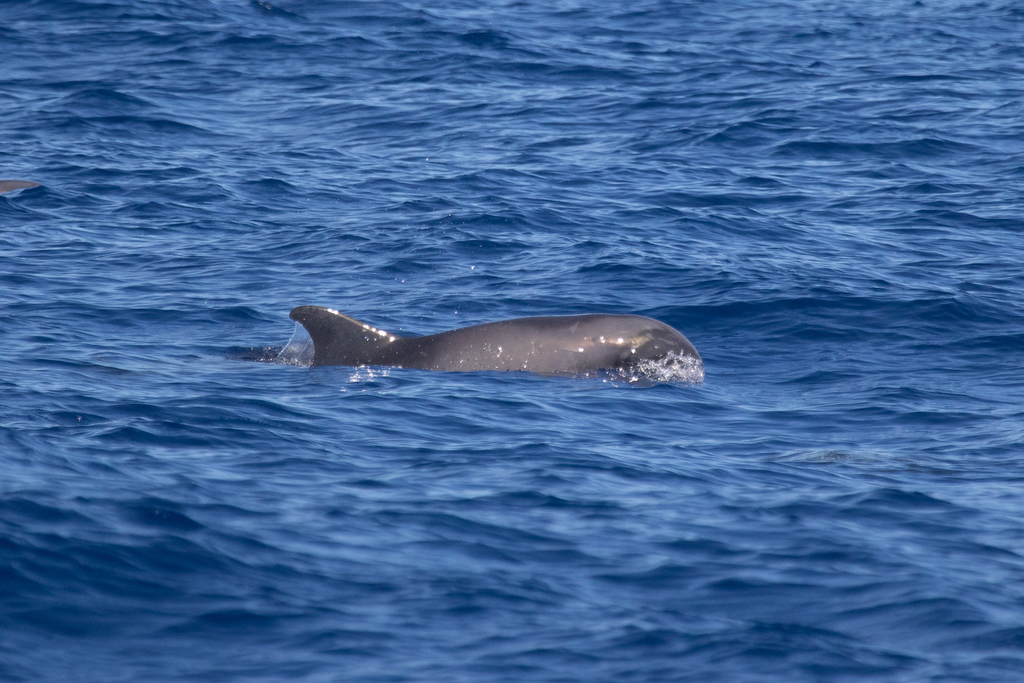
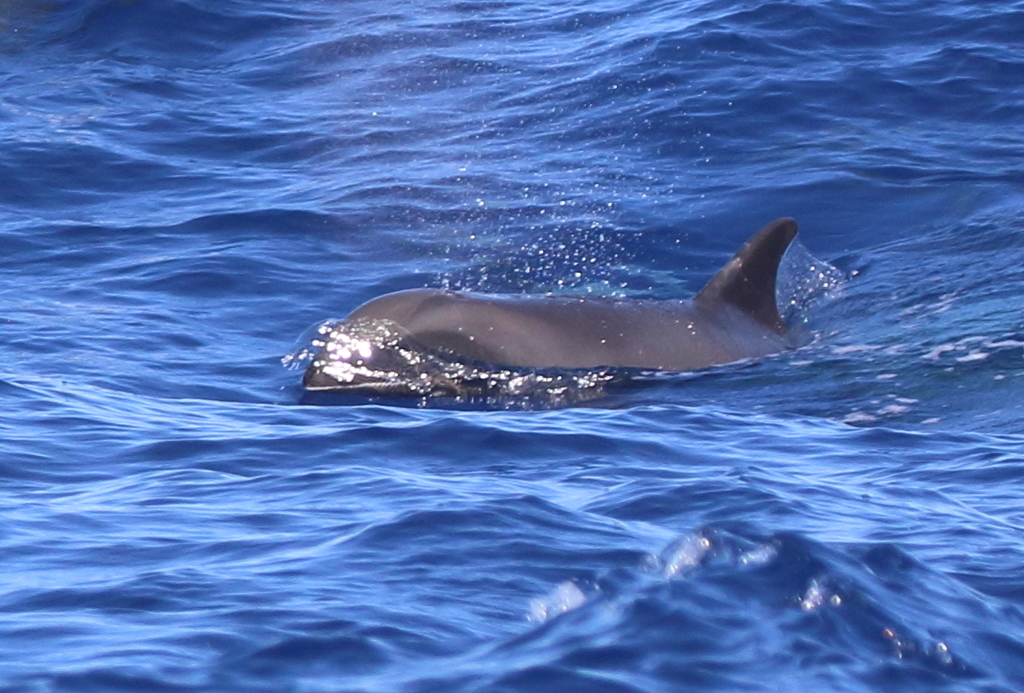
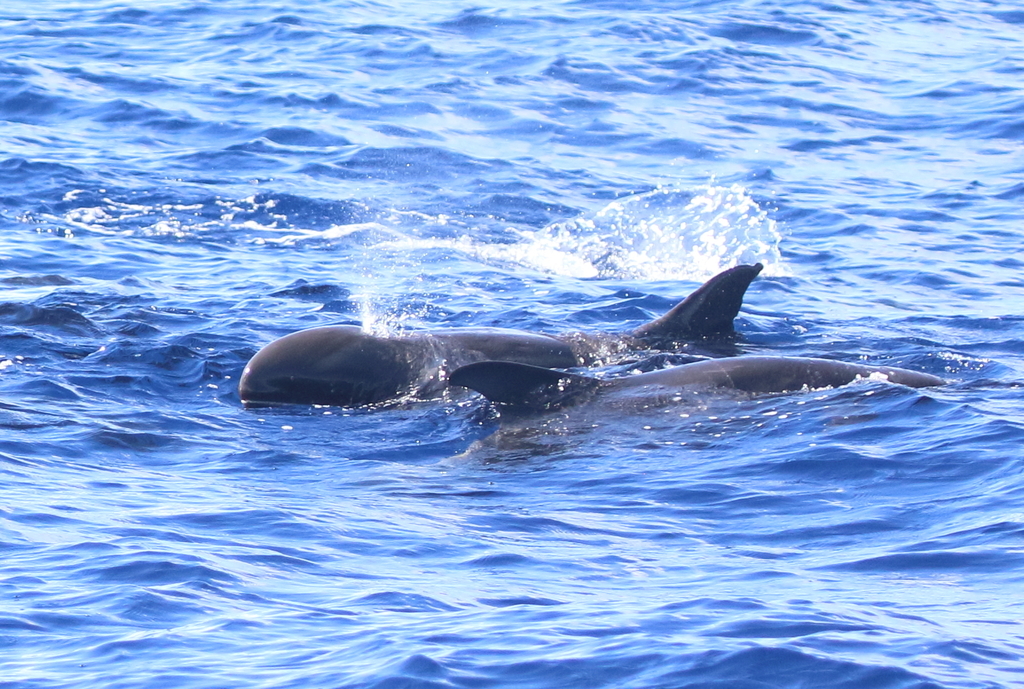
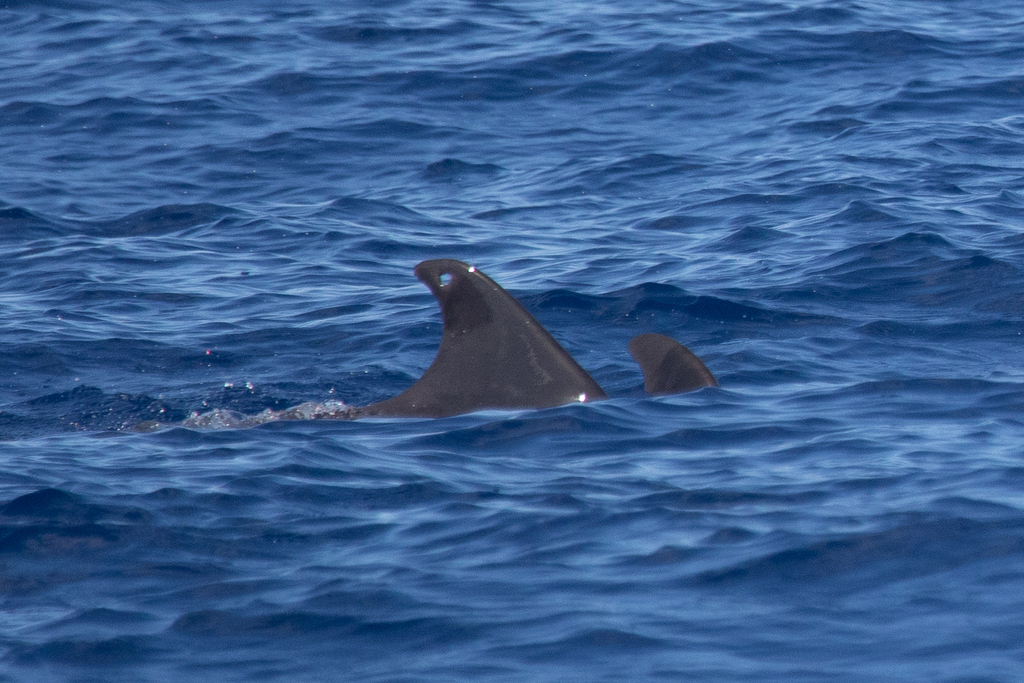
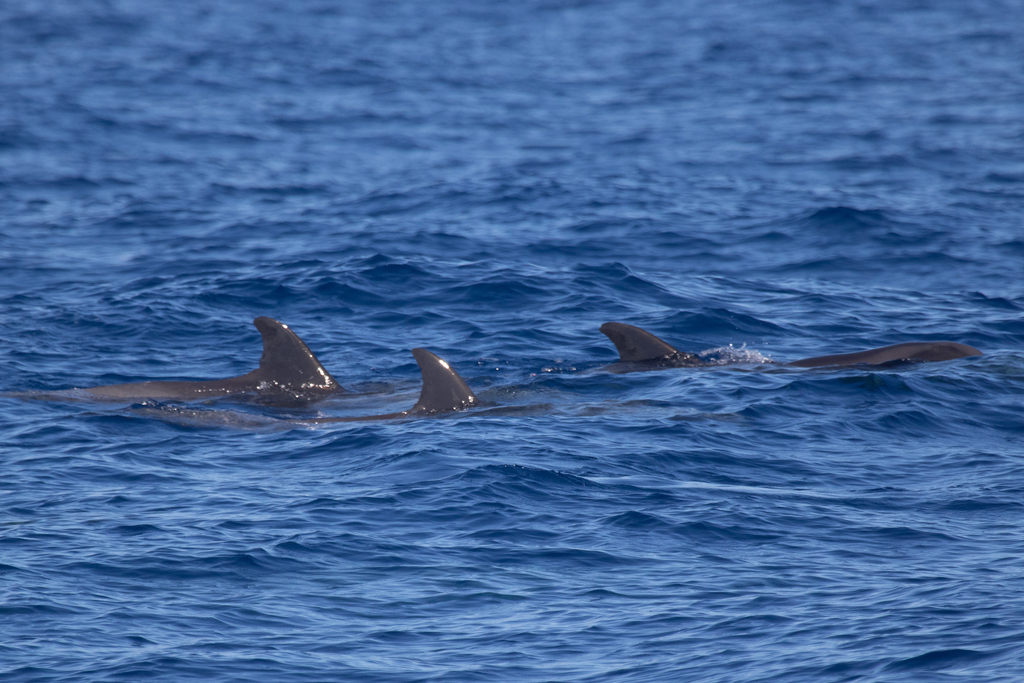
Photos show the species, not always the places on this page.
Length
Adults usually about 2.7 m (9 ft); males are longer than females. Maximum length not reliably published
Weight
About 210 kg (460 lb)
Next to a person
About one and a half adults long, and as heavy as roughly three adults
What it eats
Fish, squid, cuttlefish and shrimp.
Around people
Calm, give space
How it lives
Melon-headed whales are oceanic dolphins despite their name. By day they are often seen resting and socialising near the surface, and at night they often dive deeper to feed on fish, squid, cuttlefish and shrimp. Groups may number in the hundreds and sometimes more than 1,000, with smaller coordinated subgroups inside, probably organised around mothers and daughters. Pregnancy lasts about 12 months, with a calf every 3 to 4 years.
Where it goes
Melon-headed whales live in deep tropical and subtropical waters around the world. Some populations stay close to one area, such as a small resident stock off Hawaiʻi Island, while others range more widely. Patterns differ between regions, so one population does not show how all of them live.
We only draw a journey on the map when scientists have tracked it or clearly documented it. For this animal we have not found one yet.
Populations
A tropical species found worldwide, with strong differences between regional populations. Hawaiʻi has a small resident Kohala stock as well as a wider Hawaiian Islands stock. In Timor-Leste the species is confirmed in surveys, including a November 2016 survey around Dili, Tibar and Ataúro, but how often it can be met there is not known.
Meet it respectfully
Big, close-knit groups can be sensitive to boats. We approach slowly, never cut through or split a group, and never chase resting animals. We do not swim towards them unless local law clearly allows it, and the whales always choose how close they come. In US waters, NOAA guidance asks people to stay at least 50 yards (about 45 m) away and to watch for 30 minutes or less.
Fun fact
Tap the bulb to light it up.
Despite the name, melon-headed whales are oceanic dolphins.
Groups can number in the hundreds and sometimes more than 1,000, made of smaller subgroups moving together.
Melon-headed whales often travel with schools of Fraser's dolphins, and have also been seen in mixed groups with spinner and bottlenose dolphins.
When they are on the move, melon-headed whales make fast, low leaps out of the water as they swim.
Melon-headed whale in the Ocean Atlas
Places we have researched where this animal is recorded. It is never guaranteed, and some places are for watching from the boat only.
Travel with usComing soonTrusted referralExploringOn pause, story onlyEthics pass
Country colour: pink where we travel, blue where we are exploring or refer, grey for story only.
 Australia
 The Bahamas
 Brazil
 Comoros
 Costa Rica
 France
 French Guiana
 French Polynesia
 Ghana
 Guadeloupe
 Guam
 Indonesia
 Japan
 Madagascar
 Martinique
 Mauritius
 New Caledonia
 Réunion
 Taiwan
 United Kingdom
 United States
 Wallis and Futuna
Sources for this page
- NOAA Fisheries, 2026
- IUCN Red List
- IUCN SSC Cetacean Specialist Group, 2019
- NOAA Fisheries, Marine Mammal Stock Assessment Reports
Facts checked 26 September 2026. Photos: Unsplash licence, or Creative Commons as shown on each photo.
Work in ocean travel?
We are always happy to hear from exceptional local operators, accommodation, conservation organisations and destination experts. If your work fits responsible, small-group ocean travel, we would love to learn more.
Partner with Ocean Calling5-day freediving course in Bali
CHF 1,180