
Potato cod
Epinephelus tukula
A huge, blotched grouper that holds its patch of reef. Potato cod come and go on their own terms, and every sighting is a privilege, never a promise.
Least Concern (IUCN, assessed 2016, published 2018) means it is not close to being threatened. It is still vulnerable to spear fishing, and numbers at popular dive sites can fall.
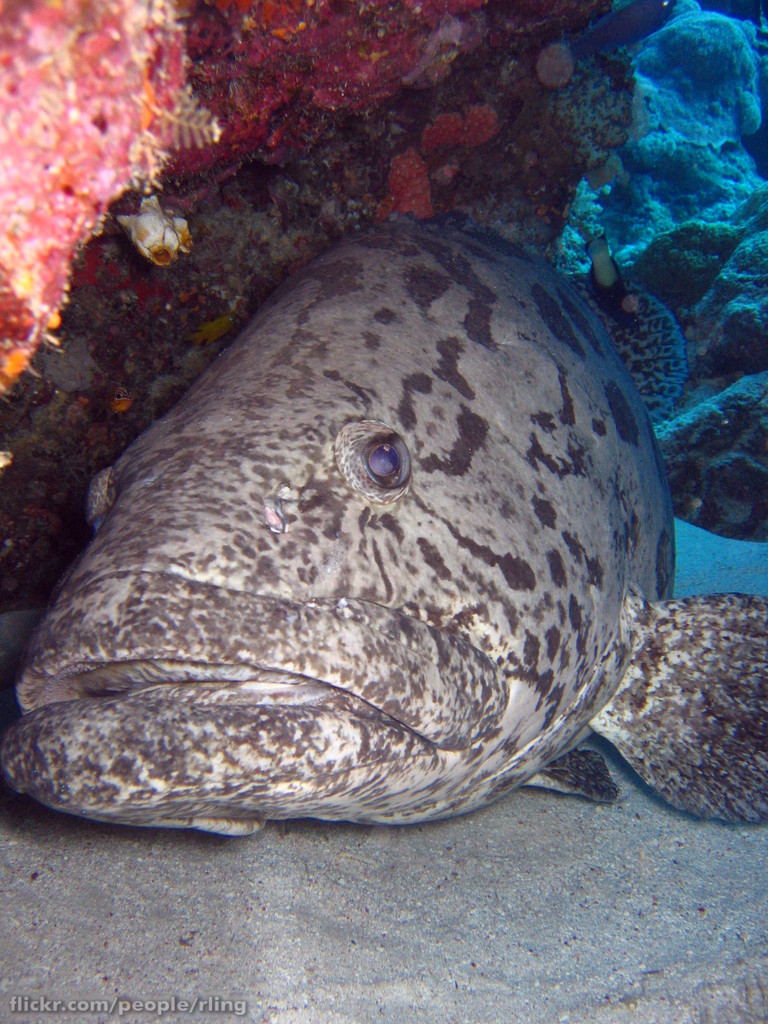
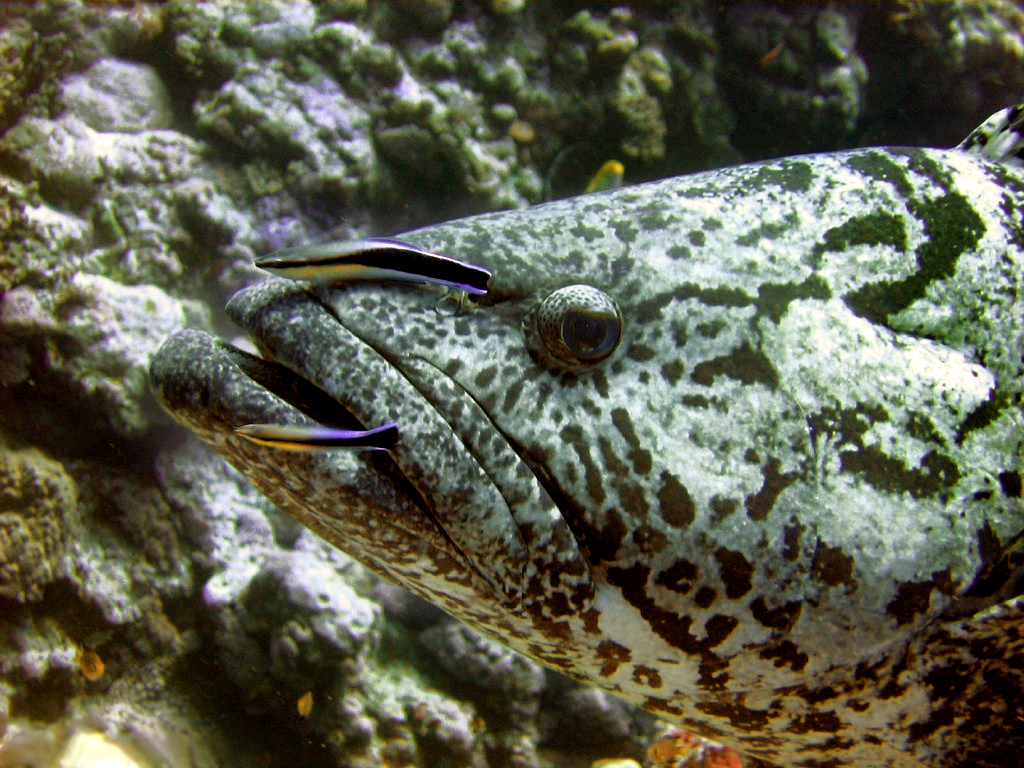
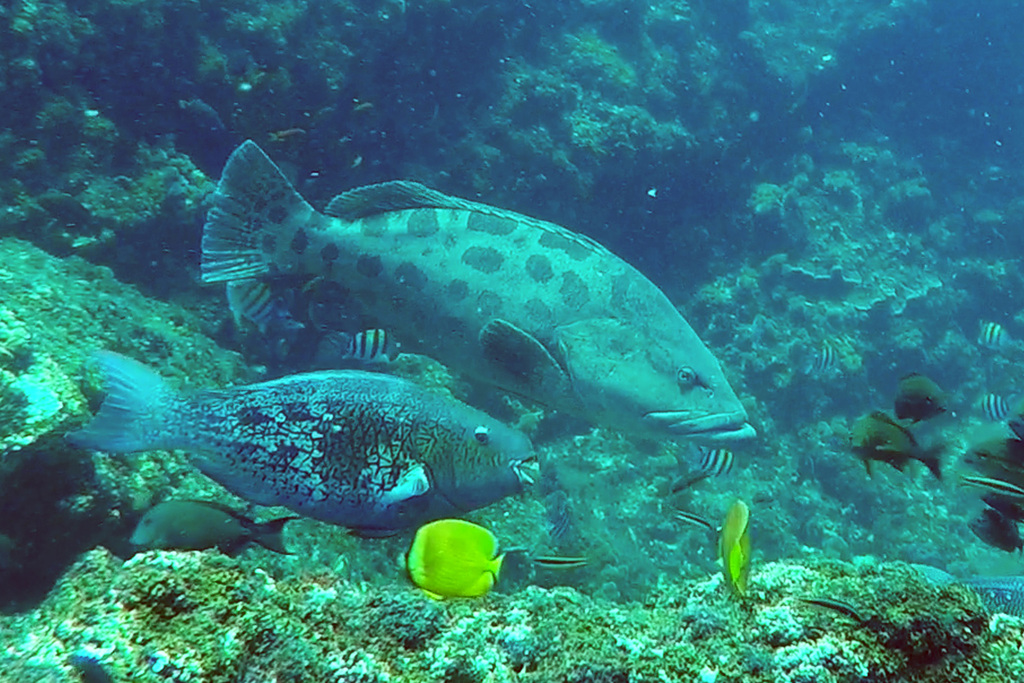
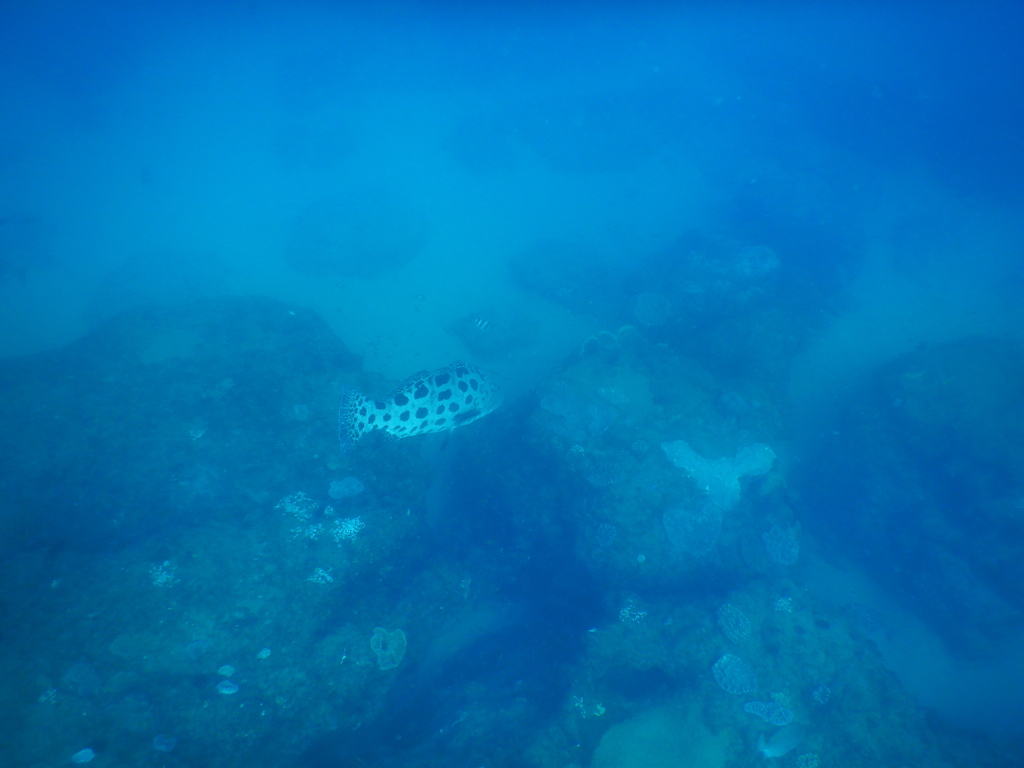
Photos show the species, not always the places on this page.
Length
Up to about 2 m (6.6 ft). Fish at Cod Hole are often described as 1.5 to 2 m (5 to 6.6 ft).
Weight
Up to about 110 kg (240 lb). Reports for Cod Hole vary widely, so the weight of any one fish is uncertain.
Next to a person
A large adult can be longer than a person is tall and as heavy as one or two adults.
What it eats
An ambush predator that swallows its prey whole: small rays, crabs, fish, squid, octopus and spiny lobsters.
Around people
Calm, look only
How it lives
Juveniles live in shallow tide pools, and adults live on coral reef channels and around seamounts with strong currents, from about 10 to 150 m (FishBase gives down to 400 m). Fish mature at about 90 to 99 cm and roughly 12 years, and the generation time is about 8.5 years. They are solitary and territorial, and described as aggressive towards intruders. Captive fish have changed sex, but spawning aggregations are unconfirmed for this species.
Where it goes
A solitary fish with a small home range, so an individual tends to stay around the same reef or cave. At Cod Hole on Ribbon Reef 10, the Great Barrier Reef, fish have been used to divers since the 1970s. They are described as not tame in any real sense.
We only draw a journey on the map when scientists have tracked it or clearly documented it. For this animal we have not found one yet.
Populations
Least Concern (IUCN, assessed 2016, published 2018). It is protected in South Africa and Australia, but it is exploited by local fisheries and is vulnerable to spear fishing. FishBase rates its fishing vulnerability as high (66 of 100) with low resilience. At Cod Hole, the average number seen per dive almost halved between 1992 and 1998 as visits grew. No global population count was found.
Meet it respectfully
Look and photograph only. Never feed, touch or bait it: feeding at Cod Hole made fish bold, and reef managers still debate it. It is territorial and can be aggressive towards intruders, so give it space and never corner it or reach for it. Stay off the coral, and follow your operator's briefing and local rules. No one can promise a sighting.
Fun fact
Tap the bulb to light it up.
The name comes from the large dark blotches on its body, which look like potatoes.
It matures at roughly 12 years old, at about 90 to 99 cm long.
Cod Hole fish became used to divers after filmmakers Ron and Valerie Taylor began visiting regularly in the 1970s.
Potato cod in the Ocean Atlas
Places we have researched where this animal is recorded. It is never guaranteed, and some places are for watching from the boat only.
Travel with usComing soonTrusted referralExploringOn pause, story onlyEthics pass
Country colour: pink where we travel, blue where we are exploring or refer, grey for story only.
 Australia
 Japan
Japan Mozambique
 Seychelles
 South Africa
 Tanzania
Sources for this page
- Wikipedia, Potato grouper
- FishBase, Epinephelus tukula
- Australian Museum, Potato Rockcod
- Wikipedia, Cod Hole
- Coral CoE, Ribbon Reefs and Cod Hole
- ReefGuide, Potato Cod
- GBIF, IUCN category lookup
Facts checked 5 October 2026. Photos: Unsplash licence, or Creative Commons as shown on each photo.
Work in ocean travel?
We are always happy to hear from exceptional local operators, accommodation, conservation organisations and destination experts. If your work fits responsible, small-group ocean travel, we would love to learn more.
Partner with Ocean Calling