
Spiny butterfly ray
Gymnura altavela
A wide, flat ray that lies camouflaged in the sand, and no sighting is ever a promise.
Endangered (IUCN, 2019) means it faces a very high risk of extinction in the wild, mainly from trawl and gillnet fishing. In some regions, including the Mediterranean and southwest Atlantic, it is Critically Endangered.
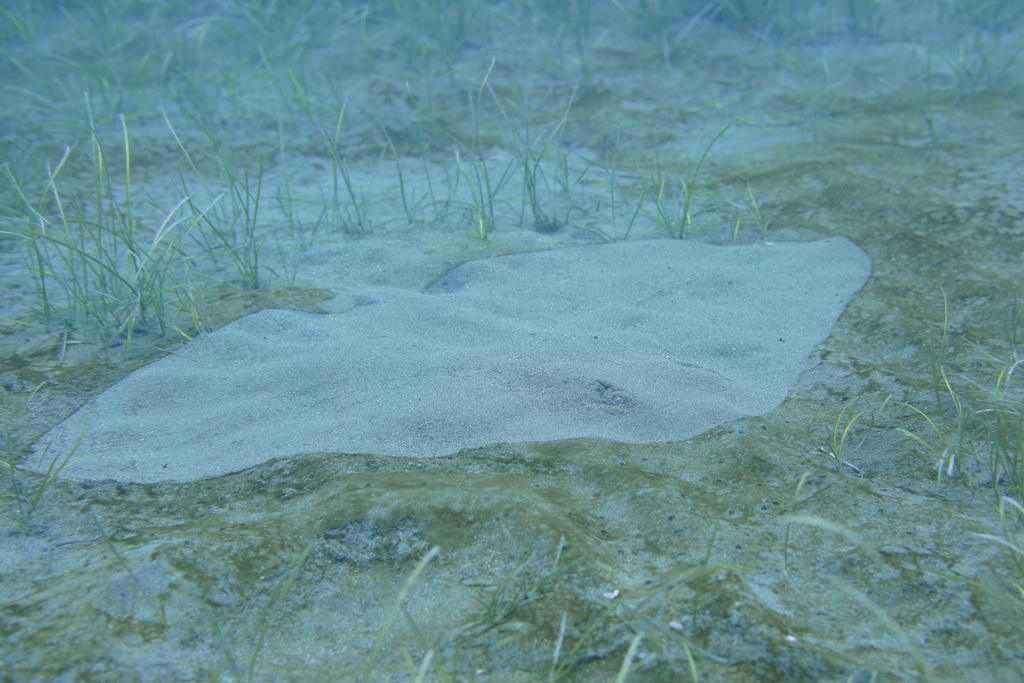
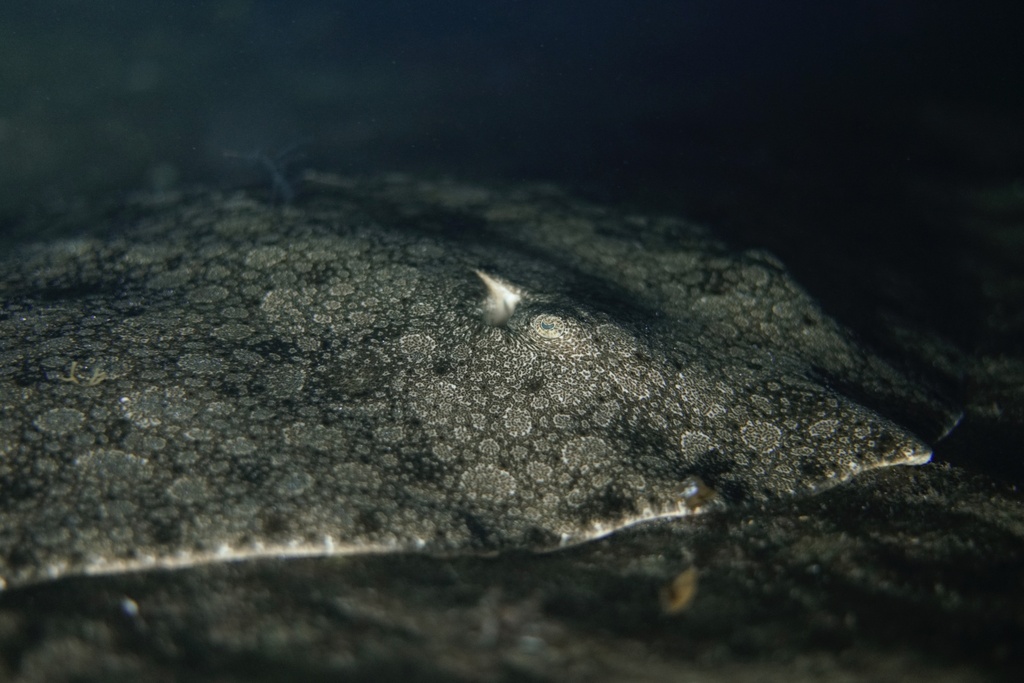
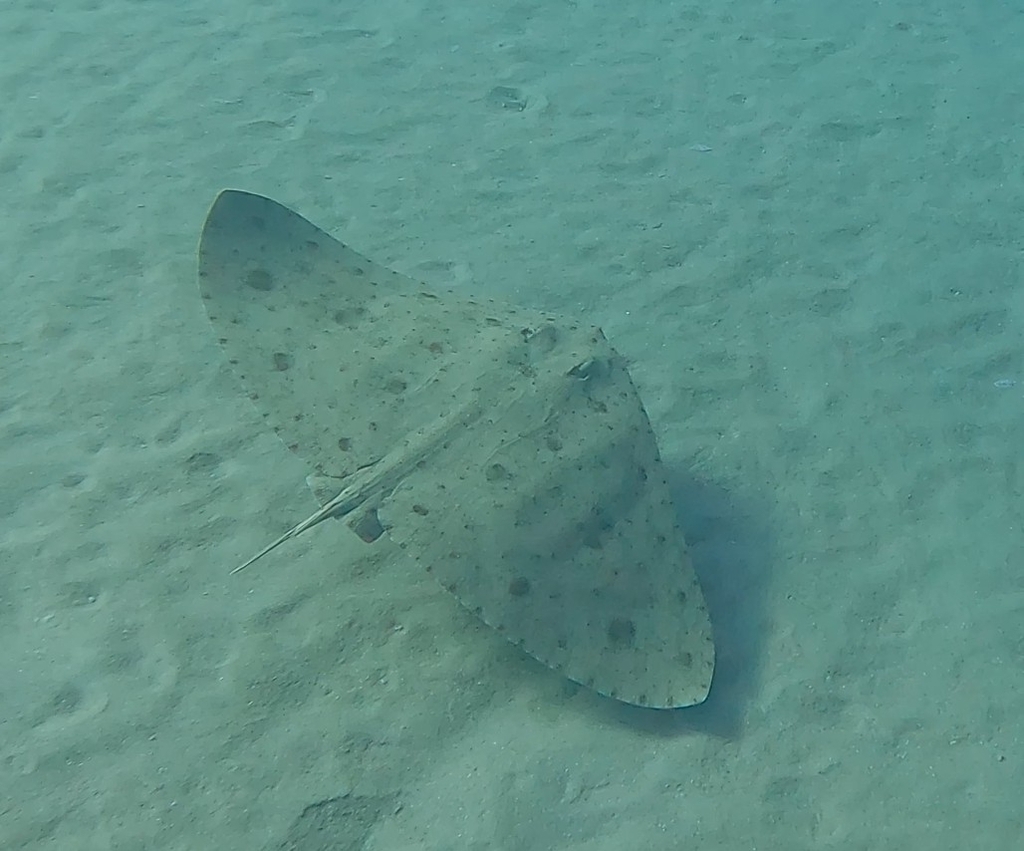
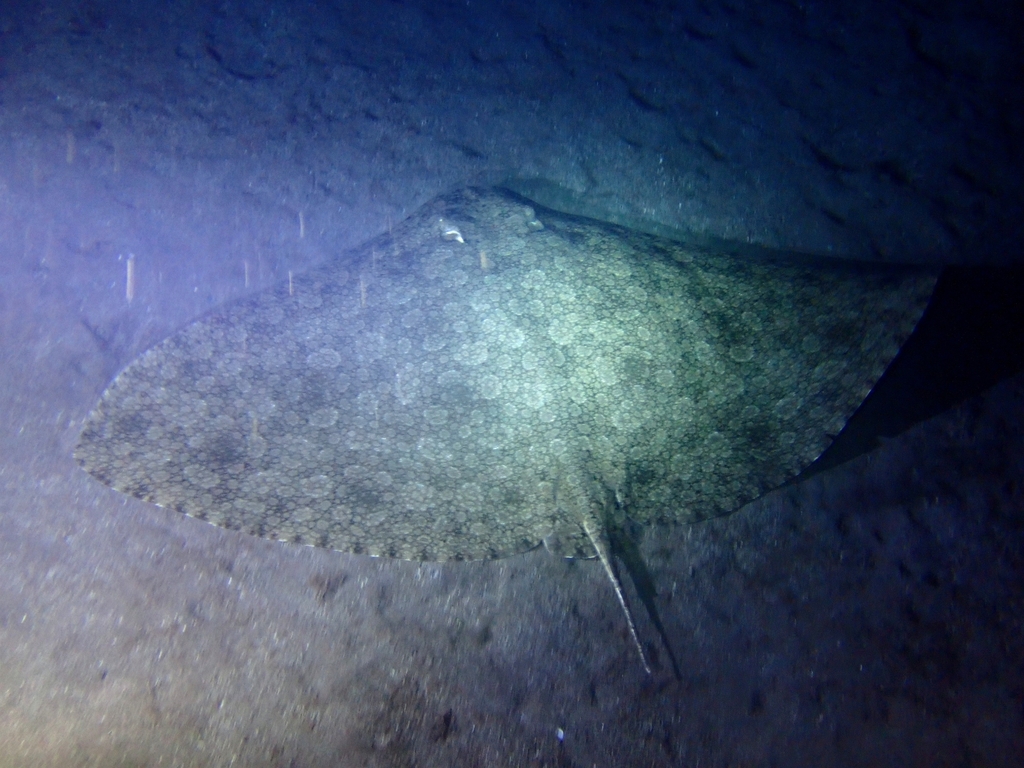
Photos show the species, not always the places on this page.
Length
Disc width is usually around 2 m (6.6 ft). Sources give a maximum from 2.2 m to 4 m (7.2 to 13 ft), and the biggest sizes are unconfirmed
Weight
Up to about 60 kg (132 lb)
Next to a person
A typical adult ray is about as wide as a tall adult is tall
What it eats
Fish, including small sharks, plus squid, crustaceans and molluscs. It hunts from the sand: it creeps toward prey, then spins and strikes with its pectoral fins.
Around people
Gentle, give space
How it lives
Found in coastal and brackish water over sand and mud, at about 5 to 100 m (16 to 330 ft). It hides by lying half buried. Females give birth to live young after a pregnancy of about 4 to 9 months. A litter is usually 2 to 6 pups, averaging about 4, and newborns are about 38 to 44 cm (15 to 17 in) across. Females grow larger than males. It is not aggressive. It has one or two serrated spines at the base of the tail, and a wound is painful but not lethal.
Where it goes
Lives close to the seabed in coastal water, buried in sand or mud. Males and females partly live apart, with females usually in deeper water except in the breeding season. The sources I read give no migration routes.
We only draw a journey on the map when scientists have tracked it or clearly documented it. For this animal we have not found one yet.
Populations
Endangered worldwide (IUCN, 2019). It used to be common across its range. Wikipedia reports that in the southwest Atlantic it is Critically Endangered, with catch rates down 99% since 1982, that in the Mediterranean it is Critically Endangered and now rare or absent in much of its former range, and that in West Africa it is Vulnerable. Trawls and gillnets are the main threats, and off the Canary Islands it has declined over about 50 years of fishing pressure. Numbers worldwide are unknown.
Meet it respectfully
It lies camouflaged on sand, so look where you put your feet in sandy shallows. A spine wound is painful. Watch from a distance, keep off the animal's path and never chase, touch, feed or bait it. No sighting is ever promised. I did not read any local viewing rules for this species.
Fun fact
Tap the bulb to light it up.
Its disc is at least 1.5 times wider than it is long.
It hides by lying half buried in sand and mud.
It has one or two serrated spines at the base of its tail, used only as a defence.
Spiny butterfly ray in the Ocean Atlas
Places we have researched where this animal is recorded. It is never guaranteed, and some places are for watching from the boat only.
Travel with usComing soonTrusted referralExploringOn pause, story onlyEthics pass
Country colour: pink where we travel, blue where we are exploring or refer, grey for story only.
 Brazil
 Cameroon
 Côte d'Ivoire
 Gabon
 Ghana
 Guinea
 Israel
 Liberia
 Mauritania
 Nigeria
 Senegal
 Sierra Leone
 Spain
 United States
Sources for this page
- FishBase, 2026
- Wikipedia, 2026
- Florida Museum, 2026
- Shorefishes of the Greater Caribbean, Smithsonian, 2026
- Loro Parque Fundacion, 2026
- GBIF and IUCN Red List category, 2026
Facts checked 5 October 2026. Photos: Unsplash licence, or Creative Commons as shown on each photo.
Work in ocean travel?
We are always happy to hear from exceptional local operators, accommodation, conservation organisations and destination experts. If your work fits responsible, small-group ocean travel, we would love to learn more.
Partner with Ocean CallingSwim with humpback whales in Moʻorea, September 2027
from CHF 4,500