
Spotted garden eel
Heteroconger hassi
Spotted garden eels rise from sandy burrows in colonies, swaying like grass as they pick plankton from the current. Approach slowly, or the whole meadow vanishes.
Least Concern (IUCN, 2019) means it is not at high risk of extinction worldwide today.
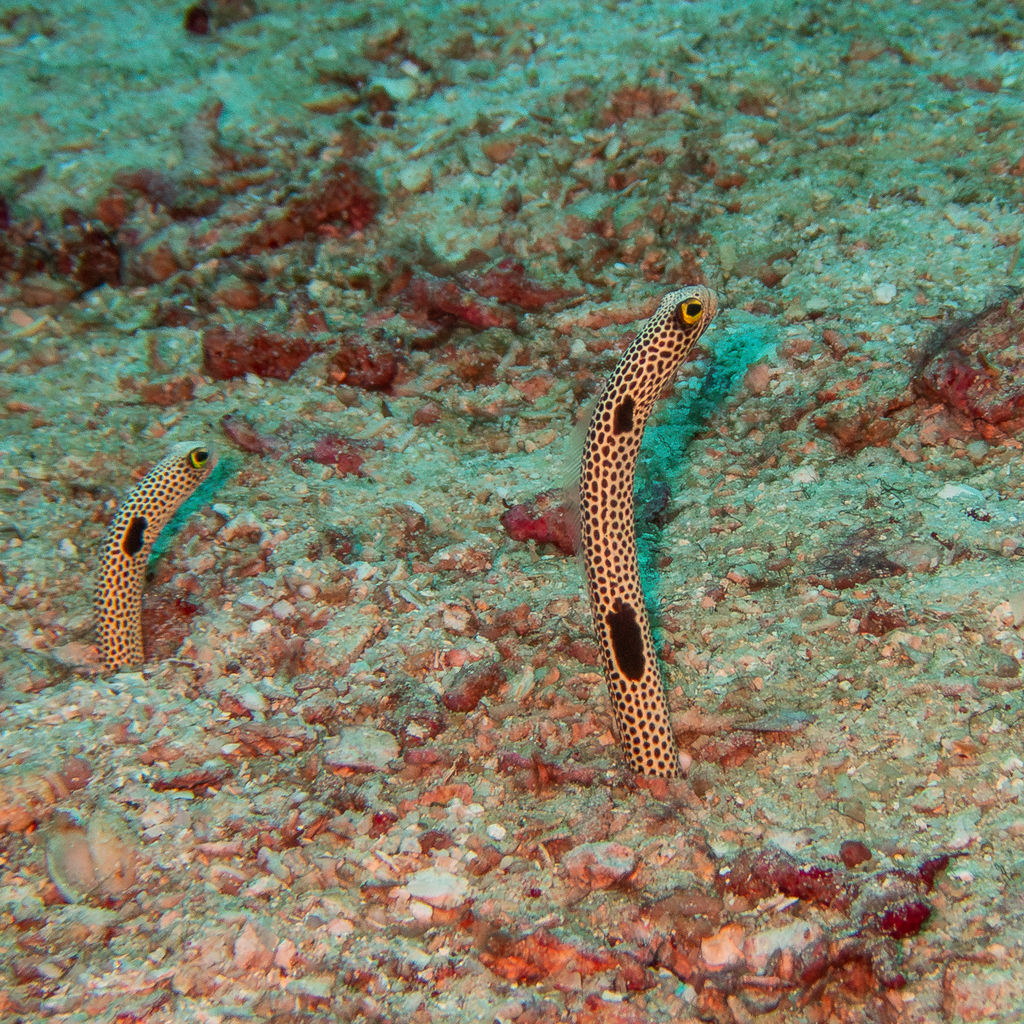
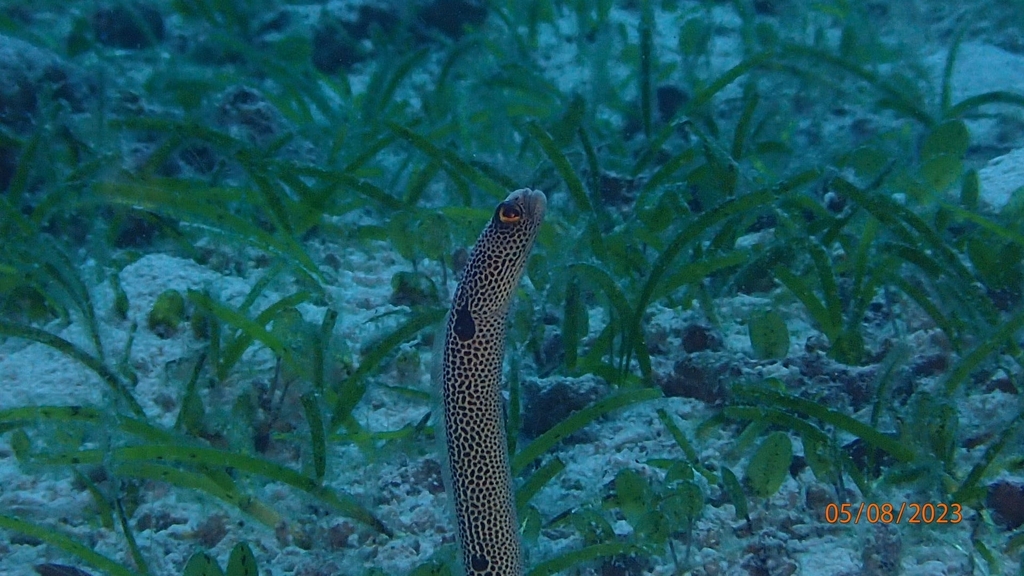
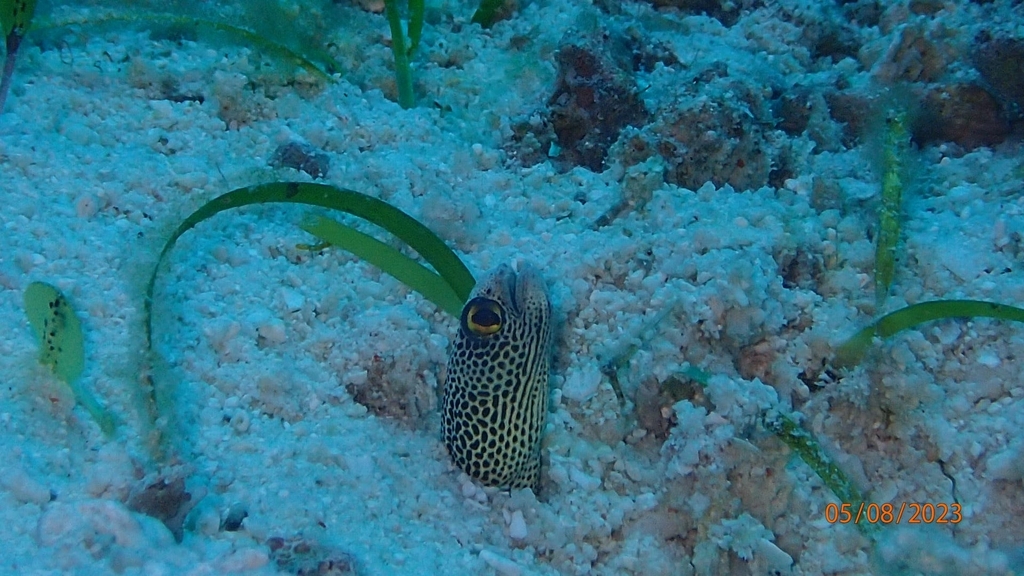
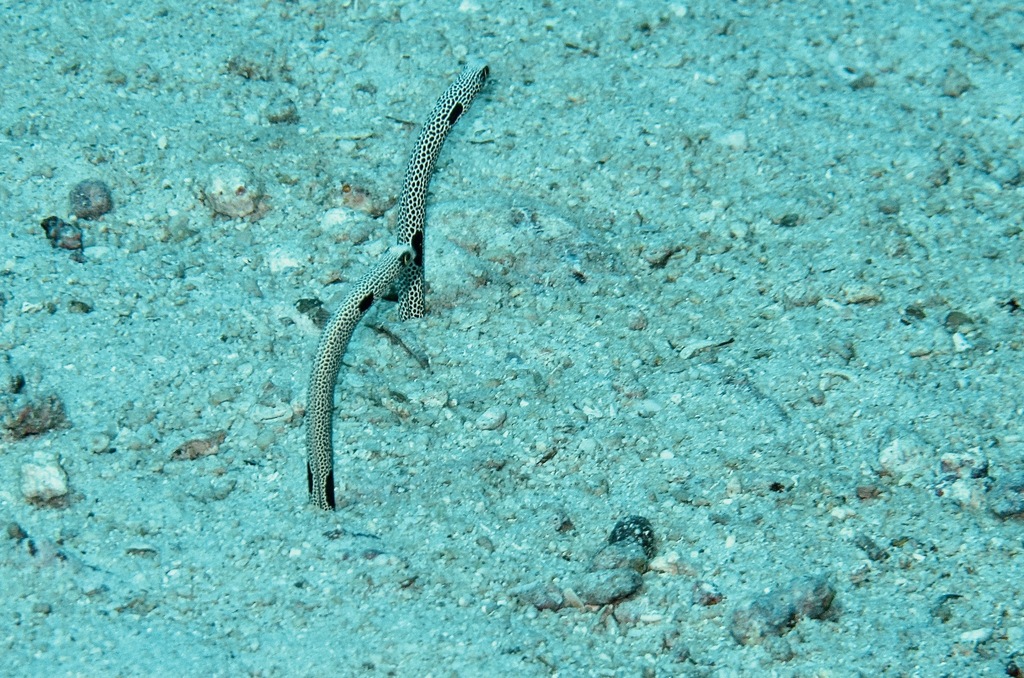
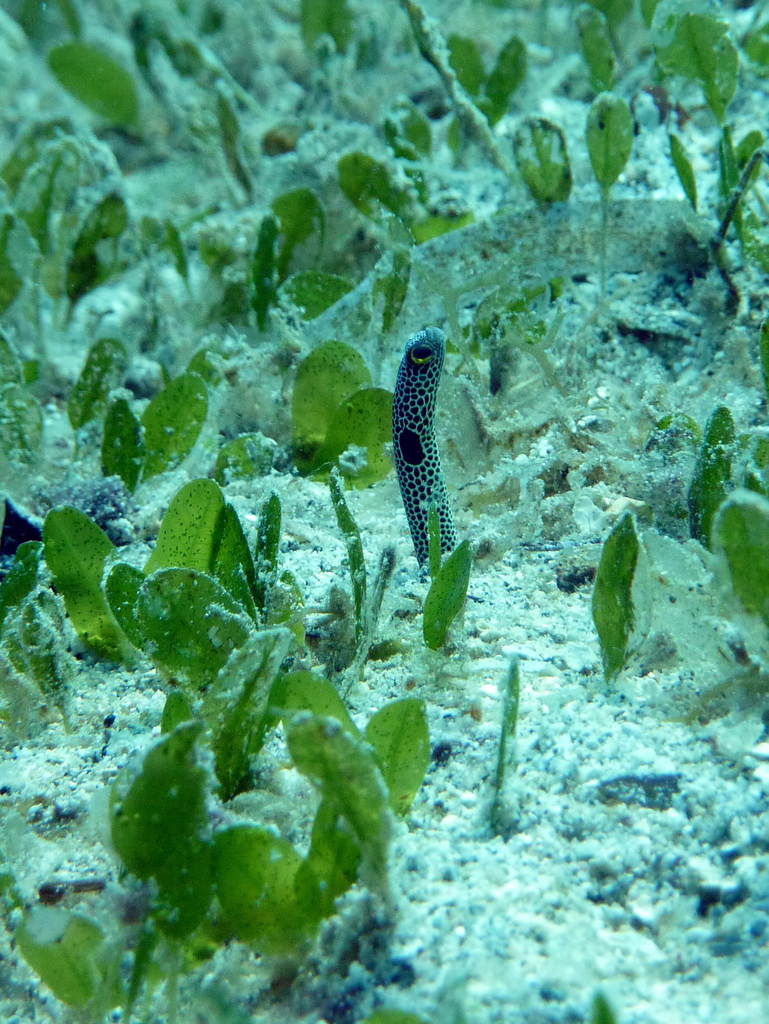
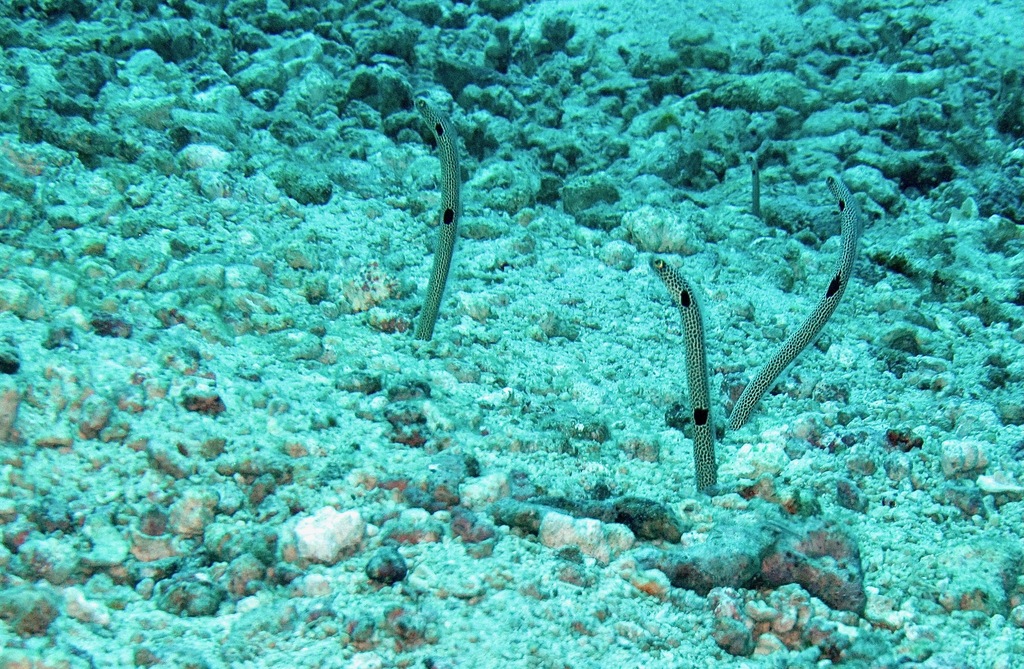
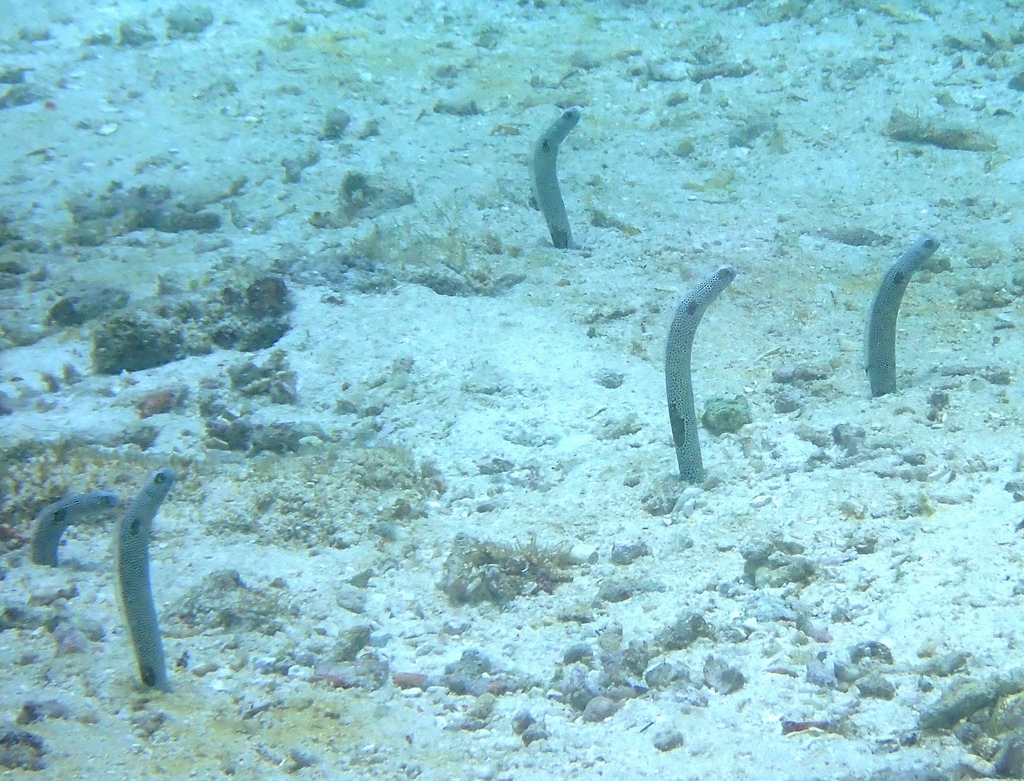
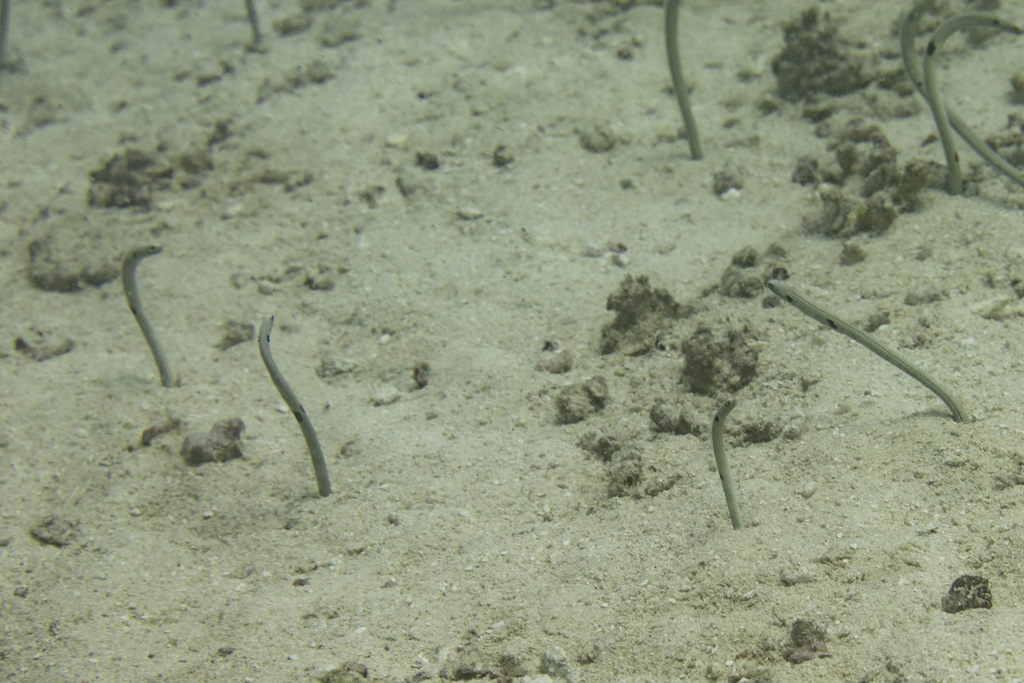
Photos show the species, not always the places on this page.
Length
Typical size not well measured; largest usually given as about 40 to 45 cm (16 to 18 in), and one museum source says up to 60 cm (2 ft). Only about 14 mm (0.6 in) thick
Weight
Not reliably measured
Next to a person
Up to about a quarter of an adult's height, and usually only part of the body shows above the sand
What it eats
Tiny drifting plankton, picked from the current while its tail stays in the burrow.
Around people
Harmless
How it lives
Spotted garden eels live in colonies on sandy slopes near reefs, often below about 15 m. Each eel digs its own burrow and rarely leaves it. They lean into the current to pick plankton from the water, and pull back tail first when something comes near. To spawn, partners stretch out from neighbouring burrows and twist together.
Where it goes
It does not migrate. Adults stay in their own burrow. Only the tiny larvae drift in open water before they settle on the sand.
We only draw a journey on the map when scientists have tracked it or clearly documented it. For this animal we have not found one yet.
Populations
Found widely on sandy bottoms across the Indo-Pacific, from the Red Sea and East Africa to Polynesia. The size of a colony varies by site, depending on current, sand and visitor pressure. There are no named subspecies. Other garden eels, like the orange-banded splendid garden eel, can live nearby and are a different species.
Meet it respectfully
Approach slowly and stay low, at the edge of the colony, not above it. Do not chase, touch, feed or crowd them, and do not stir the sand with your fins. If they hide, wait quietly. They decide if they come back up.
Fun fact
Tap the bulb to light it up.
Young spotted garden eels are completely black.
Look for fine black spots and three bigger dark patches along the body.
They are not planted in the sand. Each eel digs and keeps its own burrow.
In a laboratory flume study, spotted garden eels caught less plankton when the current reached 0.25 m per second. They changed their movements to reduce drag and save energy.
Source: Ishikawa et al., 2022, Journal of Experimental Biology
Spotted garden eel in the Ocean Atlas
Places we have researched where this animal is recorded. It is never guaranteed, and some places are for watching from the boat only.
Travel with usComing soonTrusted referralExploringOn pause, story onlyEthics pass
Country colour: pink where we travel, blue where we are exploring or refer, grey for story only.
 Australia
 Fiji
Fiji Indonesia
 Japan
Japan Malaysia
 Maldives
 Marshall Islands
 Mayotte
 Mexico
 New Caledonia
 Palau
Palau Papua New Guinea
 Philippines
 Seychelles
 Solomon Islands
 Taiwan
 Tanzania
 Thailand
 United States
Read more about the spotted garden eel
Sources for this page
- FishBase, 2016
- Australian Museum, Spotted Garden Eel
- Ishikawa et al., 2022, Journal of Experimental Biology
- IUCN Red List, Tighe, Smith and McCosker, 2019
Facts checked 26 September 2026. Photos: Unsplash licence, or Creative Commons as shown on each photo.
Work in ocean travel?
We are always happy to hear from exceptional local operators, accommodation, conservation organisations and destination experts. If your work fits responsible, small-group ocean travel, we would love to learn more.
Partner with Ocean Calling5-day freediving course in Bali
CHF 1,180