
West African manatee
Trichechus senegalensis
A slow grey shape in a muddy estuary, breathing at the surface and gone again. We watch from a respectful distance, and no sighting is ever a promise.
Vulnerable (IUCN, 2015) means it is at high risk of extinction in the wild, because hunting, nets and habitat loss are expected to shrink the population.
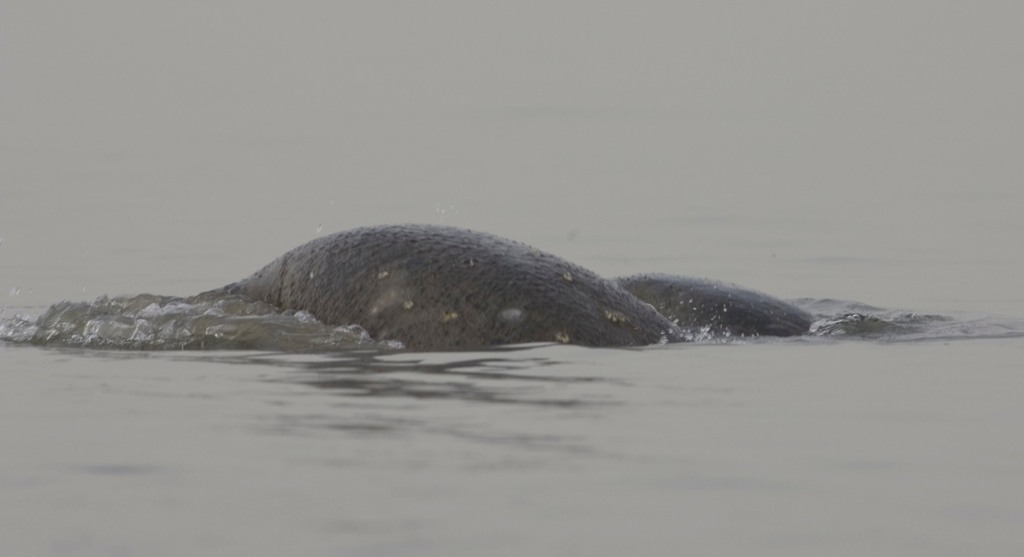
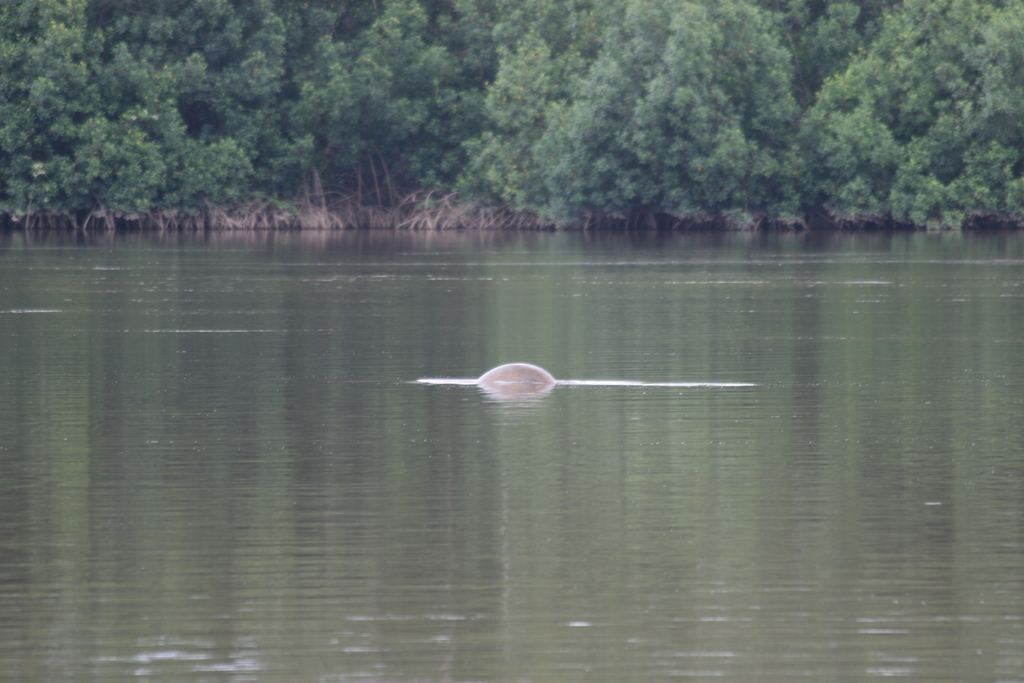
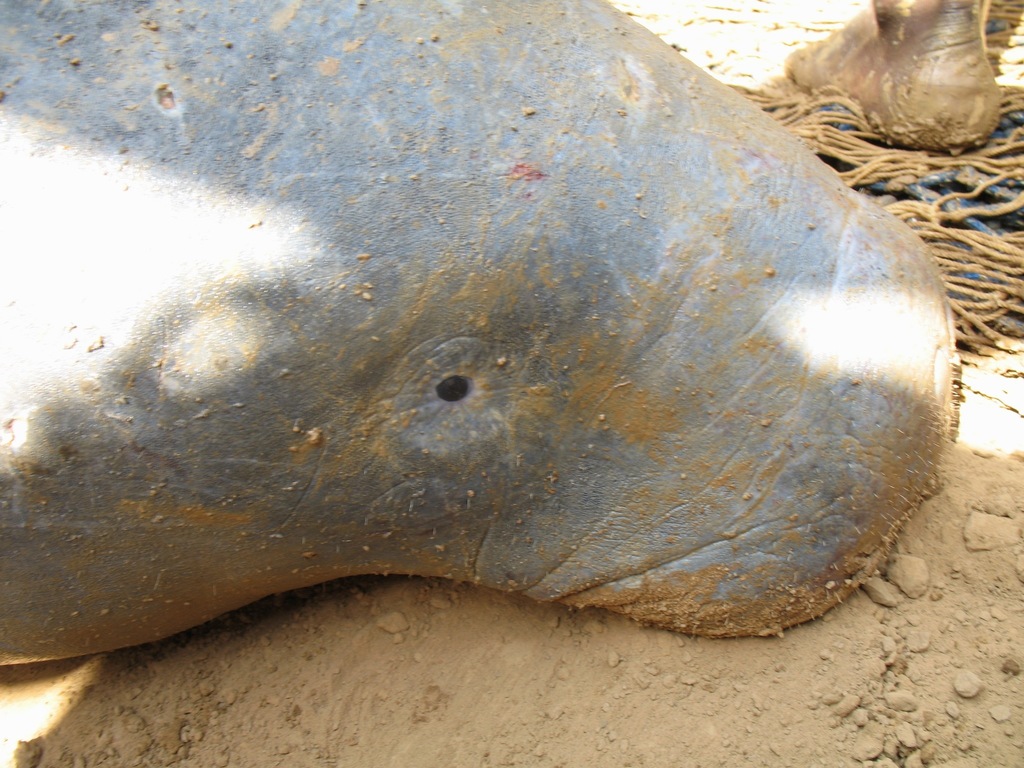
Photos show the species, not always the places on this page.
Length
Up to about 4.5 m (15 ft)
Weight
About 360 kg (790 lb); sources give one figure and no range
Next to a person
Up to about as long as a small car, and about as heavy as five adults
What it eats
Aquatic plants, and also molluscs, clams and small fish. They eat about 4 to 9% of their body weight in wet vegetation a day. It is the only manatee or dugong that seems to eat non-plant food on purpose, and in coastal groups about half the diet may be non-plant.
Around people
Quiet, give space
How it lives
Females first breed at about 3 years and males at about 9 to 10. Pregnancy lasts about 13 months and a single calf is born every 3 to 5 years. The lifespan is estimated at about 30 years.
Where it goes
West African manatees live in coastal waters, rivers and lakes, and prefer estuaries where salt water meets fresh. They are described as migratory, and some move up rivers and back to the coast.
We only draw a journey on the map when scientists have tracked it or clearly documented it. For this animal we have not found one yet.
Populations
No reliable count exists. A rough figure of about 10,000 animals or fewer across the whole range is often quoted. The range runs from Senegal to Angola, covering about 20 countries including inland ones such as Mali, Niger and Chad. The species is described as steadily depleted by hunting for meat, oil and skin, fishing nets, dams and habitat loss. IUCN status is Vulnerable. In Sierra Leone, the Sherbro River Estuary protected area was set up partly to conserve manatees. No current local counts were read.
Meet it respectfully
Manatees are hunted and caught in nets in parts of their range, so give them calm water and plenty of space. Keep boats slow and quiet near estuaries, never chase, touch or feed a manatee, and never block its path to deeper water. Do not buy meat or products made from manatees. If you meet one, let it leave when it chooses. I did not read a specific local viewing rule, so follow your guide.
Fun fact
Tap the bulb to light it up.
It is the only manatee or dugong that seems to eat non-plant food on purpose.
It lives in the sea, rivers and lakes from Senegal to Angola.
A female has one calf every 3 to 5 years after about 13 months of pregnancy.
West African manatee in the Ocean Atlas
Places we have researched where this animal is recorded. It is never guaranteed, and some places are for watching from the boat only.
Travel with usComing soonTrusted referralExploringOn pause, story onlyEthics pass
Country colour: pink where we travel, blue where we are exploring or refer, grey for story only.
 Angola
 Benin
 Cameroon
 Côte d'Ivoire
 Democratic Republic of the Congo
 Gabon
 Gambia
 Guinea
 Guinea-Bissau
 Liberia
 Nigeria
 Republic of the Congo
 Senegal
 Sierra Leone
 Togo
Sources for this page
- Wikipedia, African manatee
- Mammal Diversity Database, Trichechus senegalensis
- BioDB, West African manatee
- International Parks, Sherbro River Estuary
Facts checked 5 October 2026. Photos: Unsplash licence, or Creative Commons as shown on each photo.
Work in ocean travel?
We are always happy to hear from exceptional local operators, accommodation, conservation organisations and destination experts. If your work fits responsible, small-group ocean travel, we would love to learn more.
Partner with Ocean CallingNot sure where to go? Get your Ocean Match
from CHF 19