
Zebra shark
Stegostoma tigrinum
Born in zebra stripes and growing into leopard spots, this long-tailed carpet shark often rests on sandy reef flats by day and hunts through crevices after dark.
Endangered (IUCN, 2016) means it is at very high risk of extinction in the wild.
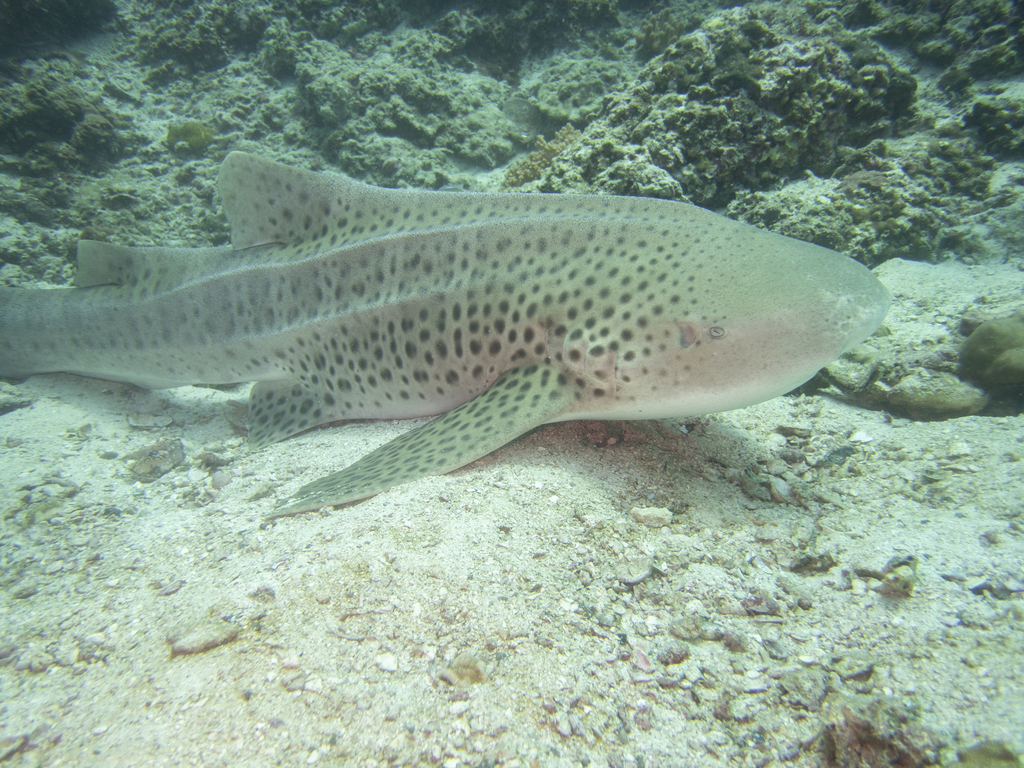
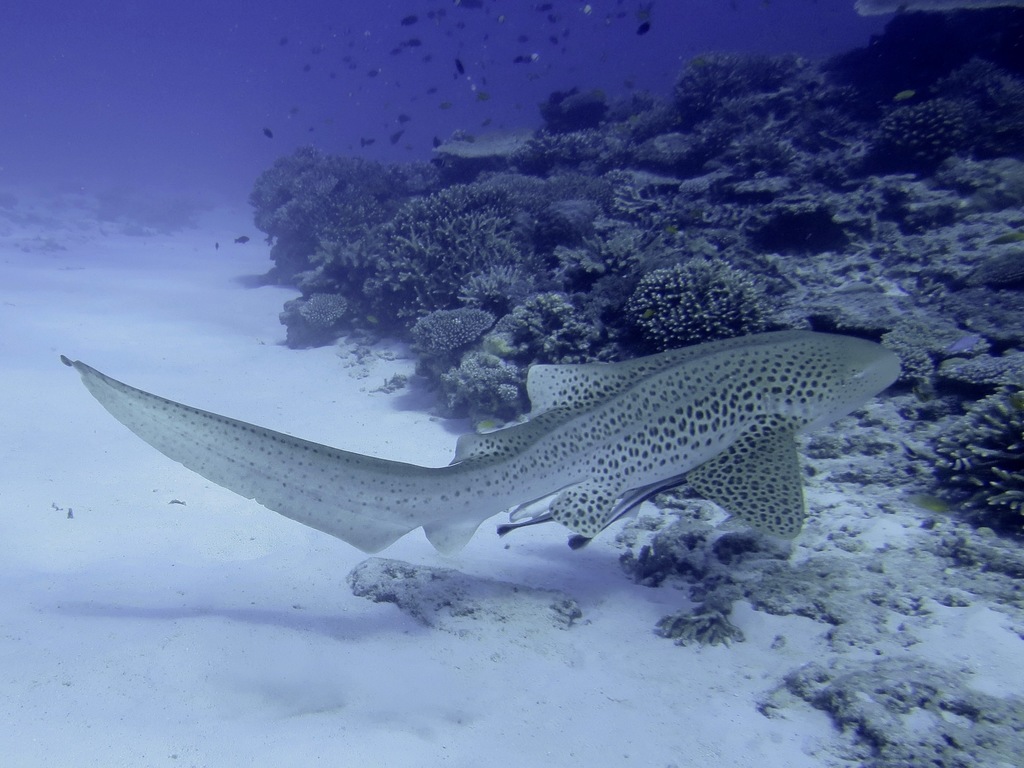
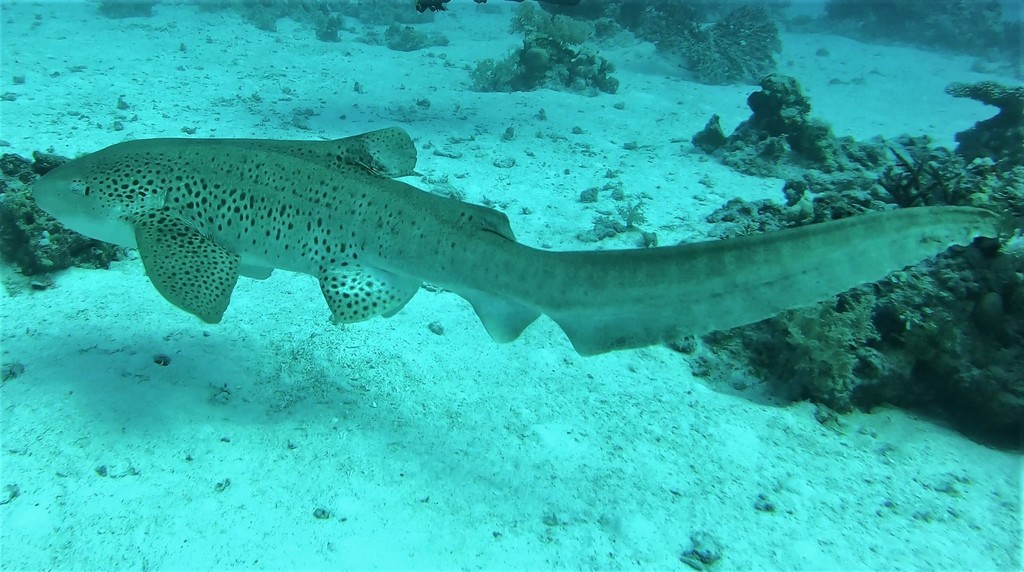
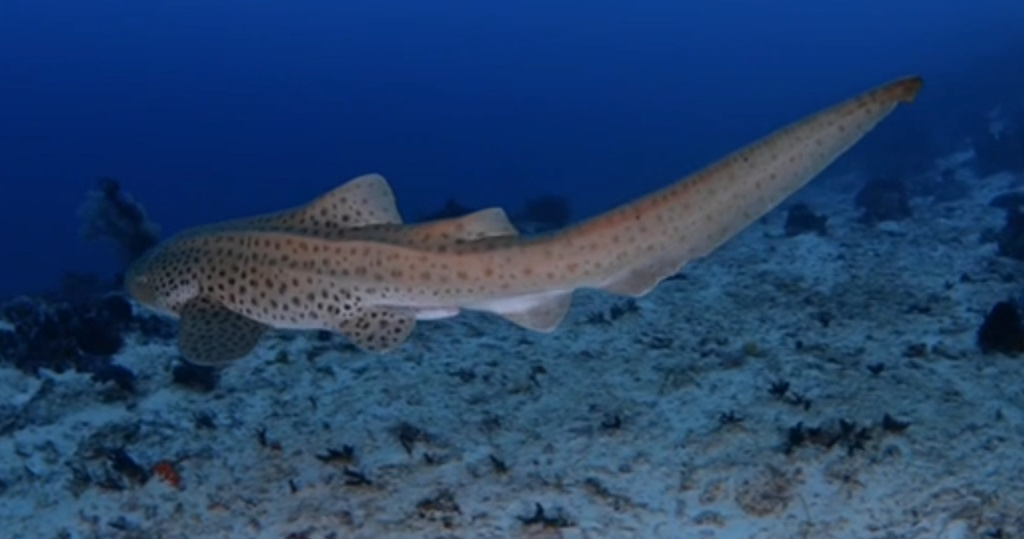
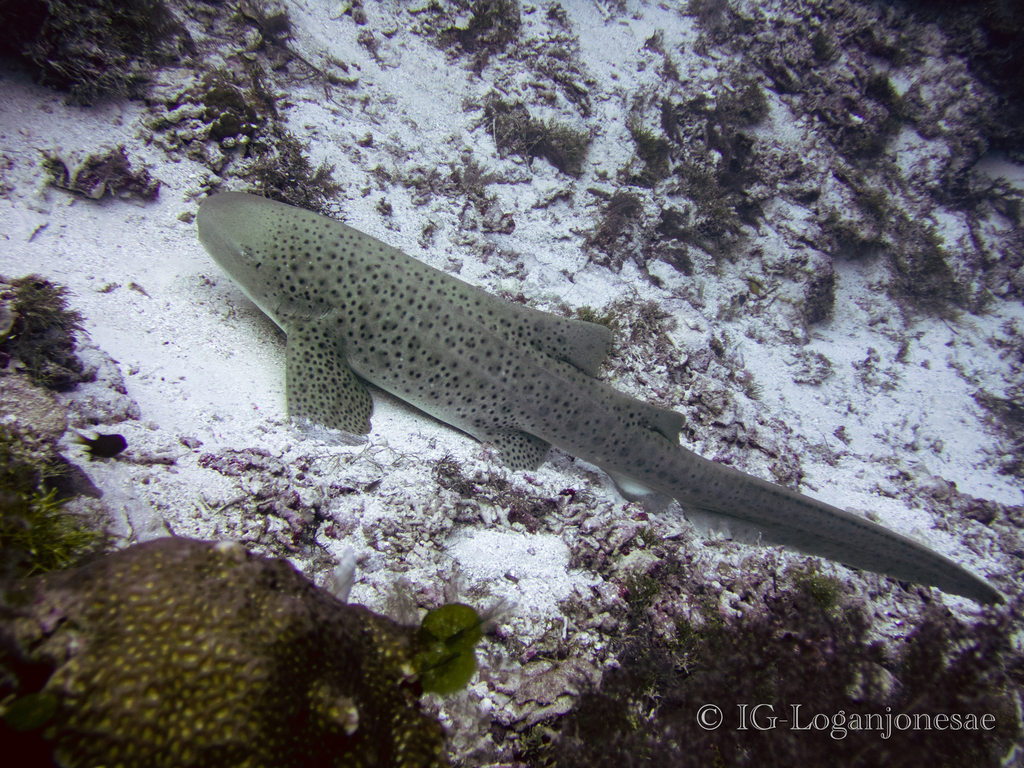
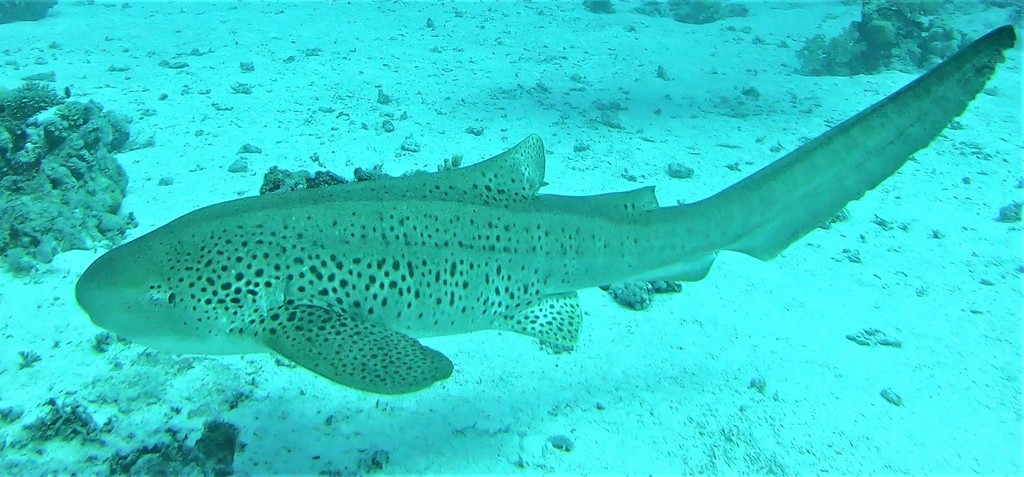
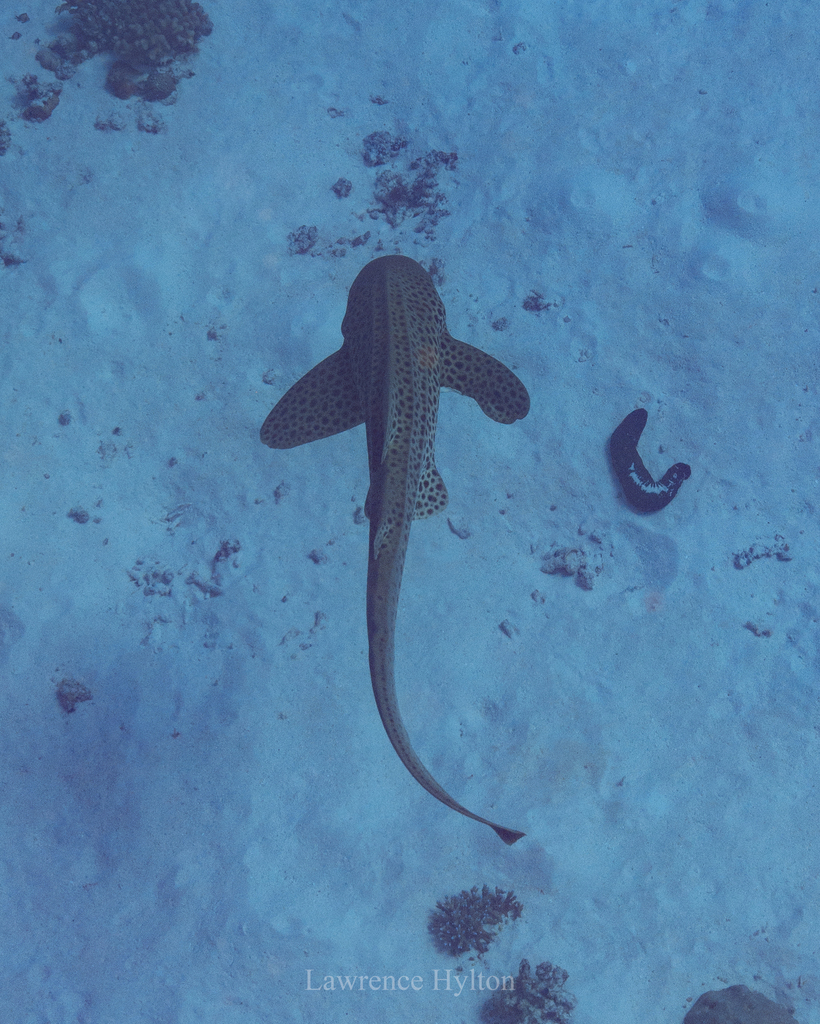
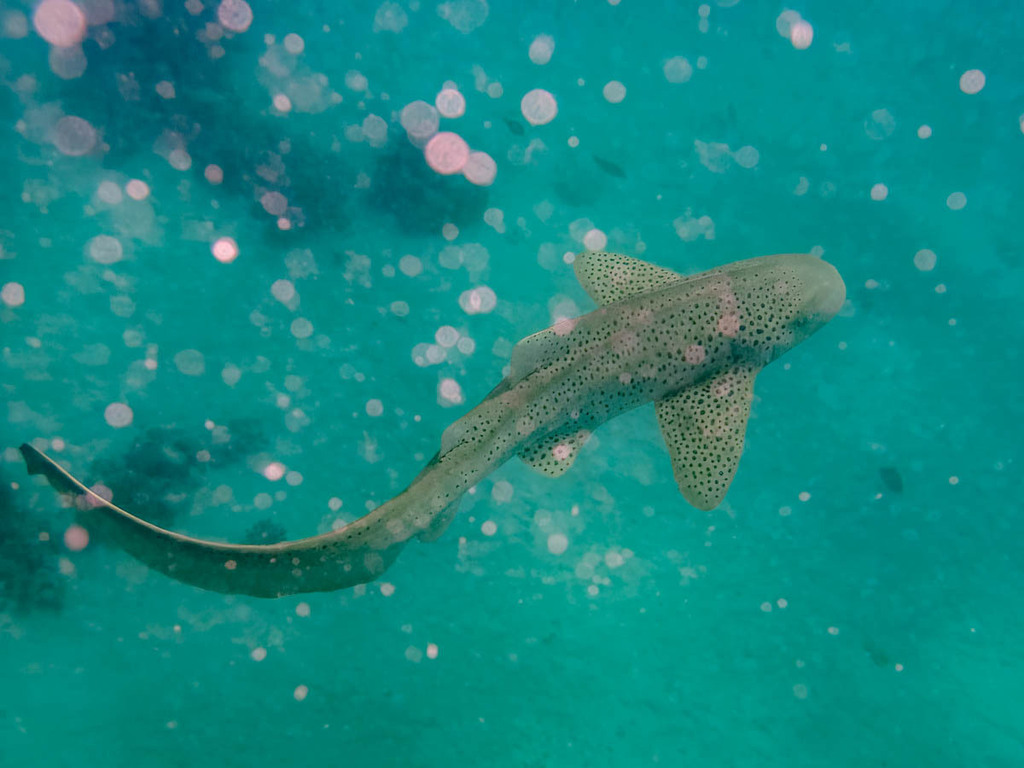
Photos show the species, not always the places on this page.
Length
Mature at 1.5 to 1.8 m (4.9 to 5.9 ft); largest reliably recorded about 2.46 m (8 ft)
Weight
Not reliably measured in the wild; aquarium sources give about 20 to 30 kg (45 to 65 lb) for adults
Next to a person
About as long as an adult person; the largest are about one-and-a-half times as long
What it eats
Snails, clams and other molluscs, crabs, shrimp, small bony fish and sometimes sea snakes.
Around people
Calm, give space
How it lives
Zebra sharks are sluggish by day, often resting on sand near coral reefs. At night they hunt, wriggling into narrow crevices to suck out snails, clams, crabs and small fish. Females lay large dark egg cases anchored by fibres. Under human care, some females have produced young without a mate. Young are boldly striped; adults are spotted.
Where it goes
Zebra sharks are strongly loyal to particular reefs and make only limited seasonal movements. By day they rest on sand near the reef, and at night they move into crevices to hunt.
We only draw a journey on the map when scientists have tracked it or clearly documented it. For this animal we have not found one yet.
Populations
In the Indo-West Pacific, zebra sharks fall into two main groups, split roughly across the Wallace region, with little mixing. Young are striped and adults spotted after about 50 to 90 cm; a sandy colour form is known mainly near Malindi, Kenya. In heavily fished areas, such as parts of Raja Ampat, they have become extremely rare or disappeared.
Meet it respectfully
Zebra sharks resting on the sand are easy to approach, but they may bite if provoked. Do not touch, ride, corner or crowd them. Watch from the side at a respectful distance and let the shark choose how close it comes.
Fun fact
Tap the bulb to light it up.
Young zebra sharks are striped and turn spotted as they grow, so adults look like a different animal.
A zebra shark's tail is almost half of its total length.
It is a different species from the California leopard shark.
A zebra shark's tail is almost half its total length. It swims with a slow, eel-like wiggle.
Source: Aquarium of the Pacific, Zebra Shark species profile
To rest, a zebra shark props itself up on its pectoral fins and faces into the current, with its mouth open and its gills held above the sand.
Source: Aquarium of the Pacific, Zebra Shark species profile
Zebra shark in the Ocean Atlas
Places we have researched where this animal is recorded. It is never guaranteed, and some places are for watching from the boat only.
Travel with usComing soonTrusted referralExploringOn pause, story onlyEthics pass
Country colour: pink where we travel, blue where we are exploring or refer, grey for story only.
 Australia
 Fiji
Fiji India
India Indonesia
 Japan
Japan Kenya
Kenya Malaysia
 Maldives
 Mozambique
 New Caledonia
 Oman
Oman Palau
Palau Papua New Guinea
 Philippines
 South Africa
 Thailand
 United Arab Emirates
Sources for this page
- Florida Museum of Natural History, 2026
- FishBase, 2023
- Virginia Aquarium, 2026
- Dudgeon et al., 2009
- Dahl et al., 2019, Copeia
- Australian Government, Zebra shark report card, 2023
Facts checked 26 September 2026. Photos: Unsplash licence, or Creative Commons as shown on each photo.
Work in ocean travel?
We are always happy to hear from exceptional local operators, accommodation, conservation organisations and destination experts. If your work fits responsible, small-group ocean travel, we would love to learn more.
Partner with Ocean CallingShop with Ocean Calling
Visit the Ocean Calling storefront on Amazon.
As an Amazon Associate I earn from qualifying purchases. You are not only choosing products that respect the ocean, you are also helping us keep going: paying our local partners fairly and keeping our retreats ethical, sustainable and honestly priced for you. 💗