Swim with Whales in French Polynesia: Season, What to Expect, Ethics and Beginner Fit
Planning to swim with whales in French Polynesia? Learn the best season, what the experience is really like, who it suits, whether beginners can join, and how to choose an ethical whale operator.
Swim with Whales in French Polynesia
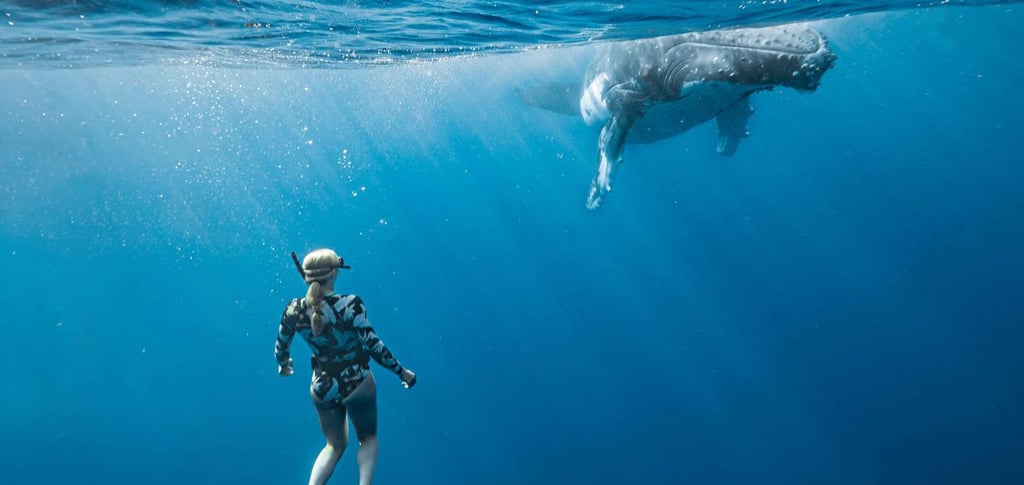
Swimming with whales in French Polynesia sounds like one of those once-in-a-lifetime experiences people talk about for years, and honestly, it often is. But the best way to plan it is not as a dreamy photo opportunity. It is better to think of it as a real wildlife encounter in open water, with real unpredictability, real emotion, and real responsibility.
That is also what makes it so special.
French Polynesia has become one of the most sought-after places in the world for humpback whale encounters, especially during the season when whales arrive in warm waters to mate, give birth, and stay close to their calves. For travellers interested in ethical ocean travel, it offers something rare: the chance to be in the water near whales in a way that is regulated, guided, and based on respect rather than spectacle.
Still, this is not the kind of experience that suits everyone in the same way. Some people absolutely love it. Others realise they wanted the idea of it more than the reality. So if you are wondering when to go, what the day actually feels like, whether beginners can do it, and how to choose an ethical operator, this guide is here to make things clearer.
When is whale season in French Polynesia?
In simple terms, whale season runs through the second half of the year, with most travellers looking at the months between July and November. That is the broad window people talk about when planning a trip.
From a practical point of view, many travellers find that late August, September, and October offer a very appealing balance. The season is properly underway, there is usually strong excitement around whale trips, and this is often when people hope for meaningful encounters with mothers and calves. That does not mean earlier or later dates are wrong. It just means timing changes the feel of the trip.
If you like the idea of planning around the heart of the season, aim for the middle months. If you care more about flexibility, quieter travel, or building a wider French Polynesia itinerary around the experience, the broader season can still work beautifully.
The most useful mindset is this: book for the season, not for a guarantee. You are not booking a show. You are entering the whales’ world for a few hours and hoping conditions align.
What is the experience actually like?
This is the part many articles skip, and it matters.
A whale day in French Polynesia is usually a mix of searching, waiting, watching, listening, and staying ready. It is not constant action. You may spend time on the boat scanning the horizon, following blows in the distance, or repositioning quietly with the guide. Sometimes the ocean is calm and generous. Sometimes it is windy. Sometimes you see whales clearly but never get in. Sometimes you enter the water and the whole moment lasts a few unforgettable minutes.
That is normal.
When everything comes together, the experience can feel both peaceful and intense at the same time. You are not swimming after whales. You are usually entering the water calmly, floating, staying quiet, and letting the guide manage the timing. If the whales are relaxed and the conditions are right, you may hear them before you fully see them. You may notice a shadow, a slow movement, or a shape emerging out of the blue. It can feel huge and gentle at once.
What surprises many people is how quiet the experience is meant to be. The best encounters are often the least dramatic from a human point of view. No splashing. No chasing. No performance. Just a few people in the water, trying to be still enough for the moment to unfold naturally.
A good whale day is not measured by how close you get. It is measured by how respectful the encounter felt.
Who does this experience suit best?
Swimming with whales in French Polynesia usually suits people who enjoy nature without needing to control it.
It is a very good fit for travellers who are comfortable spending time on boats, patient enough to accept uncertainty, and genuinely happy to observe wildlife on wildlife terms. It also suits people who like ocean experiences that feel meaningful rather than rushed. If you already enjoy snorkelling, freediving, or being in open water, there is a good chance this kind of trip will feel exciting in the right way.
It can also be wonderful for solo travellers. Whale trips tend to create a kind of shared focus that removes small talk pressure. Everyone is there for the same reason. The mood is often quiet, hopeful, and slightly emotional. That works especially well for people who like small-group experiences with depth.
On the other hand, it may not be the best fit for travellers who want guaranteed action, feel stressed by open water, or expect a long, easy swim with whales as if it were a standard excursion. This is closer to a guided wildlife encounter than a classic activity tour.
The people who enjoy it most are usually the ones who understand that patience is part of the experience.
Is it beginner-friendly?
Yes, but with nuance.
Swimming with whales in French Polynesia can be beginner-friendly for people who are calm in the water, can swim comfortably, and feel okay wearing a mask, snorkel, and fins in open ocean conditions. You do not need to be an advanced freediver. You do not need to be a marine expert. You do not need to look elegant in the water.
But you do need a basic level of comfort.
If you are the kind of beginner who says, “I’m not highly experienced, but I’m relaxed in the sea and I can follow instructions,” you may do absolutely fine. If you are a complete first-timer who has never snorkelled, feels nervous putting your face in the water, or tends to panic when conditions change, this probably should not be your first ocean experience.
That is not a judgment. It is just a more honest way to describe the day.
A helpful rule is this: beginner-friendly does not mean zero challenge. It means manageable with the right mindset. If you want to make the most of it, practise with a mask and snorkel before the trip, get comfortable floating calmly, and make peace with the fact that some of the experience happens in the waiting, not just in the water.
Why French Polynesia stands out
A lot of whale destinations offer beautiful sightings. French Polynesia stands out because the experience often feels both wild and gentle.
The setting matters. The water is warm. The light is incredible. The islands themselves already invite a slower pace. And then there is the emotional side of seeing humpbacks here, especially mothers with calves. The atmosphere is often less about adrenaline and more about presence.
That is one reason the destination has become so appealing to travellers who want something deeper than a checklist experience. It feels immersive without needing to be extreme.
There is also something very practical behind the beauty: the culture around whale encounters in French Polynesia is shaped by regulation, trained guides, and a growing awareness that wildlife tourism only works long-term when people accept limits. That may sound less exciting on paper, but in reality it makes the experience better.
In ethical whale tourism, restraint is part of the magic.
What makes a whale trip ethical?
This matters more than the photos.
An ethical whale encounter is not just about whether you got in the water. It is about how the entire experience was handled from the moment the boat left shore. Good operators tend to move with patience. They do not rush, chase, or create chaos around the animals. They brief guests clearly. They set expectations honestly. They respect distance. They read whale behaviour carefully. And they are willing to say no to an in-water attempt when the situation is not right.
That last point is a big one.
A respectful operator understands that the day is not about forcing a result. If the whales are travelling fast, seem uneasy, are clearly resting, or conditions are poor, holding back is often the most responsible choice. The same is true if the group in the water is too noisy, too large, or not ready.
This is where travellers can make better decisions too. Ask how the operator approaches whales. Ask how many guests are usually on the boat. Ask what happens if conditions are not suitable. Ask whether they prioritise observation over contact. Good operators will not be offended by those questions. Usually, they will be happy you asked.
The best whale encounters are the ones that still feel respectful when you replay them later.
A few honest expectations before you go
It helps to arrive with the right mental picture.
Some days are extraordinary. Some are quiet. Some involve more time on the boat than in the water. Some give you a brief encounter that stays with you longer than a full day of activity ever could. Wildlife does not follow itineraries, and that is part of the value.
It also helps to know that seasickness, nerves, weather, and simple luck are all part of the story. So is your own energy. If you are tired, overstimulated, or trying too hard to create the perfect moment, the day can feel harder than it needs to.
Usually, the people who come away happiest are not the ones who demanded the most. They are the ones who stayed open.
Final thoughts
Swimming with whales in French Polynesia can be extraordinary, but it is even better when you understand what it really is. It is not a marine attraction. It is not a polished tourism scene built around guaranteed proximity. It is a chance to enter the ocean with humility, stay present, and let the experience be shaped by the animals rather than by your expectations.
That is exactly why it stays with people.
If you are drawn to ocean experiences that feel slower, more thoughtful, and more respectful of wildlife, French Polynesia can be an incredible place to start. And if that way of travelling feels like your rhythm, you can take a quiet look at our upcoming retreats and see whether one of them feels like the right next step.
FAQ
When is the best time to swim with whales in French Polynesia?
The most talked-about season runs from around July to November, with many travellers especially interested in late August, September, and October. Those months are often seen as a strong window for planning, but whale encounters are never guaranteed, so flexibility always helps.
Can beginners swim with whales in French Polynesia?
Yes, some beginners can, especially if they are already comfortable swimming and snorkelling in the sea. It is less about being advanced and more about being calm in open water. If someone is completely new to snorkelling or very nervous in the ocean, it may be better to build confidence first.
What does an ethical whale encounter look like?
It looks calm. A good operator does not chase whales, force entries, or treat the day like a performance. Ethical whale tourism is built around reading the animals well, respecting limits, and accepting that sometimes the right decision is simply to observe.
Is swimming with whales in French Polynesia worth it if you do not get in the water much?
Often, yes. A big part of the experience is being out there, watching, waiting, learning, and understanding how these encounters actually unfold. For many people, the emotional impact comes as much from the atmosphere and anticipation as from the time spent in the water.
Who is this experience best for?
It is best for travellers who enjoy nature, can handle a little uncertainty, and want a wildlife encounter that feels real rather than staged. It especially suits people who value patience, small groups, and meaningful time in the ocean.
© 2026 Ocean Calling Retreats.
All rights reserved.
Ocean Calling Retreats
Ethical ocean retreats for solo travellers. Small-group experiences built on depth, safety, and meaningful connection.
Certifications
All ocean experiences follow strict ethical guidelines.