
Red Sea vs Philippines Diving: Which Reef Fits You?
Two divers come home from holiday. One talks about blue walls and corals that seem to shrug off the heat. The other talks about a tiny shrimp on a sea cucumber and a reef so full of life she did not know where to look. One went to Egypt, the other to the Philippines. The short answer: the Red Sea is about structure, clear water and unusual heat tolerance, the Philippines is about the sheer number of species. Neither is better. They answer different questions.
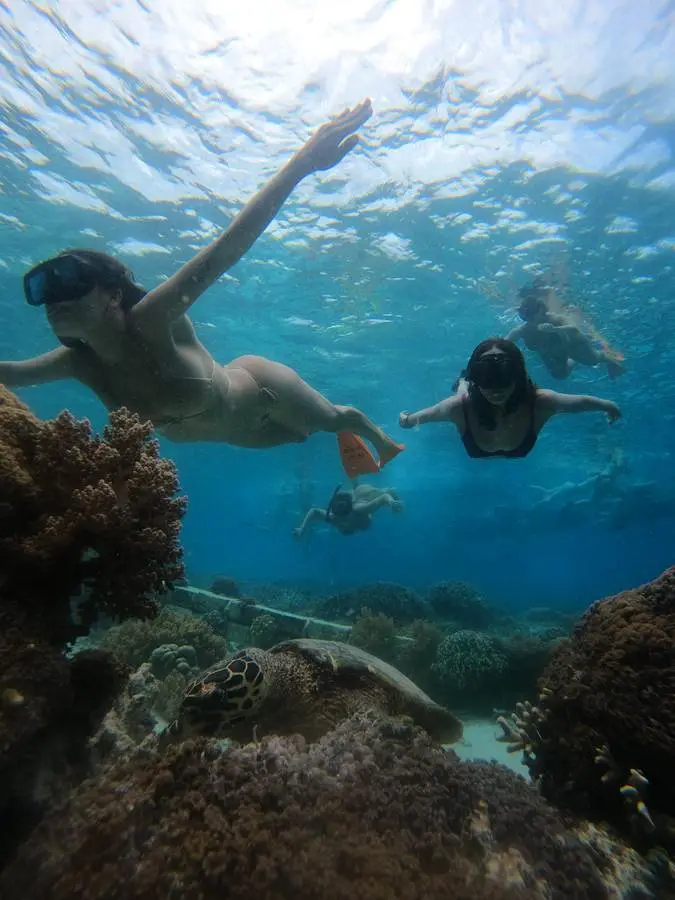
Red Sea vs Philippines diving: two different questions
When people ask me which one to choose, I usually answer with another question: what do you want to feel underwater? Some divers want space, light and big reef walls. Others want to slow down and look closely, fin kick by fin kick, at things the size of a fingernail.
The Red Sea, on Egypt's side, is a long, narrow and almost closed sea, with fringing reefs that often start right at the shore. The Philippines sits inside the Coral Triangle, the region with the richest reef life on Earth. Both have serious conservation stories, and both are under pressure from warming water and from tourism itself. That last part matters, and I come back to it below.
The Red Sea: reefs that tolerate heat, for now
The most interesting thing about the northern Red Sea is not what you see, but what the corals can handle. Researchers including Maoz Fine and colleagues have shown in experiments that corals from the Gulf of Aqaba resist heat stress well above the temperatures they normally live in. A later study on thermal refugia found that corals across the northern Red Sea have a much higher heat tolerance than their usual temperature range would suggest, and that during the strong 2015 to 2016 El Niño, northern corals did not bleach despite high heat stress.
Why? The answer is still a hypothesis, not a proven fact. Maoz Fine has linked it to the special geography and recent history of the Red Sea, and press coverage of his work describes a large natural selection event some 18,000 years ago, when corals came back into the basin after the last ice age. It is a beautiful idea, and scientists still discuss it.
But I would be dishonest if I stopped there. The Egyptian conservation group HEPCA reported that in 2024, bleaching went beyond the southern Egyptian Red Sea for the first time, reaching northern areas including Hurghada and the Gulf of Aqaba, with an average bleaching rate of 28% across its surveys. In 2023 the north had stayed mostly unaffected, while reefs south of Quseir bleached badly. These are field reports from an NGO, not yet a peer-reviewed paper, but they are a clear warning: a refuge is not a guarantee.
What the Red Sea looks like underwater
A peer-reviewed review of Red Sea species lists counted 346 species of stony coral, of which 19, around 5.5%, are found nowhere else. For fish, the same review counted 1,071 shallow-water species, with about 12.9% endemic to the Red Sea, or 14.1% if you include the Gulf of Aden. Other summaries, such as those cited by UNEP, give slightly different numbers, because they use different lists and boundaries. In some fish families, endemism is much higher: around 90% of the Red Sea's dottybacks and triplefins, and about half of its butterflyfishes, are reported as endemic.
In practice, many divers describe the Red Sea as reef walls, warm water and good light, with a lot of diving done from liveaboards that cover long stretches of coast in one trip. Conditions change with the season and the site, so ask your operator, not a brochure. We wrote more about the region in what ethical diving looks like in Egypt's Red Sea now.
The Philippines: less architecture, more life
The Philippines is one of six countries in the Coral Triangle, together with Indonesia, Malaysia, Papua New Guinea, the Solomon Islands and Timor-Leste. According to WWF, this region holds 76% of the world's coral species, 605 out of 798, and 2,228 coral reef fish species, about 37% of the world's total. It is also home to six of the world's seven marine turtle species. WWF notes that some of its figures may not be fully up to date, so read them as a careful estimate.
For a diver, this means density. Instead of one big wall, you often find many small worlds: sandy slopes with strange macro life, coral gardens, channels where fish gather in the current, and in some places, wrecks. Many divers who love the Philippines are the patient ones, people happy to spend ten minutes at one coral head.
Some places in the Philippines also have strong local rules. We wrote about Moalboal's reef conservation rules and the sardine schools there, and our Philippines Ocean Atlas covers the wider picture.
The ethical layer: the reef pays for our clumsiness
Here is a fact that should shape any trip, wherever you go. In 2026, a team from the University of Sydney and Bangor University published a study in Conservation Letters on more than 700 scuba divers at popular sites in the Philippines and Indonesia. Among the 411 divers whose behaviour they analysed in detail, they recorded 4,981 contacts with the reef, about one every four minutes. Around 41% of the contacts caused visible harm, like broken coral or sediment on living coral, and more than 80% of the damaging contacts were accidental or unnoticed. Divers underestimated their own contact by almost five times.
The study also found that cameras, gloves and pointer sticks were linked with more contact, and that when one diver touched the reef, others nearby became more likely to do the same. The good news: the researchers found that the Green Fins programme, which works with dive operators on environmental standards, can help reduce contact.
So the ethical choice is less about Egypt or the Philippines, and more about how you dive there. Good buoyancy, small groups, a proper briefing and an operator who does not let guests touch, chase or feed wildlife matter more than the flag on the map. A heat-tolerant coral that is kicked every four minutes is still a damaged coral. And yes, flying to either place has a climate cost, and warming water is exactly what threatens both reefs. Staying longer and diving slower is one honest way to make a long trip count.
Practical differences that shape the trip
The Red Sea suits divers who like longer reef journeys, often on liveaboards, and who want to see a lot of coastline in a week. The Philippines suits divers who like a slower rhythm on land, moving between a few smaller areas and diving the same reef more than once. Conditions in both places change with the season and the site, so check with your local operator before choosing dates.
If you love photography, both are rewarding, but remember the study above. An underwater or action camera is only a joy once your buoyancy is solid. On long boat days, a roll-top dry bag keeps a phone and a warm layer dry, and a rash guard helps with the sun between dives.
So which one is the better fit for you?
Choose the Red Sea if you want clear blue walls, warm water and the chance to see reefs that, so far, have handled heat better than most. Go knowing that 2024 showed even these reefs have limits. Choose the Philippines if you want the richest reef life in the world, patient dives and small, strange creatures. Many experienced divers end up visiting both, because one does not replace the other.
For a wider view on what makes protected reefs work, read why marine protected areas succeed or fail. And if this made you curious about diving in the Philippines, have a look at our Coron scuba referral trip, where Ocean Match connects you with a vetted local dive team and you book with them directly.
Questions people ask
Are Red Sea corals immune to bleaching?
No. Northern Red Sea corals have shown unusually high heat tolerance, and they did not bleach during the 2015 to 2016 El Niño. But HEPCA reported that in 2024 bleaching reached northern areas including Hurghada and the Gulf of Aqaba for the first time.
How many coral species live in the Coral Triangle?
WWF counts 605 of the world's 798 known coral species, about 76%, in the Coral Triangle, along with 2,228 coral reef fish species.
How many Red Sea fish are endemic?
It depends on the list. A peer-reviewed review counted 1,071 shallow fish species, with 12.9% endemic to the Red Sea, or 14.1% including the Gulf of Aden. Other summaries give about 14.7%.
Which is better for beginners?
We cannot honestly rank them. Both have easy and difficult sites. What matters more is a careful operator, a good briefing and solid buoyancy before you get close to the reef.
Do divers really damage reefs that much?
A 2026 study in the Philippines and Indonesia recorded about one reef contact every four minutes, with around 41% causing visible harm and more than 80% of damaging contacts accidental or unnoticed.
Wildlife encounters are never guaranteed and never forced. Ocean Calling works only with vetted, ethical local operators, and every animal is free to approach, or not, entirely on its own terms.
Sources & further reading
- HEPCA, 2024. Bleach Watch report, 2024 update (Egyptian Red Sea).
- HEPCA. Bleach Watch Egypt 2023 to 2024.
- Thermal refugia against coral bleaching throughout the northern Red Sea. University of Konstanz repository.
- Conservation Physiology. Review citing Fine et al. (2013) and other heat-stress experiments on Gulf of Aqaba corals.
- A review of contemporary patterns of endemism for shallow water reef fauna in the Red Sea. James Cook University ResearchOnline.
- UNEP. Red Sea and Gulf of Aden regional seas programme (PERSGA).
- WWF. Coral Triangle facts.
- Bangor University, 2026. Research reveals hidden damage caused to coral reefs by scuba divers.
- Israel21c. Hardy Red Sea corals hold out hope for world's dying reefs.
Further reading on Ocean Calling: More from the journal · Egypt · A small-group ocean retreat in Egypt · Coron reef conservation visitor guide · Wildlife & the law · See the retreats · Ocean Atlas
Moalboal scuba certification and freediving trip: sardine run, sea turtles and Alegria statues
Scuba or freediving certification · Moalboal, Cebu, Philippines
Marine life close to shore, at a calm pace. This story is about the Philippines, where we run trips in Moalboal and Coron.
Explore in the Ocean Atlas
Places in this article