
Ethical Whale and Dolphin Travel in Japan, Beyond Okinawa
A whale tail rises off a small Pacific island, and somewhere else in the same country a ship leaves port to hunt whales. Both are true. If you want ethical whale watching in Japan, you need to know which rules are law and which are only local agreements.
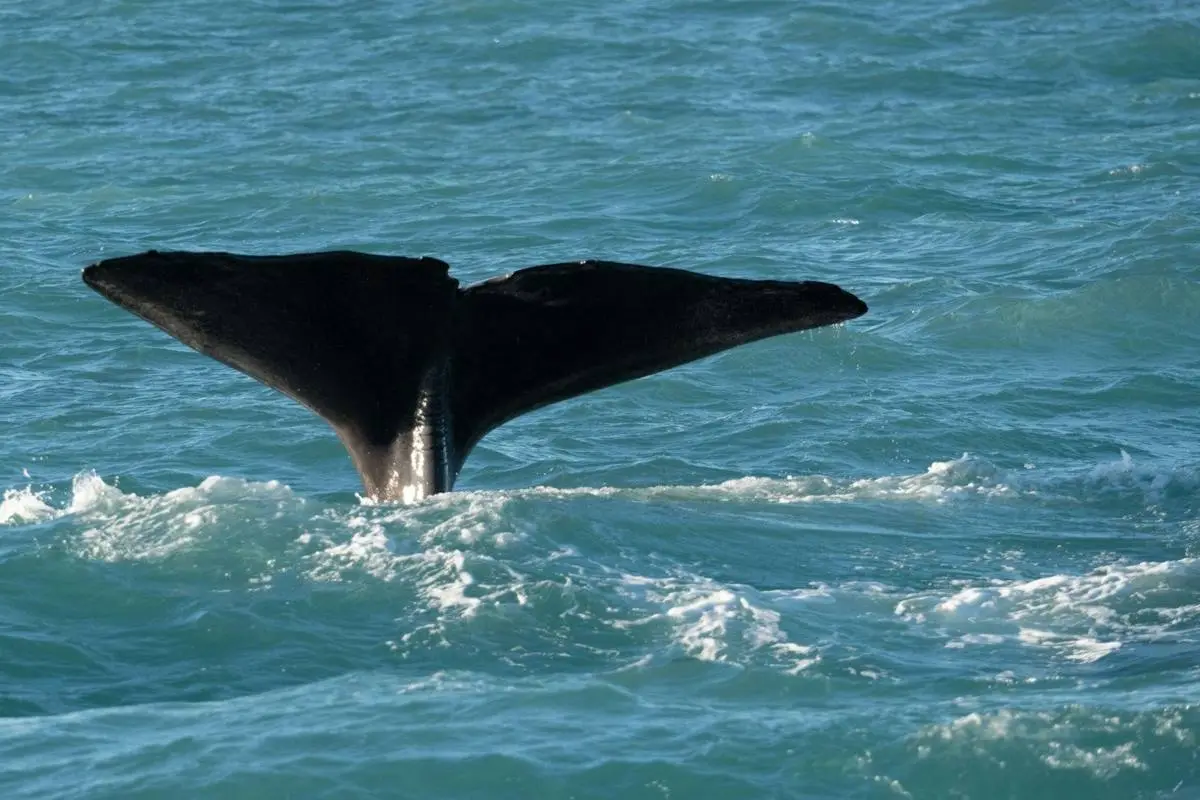
Japan has some lovely places to watch whales and dolphins, and I would happily go to a few of them. But almost every rule you will meet there is a local code that the boats agree to follow, not a national law. This article tells you which is which, as far as I could check, and what I could not find.
Is whale watching in Japan regulated by law?
Mostly no, and that is the first thing to understand. In many countries the rule is written down and has a fine. Hawai‘i, for example, has a federal approach distance for humpbacks that applies to swimmers too; we explain it in our piece on the 100-yard rule. In Japan I did not find a national approach law for whale watching or for swimming with dolphins. That does not prove there is none, because I could not search Japanese legal sources in depth, so please check the current rule before you travel.
What I did find are association guidelines, written and agreed by the local boat operators. They matter, and good operators follow them. But a guideline is only as strong as the community behind it. When a boat breaks it, the usual consequence is social, not legal. We wrote about the same gap in Okinawa in a code is not the same as a law.
Ogasawara: whales a day’s ferry from Tokyo
The Ogasawara Islands belong to Tokyo Metropolis but lie far out in the Pacific. One tour source describes the ferry from Tokyo, the Ogasawara Maru, as a 24-hour crossing that sails only four to six times a month, so check the timetable first. It is a long trip, and there is a real carbon cost, so it is not a weekend idea.
A Tokyo government guide says humpback whales visit from November to May, with February to April the best months. Sperm whales are described differently by different sources: some say females and calves live offshore all year, others say they are mainly seen from May to November. I would treat both as hopes, not plans. Dolphins, including spinner and bottlenose, are also offered by local tours.
The Ogasawara Whale Watching Association publishes a guideline, and it is voluntary. For small boats it asks them to slow down 300 m from a whale and to keep at least 100 m from baleen whales and 50 m from sperm whales. If a whale comes to the boat, the boat should leave slowly or stop until the whale has gone. Vessels over 20 tons slow down within 1,000 m and stay at least 300 m away. Playing recorded whale sounds into the sea is not allowed, and filming or research by exception needs the association’s permission. I found no rule about swimming with whales in this guideline, and I could not confirm whether another one exists. For that reason we would not sell it.
Mikurajima: dolphins and a village that set its own limits
Mikurajima is a small island south of Tokyo where people swim with wild dolphins. The facts I could confirm are few. The local community set up the Mikurajima Dolphin Association in 1993 to protect the dolphins as tourism grew, and the Tokyo government says regulated dolphin tours continue. Swimming is by booked tour, and the island has a 2004 nature conservation ordinance, which mostly covers walking in the forest with a registered guide. The village also has written rules for dolphin watching, dated 2005 and last updated in 2015. Every boat must fly a permit flag from the tourism association, guides must be certified Tokyo Nature Guides registered with the village, operators must follow the dolphin-watching guidelines set by the Tokyo government, and the number of registered boats is capped at 25. The tourism association adds its own manners: do not disturb feeding, mating or birth, do not approach a group with young calves, do not get back in the water for a group that does not come to you, and never touch or feed the dolphins. One travel site gives the swimming season as April to November.
What I could not find is the written text of the dolphin-swimming rules, such as the distance, the number of swimmers or the penalties. A 2010 Monocle article said agreements among residents keep the swims orderly. That sounds hopeful, but it is old and it is not a law. I would only go with an operator who can show you the village rules in writing and explain what happens when someone breaks them. If you want to understand why we are careful with swim offers, our piece on ethical swimming with dolphins explains our checklist.
Kerama and Okinawa: humpbacks from a boat
Humpbacks winter around the Kerama islands and Okinawa, and our Ocean Atlas lists January to March as the time to see them from boats. I could not verify the current written rules of the Kerama operators, so I will not quote them. What I can say is what we said in our Okinawa code versus law article: watch from a serious boat, and do not look for a swim.
The other side: Japan still hunts whales
Many travellers do not know this, and some learn it by surprise on a menu. Japan left the International Whaling Commission in 2019 and began commercial whaling on 1 July that year, saying it would stay inside its own exclusive economic zone. The factory ship’s first season ended with 223 whales: 187 Bryde’s, 25 sei and 11 minke, against a quota of 232. In 2024 the Fisheries Agency Council approved adding fin whales, with a self-allocated quota of 59 animals for that year. The agency said the plan was not meant to raise meat supply. OceanCare argues that this fin whale quota has not been approved by the IWC, despite Japan’s claims. I could not confirm the 2025 or 2026 catch numbers, and I will not guess them.
This is a real ethical question for visitors, and people reach different answers. Some spend money only on whale watching and avoid whale meat. Others say Japan’s coastal communities should speak for themselves. You do not need a perfect view to make an honest choice. Our article on whale meat for travellers to Norway and Japan goes through it more calmly.
What to ask before you book
Ask who wrote the rules and who can enforce them. Ask the distance in metres, and what the boat does when a whale comes close. Ask how many boats are allowed near one animal at the same time. If an operator offers a swim with whales, ask which law or written local rule allows it, and walk away if the answer is vague. Our note on why we wait when rules are still taking shape is our standard here.
For boat days, a roll-top dry bag keeps the phone and a warm layer dry, and sea wind is cold even when the island is not. A rash guard or a light long-sleeve shirt protects you from the sun without more cream in the water. And a small travel kit with a refillable bottle helps you avoid plastic on a long ferry.
We do not offer trips in Japan at the moment, and we do not sell any swim where the rules are unclear. If you would like to travel to the ocean this way, slowly and with clear rules, you can look at our retreats. You can also see what we know about the country in the Japan page of the Atlas.
Questions people ask
Is it legal to swim with whales in Japan?
I could not find a national rule that clearly allows or forbids it. The Ogasawara guideline I read has no swimming rule. Because the rules are unclear, we do not sell it. Please check the current rule locally.
Are the Ogasawara whale watching rules law?
No. They are a voluntary guideline of the Ogasawara Whale Watching Association, with distances of 100 m for small boats from baleen whales and 50 m from sperm whales. Good operators follow them, but they are not statutes.
Can I swim with dolphins at Mikurajima?
Yes, by booked tour with a guide registered with the village. The village rules cap the number of boats and require a permit flag, and the tourism association asks swimmers not to touch, feed or follow the dolphins, and not to approach groups with young calves.
Does Japan still hunt whales?
Yes. Japan left the IWC in 2019 and hunts minke, Bryde’s, sei and, since 2024, fin whales in its own waters. Critics dispute parts of this. I could not confirm recent catch numbers.
When is the best season for whales in Ogasawara?
A Tokyo government guide says humpbacks are present from November to May, best from February to April. Sperm whale timing differs between sources. Animals move, so nothing is guaranteed.
Does Ocean Calling run trips in Japan?
No, not at the moment. Our Atlas shares Japan’s ocean story, but we do not offer trips there.
Wildlife encounters are unpredictable. Whale and dolphin watching should always follow local regulations and experienced professional guidance. Encounters are never guaranteed and never forced. Ocean Calling works only with vetted, ethical local operators, and every animal is free to approach, or not, entirely on its own terms.
Sources & further reading
- Whale Watching Guideline, Ogasawara. Ogasawara Whale Watching Association.
- Common species and tours. Ogasawara Whale Watching Association.
- Island guide. Tokyo Metropolitan Government, Islands.
- Wild Dolphins, Mikurajima. Tokyo Metropolitan Government, Islands.
- Sightseeing on Mikurajima Island. Tokyo Metropolitan Government, Bureau of Environment.
- Mikurashima Island: Swimming with Wild Dolphins and Seeing 700 Giant Trees. Tokyo Islands.
- The flipper-side of tourism. Monocle, 2010.
- Whale resources and catch limits. Fisheries Agency of Japan.
- Japan proposes expanding commercial whaling to fin whales. Express & Star (AP), 2024.
- Japan whaling expansion (press release). OceanCare, 2024.
- Japan whaling ship returns home after first commercial hunt. Arab News (AFP), 2019.
- At the Ogasawara Islands, during humpback whale season. Saiyu Travel.
- Mikurajima Village. 御蔵島における自然環境保全促進地域の適正な利用に関する事業運営要綱 (Yōkō No. 2, 25 May 2005, in force as amended 1 January 2015).
- Mikurajima Tourism Association. 海へ: dolphin watching rules and manners.
Further reading on Ocean Calling: Japan in the Atlas · Hawai‘i 100-yard rule · Humpback whale · Sperm whale · Ocean Atlas
Swim with humpback whales in Moʻorea: an ethical whale retreat
Whale encounter retreat · Moʻorea, French Polynesia
Time in the blue, on the whales’ terms. If you love whales, this is our whale trip: small group, slow pace, on the animals’ terms.
Explore in the Ocean Atlas
Places in this article
Animals in this article
 Humpback whaleMegaptera novaeangliae
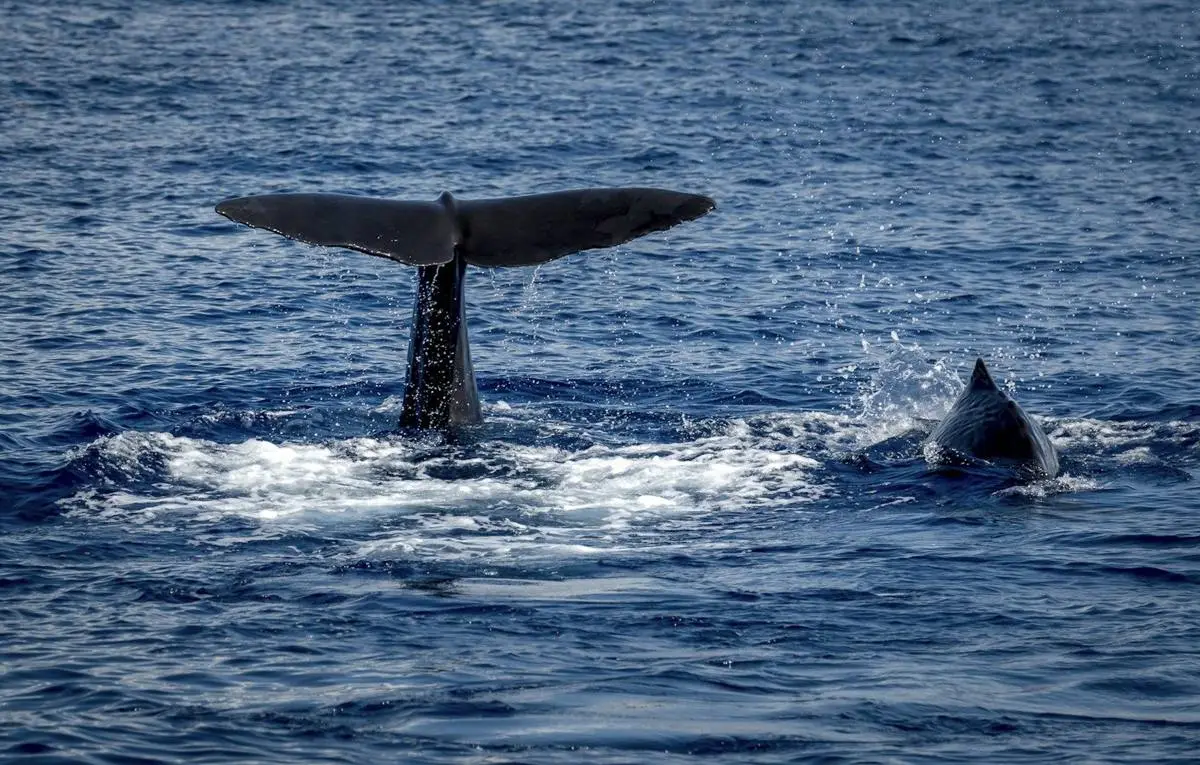 Sperm whalePhyseter macrocephalus
 Common bottlenose dolphinTursiops truncatus
 Spinner dolphinStenella longirostris