
Ethical Swimming with Dolphins
When the Ocean Sets the Rules
The boat engine slowed, and suddenly everything became quiet.
We had been travelling for almost an hour, scanning the horizon, when the guide gently pointed towards a small movement in the distance. A dorsal fin appeared briefly, then disappeared again beneath the surface. No rush, no loud instructions — only a calm pause as everyone instinctively leaned forward, curious but quiet.
Some moments later, we entered the water slowly. No jumping, no splashing. Just the sound of breathing through snorkels and the soft movement of the sea.
At first, nothing happened.
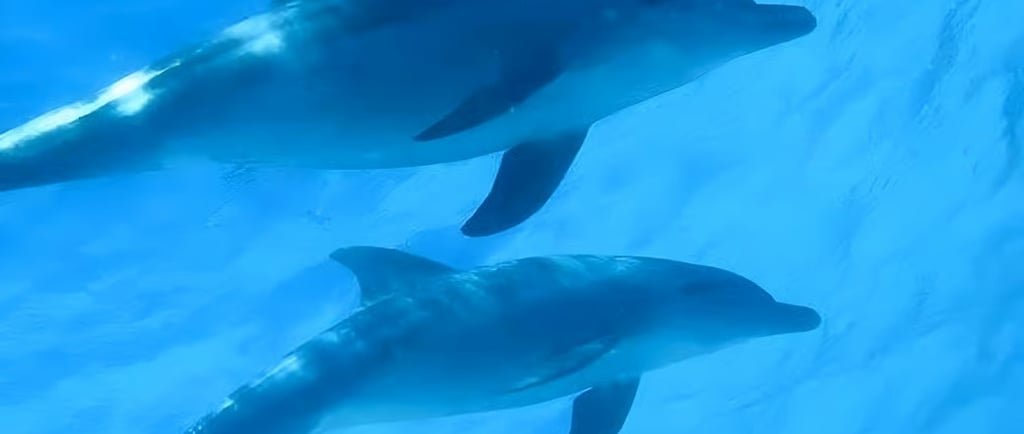
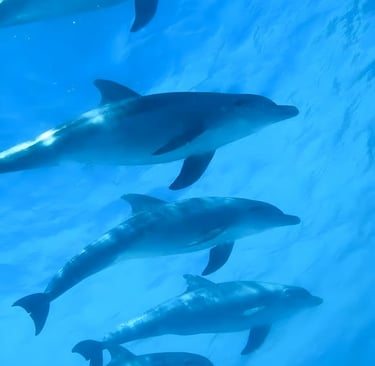
Then, in the distance, a small group of dolphins passed by. They did not approach immediately. They stayed together, moving with intention, following their own rhythm. We observed, floating, allowing space. After a few minutes, one dolphin briefly changed direction, curious for a second, before returning to the group.
The encounter lasted less than five minutes.
And yet, it felt complete.
Ethical swimming with dolphins often looks different from what social media suggests. There are no guarantees, no staged interactions, no attempts to control the experience. Responsible wildlife encounters respect the reality that dolphins are wild animals with complex social structures and communication patterns. They decide if and how close they come.
Science-based marine tourism helps guide these encounters. Marine biologists and conservation experts have observed that dolphins can experience stress when chased, touched, or surrounded by large groups. Ethical travel guidelines therefore encourage small group sizes, respectful distances, and minimal noise in the water. These responsible tourism practices aim to protect natural behaviour and support long-term marine life protection.
Many ethical marine tourism operators collaborate with researchers and local communities to ensure sustainable ocean travel experiences remain aligned with conservation efforts. This approach helps protect feeding areas, resting zones, and migration routes that are essential for dolphin populations.
Interestingly, when encounters are not forced, they often feel more meaningful. Observing dolphins moving freely — interacting with each other, navigating the ocean with precision — creates a deeper sense of connection than any controlled interaction could offer.
Ethical ocean travel is not about limiting experiences. It is about allowing them to unfold naturally.
Swimming with dolphins can remain a powerful memory when approached with patience, respect, and awareness. By choosing responsible wildlife encounters and supporting science-based marine tourism, travellers help preserve the possibility of these quiet moments — moments where nothing is forced, yet everything feels unforgettable.
Sometimes, the most extraordinary encounters happen when we simply allow the ocean to lead.