
Your Freediving Journey
Learn to freedive in a safe, supportive space designed for women, beginners, and neurodivergent travellers.
Responsible & Ethical Ocean Encounters
What Is Freediving?
Freediving is the art of exploring the ocean on a single breath. It’s calm, quiet, and deeply meditative — the opposite of adrenaline sports. You learn how to relax your mind, soften your breath, and move effortlessly underwater, supported by experienced instructors who understand every comfort level.
Our courses are gentle, personalised, and adapted to each guest — including beginners, women travelling alone, and neurodivergent divers. You learn at your own rhythm with coaches who teach clearly, respectfully, and without pressure.


Who This Is For
People choose freediving because it’s simple, powerful, and gives you a level of control over your body that scuba can’t offer. You don’t need tanks, heavy gear, or complicated equipment to reach depth. A scuba diver needs a full setup to reach 20 meters. A freediver can do it with one breath. That difference alone attracts people who want to feel strong, capable, and in charge of their own progress.
Freediving is also chosen by people who want to get close to marine animals without bubbles or noise. Wildlife stays calmer around freedivers because you move quietly and naturally.
Many learners choose it because they want to build their breath-hold, manage stress, and understand how their body reacts under pressure. Freediving gives you measurable progress and teaches you skills you can apply outside the water too.
And for many, it’s simply the feeling: clean, quiet, and free. No gear. No weight on your back. Just you, your breath, and the ocean.
Freediving is for people who want a challenge that feels empowering instead of technical. For people who want to rely on themselves, not equipment. For people who want to feel strong, focused, and fully present in the water.
If you want to discover what your body and mind can really do, this is where you start.


Understanding Freediving Certifications
There are different freediving certification systems (PADI, AIDA, Molchanovs/WAVE, SSI).
Each one teaches the same essential skills — breathwork, equalisation, safety, and depth — but the structure varies slightly.
During the retreat, the certification offered depends on the location, the coach, and the training conditions.
Because the retreat offers two to three training days, guests usually complete coaching sessions or Level 1/Level 2 training.
Instructor-level programs are not part of our retreats.
All freediving agencies teach the same foundations. They differ mainly in teaching style, certification systems, and progression. You can choose the agency you prefer, and I’ll match you with the best instructor available during your dates.
LEVEL 2 – Intermediate


LEVEL 1 – Beginner
AIDA 2, SSI Level 1, WAVE 1, PADI Freediver
Advanced athletes (not included)
LEVEL 3/4 – Advanced


AIDA 3, SSI Level 2, WAVE 2, PADI Advanced Freediver


Relaxation


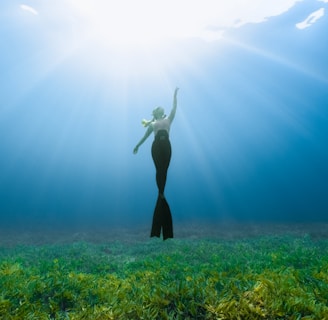
Freediving invites you to slow your thoughts, soften your breath, and let the ocean hold you. Every session begins with relaxation techniques, mindfulness, and breathing exercises that help you feel grounded, safe, and connected to the moment.
You learn gentle breathing methods that calm the nervous system and help you enter a state of deep focus. These techniques are simple, accessible, and can be used for everyday stress, not only underwater.
How the E-Learning Works
Before your course begins, you receive access to online learning material. You can study at your own rhythm — theory, videos, safety, and breathing techniques. This helps you arrive more confident, especially if English is not your first language.


The Most Important Skill: Equalisation
Equalisation is the technique that protects your ears as you go deeper. You don’t need experience — we teach you from zero. If you want to prepare, there are many free videos online that explain the basics (Frenzel, Valsalva). You can also train your breathing and relaxation with free apps for apnea on Google Play and Apple Store.


Medical Clearance & Safety Requirements
Freediving is a calm and gentle sport, but it still involves changes in pressure that affect the ears, lungs, sinuses, and cardiovascular system.
To train safely, every guest must complete a standard medical questionnaire. Depending on your answers, a doctor’s signature may be required before joining the course.
This is important if you have ever experienced:
• Respiratory conditions such as asthma, chronic bronchitis, breathing difficulties, or recurrent sinus issues
• Cardiovascular concerns, including high or low blood pressure, arrhythmias, fainting episodes, chest pain, or any diagnosed heart condition
• Neurological issues, such as seizures, blackouts, migraines with aura, or balance problems
• Ear, nose, or throat problems, including past ear infections, difficulty equalising, perforated eardrum, ENT surgery, or severe allergies
• Recent surgeries or injuries, especially involving the lungs, chest, throat, ears, abdomen, or spine
• Medication use that affects breathing, blood pressure, heart rhythm, anxiety response, or consciousness
• Mental health or neurodivergent conditions that affect stress response, panic sensitivity, or body awareness (the instructor must know to adapt the pace clearly and respectfully)
• Pregnancy at any stage
• Smoking, vaping, or recreational drug use, which can affect lung function, blood oxygenation, and safety underwater
• Any chronic illness requiring ongoing medical care or monitoring
Pressure changes underwater can affect the ears, sinuses, lungs, and circulation. Certain medical conditions, past surgeries, or medications can change how your body reacts to depth or breath-holds. This is why all international freediving agencies require the questionnaire to be completed honestly and, when needed, validated by a doctor.
If you have marked “yes” on the questionnaire, you must submit a certificate from a doctor confirming that you are fit to train.


Why Freediving is Not the Same as Scuba
Freediving and scuba diving are two different sports. Freediving uses breath-hold and relaxation. Scuba uses tanks and equipment. You cannot mix both during the same session because the body adapts differently. On this retreat, you may choose coaching or fun freediving days — scuba is organised separately with different procedures.


What to Expect During Training
Your sessions are slow, calm, and fully guided from the moment you arrive. You start on land with simple breathing exercises, body relaxation, and equalisation practice. This helps your mind and body feel grounded before entering the water.
In the ocean, everything is done at your own rhythm. You warm up gently at the surface, learning how to breathe, float, and relax while your coach stays right beside you. When you feel ready, you begin short, shallow dives to practise technique and comfort. Depth is never the goal — safety and ease always come first.
Every session includes full supervision, buoy systems, clear communication, and personalized coaching adapted to your level, your energy, and your learning style. You are never rushed or pushed beyond what feels good for you.


Why Train With Us
Slow Teaching, Clear Guidance
You learn with certified instructors who teach calmly, explain every step clearly, and adapt the pace to how your body feels. There is no pressure, no ego, and no pushing beyond comfort — you progress with confidence and clarity.
Small Groups for Safety
Training happens in small groups so your instructor can stay fully focused on you. Every session follows international safety standards, with proper buoy systems, rescue readiness, and oxygen available when needed. You are supervised from the surface at all times.
A Supportive Space for Every Diver
Our freediving partners specialise in working with beginners, solo women, and neurodivergent travellers. You are welcomed exactly as you are, with coaches who teach gently and communicate in simple, reassuring ways. Your comfort and sense of safety come first.
Warm, Clear Water for Easy Learning
Bali offers calm, warm conditions perfect for your first freediving experience. You learn relaxation, breathwork, equalisation, and smooth underwater movement in clear, shallow areas before progressing deeper.
A Calm, Rewarding Experience
Freediving becomes meaningful when you feel understood and supported. Every session begins with grounding, gentle breathing, and mindfulness so you enter the water relaxed, safe, and connected with your body.


Frequently Asked Questions
Do I need to be a strong swimmer?
No. You only need to feel comfortable in the water. Freediving is calm, technique-based, and adapted to your own rhythm.
Can I join if I’ve never freedived before?
Yes. Most guests are complete beginners. You start with breathing, relaxation, and shallow-water practice before anything deeper.
Will I feel safe during the course?
Yes. Safety is the foundation of every session. You train in small groups with certified instructors who guide you closely and explain each step clearly.
Can I train if I’m nervous in open water?
Yes. Many beginners feel this way. Sessions are slow, supportive, and personalised, especially for guests who need extra clarity or reassurance.
Is equipment included?
Yes. Mask, snorkel, fins, and buoy systems are provided.
Can I bring my own equipment?
Absolutely. If you already have a mask, snorkel, fins, or a wetsuit you feel comfortable with, you can bring them. Your coach will simply check everything on the first day to make sure it fits the training conditions.
What if I can only hold my breath for 20 seconds?
That’s completely fine. Many beginners start exactly like this. Breath-hold time improves quickly once you learn how to relax and breathe properly. You don’t need any specific time to begin.
What if I can’t relax in the water?
It’s very common. You’ll learn simple breathing and grounding techniques that help your body soften and feel safe.
What if I panic when I go underwater?
You will never be pushed. Everything is done slowly, at your pace, with full support at the surface.
What if I struggle with equalisation?
Everyone learns equalisation. You practise on land first, and the coach adapts the technique to your comfort level.
What if my ears hurt easily?
This usually means equalisation needs adjustment. You’ll learn to move gently and equalise correctly, without rushing.
What if I’m not flexible?
Flexibility is not required. Freediving is more about relaxation and technique than physical flexibility.
What if I can’t fin properly?
You learn step by step. Most beginners improve quickly once the movement is explained clearly.
What if I get cold easily?
Depending on the conditions, wetsuits are provided. You can also bring your own for extra comfort.
What if I get seasick?
It’s a common worry. Most training happens close to shore in calm water. If you’re sensitive, you can take a non-drowsy seasick tablet and choose a stable spot on the boat. Your comfort always comes first.
What if the currents are strong?
We never train in unsafe conditions. Sessions are scheduled around tides and weather to ensure calm, manageable water. If currents are uncomfortable, we change the location or reschedule.
What if I’m scared of sharks or other animals?
This is very normal. We train in calm, familiar areas where marine life is peaceful. Sharks avoid divers and encounters are rare. You will always be guided and supported so nothing feels unpredictable.
Can I do both freediving and scuba during the retreat?
No. Freediving and scuba cannot be mixed in the same session. You may book scuba on separate days if available.
Do freediving certifications expire?
No. AIDA, SSI, Molchanovs, and PADI certifications do not expire and are valid for life.
Is the certification recognised worldwide?
Yes. All major systems are internationally recognised.
How deep can I go with each level?
Depth ranges vary slightly by agency:
• PADI Freediver: ~10–16 m
• PADI Advanced: ~16–24 m
• PADI Master: ~24–30 m
• AIDA 2: ~12–20 m
• AIDA 3: ~24–30 m
• AIDA 4: ~32–38 m
• SSI Level 1: ~10–20 m
• SSI Level 2: ~20–30 m
• SSI Level 3: ~30–40 m
• Molchanovs Wave 1: ~12–20 m
• Molchanovs Wave 2: ~24–30 m
• Molchanovs Wave 3: ~32–40 m
• Molchanovs Wave 4: 40 m+
Depth is always a guideline, not a requirement. Comfort always comes first.
What is the difference between each level?
Level 1 focuses on relaxation, safety, and basic technique in shallow depth.
Level 2 builds on equalisation, body position, and gradual depth progression.
Level 3 and above explore advanced physiology and deeper techniques.
Retreats focus on Level 1 or Level 2 only.
Can I choose the certification agency (AIDA, SSI, Molchanovs, PADI)?
The agency depends on the destination, the instructor, and the local school. You can train Level 1 or Level 2 (if Level 1 is already attained), but the certification system is confirmed on-site based on availability and conditions.
Do I need to prepare before the retreat?
Not required, but practising simple breathing, equalisation videos, or apnea apps can help you feel more confident.
Do I need medical clearance?
You must complete the standard freediving medical questionnaire. If you have marked “yes,” you must submit a certificate from your doctor confirming that you are fit to train.
All our ocean experiences follow strict ethical guidelines.
We work only with trusted operators who respect wildlife, avoid disturbance, and never chase or touch marine animals.

Get in
Ready to begin your freediving journey?
Reach out and I’ll help you choose the course that fits your level and comfort.
Contact
Let's chat about your ocean retreat journey.
© 2025. © Ocean Calling Retreats.
All rights reserved.
Ocean Calling Retreats
Operated by Rocío Ruiz — Swiss-based, serving clients worldwide
EMAIL
hello@oceancallingretreats.com
WhatsApp
+60 17 506 3408