
How to Recognise Ethical Whale Encounters: Green Flags and Red Flags
Learn how to recognise ethical whale encounters through clear green flags and red flags, and choose responsible whale experiences that respect marine life, local guidelines, and more thoughtful ocean travel.
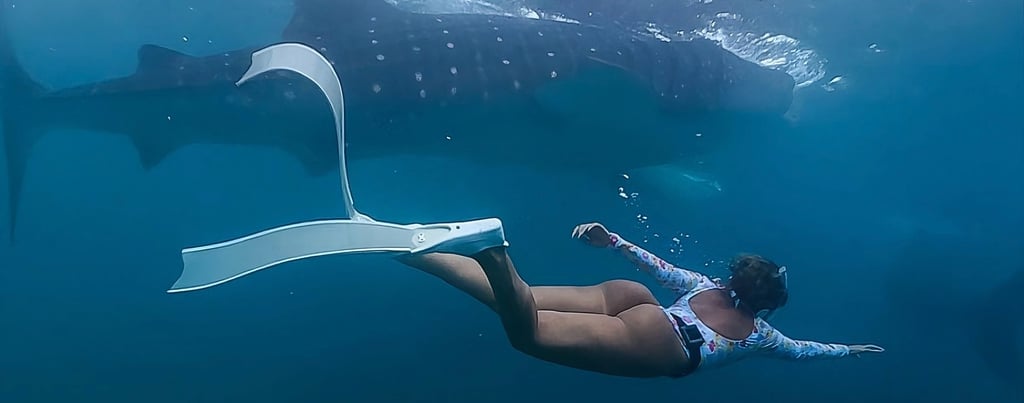
How to Recognise Ethical Whale Encounters: Green Flags, Red Flags, and What Responsible Operators Do Differently
Ethical whale encounters should feel calm, respectful, and unforced. That is the simplest way to recognise them.
If a whale experience feels rushed, crowded, overly promised, or built around getting as close as possible, that is usually a sign something is off. If it feels measured, well guided, and based on the animal having space and choice, that is usually a much better sign.
This matters because whale encounters are often marketed as magical, once-in-a-lifetime moments, but not all of them are responsible wildlife experiences. Some are carefully run. Some are not. And for travellers who care about ethical ocean travel, it helps to know the difference before booking.
The best whale encounter is not the one that feels most intense. It is the one that asks the least from the whale.
What ethical whale encounters actually look like
Ethical whale encounters are not about creating a perfect wildlife moment on demand. They are about allowing whales to remain wild while people observe them with care.
That means the animals are not chased, crowded, blocked, or pushed into interaction. It means the boat is handled carefully. It means guides set boundaries. It means guests are briefed properly. It means no one acts as if seeing wildlife gives them the right to control it.
In practice, responsible whale encounters often look less dramatic than tourism marketing suggests. They may involve more waiting, more watching, more uncertainty, and more restraint. That is not a weakness. That is usually the sign that the experience is being run well.
Whales are intelligent, social marine mammals with migration routes, feeding patterns, resting needs, and family bonds. A respectful encounter recognises that human presence should fit around those realities, not the other way around.
Green flags to look for
Clear rules, explained simply
A good operator should be able to explain how they approach whales, what guidelines they follow, when they do not enter the water, and what behaviour is expected from guests. If those answers are clear and easy to understand, that is a very good sign.
Responsible operators are usually not vague about their standards. They know them well because they use them every day.
Calm boat behaviour
How the boat moves matters more than many travellers realise. Ethical whale encounters usually begin with slow, careful, patient navigation. The boat should not speed toward whales, cut across their path, or reposition aggressively to get a better look.
A respectful encounter starts before anyone enters the water.
Small groups that stay manageable
Small groups tend to create better wildlife experiences. There is less noise, less confusion, and less pressure on the animals. It is also easier for the guide to manage behaviour and keep the group calm.
In responsible ocean travel, small-group experiences are often one of the clearest signs that care is built into the design of the trip.
A proper briefing before the encounter
A briefing should cover more than safety. It should explain how to move in the water, what not to do around whales, why certain rules matter, and what happens if conditions are not right.
This is one of the strongest green flags because it shows the operator is not just selling excitement. They are creating a framework for respectful behaviour.
Passive observation, not pursuit
Ethical swimming with whales should never depend on chasing. Guests should not be encouraged to swim hard toward the animals, dive down after them, or try to create a reaction.
The best interactions happen when humans stay calm and the whale remains free to choose whether to come closer. That is what makes the moment feel real.
A guide who is happy to say no
One of the best signs of a responsible operator is that they are willing to stop, step back, or cancel part of the encounter if needed.
If there is a calf nearby, if the whales are resting, if the sea is rough, or if the group is not behaving appropriately, a good guide will not push for the sake of delivering a dramatic experience. They will protect the conditions instead.
That kind of restraint is not disappointing. It is exactly what responsible wildlife encounters require.
Education is part of the trip
Ethical marine tourism often includes some context. A guide may explain whale behaviour, migration, local guidelines, or why certain actions are avoided. The experience may also be connected to local knowledge, marine expertise, or conservation-minded practices.
This matters because education changes how people behave. When travellers understand why distance and patience matter, they usually make better decisions in the moment.
Red flags to avoid
Guaranteed close encounters
Wildlife should never be sold like a scheduled performance. If an operator strongly implies that you will definitely swim close to whales or have a dramatic in-water moment, that is one of the clearest red flags.
Whales are wild animals, not outcomes to be delivered.
Boats that chase or pressure the animals
If a boat speeds up to reach whales, repeatedly pursues them, or keeps repositioning to force a better view, the experience is already becoming more about human expectation than animal welfare.
Fast pursuit may look exciting from the deck, but it is rarely a good sign in ethical wildlife tourism.
Crowding around the whales
Multiple boats surrounding the same animal, cutting off its movement, or placing swimmers in several directions are strong warning signs. Whales should always have space to move away.
If the experience depends on removing that space, it is no longer respectful.
Treating mothers and calves like a bonus attraction
Calves are one of the clearest situations where more caution is needed, not less. Ethical operators tend to be especially conservative around mothers with calves because these are sensitive encounters.
If a company treats that situation as a reason to push closer, it is worth asking what their priorities really are.
Encouraging people to chase in the water
Any instruction to swim hard, dive after the whale, intercept its path, or create movement to get attention should be seen as a serious red flag.
Responsible whale encounters are based on patience, not pursuit.
Little or no briefing
A rushed, vague, or almost non-existent briefing usually points to weak standards behind the experience. Good wildlife encounters rely on structure. Without it, too much is left to chance.
When the briefing is poor, it often means the operator is expecting the moment to carry the trip rather than the quality of the guiding.
Everything revolves around the photo
Photography is not the problem. The problem is when the whole experience becomes organised around getting the shot.
When content takes over, behaviour often changes. Boats move differently. Groups become more impatient. Boundaries get pushed. Wildlife becomes a backdrop instead of the centre of consideration.
That shift is subtle, but it matters.
Questions worth asking before booking
A few simple questions can tell you a lot about whether a whale experience is likely to be responsible.
Ask how many people are on the boat. Ask whether swimming is always allowed. Ask what happens when calves are present. Ask how the operator approaches whales. Ask whether they ever cancel or stop an interaction when conditions do not feel right.
These are not difficult questions, and a good operator should be comfortable answering them. In many cases, the tone of the answer reveals just as much as the answer itself.
This is one of the easiest ways to choose ethical tour operators without needing to become an expert first.
Why beautiful does not always mean responsible
One of the reasons this topic can feel confusing is that harmful wildlife tourism can still look beautiful in photos.
A stunning image does not tell you whether the boat chased the animal. A perfect video does not reveal whether the group crowded a calf. A powerful moment in the water does not automatically mean the encounter was ethical.
That is why responsible whale watching guidelines matter so much. They help travellers look beyond the image and pay attention to the conditions behind it.
A good encounter is not just something that looks extraordinary. It is something that was handled well.
What responsible operators do differently
Responsible operators usually do not promise too much. They speak clearly. They slow down. They keep group sizes manageable. They brief people properly. They are comfortable with uncertainty. They accept that the whale may not want to engage.
Most importantly, they understand that a great wildlife experience is not built by reducing the animal’s freedom. It is built by protecting it.
That is a very different mindset from mass tourism, and it often leads to a different kind of traveller too. People who choose these experiences are usually looking for something more meaningful than a quick thrill. They want to feel close to the ocean without putting unnecessary pressure on it.
That is where ethical ocean travel becomes more than a nice phrase. It becomes a practical way of making better choices.
A final thought
If you are trying to recognise ethical whale encounters, the easiest place to start is this: look for calm, clarity, and restraint.
Good encounters do not usually feel frantic. They do not need heavy promises. They do not depend on chasing wildlife, crowding the moment, or turning the ocean into a performance.
They feel respectful.
And in many ways, that is what makes them memorable. Not because they gave you everything, but because they left something important untouched.
For travellers who feel drawn to that slower, more thoughtful way of experiencing marine environments, you can explore our upcoming retreats.
FAQ
What is an ethical whale encounter?
An ethical whale encounter is a wildlife experience that aims to minimise disturbance and allow whales to remain in control of the interaction. It usually includes careful boat behaviour, clear rules, passive observation, and guides who prioritise marine life over guest expectations.
How can I tell if a whale operator is responsible?
Look for operators who explain their guidelines clearly, keep groups small, provide proper briefings, avoid chasing whales, and are willing to cancel or step back when necessary. Transparency and calm decision-making are usually very good signs.
Are close whale encounters always unethical?
Not always. Sometimes whales choose to approach people or boats. The important question is whether that closeness happened naturally or was created through pursuit, crowding, or pressure. Ethical encounters happen on the whale’s terms.
What are the biggest red flags in whale tourism?
Some of the biggest red flags are guaranteed close contact, fast boat approaches, crowding around animals, poor briefings, chasing in the water, and pushing too close to mothers with calves. These are often signs that the experience is being built around demand rather than respect.
Why do small groups matter in whale encounters?
Small groups usually create less noise and less pressure on wildlife. They also allow guides to manage behaviour more carefully, which often leads to calmer, more respectful, and lower-impact experiences.
Supporting Articles
© 2026 Ocean Calling Retreats.
All rights reserved.
Ocean Calling Retreats
Ethical ocean retreats for solo travellers. Small-group experiences built on depth, safety, and meaningful connection.
Certifications
All ocean experiences follow strict ethical guidelines.