
Anhinga (American darter)
Anhinga anhinga
A snake-necked bird drying its wings in the sun is a calm sight, and no sighting is ever a promise.
Least Concern (IUCN) means it is not at high risk of extinction at present, and BirdLife International's 2025 figures list 33,300 to 133,000 birds.
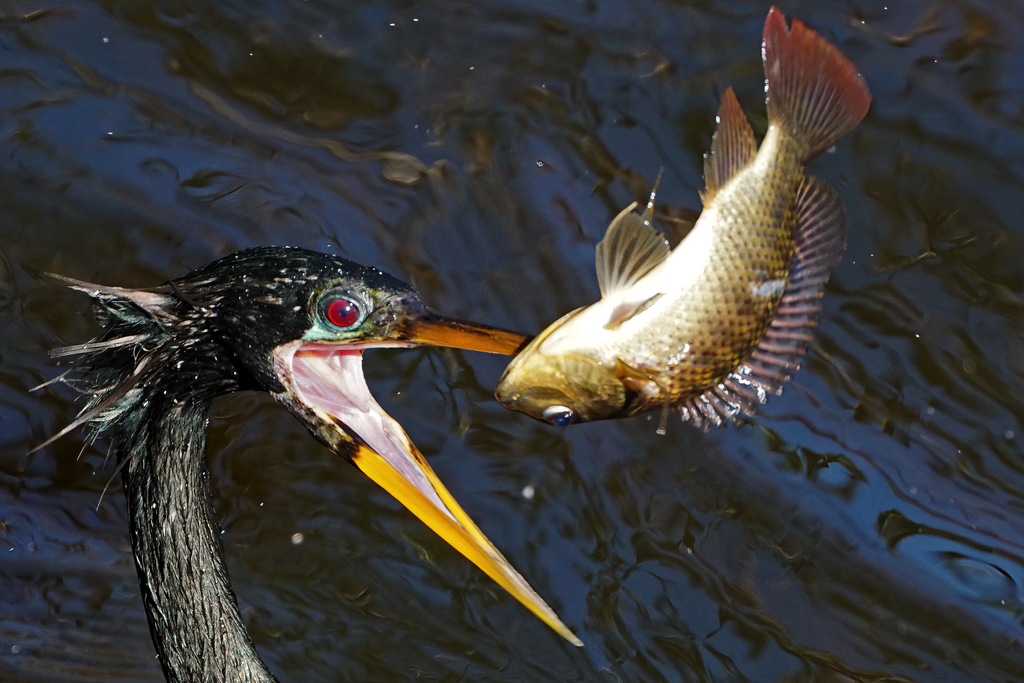
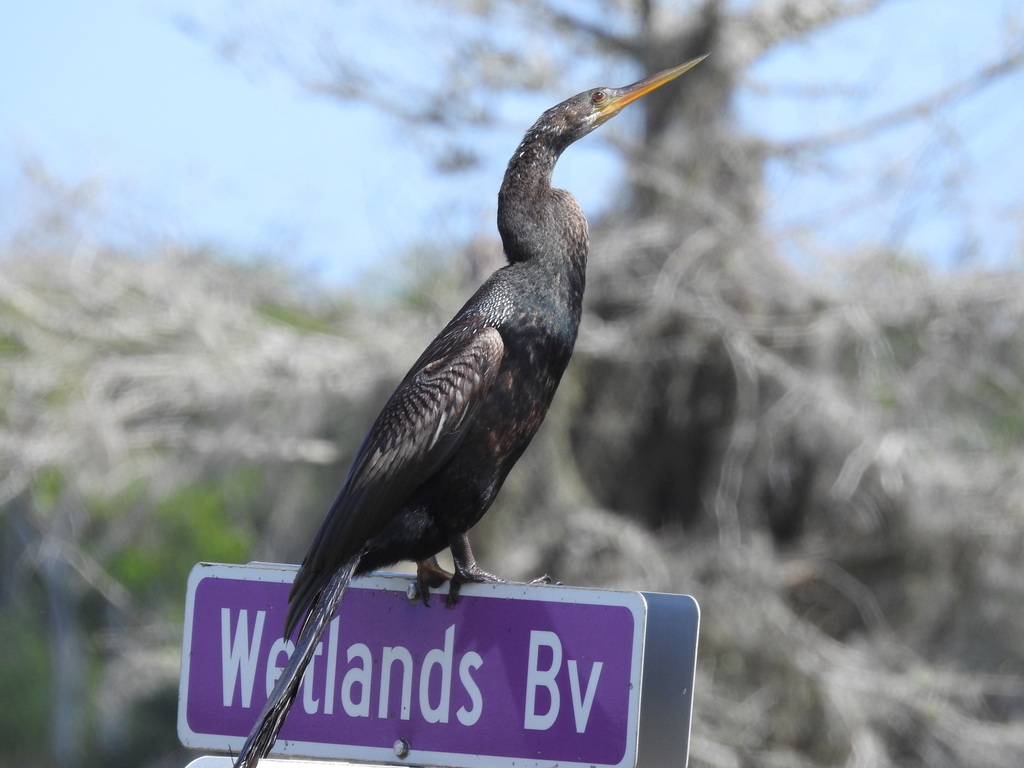
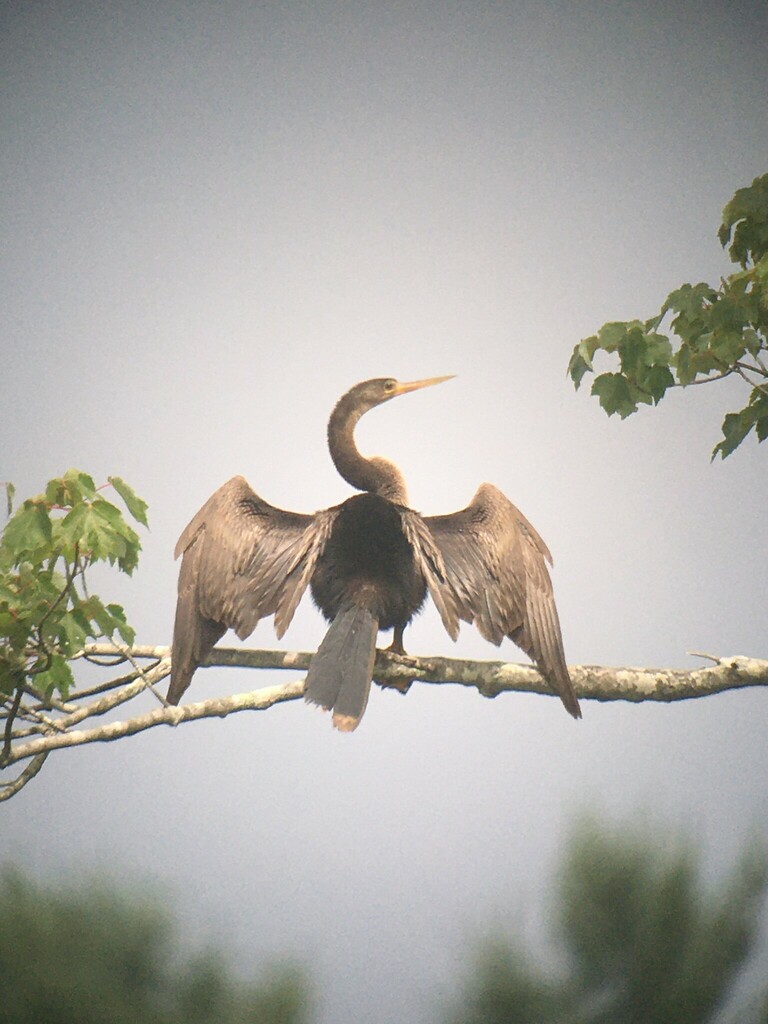
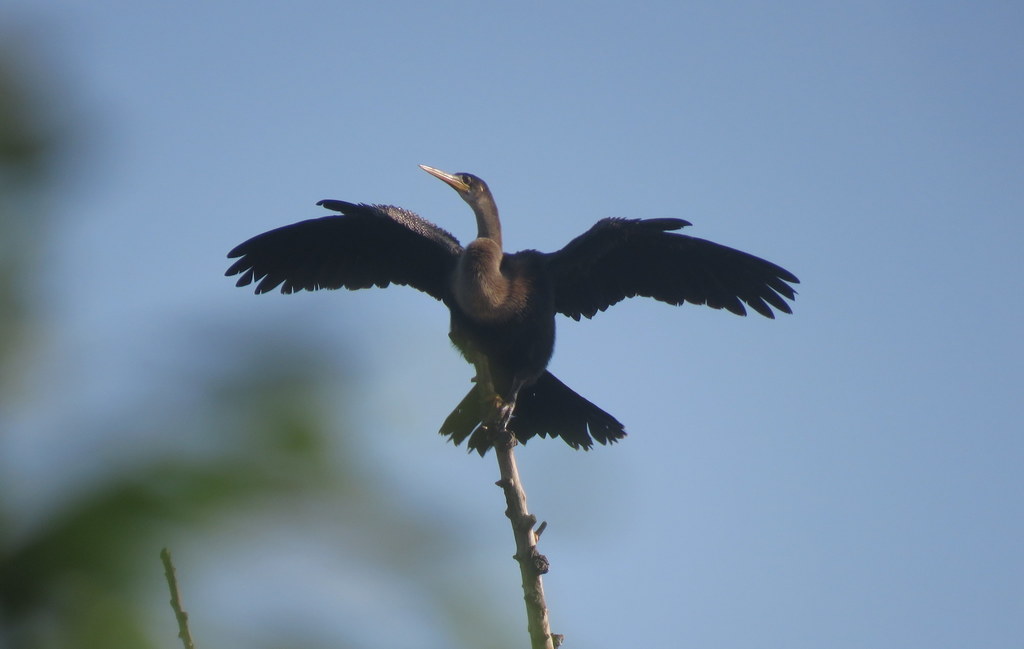
Photos show the species, not always the places on this page.
Length
About 75 to 95 cm (30 to 37 in), wingspan about 109 to 117 cm (43 to 46 in)
Weight
About 1.04 to 1.35 kg (2.3 to 3.0 lb)
Next to a person
Body about as long as a toddler is tall, with wings spread about two-thirds of an adult's arm span, and about as heavy as a bag of sugar
What it eats
Mostly fish, such as perch and sunfish, plus amphibians, aquatic invertebrates, insects and small reptiles. It swims with only its head and neck above water, stalks slow-moving fish underwater and spears them with its sharp bill. It swallows prey head first.
Around people
Quiet, keep distance
How it lives
It lives in freshwater and brackish lakes, marshes, swamps and mangroves with shrubs or trees along the water. Pairs are monogamous and build stick nests in trees above water. A clutch is usually 2 to 6 pale bluish-green eggs, with an average of about 4. Both parents incubate for 25 to 30 days. Chicks fledge at about 6 weeks and adults mature at about 2 years. The oldest known wild bird lived 16.4 years.
Where it goes
The sources I read do not describe long migrations. It lives in warm, shallow, slow-moving water from the south-eastern United States through Central and South America. Its range is limited northward because it lacks insulating feathers.
We only draw a journey on the map when scientists have tracked it or clearly documented it. For this animal we have not found one yet.
Populations
Wikipedia lists 33,300 to 133,000 birds (BirdLife International, 2025) with an unknown trend, and its range spans about 15 million square kilometres. It is described as abundant across the Americas, with habitat loss and pesticide contamination as ongoing threats. I did not find population numbers by country.
Meet it respectfully
Watch quietly from a distance, especially when birds are drying their wings or tending nests in trees over water. Never chase, feed or bait them. Keep boats slow and well back from nesting trees, and do not walk up to perches. Follow local rules and your guide. Sightings are never promised.
Fun fact
Tap the bulb to light it up.
It is called the snakebird because only its neck shows above water while it swims.
Its feathers are not fully waterproof, which helps it dive, so it dries them by perching with wings spread.
The oldest known wild anhinga lived 16.4 years.
Anhinga (American darter) in the Ocean Atlas
Places we have researched where this animal is recorded. It is never guaranteed, and some places are for watching from the boat only.
Travel with usComing soonTrusted referralExploringOn pause, story onlyEthics pass
Country colour: pink where we travel, blue where we are exploring or refer, grey for story only.
 Argentina
 The Bahamas
 Belize
 Brazil
 Canada
 Cayman Islands
 Colombia
 Costa Rica
 Cuba
Cuba Ecuador
 El Salvador
 French Guiana
 Guatemala
 Guyana
 Honduras
 Mexico
 Nicaragua
 Panama
 Peru
Peru Suriname
 Trinidad and Tobago
 United States
 Uruguay
 Venezuela
Sources for this page
- Wikipedia, Anhinga, 2026
- Animal Diversity Web, Anhinga anhinga, 2026
- US National Park Service, Anhinga, 2026
- Oiseaux-Birds, Anhinga, 2026
- Wikipedia, List of Suliformes by population (BirdLife International, 2025)
- GBIF, IUCN Red List category, 2026
Facts checked 5 October 2026. Photos: Unsplash licence, or Creative Commons as shown on each photo.
Work in ocean travel?
We are always happy to hear from exceptional local operators, accommodation, conservation organisations and destination experts. If your work fits responsible, small-group ocean travel, we would love to learn more.
Partner with Ocean CallingGili Trawangan in 5 days
from CHF 790