
Antillean manatee
Trichechus manatus manatus
Antillean manatees are quiet seagrass grazers of warm Caribbean and Central American bays and rivers. A nose at the surface is a privilege, never a guarantee.
Endangered (IUCN, 2008) means it is at very high risk of extinction in the wild. This status is for the Antillean manatee subspecies. The whole species is Vulnerable.
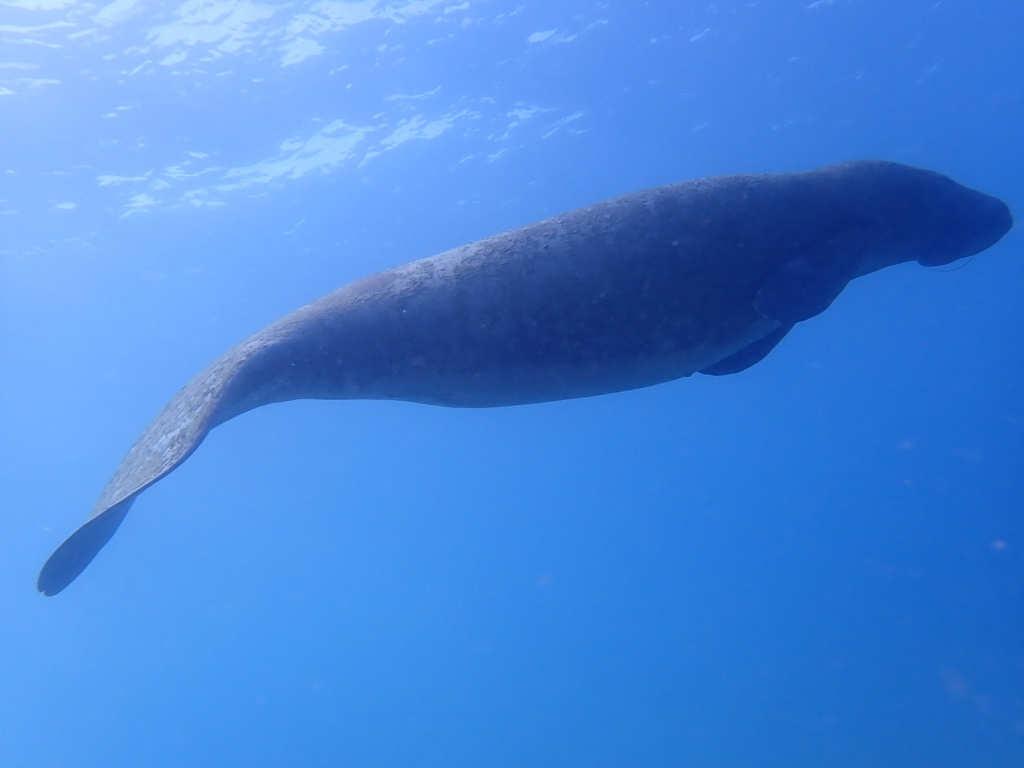
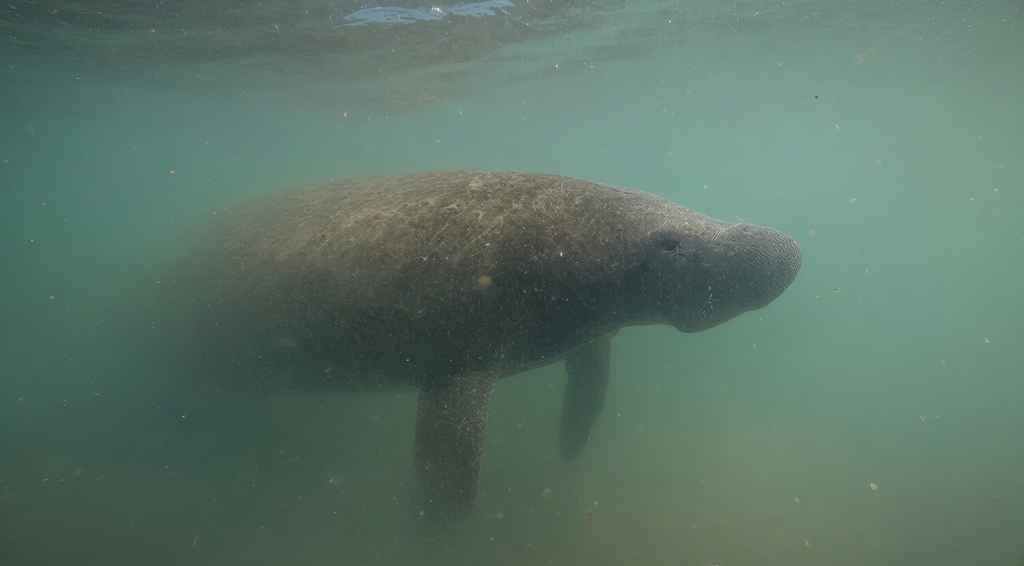
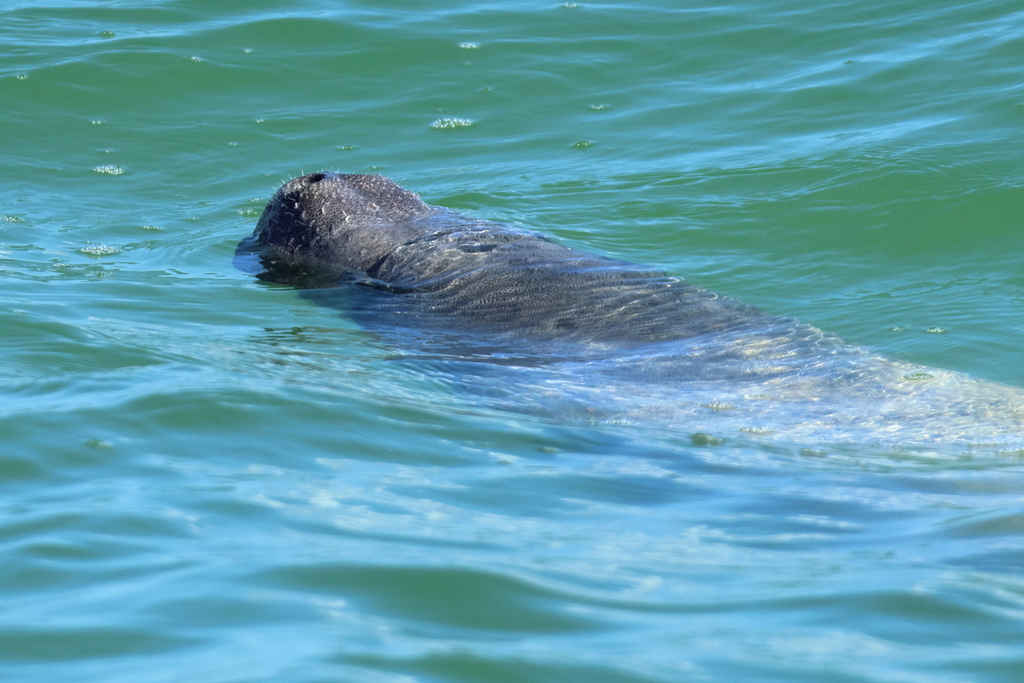
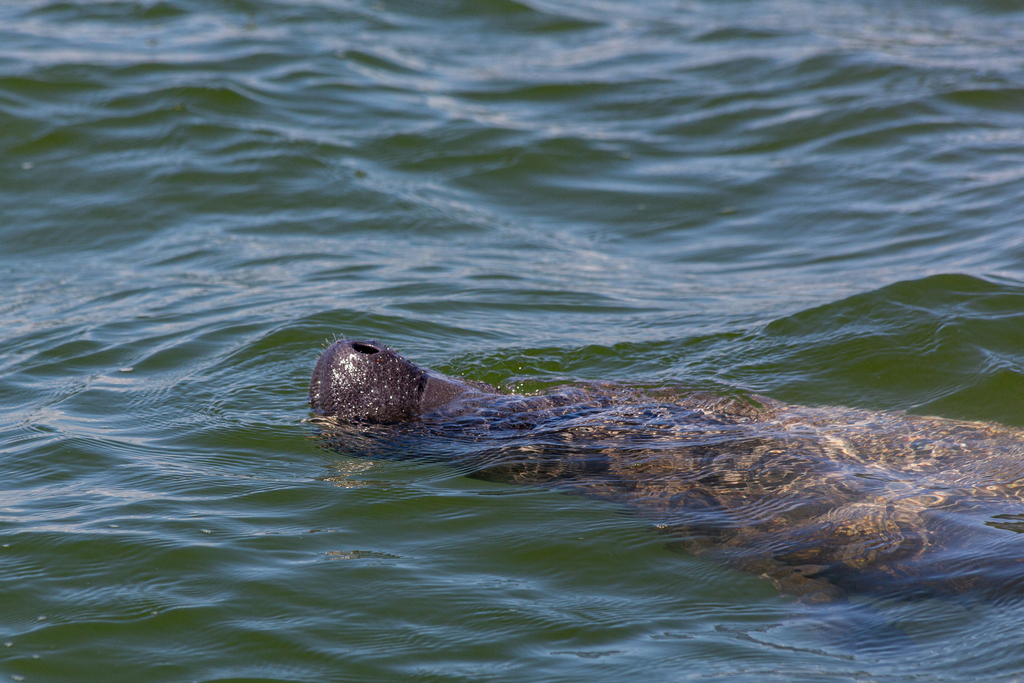
Photos show the species, not always the places on this page.
Length
Usually about 2.7 to 3 m (8.9 to 9.8 ft); the longest in one Antillean study about 3.3 m (10.8 ft). Smaller on average than Florida manatees
Weight
Often about 400 to 550 kg (880 to 1,210 lb); the heaviest in one Antillean study about 550 kg (1,210 lb)
Next to a person
About one and a half times as long as an adult person and as heavy as several adults
What it eats
Mainly seagrasses, plus mangrove leaves, algae and other water plants. A manatee may eat about 4 to 10 percent of its body weight in a day, and it needs to reach fresh water from time to time.
Around people
Calm, give space
How it lives
Antillean manatees graze on seagrass and water plants in shallow coastal lagoons, bays, river mouths and rivers. They are slow and mostly solitary, but mothers and calves stay close for about two years. They rest often near the surface, which makes them easy to hit by fast boats.
Where it goes
Many stay in the same bay for most of the year, but some travel far. In Chetumal Bay, Mexico, 15 manatees were tracked by satellite: females spent 89.6 percent of their time in the bay and males 72.0 percent, and some swam up to 240 km in 89 days along the coast of Belize.
Populations
This subspecies lives in patches from the Gulf of Mexico and the Caribbean to northeast Brazil, and is mostly absent from the Lesser Antilles. Fewer than 7,000 may remain in the wild, and Belize has the highest known density. IUCN lists the Antillean subspecies as Endangered, while the West Indian manatee as a whole is Vulnerable. Skull shape splits Florida and Antillean subspecies, but DNA shows three regional lineages that do not match them exactly.
Meet it respectfully
Watch quietly from a boat with the engine off or from shore. Never touch, feed, give water to, chase, surround or corner a manatee, and never come between a mother and calf. Keep boats slow in manatee areas. In Belize and Puerto Rico the law forbids feeding or harassing manatees, and in Mexico they are a protected endangered species. The manatee chooses how close it comes.
Fun fact
Tap the bulb to light it up.
Manatee mothers care for their calves for about two years.
A manatee can eat about 4 to 10 percent of its body weight in plants in one day.
In Chetumal Bay, Mexico, satellite tags showed one manatee travelling up to 240 km in 89 days into the waters of Belize.
Source: Castelblanco-Martínez et al., 2013, Marine Mammal Science
DNA from 330 manatees shows three regional groups of West Indian manatees, split near the chain of islands from the Lesser Antilles to Trinidad.
Follow its journey
Watch it travel. Every line comes from satellite tracking or documented research, and the source is named.
StartEndJourney (the line joins documented areas; real paths vary)
Antillean manatee in the Ocean Atlas
Places we have researched where this animal is recorded. It is never guaranteed, and some places are for watching from the boat only.
Travel with usComing soonTrusted referralExploringOn pause, story onlyEthics pass
Country colour: pink where we travel, blue where we are exploring or refer, grey for story only.
 Belize
 Brazil
 Colombia
 Costa Rica
 Dominican Republic
 French Guiana
 Guadeloupe
 Haiti
Haiti Honduras
 Jamaica
 Mexico
 Nicaragua
 Panama
 Suriname
Sources for this page
- U.S. Fish and Wildlife Service, Antillean manatee
- U.S. Fish and Wildlife Service, Manatee
- Castelblanco-Martínez et al., 2013, Marine Mammal Science, Antillean manatees in Chetumal Bay and Belize
- Vianna et al., 2006, Molecular Ecology, phylogeography of manatees
- Luna et al., 2021, Frontiers in Marine Science, West Indian manatee genetics in Brazil
- Self-Sullivan & Mignucci-Giannoni, 2008, IUCN Red List, Trichechus manatus manatus
- Castelblanco-Martínez et al., 2021, Scientific Reports, Antillean manatee body condition
- Allen et al., 2017, Journal of the Marine Biological Association of the UK, manatee diet in Belize
Facts checked 26 September 2026. Photos: Unsplash licence, or Creative Commons as shown on each photo.
Work in ocean travel?
We are always happy to hear from exceptional local operators, accommodation, conservation organisations and destination experts. If your work fits responsible, small-group ocean travel, we would love to learn more.
Partner with Ocean Calling