
Basking shark
Cetorhinus maximus
The world's second largest fish cruises slowly at the surface with its mouth open to filter plankton, then can vanish offshore and dive more than a kilometre deep.
Endangered (IUCN, 2018) means it is at very high risk of extinction in the wild.
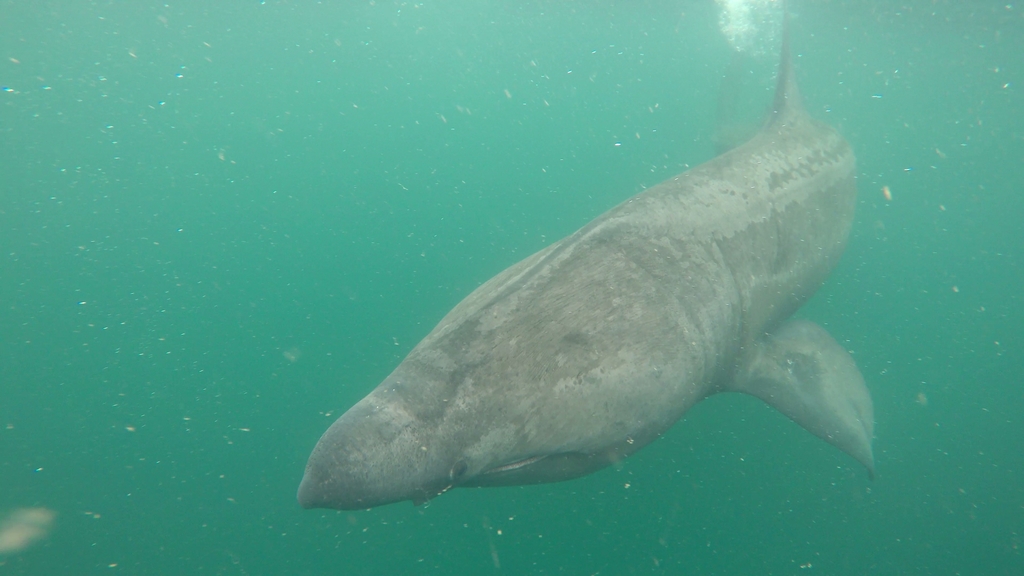
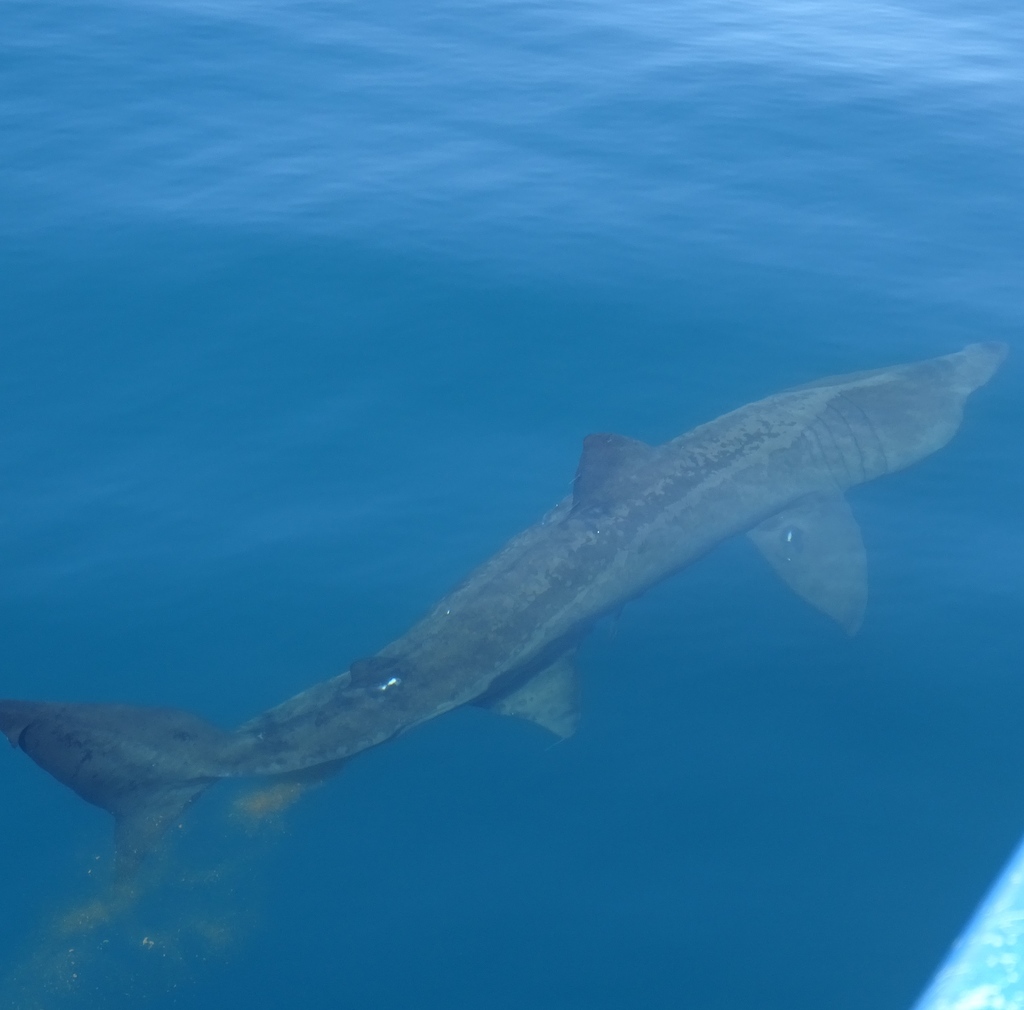
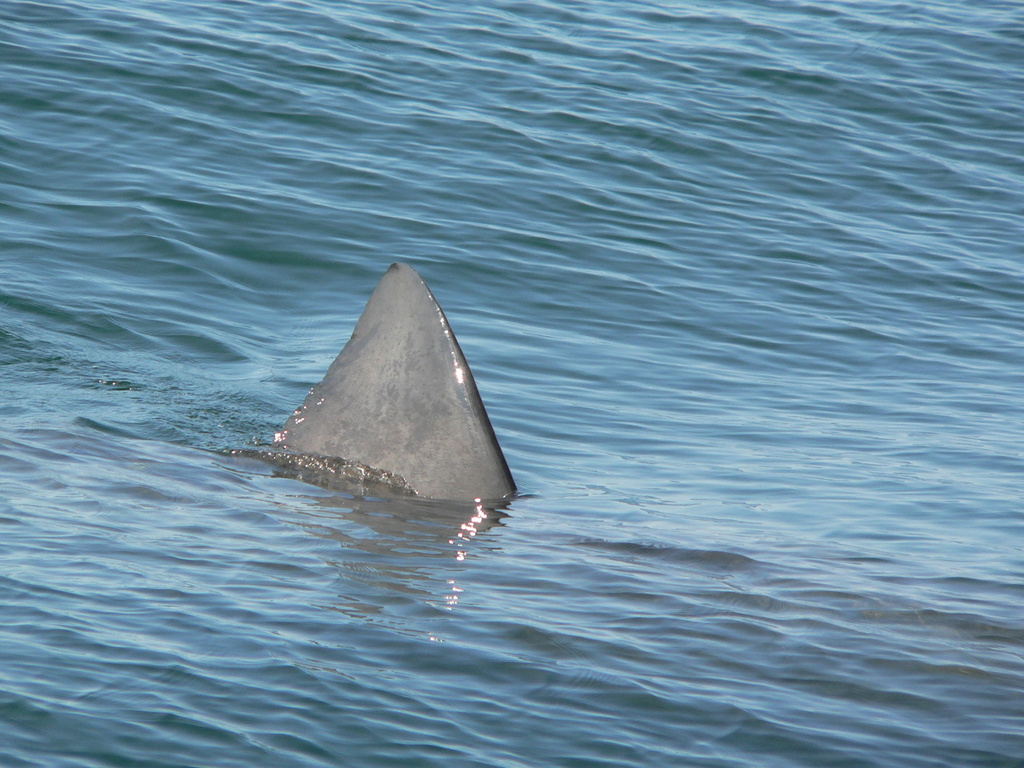
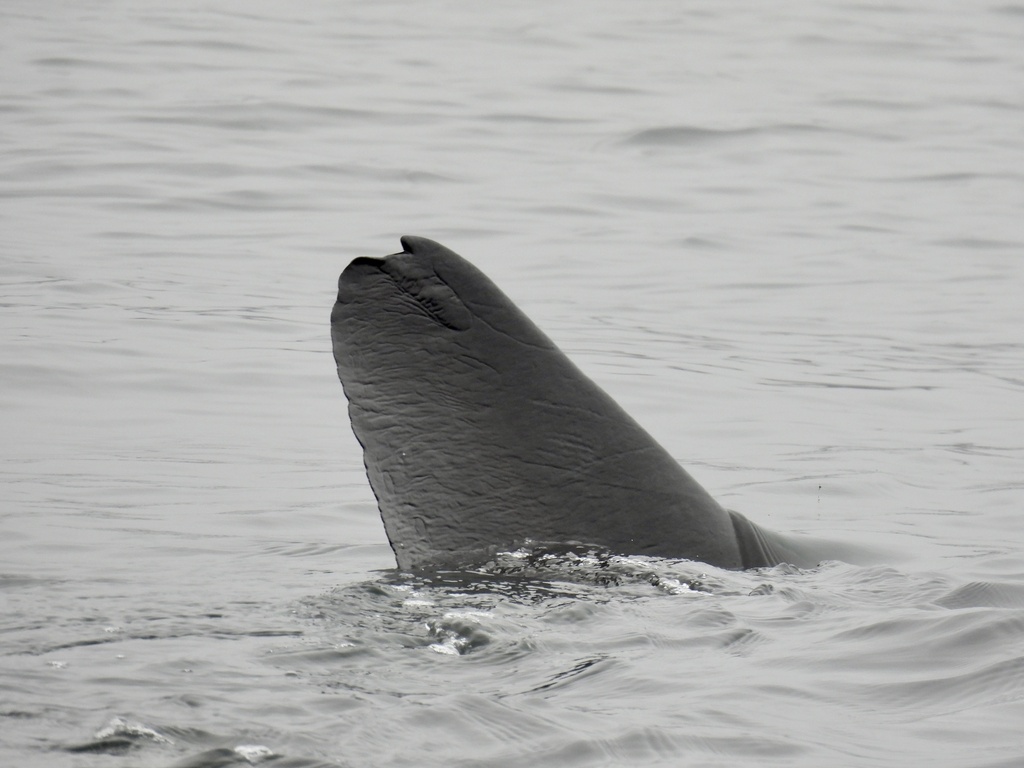
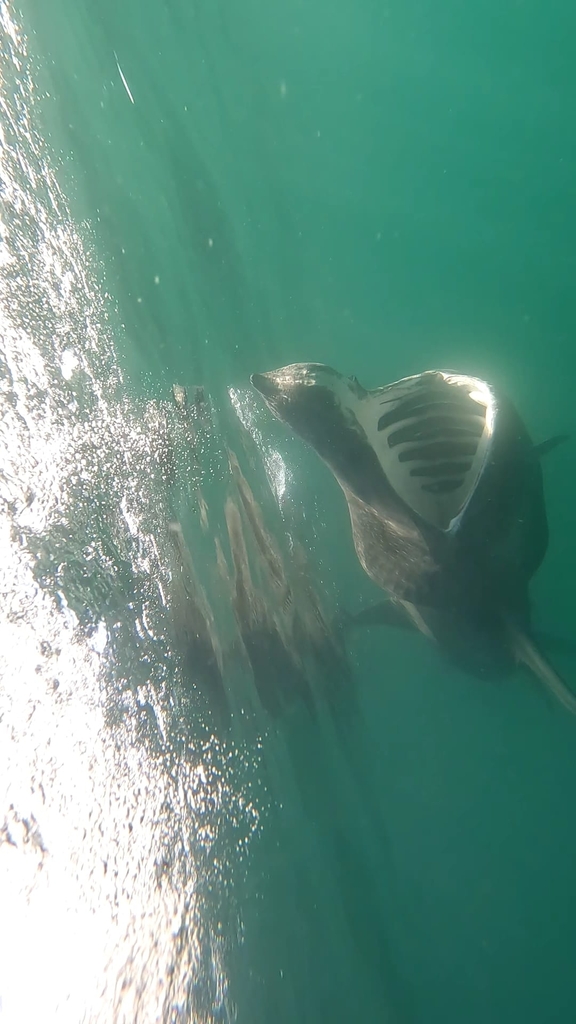
Photos show the species, not always the places on this page.
Length
Adults commonly about 6 to 10 m (20 to 33 ft); the largest up to about 12 m (39 ft), and these are now rare
Weight
Large adults can weigh several tonnes; a typical adult weight is not reliably measured
Next to a person
A typical adult is about four times as long as a person
What it eats
Zooplankton, especially copepods and other tiny drifting animals, plus fish eggs. It filters them as it swims forward with its huge mouth open, using its gill rakers.
Around people
Calm, give space
How it lives
The basking shark swims slowly with its mouth wide open to filter plankton, often at the surface on calm summer days along fronts where plankton gathers. It can be alone or in groups. Outside the summer surface season, many tracked sharks spend long periods offshore and deep, sometimes below 1,000 m. It grows slowly and has few young, so it recovers slowly from fishing.
Where it goes
Tracking shows long seasonal journeys, and not every shark takes the same route. Of sharks tagged off west Scotland and the Isle of Man from 2012 to 2015, some stayed around the UK and Ireland, some went to the Bay of Biscay, and one reached North African waters. Off Cape Cod in the United States, some tagged sharks went south to the Bahamas, the Caribbean and on to South America.
Populations
Basking sharks live in cool and temperate seas around the world. The Sea of the Hebrides in Scotland is one of the most important summer places, with sharks returning in consecutive years. The species is Endangered worldwide. It is protected in the UK and, since 2022, under the Wildlife Act in Ireland.
Meet it respectfully
Watch from a slow boat, slow down early and put the engine in neutral nearby. Never cut across its path, force it to change course, chase or crowd it, and never touch it. Keep well back when several boats are present. In the UK disturbing a basking shark is an offence, and in Ireland it is protected under the Wildlife Act, so any in-water encounter must follow local law and codes.
Fun fact
Tap the bulb to light it up.
It is the second largest fish in the world, after the whale shark.
Tagged basking sharks from New England crossed the equator into the Southern Hemisphere.
Satellite tags on basking sharks from Scotland and the Isle of Man showed a median trip of 3,633 km. One shark ended 3,088 km from where it was tagged, in North African waters.
Basking sharks tagged off Cape Cod travelled to the Caribbean and South America, and some stayed in deep water for weeks to months.
Source: Skomal et al., 2009, Current Biology, transequatorial migrations by basking sharks
Follow its journey
Choose a journey and watch it travel. Every line comes from satellite tracking or documented research, and the source is named.
StartEndJourney (the line joins documented areas; real paths vary)
Basking shark in the Ocean Atlas
Places we have researched where this animal is recorded. It is never guaranteed, and some places are for watching from the boat only.
Travel with usComing soonTrusted referralExploringOn pause, story onlyEthics pass
Country colour: pink where we travel, blue where we are exploring or refer, grey for story only.
 Albania
 Australia
 Belgium
 Canada
 Chile
Chile Croatia
 Denmark
 Faroe Islands
 France
 Greece
 Iceland
 Ireland
 Italy
Italy Japan
Japan Netherlands
 New Zealand
 Norway
 Portugal
 Russia
 Spain
Spain Sweden
 United Kingdom
 United States
Sources for this page
- FishBase, Cetorhinus maximus summary
- NatureScot, Sharks and skates of Scotland: basking shark
- Doherty et al., 2017, Scientific Reports, basking shark satellite tracking in the north-east Atlantic
- Skomal et al., 2009, Current Biology, transequatorial migrations by basking sharks
- Irish Basking Shark Group, legal status
- GBIF occurrence records by country, checked 26 Sep 2026
- CMS, Cetorhinus maximus
- Marine Management Organisation, GOV.UK, 2025, Protected marine species: fish including sharks
Facts checked 26 September 2026. Photos: Unsplash licence, or Creative Commons as shown on each photo.
Work in ocean travel?
We are always happy to hear from exceptional local operators, accommodation, conservation organisations and destination experts. If your work fits responsible, small-group ocean travel, we would love to learn more.
Partner with Ocean CallingNew: tiger sharks in Fuvahmulah, January or March 2027
from CHF 2,900