
Blue-spotted stingray
Neotrygon kuhlii complex
Watch the sand for a maskray with electric-blue spots and a slender whip tail. Give it space, because it uses its venomous barb if it is stepped on.
Varies by species: the old Neotrygon kuhlii is Data Deficient, the Australian species is Near Threatened, and most others in the group are Least Concern. The species around Lombok and the Gili Islands is not confirmed.

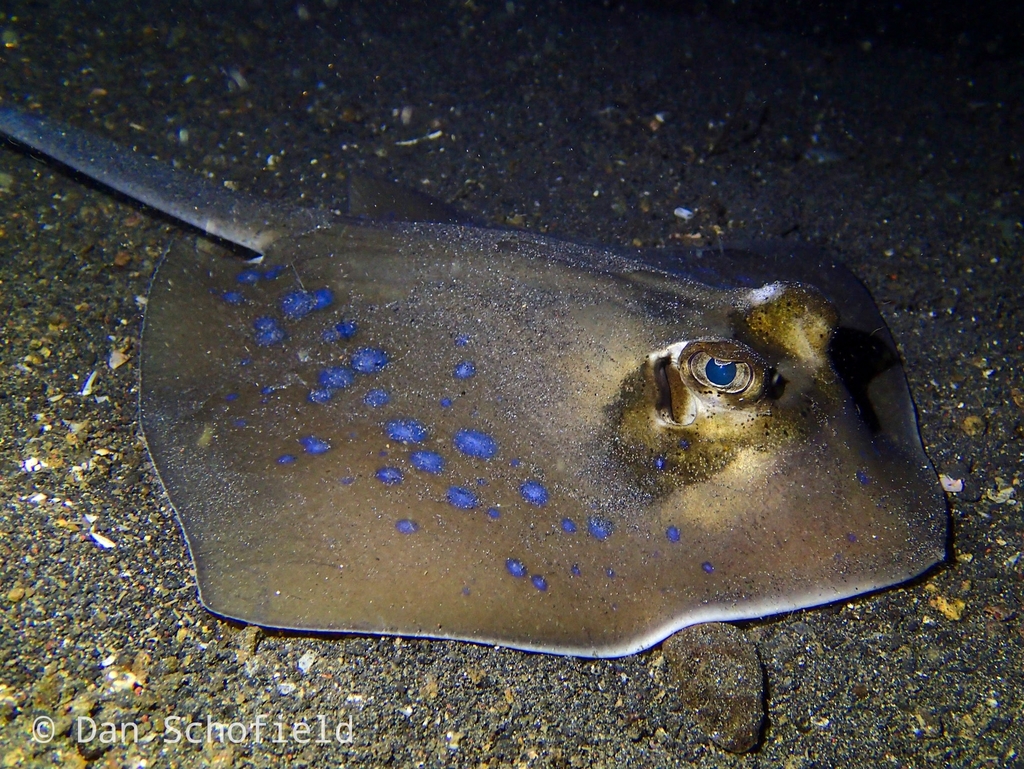
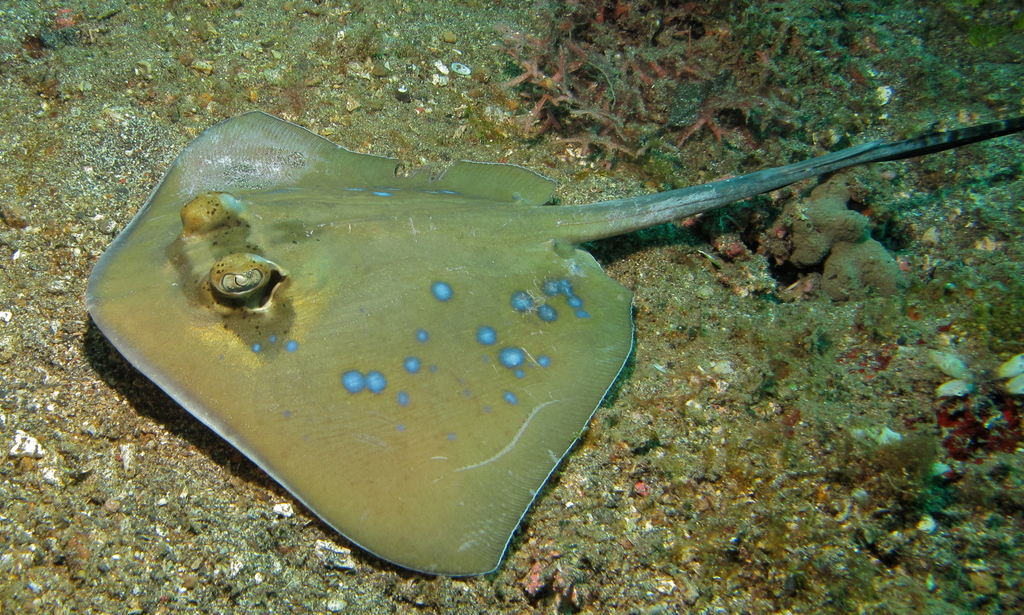
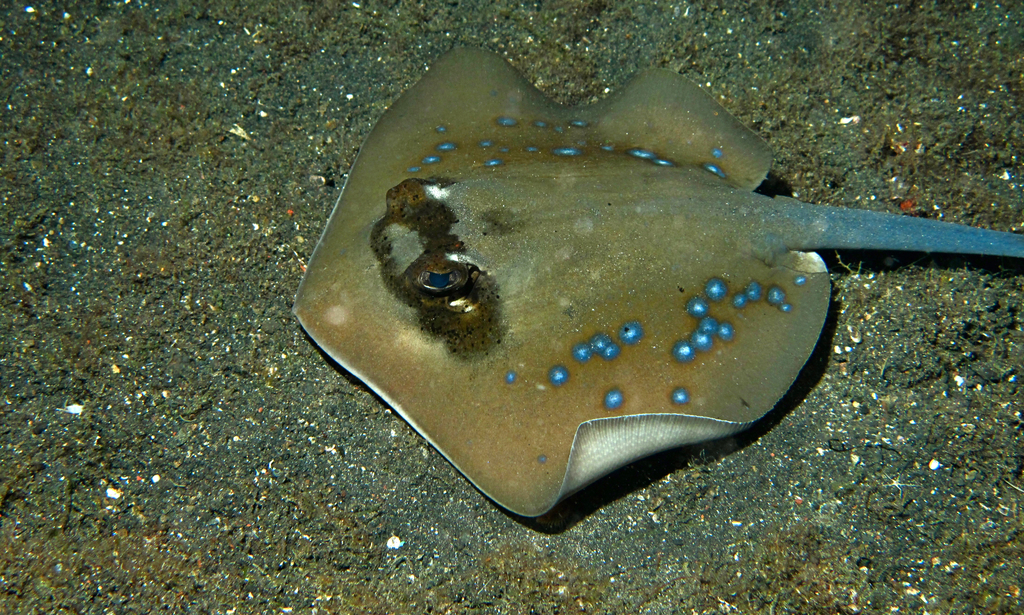
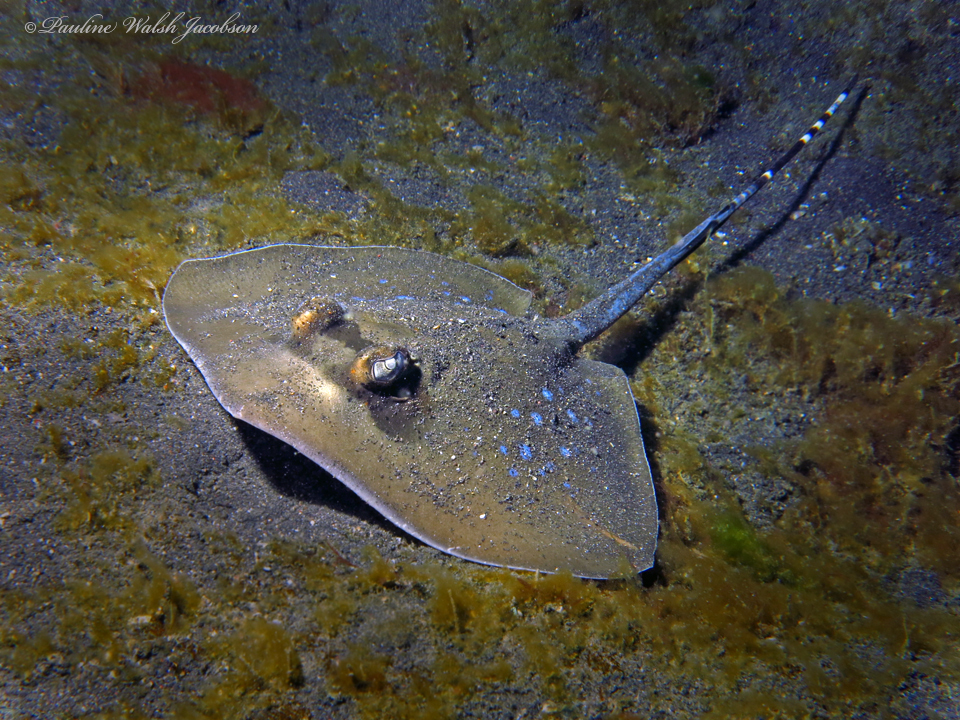
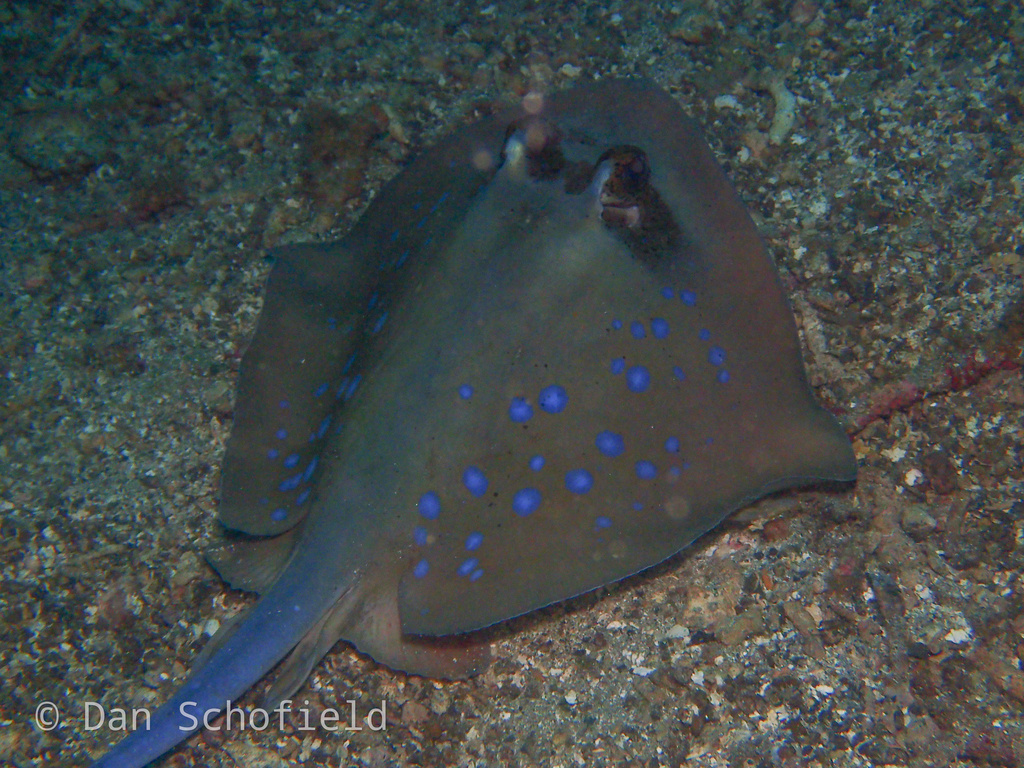
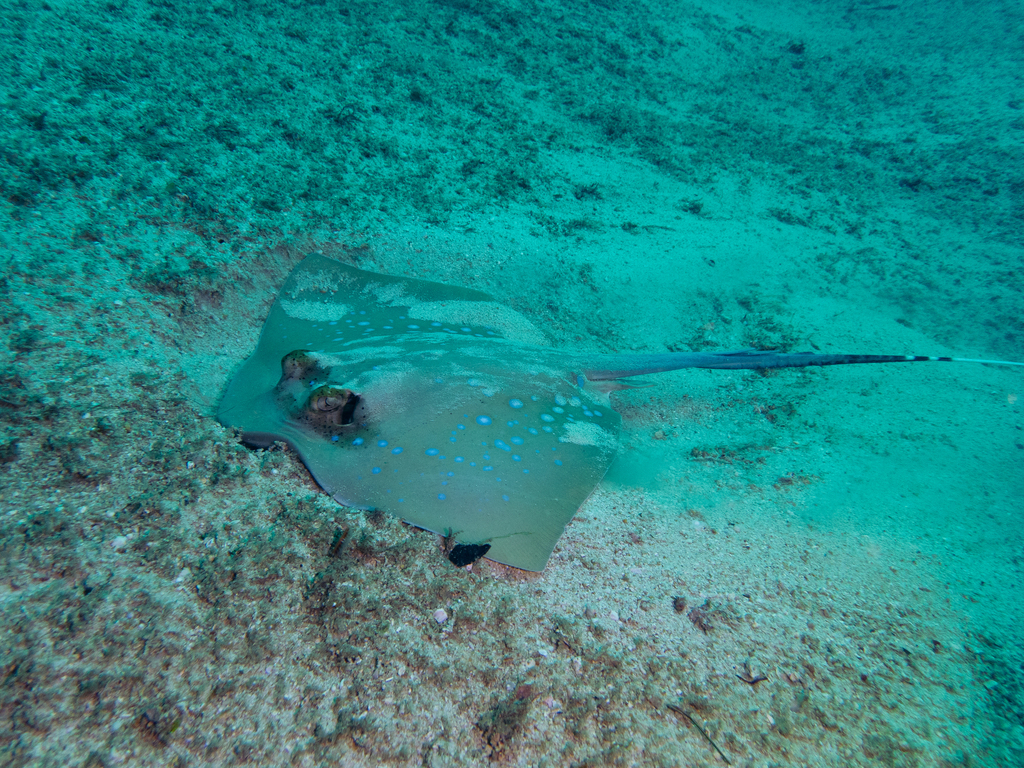
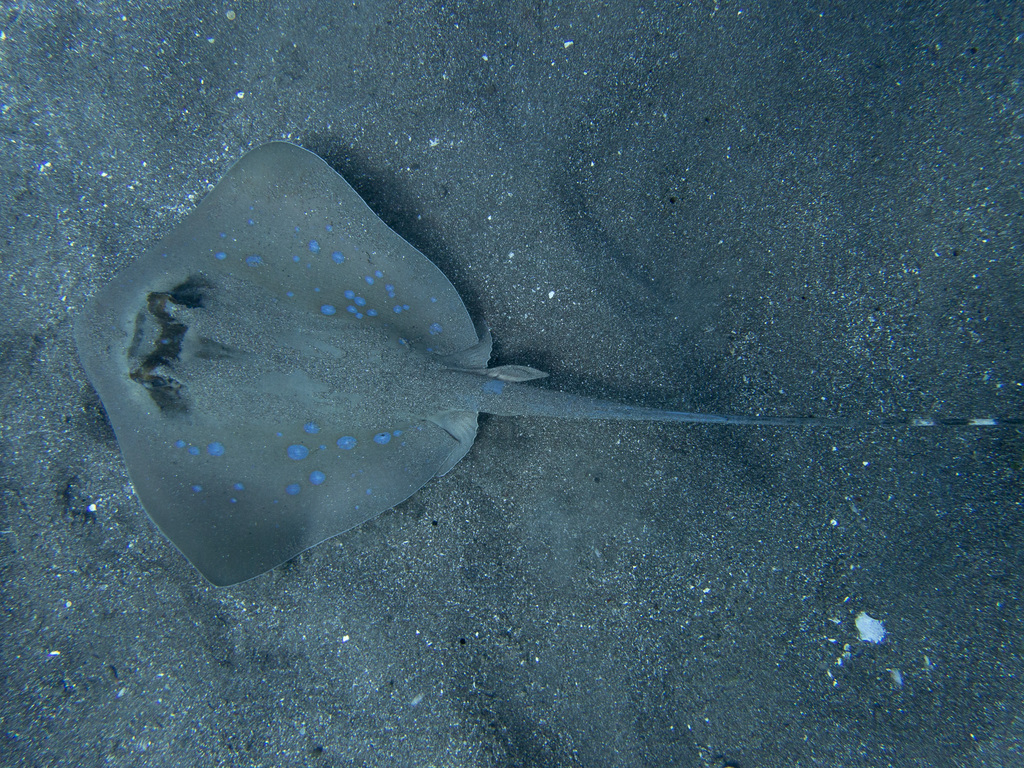
Photos show the species, not always the places on this page.
Length
Size differs between the related species and typical size is not well measured. Largest disc widths about 45 to 47 cm (18 in) in some forms; up to about 70 cm (2.3 ft) long including the tail
Weight
Not reliably measured
Next to a person
Disc about as wide as a dinner plate to a small laptop; with its slender whip tail, often about knee height on an adult
What it eats
Mostly crabs and shrimps from the sand beside reefs, and sometimes small fishes.
Around people
Potentially dangerous, respect
How it lives
This ray usually lives alone on sandy bottoms next to reefs. At high tide it moves onto reef flats and into shallow lagoons. It feeds on crabs and shrimps, and it sometimes covers itself with sand so that only its eyes and tail show. Females give birth to live pups, usually 1 to 3 at a time in Australian studies.
Where it goes
At high tide, this ray moves from sandy bottoms beside the reef onto the reef flats and into shallow lagoons. No long-distance migration has been published.
We only draw a journey on the map when scientists have tracked it or clearly documented it. For this animal we have not found one yet.
Populations
What was once called one species is now known to be several closely related species, split from 2016 onwards and living in different parts of the Indo-Pacific. The correct name for the rays around Lombok and the Gili Islands is not yet settled.
Meet it respectfully
Its tail has a venomous spine that causes painful wounds. Never touch, grab, chase or feed it, and do not block its way. Hover well above the sand, as it may be partly buried. When wading, shuffle your feet. Let it choose the distance.
Fun fact
Tap the bulb to light it up.
Look for an angular disc, a dark mask around the eyes and a slender banded whip tail. This helps tell it from the blue-spotted ribbontail ray.
Scientists are still finding new species in this group. One from Fiji was described in 2025.
Conservation status differs between the species in the group, from Least Concern to Near Threatened.
In Moreton Bay, Australia, tagged blue-spotted maskrays stayed in the same area for up to 1,081 days. That is nearly three years in one small neighbourhood.
Blue-spotted stingray in the Ocean Atlas
Places we have researched where this animal is recorded. It is never guaranteed, and some places are for watching from the boat only.
Travel with usComing soonTrusted referralExploringOn pause, story onlyEthics pass
Country colour: pink where we travel, blue where we are exploring or refer, grey for story only.
 Australia
 Egypt
Egypt India
India Indonesia
 Japan
Japan Malaysia
 Mozambique
 New Caledonia
 New Zealand
 Philippines
 South Africa
 Sri Lanka
 Taiwan
 Thailand
 Vietnam
Sources for this page
- FishBase, 2016
- Last, White & Séret, 2016
- Reef Check, 2019
- Glaus et al., 2025, Journal of Fish Biology
- Reef Life Survey, Neotrygon kuhlii
- FishBase, Neotrygon australiae
Facts checked 26 September 2026. Photos: Unsplash licence, or Creative Commons as shown on each photo.
Work in ocean travel?
We are always happy to hear from exceptional local operators, accommodation, conservation organisations and destination experts. If your work fits responsible, small-group ocean travel, we would love to learn more.
Partner with Ocean CallingGili Trawangan in 5 days
from CHF 790