
Bumphead parrotfish
Bolbometopon muricatum
Bumphead parrotfish often move in small groups, grazing coral and algae on the reef. Hover quietly and let them pass, and never chase or light up sleeping fish.
Vulnerable (IUCN, 2024) means it is at high risk of extinction in the wild.

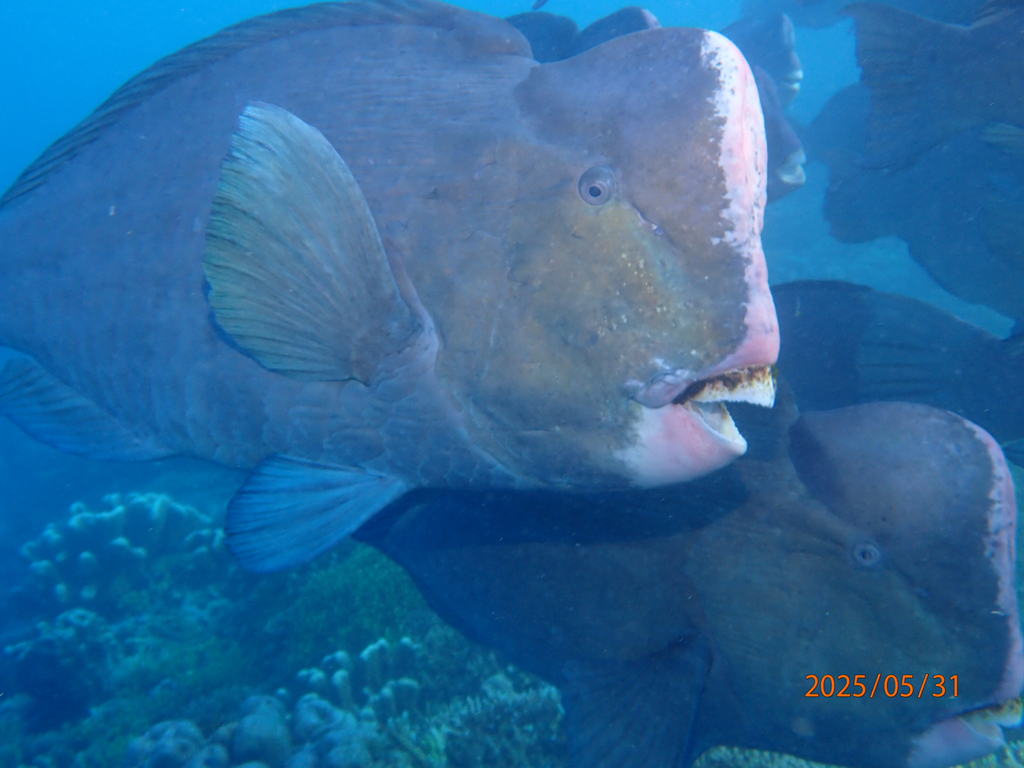
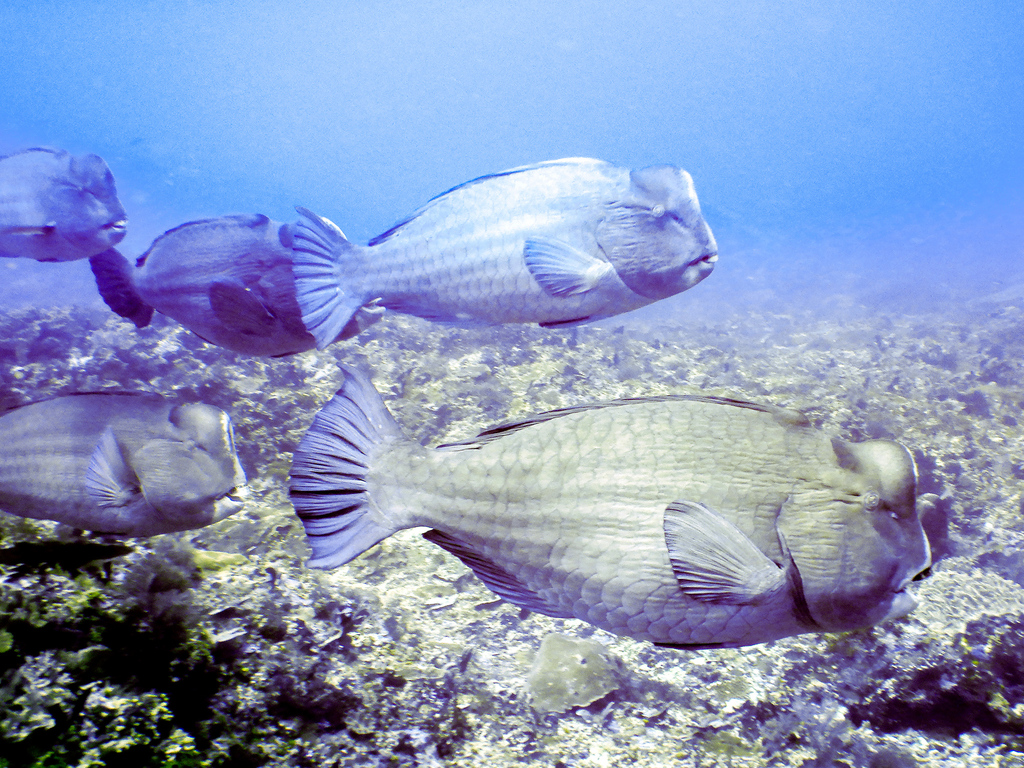
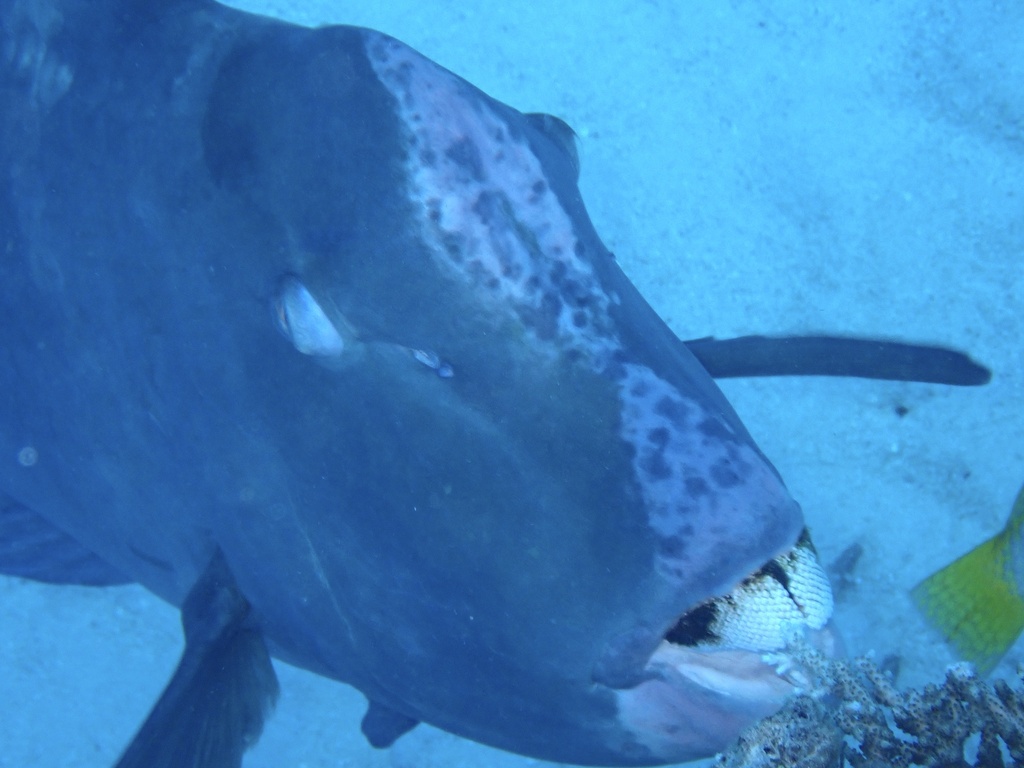
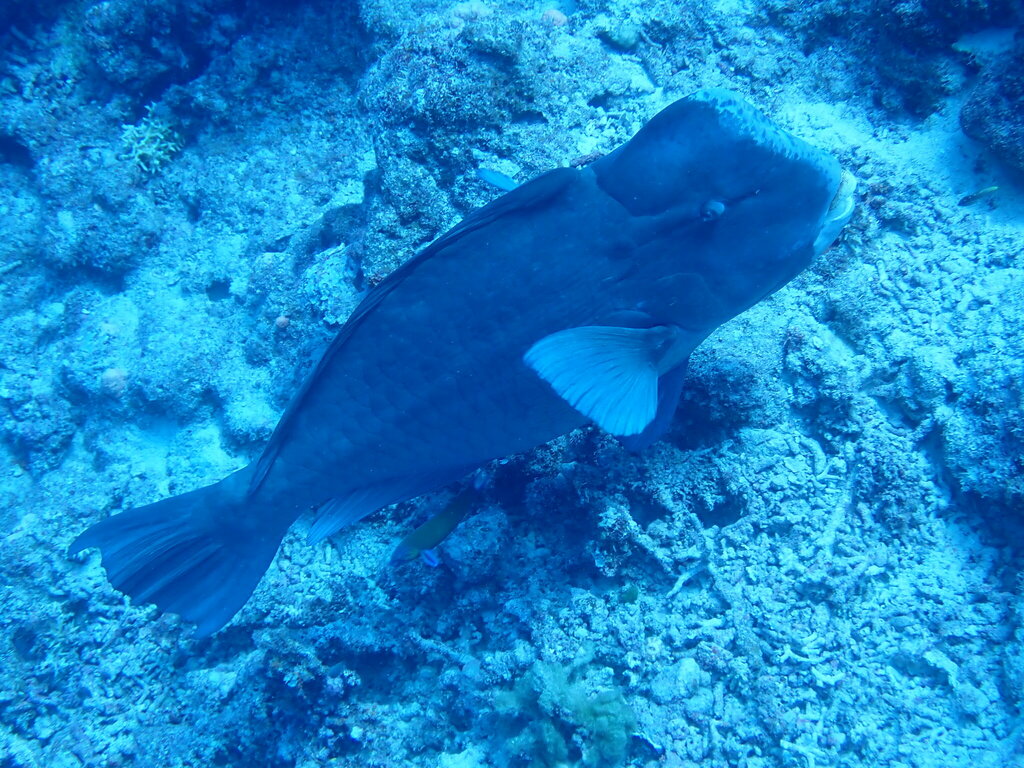
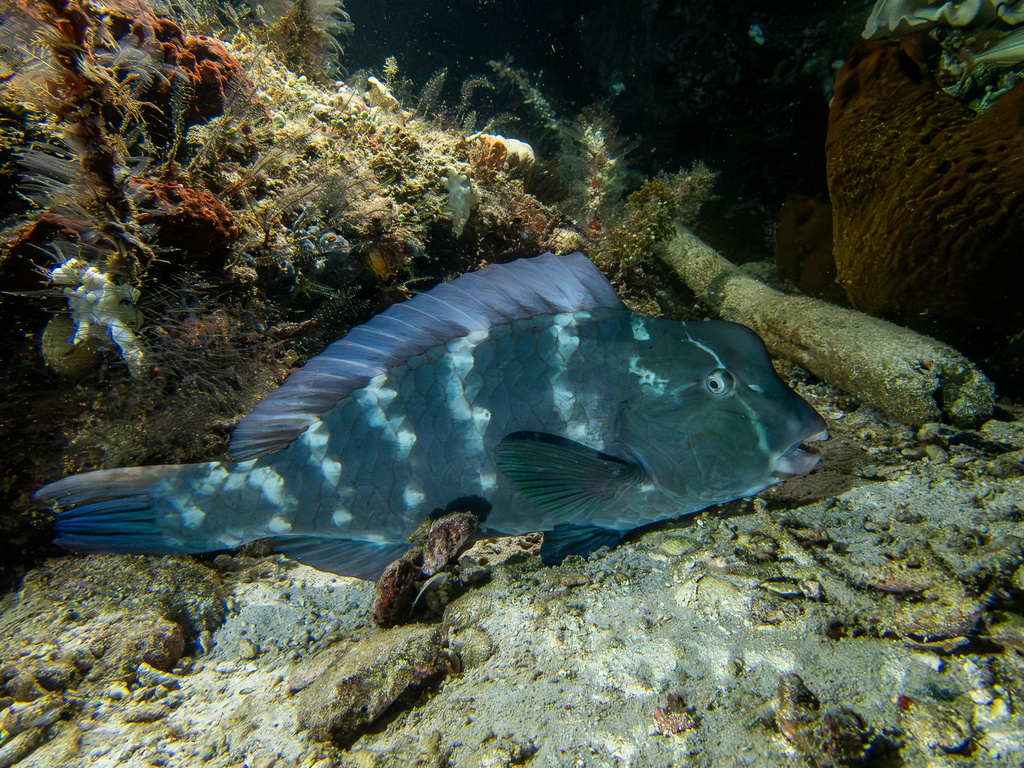
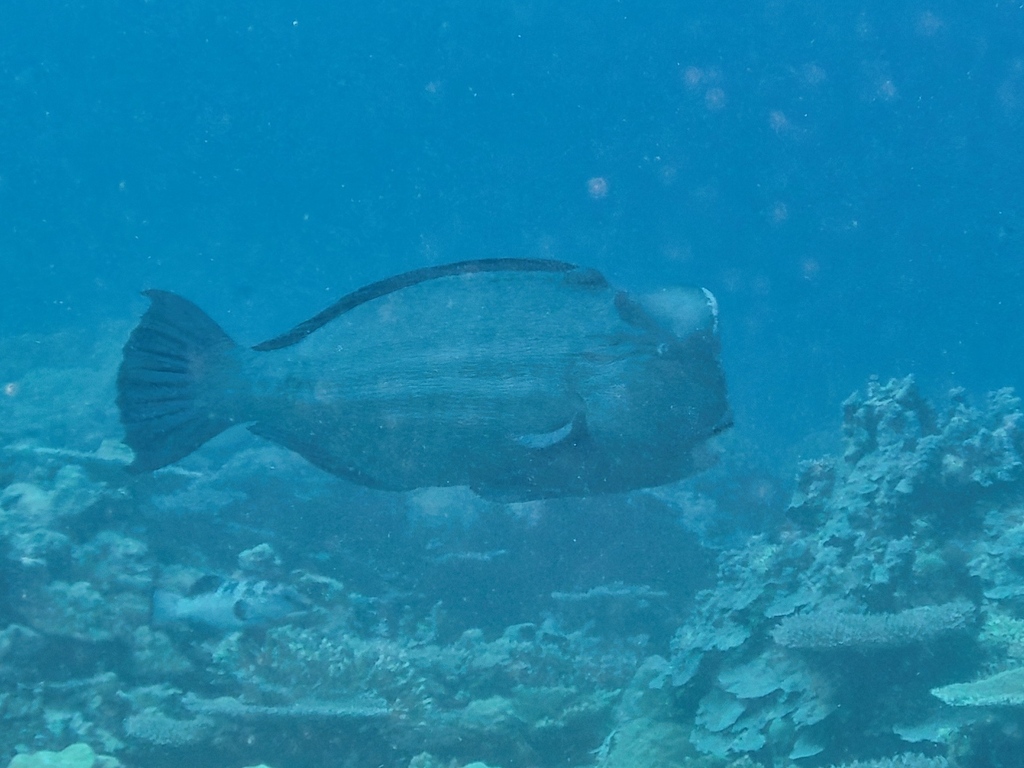
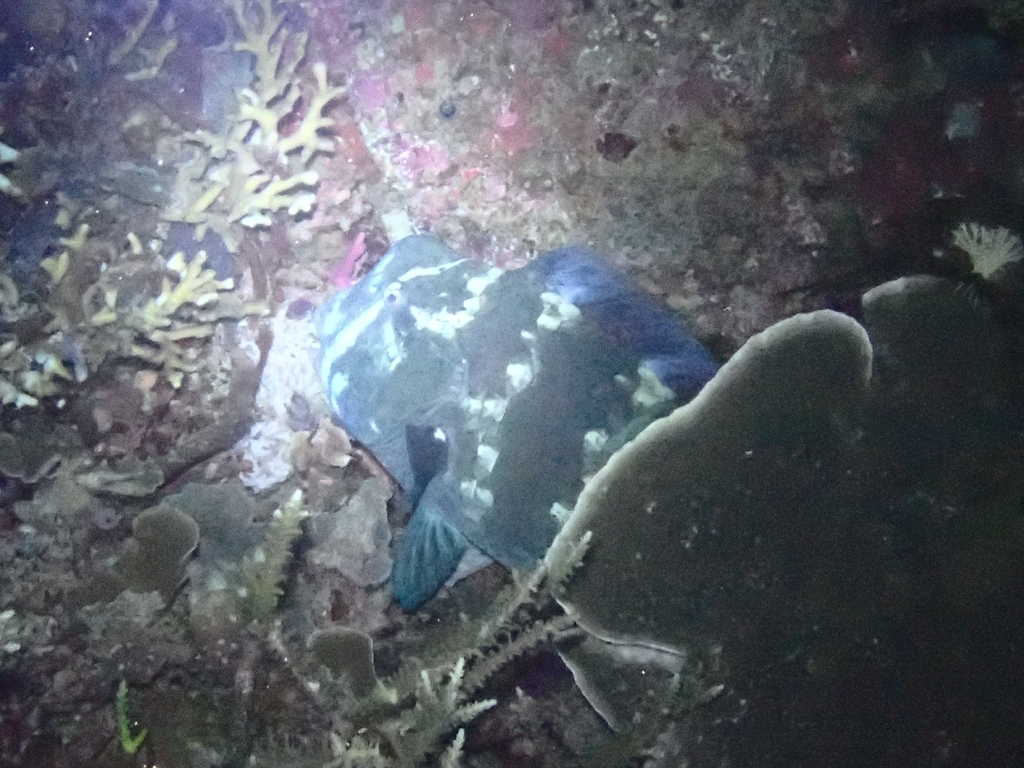
Photos show the species, not always the places on this page.
Length
Commonly about 0.7 m (2.3 ft); largest published about 1.3 m (4.3 ft)
Weight
Typical adult weight not reliably measured; heaviest published about 46 kg (101 lb)
Next to a person
Commonly about the length of a forearm to a shin; the largest would reach roughly chest height if stood on end
What it eats
Live coral, algae growing on the reef, and other small sea-floor life including shellfish. It bites off pieces of reef with its strong beak and sometimes rams coral with its forehead first.
Around people
Calm, give space
How it lives
The bumphead is the largest and most wary of the parrotfishes. It moves in small groups, feeding on algae and live coral, and sometimes rams its head against coral to break it. It also eats shellfish. At night it sleeps in caves and shipwrecks.
Where it goes
Bumphead parrotfish do not make long migrations that we know of. By day, schools may travel up to about 6 km from the caves or wrecks where they sleep, and they often return to the same night roosts. At Tulamben in Bali, a school is often seen around the USAT Liberty wreck, but sightings are never guaranteed.
We only draw a journey on the map when scientists have tracked it or clearly documented it. For this animal we have not found one yet.
Populations
Found on tropical reefs from the Red Sea and East Africa to the central Pacific. Numbers depend strongly on fishing: remote and protected reefs can hold large schools, while on heavily fished coasts they are often rare or gone. At Tulamben a school is often seen on the USAT Liberty wreck, and around the Gili Islands it is seen only occasionally.
Meet it respectfully
Hang still outside the school and let it pass. Do not touch, chase, herd, surround or feed the fish. Never shine lights on fish sleeping at night, and never enter caves or wreck sleeping spots to get a photo. Follow local park and dive rules, which differ by place.
Fun fact
Tap the bulb to light it up.
It is the largest parrotfish in the world.
On studied Great Barrier Reef reefs, one large adult can remove around 5 tonnes of reef a year, making coral sand.
Young bumpheads have rows of white spots, and the forehead bump appears at about 25 cm long.
It is not the Napoleon wrasse: the bumphead has a parrot-like beak and a plain green body.
One large bumphead parrotfish may eat as much as 5 tonnes of reef in a year, and makes tonnes of fine coral sand along the way.
Source: Bray, 2020, Fishes of Australia (Museums Victoria), Bumphead parrotfish
Young bumpheads look very different: brownish to green, with five rows of small white spots on each side. The famous forehead bump appears at about 25 cm long.
Source: FishBase, Bolbometopon muricatum
Bumphead parrotfish in the Ocean Atlas
Places we have researched where this animal is recorded. It is never guaranteed, and some places are for watching from the boat only.
Travel with usComing soonTrusted referralExploringOn pause, story onlyEthics pass
Country colour: pink where we travel, blue where we are exploring or refer, grey for story only.
 Australia
 Cocos (Keeling) Islands
 India
India Indonesia
 Japan
Japan Malaysia
 Micronesia (FSM)
 New Caledonia
 Palau
Palau Papua New Guinea
 Philippines
 Saudi Arabia
 Seychelles
 Solomon Islands
 Sudan
Sudan United States
Sources for this page
- FishBase, 2024
- Kobayashi et al., 2011, NOAA PIFSC
- IUCN Red List, 2025
- Australian Museum, Bumphead parrotfish
- Bray, 2020, Fishes of Australia
Facts checked 26 September 2026. Photos: Unsplash licence, or Creative Commons as shown on each photo.
Work in ocean travel?
We are always happy to hear from exceptional local operators, accommodation, conservation organisations and destination experts. If your work fits responsible, small-group ocean travel, we would love to learn more.
Partner with Ocean CallingNot sure where to go? Get your Ocean Match
from CHF 19