
Chevron barracuda
Sphyraena qenie
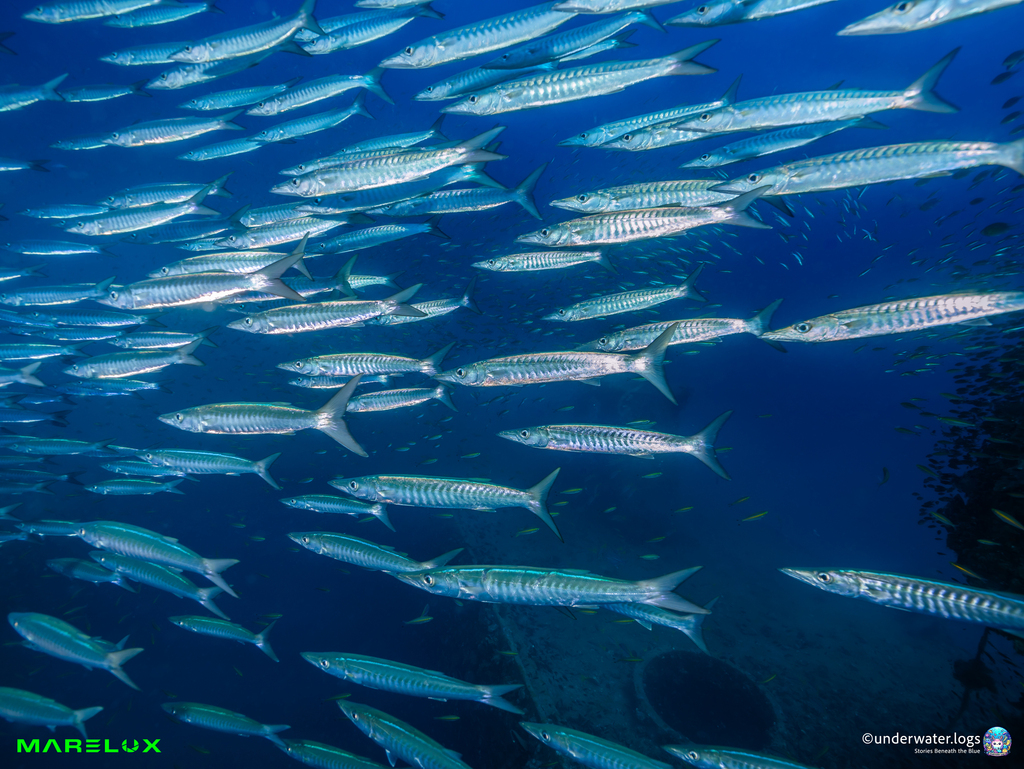
By day, chevron barracuda may gather in large, still schools on reefs with current. Hang outside the swirl and never swim through it. Sightings are never promised.
Least Concern (IUCN, 2023) means it is not at high risk of extinction worldwide today.


Photos show the species, not always the places on this page.
Length
Usually about 80 cm (2.6 ft) long; largest recorded about 1.7 m (5.6 ft)
Weight
Typical weight not reliably measured; published maximum records disagree
Next to a person
Most adults are about as long as half an adult's leg; the rare largest are close to a person's height
What it eats
Mainly other fish. They feed mostly at night, dusk and dawn, after the daytime schools break up.
Around people
Calm, give space
How it lives
Chevron barracuda form large schools that hold their position by day, and a school may stay at the same site for months or even years. At night the schools break up and the fish spread out to hunt other fish.
Where it goes
By day the schools hold their position and may stay at the same site for months or even years. At night they break up and the fish spread out to hunt.
We only draw a journey on the map when scientists have tracked it or clearly documented it. For this animal we have not found one yet.
Populations
Found across the Indo-Pacific, forming large daytime schools at many reef sites, from the Red Sea to Southeast Asia and the Pacific islands. There are no named subspecies or well-documented regional size forms.
Meet it respectfully
Stay outside the school and never swim through it, chase it, surround it or herd it for photos. Keep fins and cameras clear of the fish, avoid sudden moves toward them, and let the school choose how close to pass. Follow local park rules and your guide's briefing, as rules differ by place.
Fun fact
Tap the bulb to light it up.
Daytime schools can hold the same reef corner for months or even years, then break up at night to hunt.
A circling daytime school is not attacking divers. The fish are resting and social, and they hunt mostly at night.
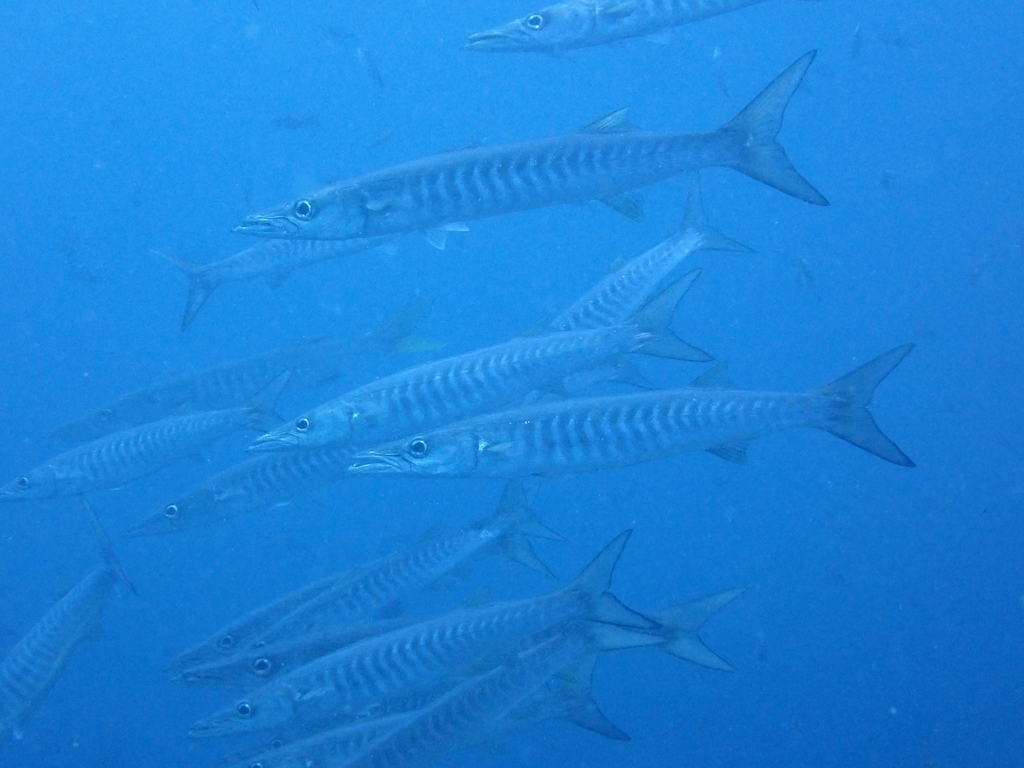
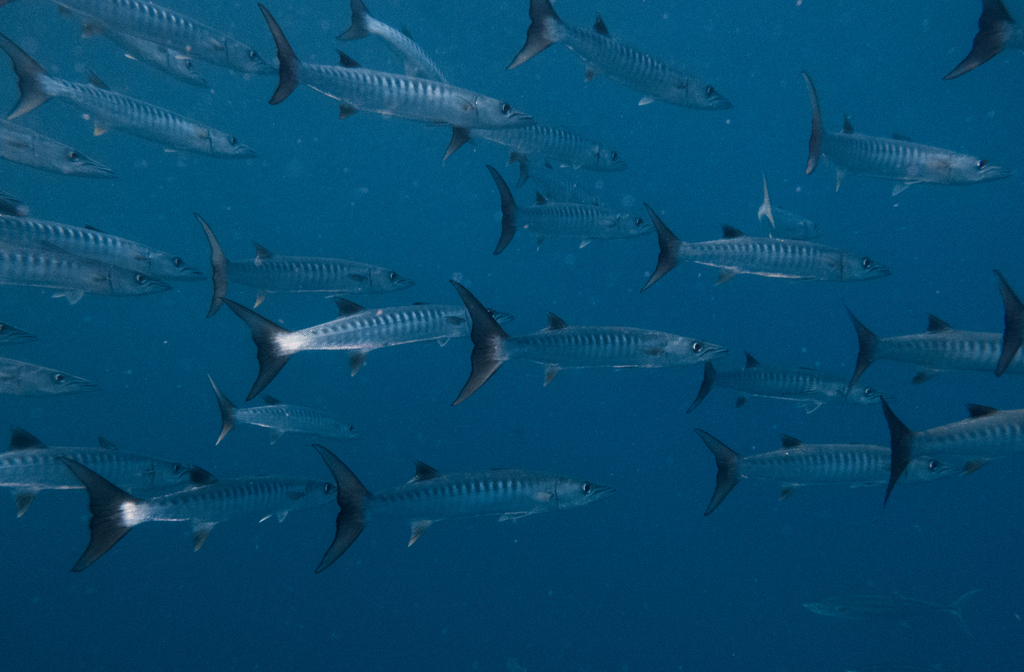
It is not a great barracuda. On a great barracuda the dark bars stay above the line along its side and the tail tips are white; on a chevron barracuda the bars cross that line and the tail is mostly black.
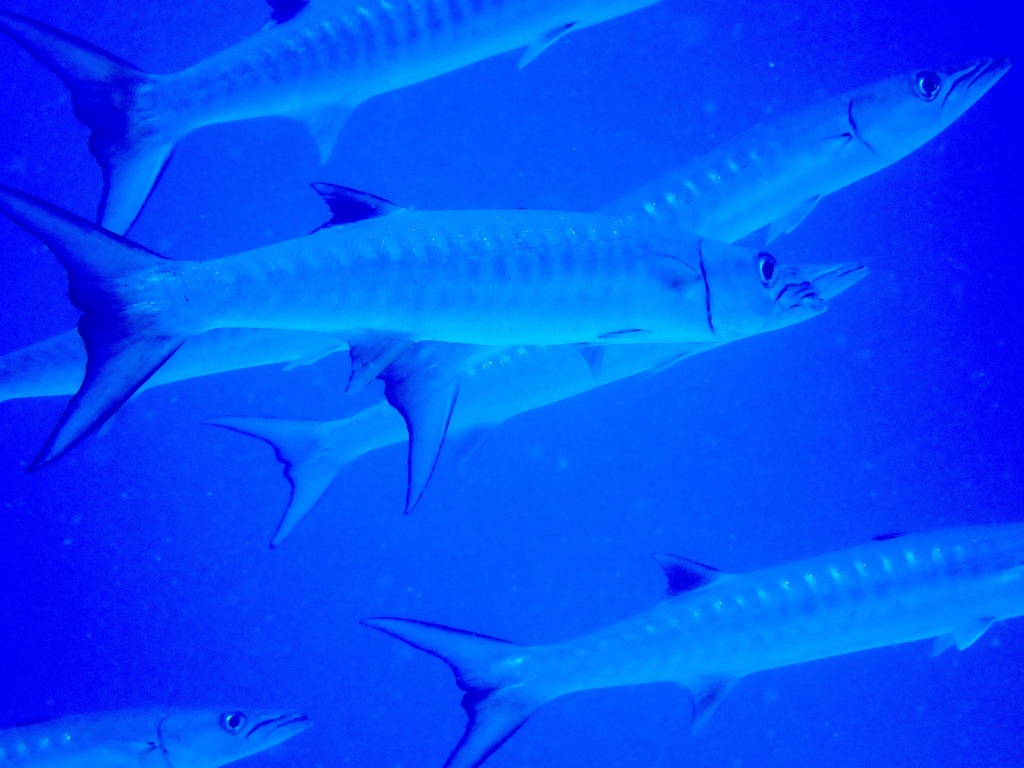
Look for its stripes. Many dark bars cross its sides, slanting in the upper half and dropping almost straight down in the lower half, like rows of chevrons.
A chevron barracuda can grow up to 170 cm long, though most are around 80 cm.
Chevron barracuda in the Ocean Atlas
Places we have researched where this animal is recorded. It is never guaranteed, and some places are for watching from the boat only.
Travel with usComing soonTrusted referralExploringOn pause, story onlyEthics pass
Country colour: pink where we travel, blue where we are exploring or refer, grey for story only.
 American Samoa
 Australia
 Egypt
 Fiji
 French Polynesia
 Indonesia
 Japan
 Malaysia
 Maldives
 Mozambique
 Myanmar
 New Caledonia
 Palau
 Panama
 Papua New Guinea
 Philippines
 Solomon Islands
 South Africa
 Thailand
Sources for this page
Facts checked 26 September 2026. Photos: Unsplash licence, or Creative Commons as shown on each photo.
Work in ocean travel?
We are always happy to hear from exceptional local operators, accommodation, conservation organisations and destination experts. If your work fits responsible, small-group ocean travel, we would love to learn more.
Partner with Ocean CallingNew: tiger sharks in Fuvahmulah, January or March 2027
from CHF 2,900