
Galápagos shark
Carcharhinus galapagensis
Galápagos sharks are strong, curious sharks of remote islands. Around the Galápagos and other oceanic islands, they may come to look at divers before moving on.
Least Concern (IUCN, 2019) means it is not at high risk of extinction worldwide today.
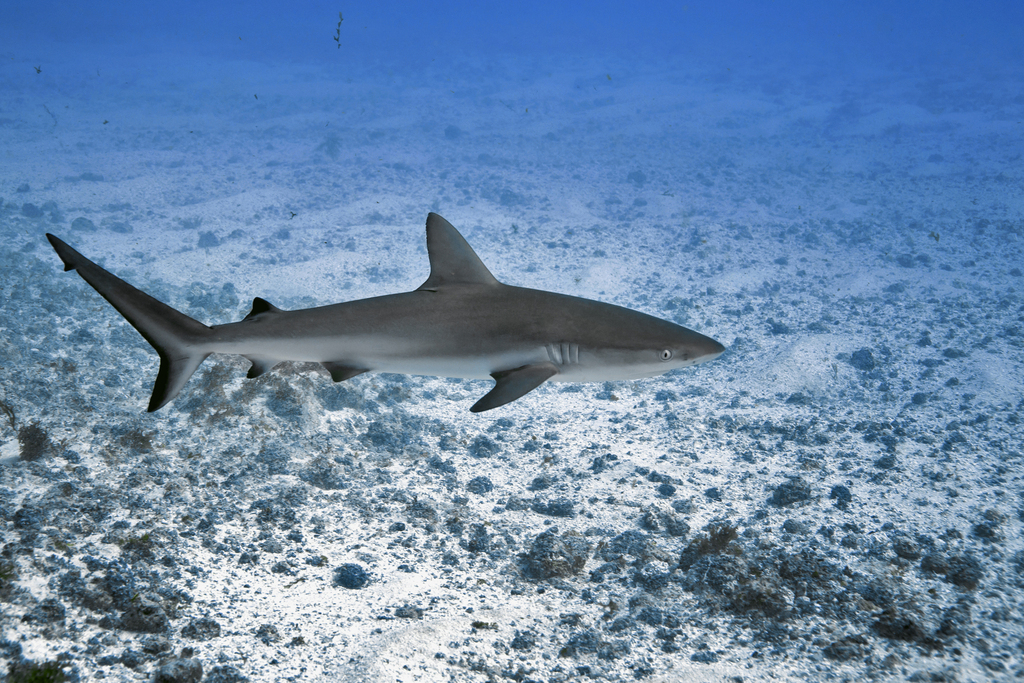
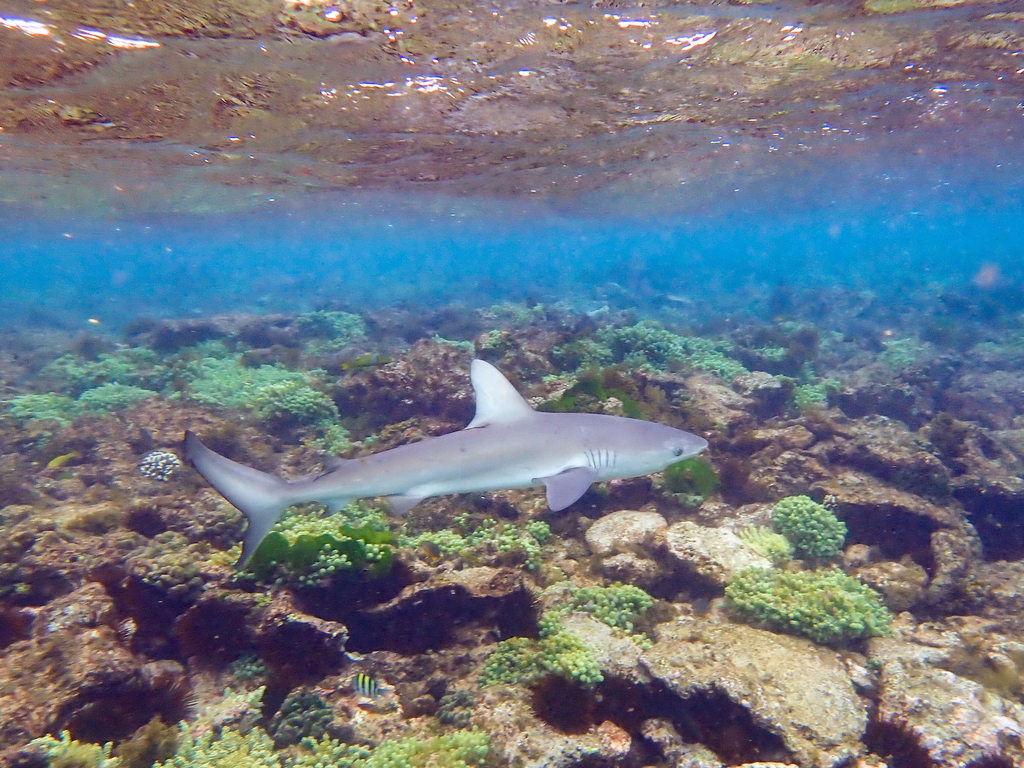
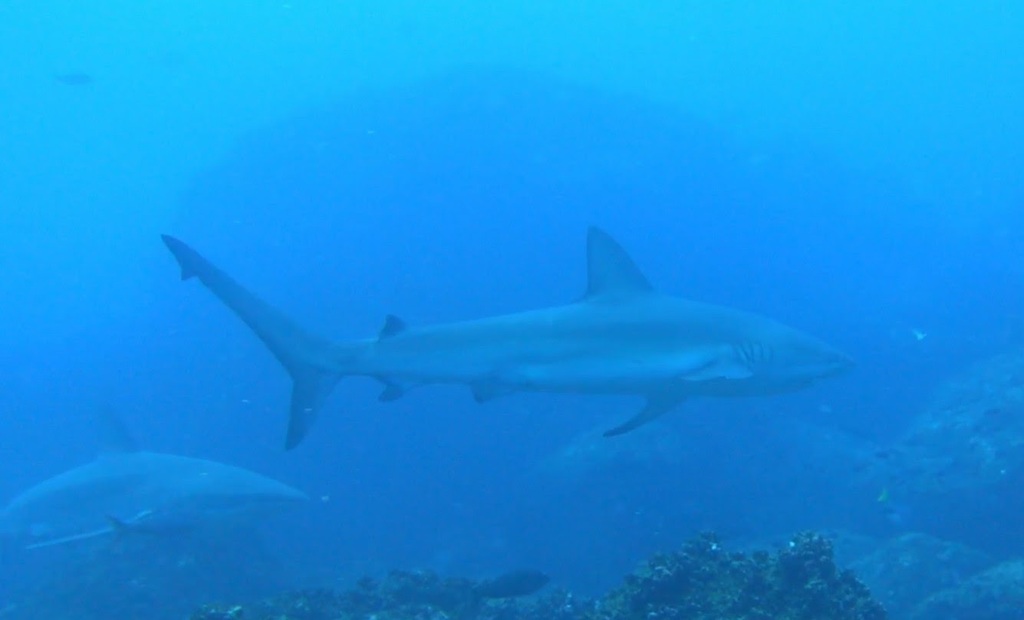
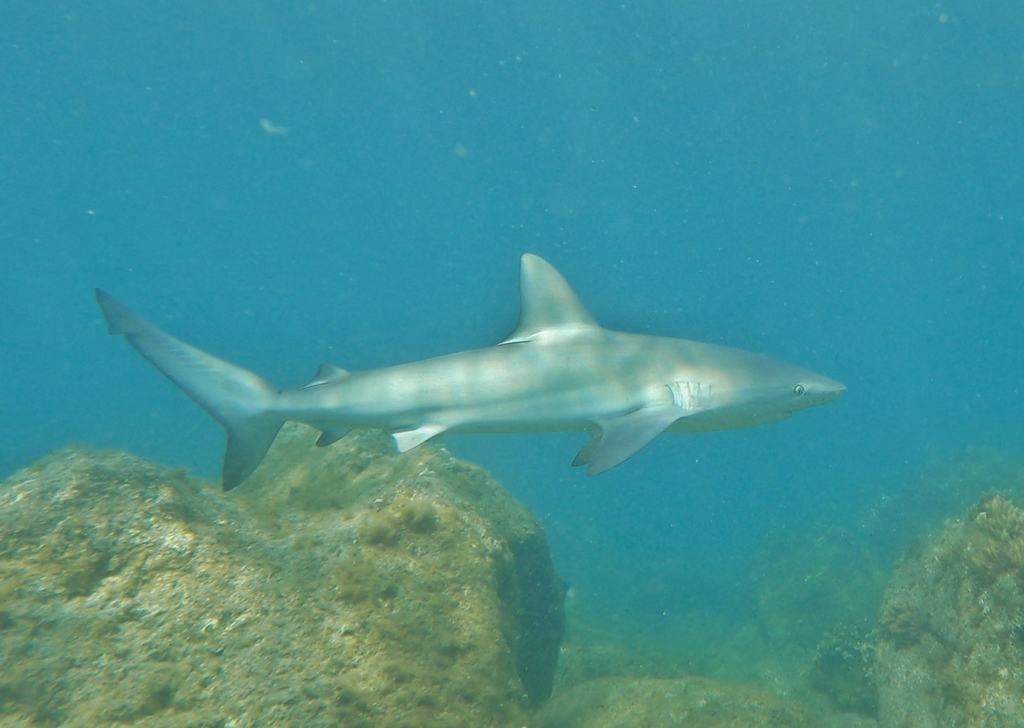
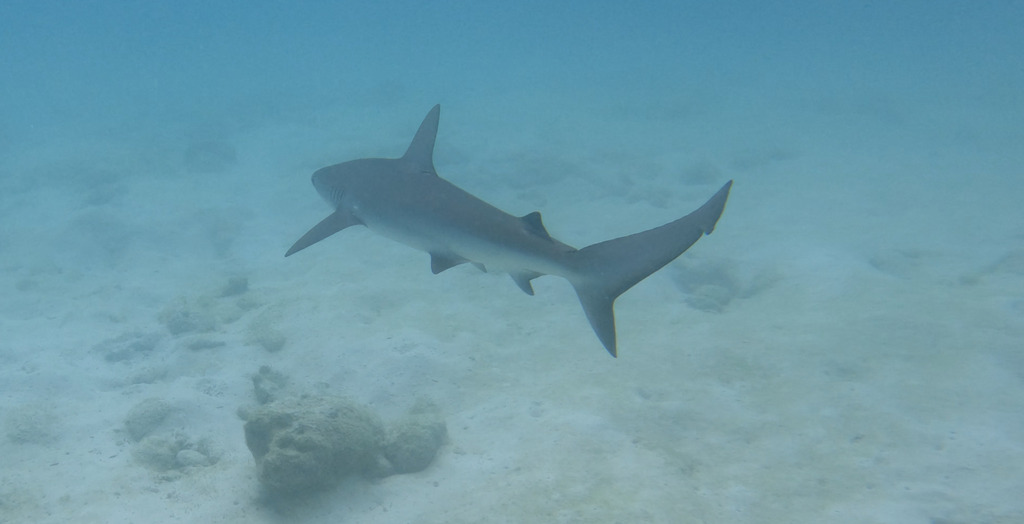
Photos show the species, not always the places on this page.
Length
Usually about 3 m (9.8 ft); largest recorded about 3.7 m (12.1 ft)
Weight
Not reliably measured
Next to a person
An adult is about one-and-a-half to two times as long as a person
What it eats
Mostly bottom living fish, plus squid and octopus. In some places they also take bigger prey such as sea lions or marine iguanas, but this is local, not normal everywhere.
Around people
Potentially dangerous, respect
How it lives
The Galápagos shark lives mostly around oceanic islands in warm seas, over clear water with coral and rocky bottoms. Young sharks stay in shallow water, less than about 25 m deep, and adults range more widely. It is one of the least understood requiem sharks, and its population trend is unknown in much of its range.
Where it goes
Most Galápagos sharks stay near their home islands. At French Frigate Shoals in Hawaiʻi, tracked sharks stayed around the atoll. In the Revillagigedo Islands, Mexico, 90% of movements were within 50 km of tagging sites, but one shark went from Socorro Island to Clipperton and then to Darwin Island in the Galápagos, about 3,160 km.
Populations
The species has a patchy world distribution, with isolated groups around oceanic islands such as the Galápagos, Hawaiʻi, Cocos, Malpelo, Revillagigedo, Easter Island, St Helena, Ascension and Bermuda. At Darwin and Wolf in the Galápagos, it made up 19.4% of the fish biomass in 2013 and 2014. Off Panama and Colombia, sharks were also tracked along a mainland coast for about 400 km. Least Concern worldwide does not mean every island group is safe.
Meet it respectfully
Galápagos sharks can be curious and may come close. Stay calm, stay close to your group and keep watching them. If a shark arches its back, speeds up or makes repeated close passes, give it space and leave the water calmly. Never feed, bait, chase or block them, and never carry speared fish. Feeding sharks is not allowed in Hawaiʻi state waters, and catching sharks is banned there too.
Fun fact
Tap the bulb to light it up.
Of 69 verified records worldwide, 53 come from oceanic islands and 16 from continental coasts.
Galápagos sharks are easy to confuse with grey reef and dusky sharks, but they are a different species.
One Galápagos shark tagged at Socorro Island, Mexico, was later found at Clipperton and then at Darwin Island in the Galápagos, a trip of about 3,160 km.
At Darwin and Wolf islands, sharks make up most of the fish weight on the reef, and Galápagos sharks alone are 19.4% of it.
Follow its journey
Watch it travel. Every line comes from satellite tracking or documented research, and the source is named.
StartEndJourney (the line joins documented areas; real paths vary)
Galápagos shark in the Ocean Atlas
Places we have researched where this animal is recorded. It is never guaranteed, and some places are for watching from the boat only.
Travel with usComing soonTrusted referralExploringOn pause, story onlyEthics pass
Country colour: pink where we travel, blue where we are exploring or refer, grey for story only.
 Australia
 Brazil
 Chile
Chile Colombia
 Costa Rica
 Ecuador
 France
 Japan
Japan Mexico
 New Zealand
 Norfolk Island
 Panama
 Saint Helena
 United Kingdom
 United States
Sources for this page
- FishBase, Carcharhinus galapagensis
- Gausmann, 2026, Diversity
- Meyer, Papastamatiou & Holland, 2010, Marine Biology (NOAA summary)
- Lara-Lizardi et al., 2026, PLOS ONE
- Salinas-de-Leon et al., 2016, PeerJ
- Wetherbee et al., 2025, Fishes
- Hawaii Revised Statutes 188-40.6, shark feeding
- Hawaii DLNR, 2021, shark fishing ban
Facts checked 26 September 2026. Photos: Unsplash licence, or Creative Commons as shown on each photo.
Work in ocean travel?
We are always happy to hear from exceptional local operators, accommodation, conservation organisations and destination experts. If your work fits responsible, small-group ocean travel, we would love to learn more.
Partner with Ocean CallingShop with Ocean Calling
Visit the Ocean Calling storefront on Amazon.
As an Amazon Associate I earn from qualifying purchases. You are not only choosing products that respect the ocean, you are also helping us keep going: paying our local partners fairly and keeping our retreats ethical, sustainable and honestly priced for you. 💗