
Sei whale
Balaenoptera borealis
The sei whale is one of the fastest great whales and is rarely seen. Any sighting is a lucky and special moment.
Endangered (IUCN, 2018) means it is at very high risk of extinction in the wild.

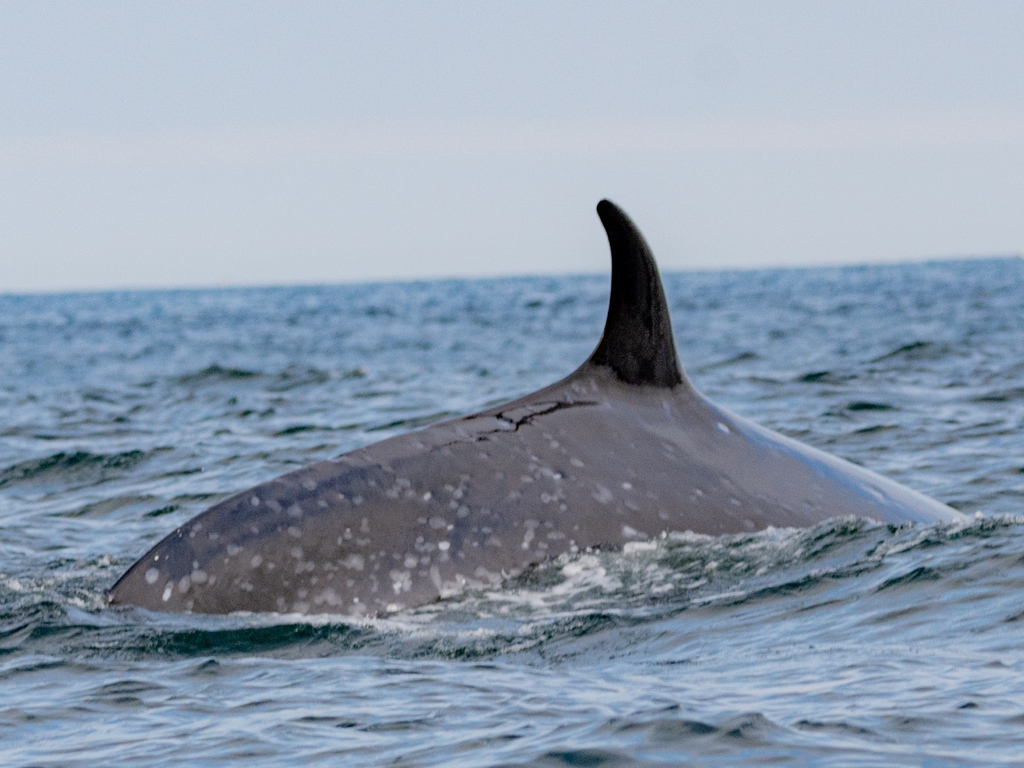
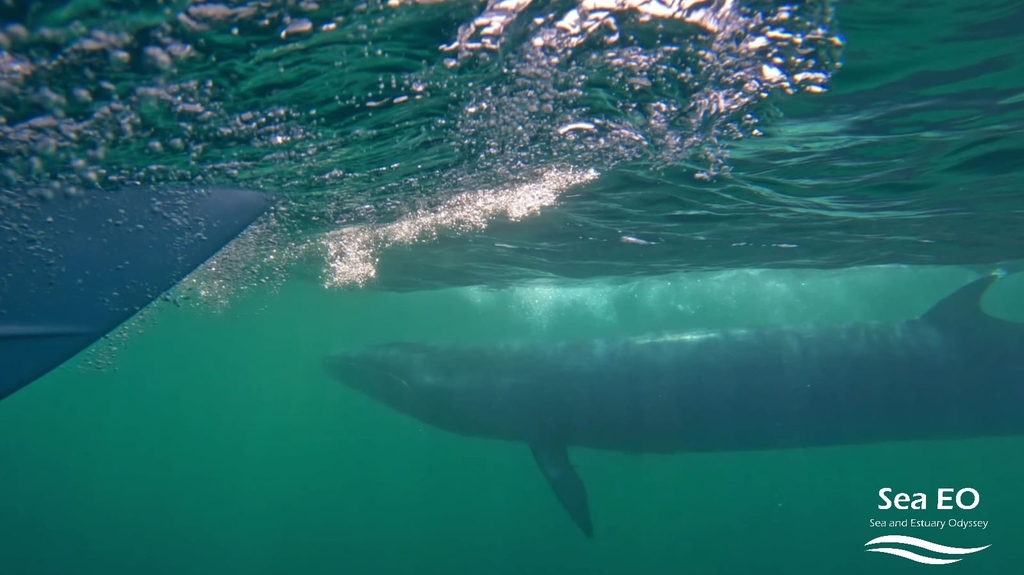
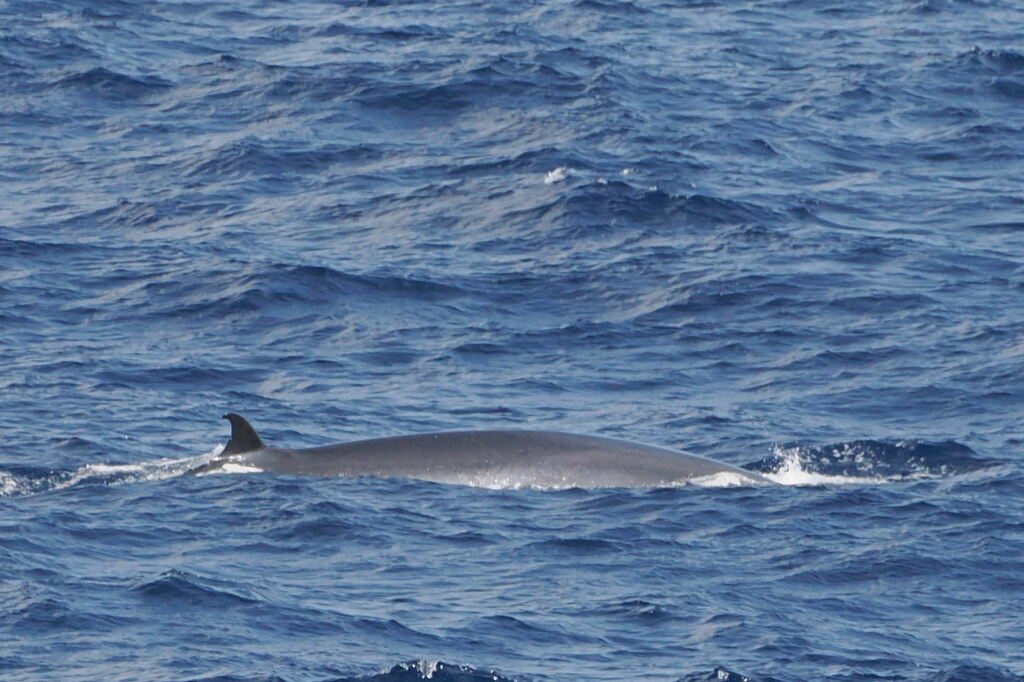
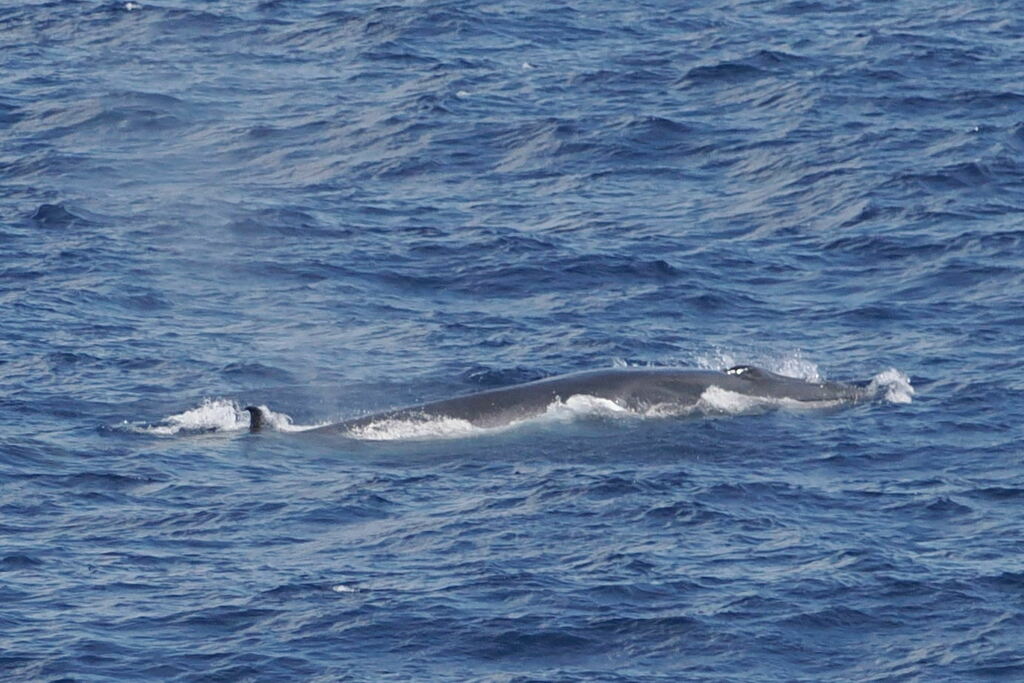
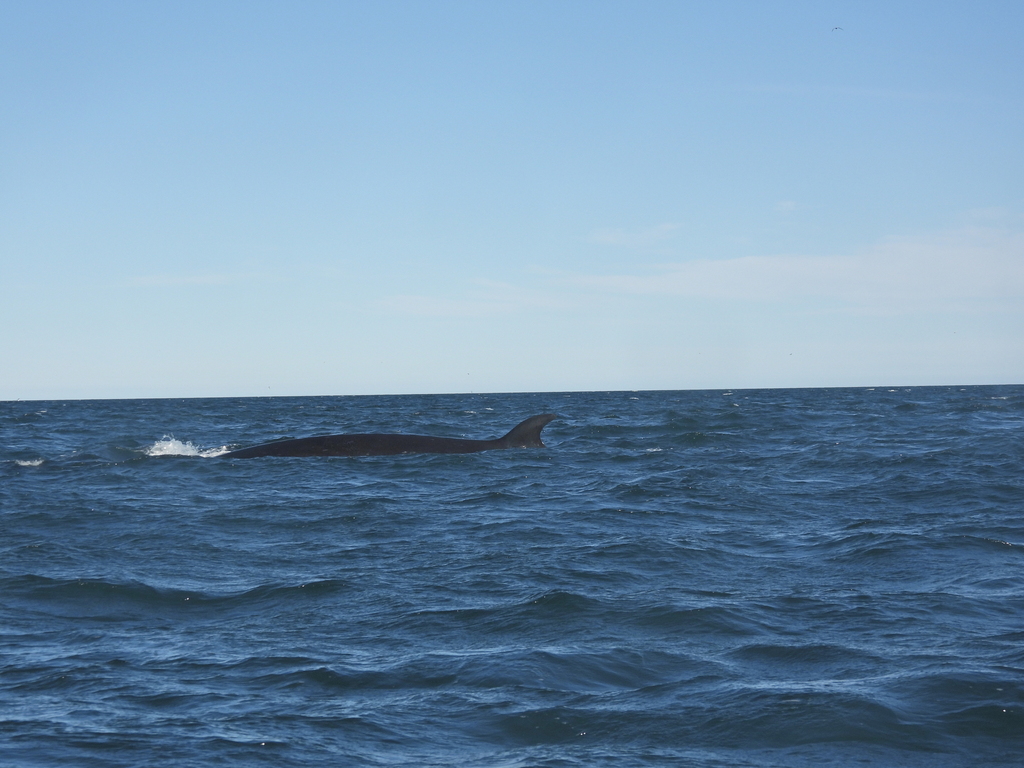
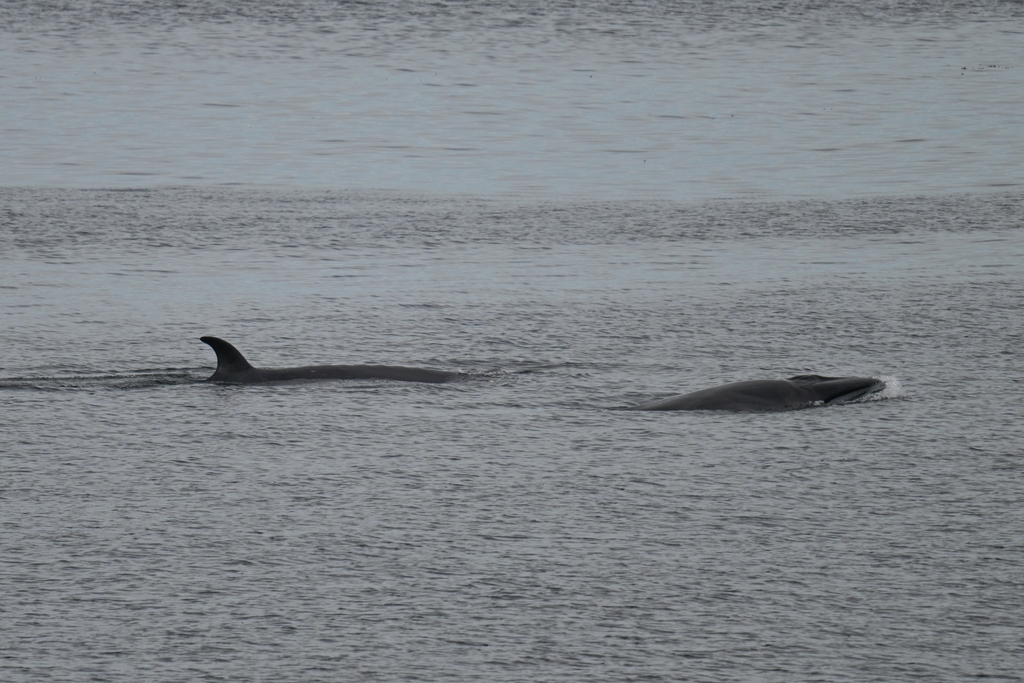
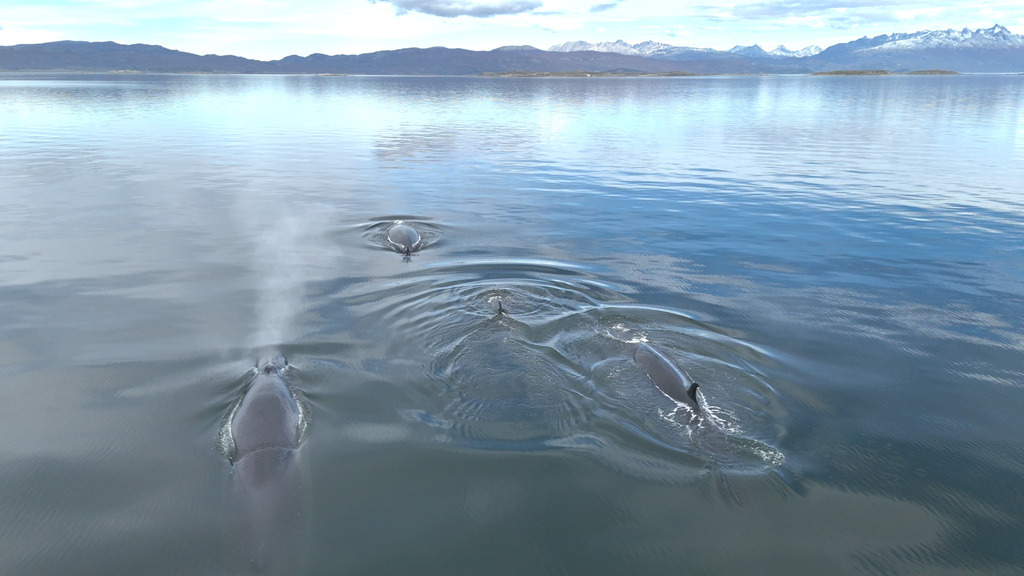
Photos show the species, not always the places on this page.
Length
About 12.2 to 18.3 m (40 to 60 ft)
Weight
Up to about 45 tonnes (100,000 lb)
Next to a person
About 7 to 11 adults lying head to toe
What it eats
Copepods, krill, small schooling fish and squid.
Around people
Calm, give space
How it lives
Sei whales feed mainly by skimming near the surface, and also by gulping. They eat copepods, krill, small fish and squid, and NOAA estimates an average of about 900 kg a day. They are usually seen alone or in small groups, and more can gather where food is rich. They are among the fastest great whales and can reach more than 55 km/h (34 mph).
Where it goes
Their migrations are poorly known: sei whales may appear in an area and then stay away for years. Many move between lower-latitude winter waters and higher-latitude feeding grounds, but routes and timing are hard to predict. Stocks in different ocean basins follow different migration calendars.
We only draw a journey on the map when scientists have tracked it or clearly documented it. For this animal we have not found one yet.
Populations
Two subspecies are commonly recognised: the northern sei whale (B. b. borealis) and the southern sei whale (B. b. schlegelii). Populations in different ocean basins differ in numbers and migration. They prefer offshore waters, and where Bryde's whales also live, the two can be hard to tell apart.
Meet it respectfully
We watch only from the boat. NOAA and Australian guidelines advise keeping at least 100 m away. In the Azores, the law keeps boats at least 50 m away, and 100 m from a whale with a small calf, and swimming with whales is not allowed. Sei whales sink quietly instead of lifting their tail before a dive, so boats should slow down and watch where they may surface next.
Fun fact
Tap the bulb to light it up.
Sei whales can be hard to tell apart from Bryde's whales where both live.
A sei whale may be common in an area one year and scarce the next.
It is one of the fastest great whales.
The name 'sei' comes from 'seje', the Norwegian word for pollock. Off Norway, these whales were often found together with the fish.
When a sei whale swims just below the surface, its tail leaves 'fluke prints': smooth, round patches on the water, like footprints on the sea.
Sei whale in the Ocean Atlas
Places we have researched where this animal is recorded. It is never guaranteed, and some places are for watching from the boat only.
Travel with usComing soonTrusted referralExploringOn pause, story onlyEthics pass
Country colour: pink where we travel, blue where we are exploring or refer, grey for story only.
 Antarctica
 Argentina
 Australia
 Brazil
 Canada
 Chile
Chile Denmark
 Falkland Islands
 Faroe Islands
 France
 Greenland
 Iceland
 Indonesia
 Japan
Japan Mauritania
 Netherlands
 New Zealand
 Norway
 Portugal
 South Africa
 Spain
Spain United Kingdom
 United States
 Uruguay
Sources for this page
- NOAA Fisheries, 2026
- IUCN SSC Cetacean Specialist Group, 2018
- Queensland Government, 2026
- International Whaling Commission, Sei whale
- Azores Regional Legislative Decree 9/99/A (FAOLEX)
Facts checked 26 September 2026. Photos: Unsplash licence, or Creative Commons as shown on each photo.
Work in ocean travel?
We are always happy to hear from exceptional local operators, accommodation, conservation organisations and destination experts. If your work fits responsible, small-group ocean travel, we would love to learn more.
Partner with Ocean Calling