
Silver-cheeked toadfish
Lagocephalus sceleratus
An invasive visitor along the Cypriot coast. Officials say it is no threat to swimmers who leave it alone, and no sighting is ever a promise.
Least Concern (IUCN, 2011) means that, worldwide, it is not currently considered at risk of extinction. In the Mediterranean it is an invasive species.

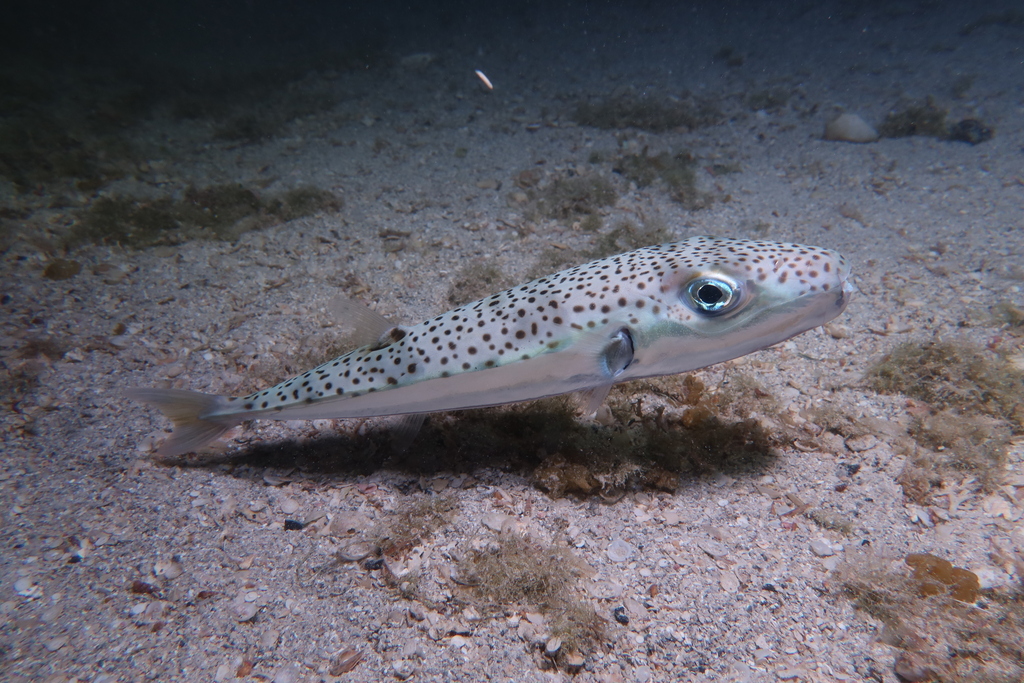
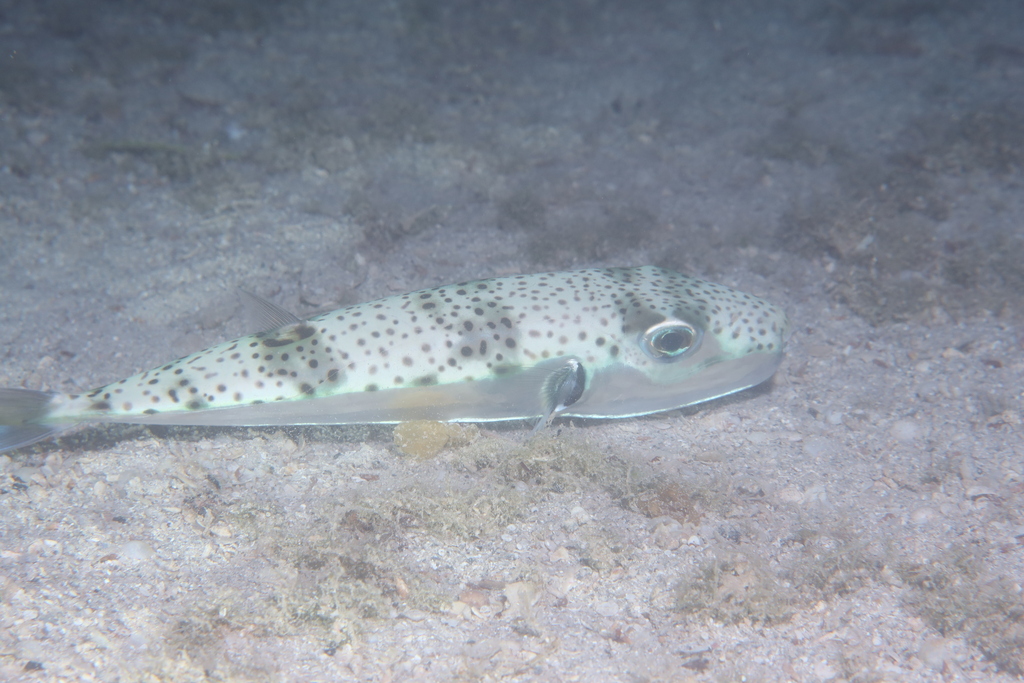
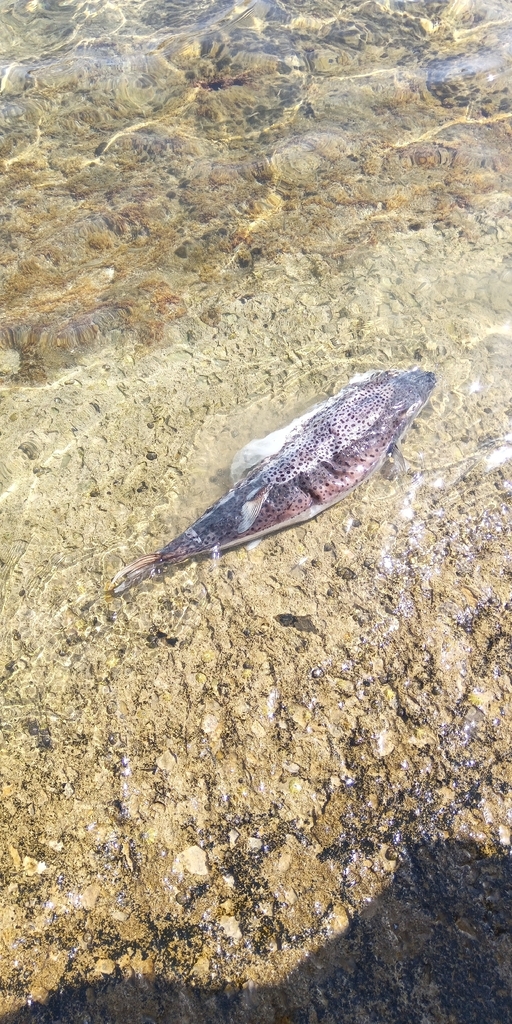
Photos show the species, not always the places on this page.
Length
Reported up to 110 cm (43 in) total length. In the eastern Mediterranean one study measured fish up to 64 cm (25 in), and a fish caught in Croatia in 2024 weighed 1.33 kg.
Weight
Up to about 9 kg (20 lb) reported. The 2024 Croatian fish weighed 1.33 kg (2.9 lb).
Next to a person
Large fish can be longer than an adult's arm, up to roughly the length of a small child.
What it eats
Mostly animals that live on the seabed, including bivalves, snails, sea urchins, crustaceans and fish. In the eastern Mediterranean, fish longer than about 20 cm ate mainly cephalopods such as cuttlefish and octopus. FishBase describes it as an omnivore.
Around people
Look, never touch
How it lives
The silver-cheeked toadfish is native to the Indo-West Pacific and entered the Mediterranean through the Suez Canal. It was first reported in the Mediterranean in 2003. It lives on offshore reefs and sandy bottoms, mostly 18 to 100 m deep. Young fish use sandy bottoms, and larger breeding fish favour seagrass meadows. It spawns in summer, and the eggs and larvae drift in open water. Reported maximum age is about 7 years. It carries tetrodotoxin, a strong toxin that is dangerous if the fish is eaten.
Where it goes
No regular migration is described in the sources read. Since its first Mediterranean sighting in 2003 it has spread west and north, reaching the northern Adriatic in Croatia in May 2024, the northernmost record then. Larger breeding fish are reported moving into seagrass meadows.
We only draw a journey on the map when scientists have tracked it or clearly documented it. For this animal we have not found one yet.
Populations
Listed as Least Concern by the IUCN worldwide (assessed 2011), but invasive in the Mediterranean. Cyprus has no scientific census or official estimate of its population in the exclusive economic zone. Since June 2024 a grant scheme pays professional fishers 4.73 euros per kg landed, funded through 2029, and had collected over 103 tonnes by June 2026 with about 150 fishers in 11 groups taking part. The species damages nets and fishing gear. Selling it is prohibited across the EU.
Meet it respectfully
If you see one, keep your distance and carry on. The fish defends itself only when disturbed, and reported incidents involved people who approached, touched or fed trapped fish. Never touch, tease, feed or try to catch one, as the beak can cause severe injuries. Never eat it: there is no antidote to tetrodotoxin, and its sale is banned in the EU. Report sightings and follow local rules and your guide.
Fun fact
Tap the bulb to light it up.
Tetrodotoxin is concentrated in the gonads, at roughly five to ten times the level in muscle, and females and mature fish carry more of it.
Cypriot officials say the fish poses no threat to swimmers and is poisonous only if eaten, and no incidents have been recorded in Cyprus.
The species was first seen in the Mediterranean in 2003 and has since reached the northern Adriatic.
Silver-cheeked toadfish in the Ocean Atlas
Places we have researched where this animal is recorded. It is never guaranteed, and some places are for watching from the boat only.
Travel with usComing soonTrusted referralExploringOn pause, story onlyEthics pass
Country colour: pink where we travel, blue where we are exploring or refer, grey for story only.
 Algeria
 Australia
 Croatia
 Cyprus
 Egypt
Egypt Greece
 Indonesia
 Israel
 Italy
Italy Japan
Japan Malaysia
 Mozambique
 Philippines
 South Africa
 Taiwan
 Thailand
 Tunisia
 Türkiye
 Vietnam
Sources for this page
- FishBase, 2026
- Cyprus Mail, 19 June 2026
- Cyprus Mail, 23 June 2026
- Christidis et al., 2021, Toxins
- Kalogirou, 2013, Mediterranean Marine Science
- Phys.org, northernmost record, 2025
- Wikipedia, Lagocephalus sceleratus
- GBIF, IUCN Red List category
Facts checked 5 October 2026. Photos: Unsplash licence, or Creative Commons as shown on each photo.
Work in ocean travel?
We are always happy to hear from exceptional local operators, accommodation, conservation organisations and destination experts. If your work fits responsible, small-group ocean travel, we would love to learn more.
Partner with Ocean CallingSwim with humpback whales in Moʻorea, September 2027
from CHF 4,500