
Spinetail devil ray
Mobula mobular
Spinetail devil rays are huge, far ranging filter feeders. If one passes, we stay still and let the ray choose the encounter.
Critically Endangered (IUCN, 2025) means it is at extremely high risk of extinction in the wild.
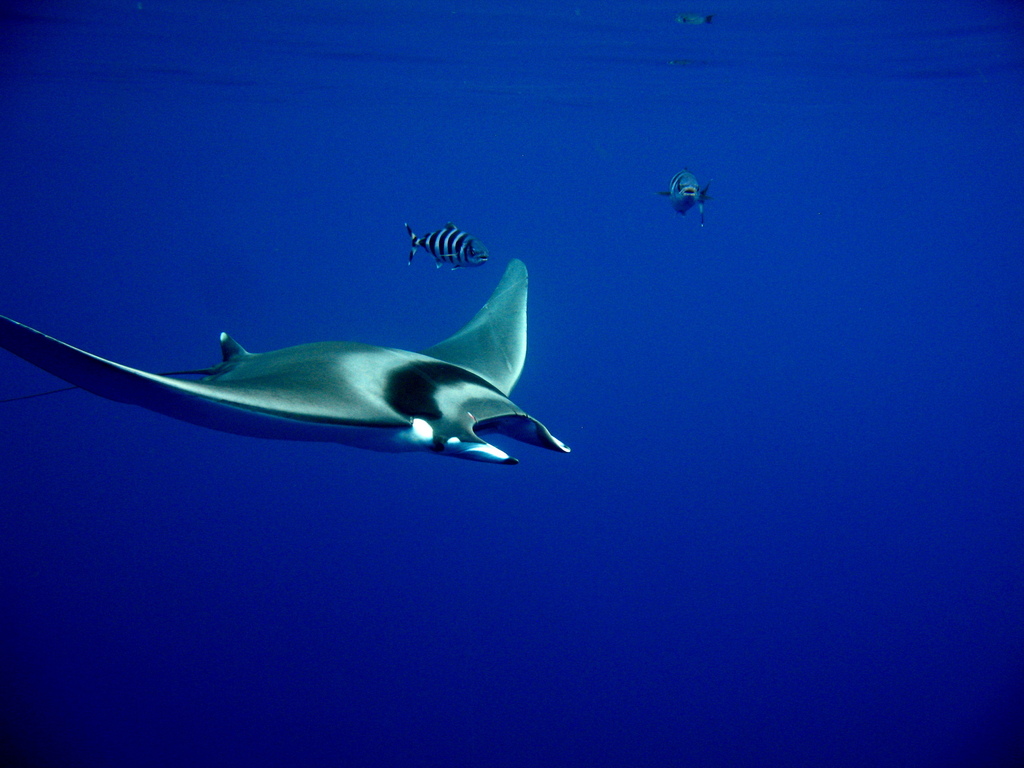
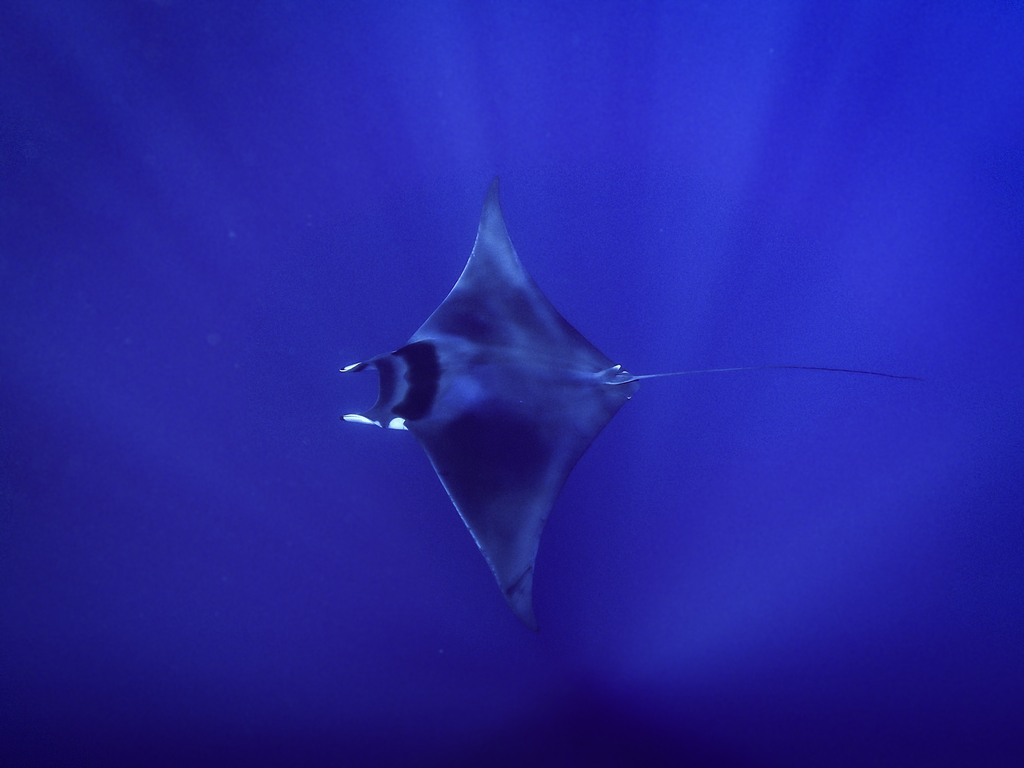
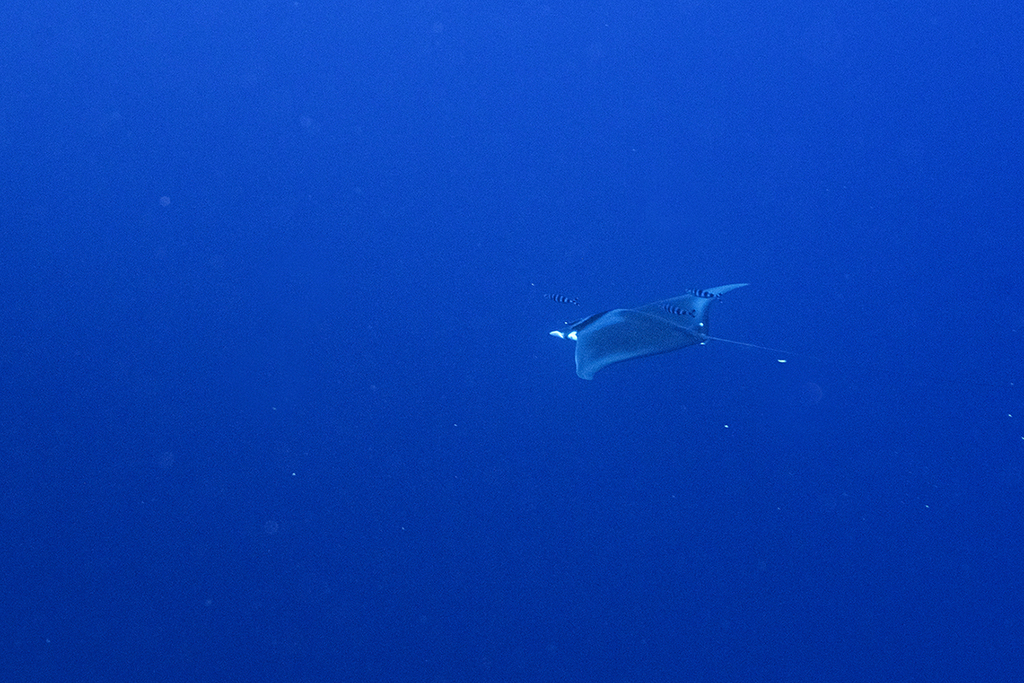
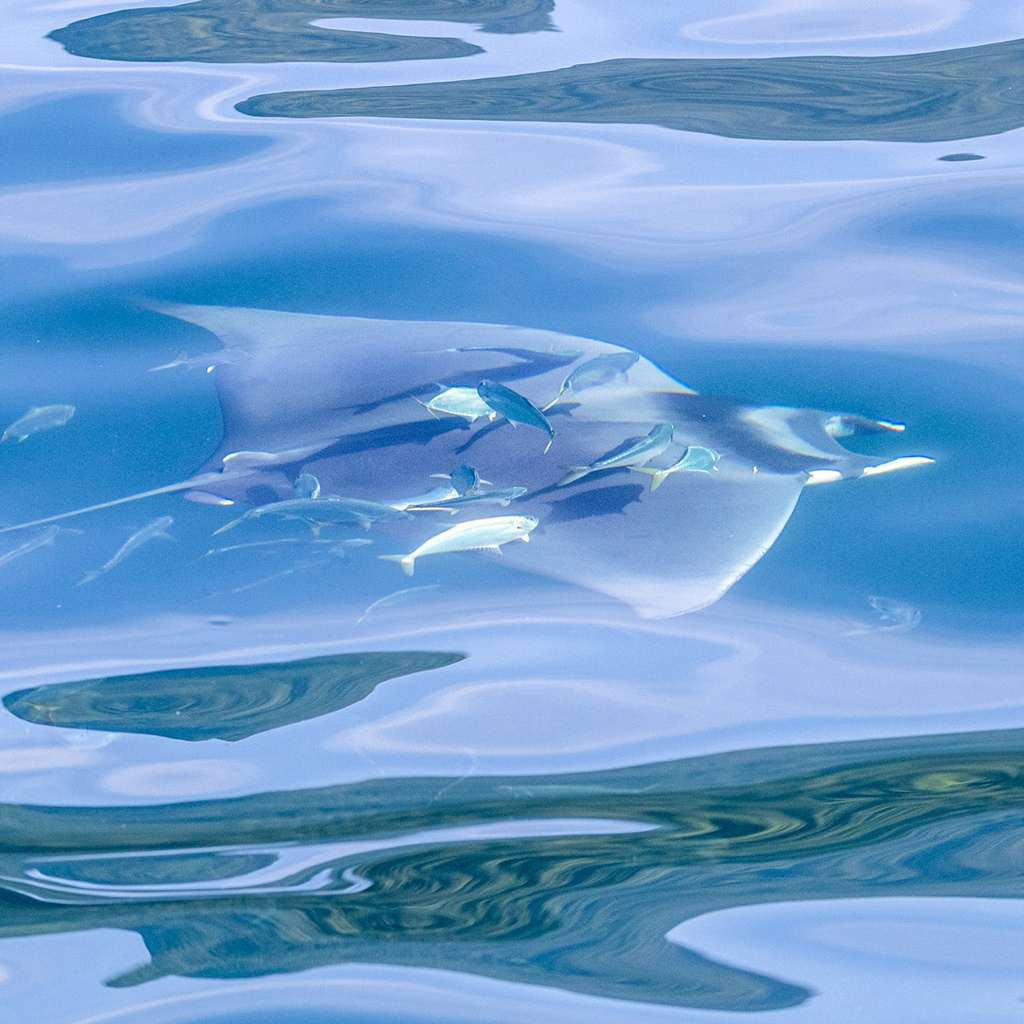
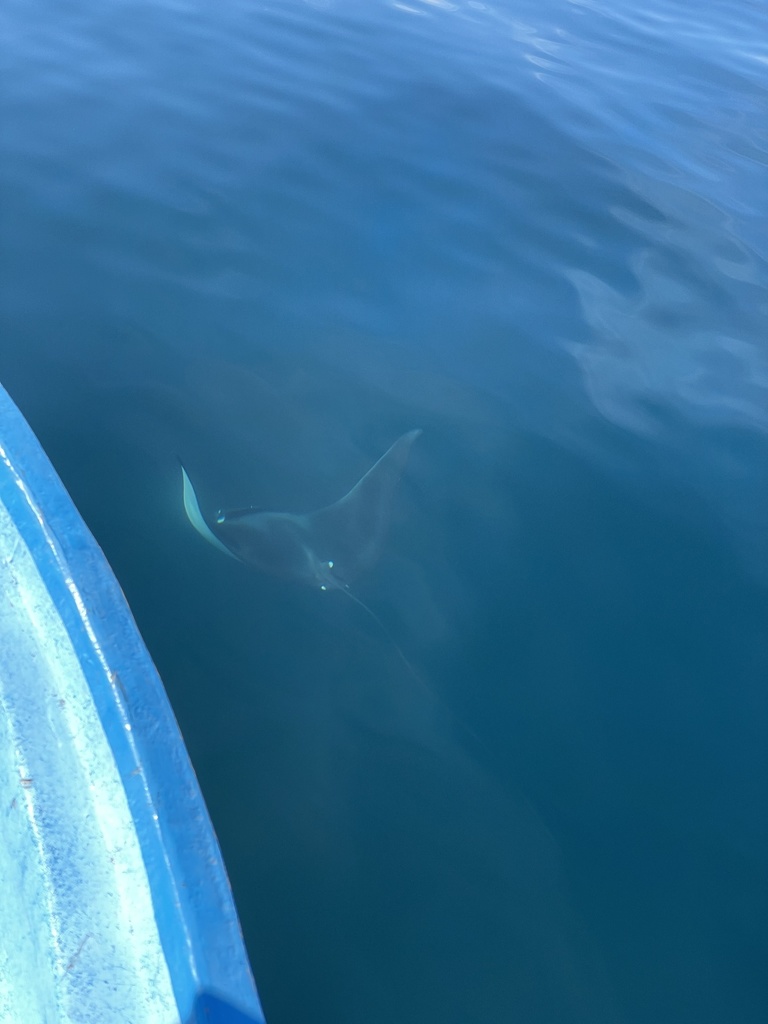
Photos show the species, not always the places on this page.
Length
Largest reliably recorded about 3.5 m (11.5 ft) across (disc width); adults mature at about 2 to 2.4 m (6.6 to 7.9 ft) across
Weight
Not reliably measured
Next to a person
A big adult is about twice as wide as a person is tall
What it eats
Mainly small plankton such as krill and other tiny crustaceans, filtered from the water.
Around people
Calm, give space
How it lives
The spinetail devil ray lives in coastal and shelf waters of warm seas around the world. It is often alone but can gather in large numbers to feed or breed. It spends most time shallower than 50 m, yet can dive to 1,112 m. Females usually have one large pup after about 12 months, every 1 to 3 years.
Where it goes
A real traveller, but not every ray follows the same route. Rays tagged off New Zealand swam 1,400 to 1,800 km north to waters near Vanuatu and Fiji at the end of summer. In the Mediterranean, tracked rays moved east toward the Levantine Sea with the seasons, and one tagged off Gaza swam to Spain and back within a year.
Populations
Found in warm and temperate seas worldwide, including the Mediterranean, but its populations are patchy. In the southwest Gulf of California, courtship of this species was recorded, mostly off La Ventana and Ensenada de Muertos, but most big devil ray schools in Baja are Munk's devil rays and spinetails there are occasional. The IUCN now lists it as Critically Endangered (2025), mainly because of fishing. Females usually have only one pup at a time, so numbers recover very slowly.
Meet it respectfully
Stay still and let the ray choose how close to come. Never chase, touch, block or feed it, and never swim through a group. Boats should stay slow and quiet. We avoid fishing or feeding set ups. In Mexico, catching or keeping this ray is not allowed.
Fun fact
Tap the bulb to light it up.
Spinetail devil rays tagged off New Zealand dived as deep as 1,112 m.
One ray tagged off Gaza in March 2016 swam all the way to Spain, then back to the eastern Mediterranean a year later.
It was once also called Mobula japanica. Scientists now treat both names as one species.
Two rays tagged off New Zealand swam 1,400 to 1,800 km north to near Vanuatu and Fiji, at up to 63 km a day.
Source: Francis and Jones, 2017, Aquatic Conservation, spinetail devil rays tagged in New Zealand
One spinetail devil ray tagged off Gaza in March 2016 reached Spain, then swam back to the Levantine Sea a year later.
Source: Notarbartolo di Sciara et al., 2025, Scientific Reports, spinetail devil rays in the Mediterranean
Aerial surveys estimated up to 12,700 spinetail devil rays in the northwest Mediterranean.
Follow its journey
Choose a journey and watch it travel. Every line comes from satellite tracking or documented research, and the source is named.
StartEndJourney (the line joins documented areas; real paths vary)
Spinetail devil ray in the Ocean Atlas
Places we have researched where this animal is recorded. It is never guaranteed, and some places are for watching from the boat only.
Travel with usComing soonTrusted referralExploringOn pause, story onlyEthics pass
Country colour: pink where we travel, blue where we are exploring or refer, grey for story only.
 Australia
 Bangladesh
 Croatia
 France
 India
India Indonesia
 Italy
Italy Japan
Japan Malaysia
 Mexico
 Mozambique
 Myanmar
 New Zealand
 Peru
Peru Philippines
 Spain
Spain Tanzania
 United States
Sources for this page
- IUCN Red List, 2022 assessment, Mobula mobular (older)
- Palacios et al., 2023, Marine Biology, devil ray courtship in the southern Gulf of California
- Francis and Jones, 2017, Aquatic Conservation, spinetail devil rays tagged in New Zealand
- Notarbartolo di Sciara et al., 2025, Scientific Reports, spinetail devil rays in the Mediterranean
- Mexico, NOM-029-PESC-2006, responsible fishing of sharks and rays (rule 4.2.2)
- FishBase, 2025, Mobula mobular (IUCN Critically Endangered, 2025)
- Marine Biology, 2025, reproduction of the spinetail devil ray
Facts checked 26 September 2026. Photos: Unsplash licence, or Creative Commons as shown on each photo.
Work in ocean travel?
We are always happy to hear from exceptional local operators, accommodation, conservation organisations and destination experts. If your work fits responsible, small-group ocean travel, we would love to learn more.
Partner with Ocean CallingNew: mobula rays in La Ventana, May 2027
CHF 2,720