
Tope shark (school shark)
Galeorhinus galeus
A slim grey shark passing through is a rare and quiet moment, and no sighting is ever a promise.
Critically Endangered (IUCN, 2020) means it faces an extremely high risk of extinction in the wild, because fishing has depleted stocks in many regions.
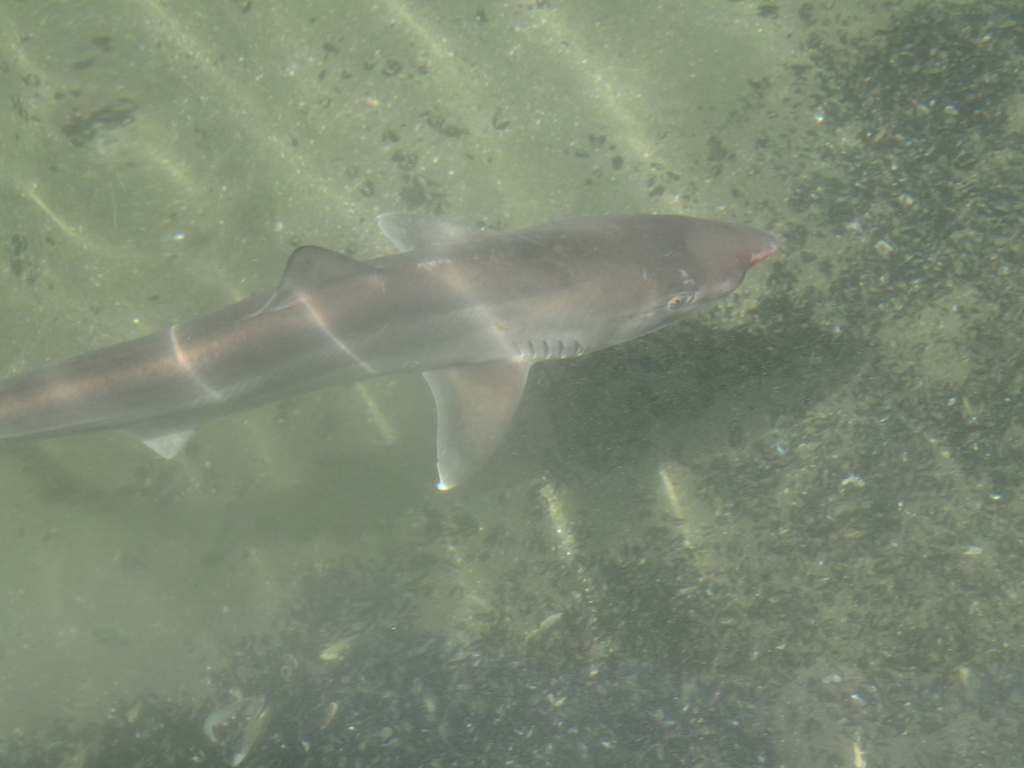
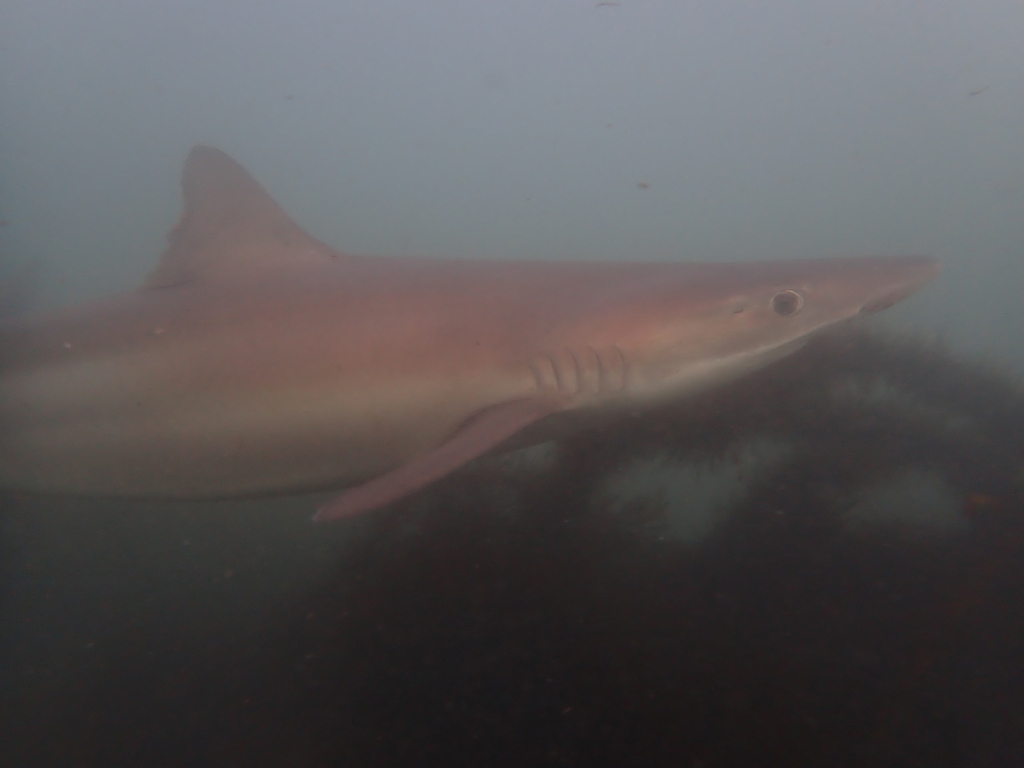
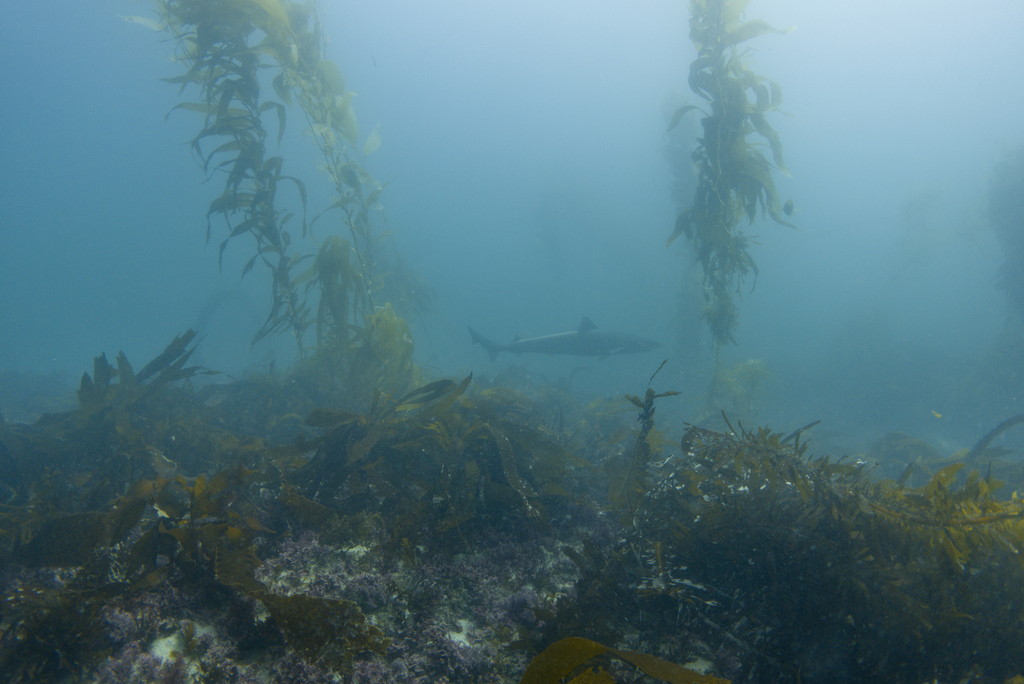

Photos show the species, not always the places on this page.
Length
Maximum about 193 to 195 cm (6 ft 4 in to 6 ft 5 in); common length about 160 cm (5 ft 3 in); mature males about 135 to 175 cm (4 ft 5 in to 5 ft 9 in), females about 150 to 195 cm (4 ft 11 in to 6 ft 5 in)
Weight
Up to about 44.7 kg (98.5 lb) in FishBase; other sources say about 45 kg (99 lb)
Next to a person
Large adults are about as long as a tall person, and can weigh as much as a heavy adult
What it eats
Fish from the seabed and open water, plus crustaceans, cephalopods, worms and echinoderms.
Around people
Calm, give space
How it lives
It lives on continental shelves and upper slopes, from the surf zone down to about 550 m (1,800 ft), with records deeper. It gives live birth after about 12 months. Litters are 6 to 52 pups and larger mothers have more. Males mature at about 135 cm (8 to 13 years) and females at about 150 cm (11 to 18 years). FishBase lists a maximum age of 55 years. It forms small schools and shows size and sex segregation.
Where it goes
Highly migratory in cooler waters, with seasonal north-south and inshore-offshore movements. Tagged sharks from the UK have been recovered in the Azores, the Canary Islands and Iceland. In Australia, some have travelled about 1,200 km (750 mi) along the coast, and CMS notes some migrations over 2,000 km. Pups stay in nursery bays for one to two years before moving offshore.
We only draw a journey on the map when scientists have tracked it or clearly documented it. For this animal we have not found one yet.
Populations
Critically Endangered globally (IUCN, assessed 2020). Some older pages still list it as Vulnerable. CMS says most stocks are depleted to varying degrees, with serious depletion in some areas, and that regional status ranges from Critically Endangered in the south-west Atlantic to Least Concern in the eastern North Pacific. It is listed on CMS Appendix II (2020) and as Near Threatened in New Zealand. In the UK it is a Species of Principal Importance in England and Wales. It has been fished for liver oil, meat and fins with gillnets and longlines, and caught as bycatch in trawls.
Meet it respectfully
If you are lucky enough to see one, keep calm and give it plenty of space. Never chase, touch, feed or bait it, and never block its path or dive down on it. Keep boats slow and steady near any shark. This is a Critically Endangered species, so careful, quiet encounters matter. Follow local rules and your guide. Sightings are never promised.
Fun fact
Tap the bulb to light it up.
FishBase lists a maximum age of 55 years.
Tagged sharks from the UK have been recovered as far away as the Azores, the Canary Islands and Iceland.
Its liver oil is rich in vitamin A, and heavy liver fishing in the 1940s hit populations hard.
Tope shark (school shark) in the Ocean Atlas
Places we have researched where this animal is recorded. It is never guaranteed, and some places are for watching from the boat only.
Travel with usComing soonTrusted referralExploringOn pause, story onlyEthics pass
Country colour: pink where we travel, blue where we are exploring or refer, grey for story only.
 Argentina
 Australia
 Belgium
 Brazil
 Cameroon
 Canada
 Chile
Chile Côte d'Ivoire
 France
 Gabon
Gabon Germany
 Ghana
Ghana Guinea
 Ireland
 Liberia
 Mexico
 Netherlands
 New Zealand
 Nigeria
 Norway
 Portugal
 Sierra Leone
 Spain
Spain United Kingdom
 United States
Sources for this page
- FishBase, Galeorhinus galeus, 2026
- Wikipedia, Tope shark, 2026
- CMS Sharks MOU, Galeorhinus galeus, 2026
- MarLIN, Tope shark, 2026
- Florida Museum, Tope Shark, 2026
- MarineBio Conservation Society, Tope Sharks, 2026
- GBIF, IUCN Red List category, 2026
Facts checked 5 October 2026. Photos: Unsplash licence, or Creative Commons as shown on each photo.
Work in ocean travel?
We are always happy to hear from exceptional local operators, accommodation, conservation organisations and destination experts. If your work fits responsible, small-group ocean travel, we would love to learn more.
Partner with Ocean CallingNew: tiger sharks in Fuvahmulah, January or March 2027
from CHF 2,900