Responsible Whale Watching & Swimming Guidelines
A little kid's dream
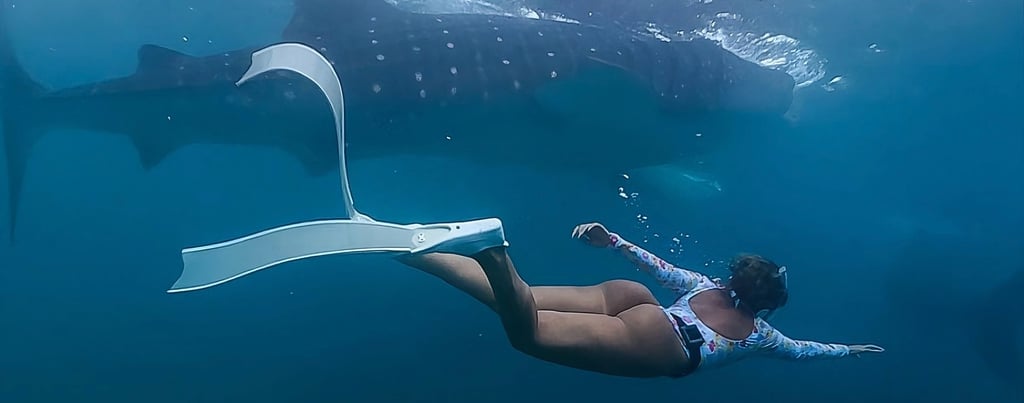
It was always a dream of mine to swim in the water with whales.
As a child, I imagined being a mermaid, moving freely through the ocean, feeling completely at home in the deep blue. I remember watching The Little Mermaid and thinking: I want to feel what she feels — curiosity, freedom, connection with the underwater world.
That feeling never really disappeared. It simply evolved.
As I grew older, I began learning more about whales — their intelligence, their emotional depth, the way they communicate across vast distances, the way they protect each other. There are many stories of whales helping humans in the ocean, gently guiding them away from danger or shielding them from potential threats. Whether instinct, curiosity, or something we still do not fully understand, these encounters remind us that the ocean is not separate from us — we are part of the same ecosystem.
So the question naturally becomes: if these animals show awareness and sensitivity towards us, why wouldn’t we do the same for them?
Swimming with whales, or even simply observing them in the wild, is not just a dream experience. It is a responsibility. These animals are not attractions. They are sentient marine mammals with complex social structures, migration routes, and communication systems that scientists are still studying today. Our presence should never interfere with their natural behaviour.
Choosing responsible whale watching or swimming experiences is essential to protect their wellbeing and the health of marine ecosystems. Ethical operators follow strict marine wildlife guidelines, limiting the number of people in the water, maintaining respectful distances, and never forcing interaction. Encounters should always happen on the whale’s terms. If a whale chooses to approach, the experience becomes extraordinary precisely because it is voluntary.
Responsible whale encounters require patience and humility. Boats should reduce speed when animals are nearby, avoid surrounding them, and allow clear pathways for movement. In-water interactions must remain calm and passive. No touching, no chasing, no diving directly towards them. Stillness often creates the most meaningful connection.
Small group experiences reduce pressure on wildlife and allow for quieter observation. Many ethical operators collaborate with marine biologists and conservation organisations, contributing to research that protects whale populations and their habitats.
Responsible ocean travel also considers the wider environmental impact of our choices. Reducing plastic consumption, choosing reef-safe sunscreen, and supporting conservation-focused initiatives helps protect the ecosystems whales depend on for survival.
For many people, the dream of swimming with whales comes from a place of wonder. But wonder alone is not enough. Education, awareness, and conscious choices allow these encounters to remain possible for future generations.
Perhaps the real dream is not only to swim with whales, but to know that our presence does not cause harm.
We cannot become mermaids, but we can choose to move through the ocean with the same sense of respect, curiosity, and care.
Whales do not need us to save them in a heroic way.
They simply need us to protect the space that allows them to live freely.
And maybe that is the most meaningful connection we can create with the ocean.