
Common minke whale (North Atlantic)
Balaenoptera acutorostrata
Watch for a small, low blow and a sharply pointed snout, a minke whale surfacing is a quiet, fleeting moment worth waiting for.
Least Concern (IUCN, 2018) means it is not at high risk of extinction worldwide today.
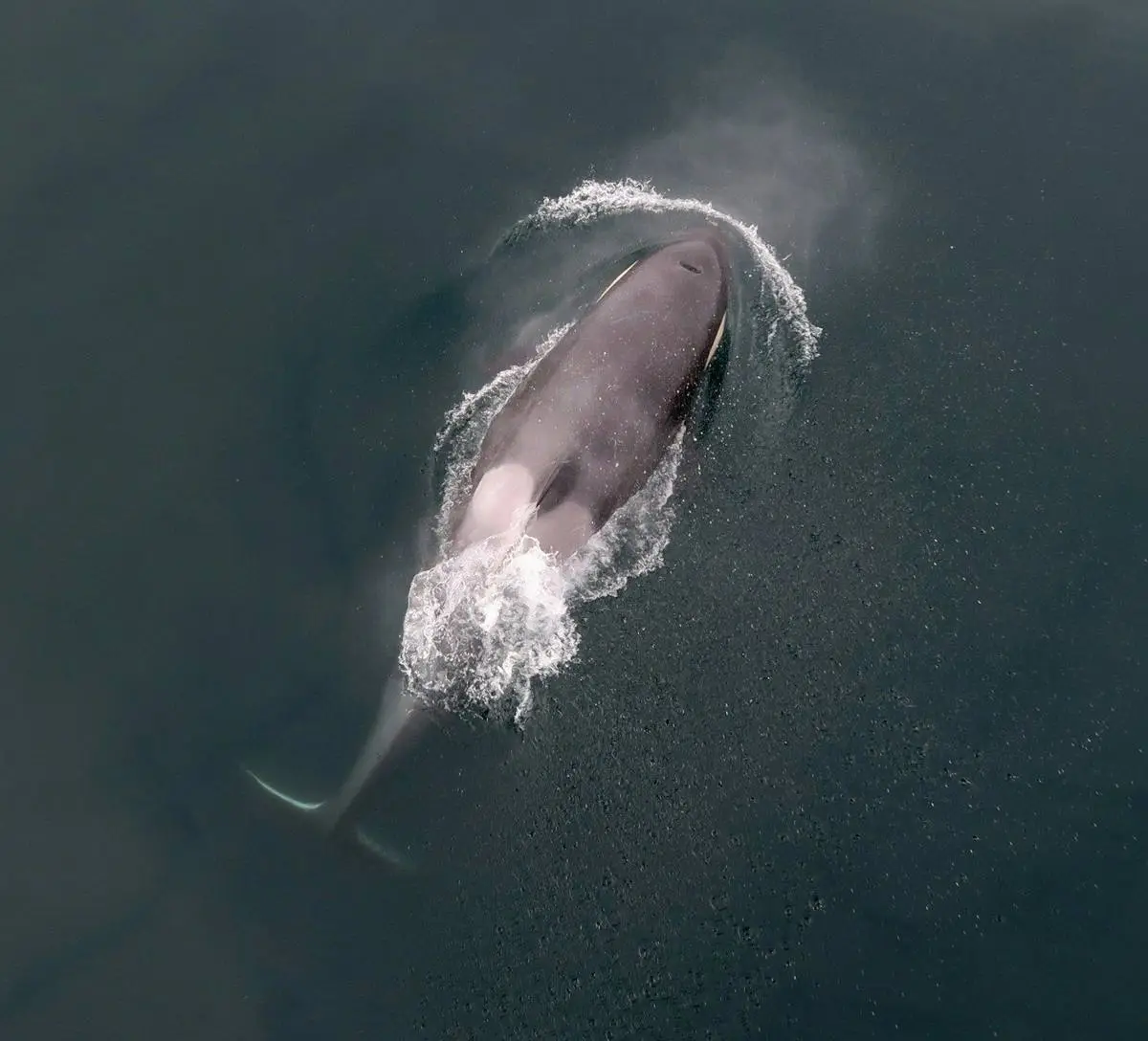


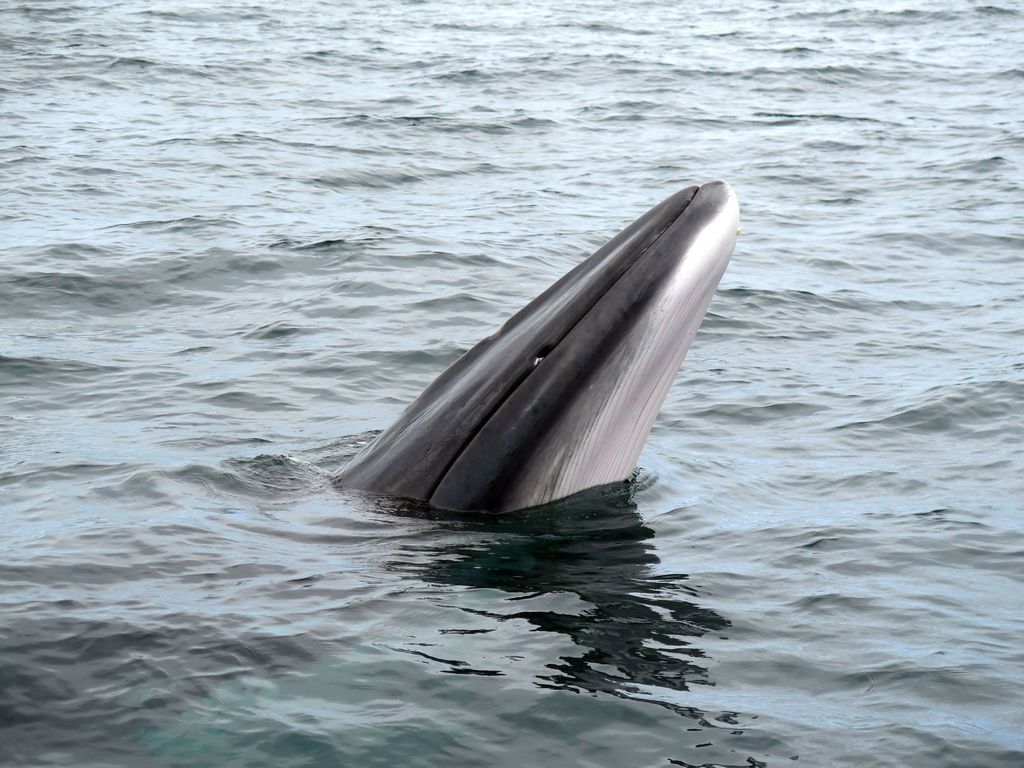
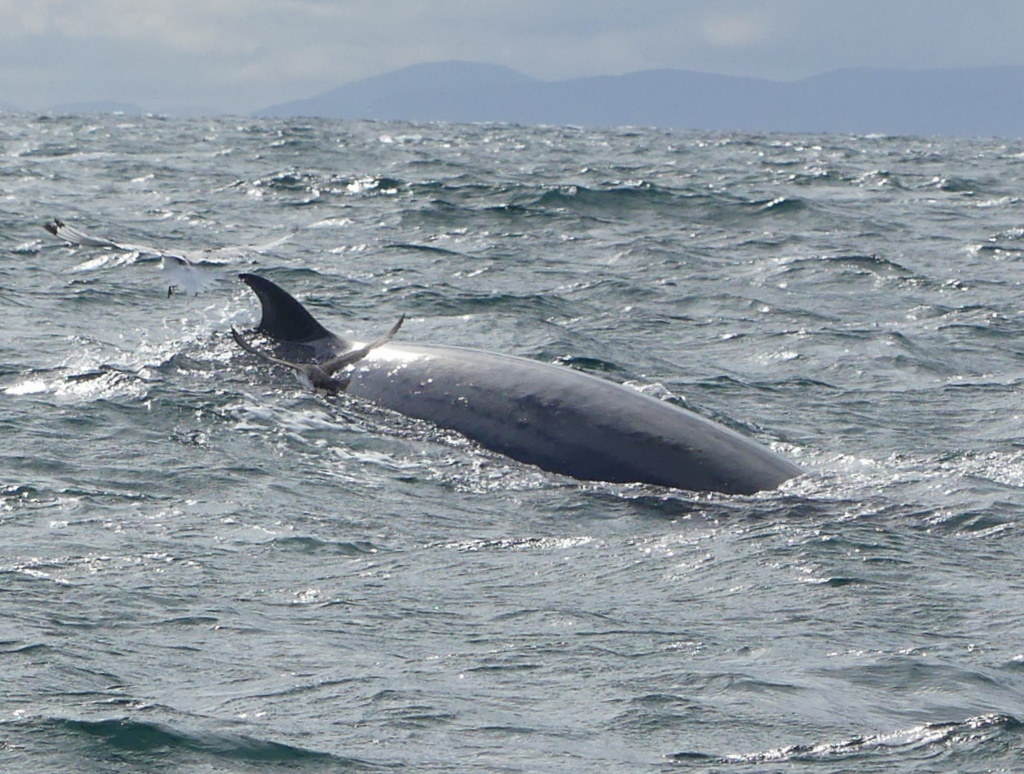
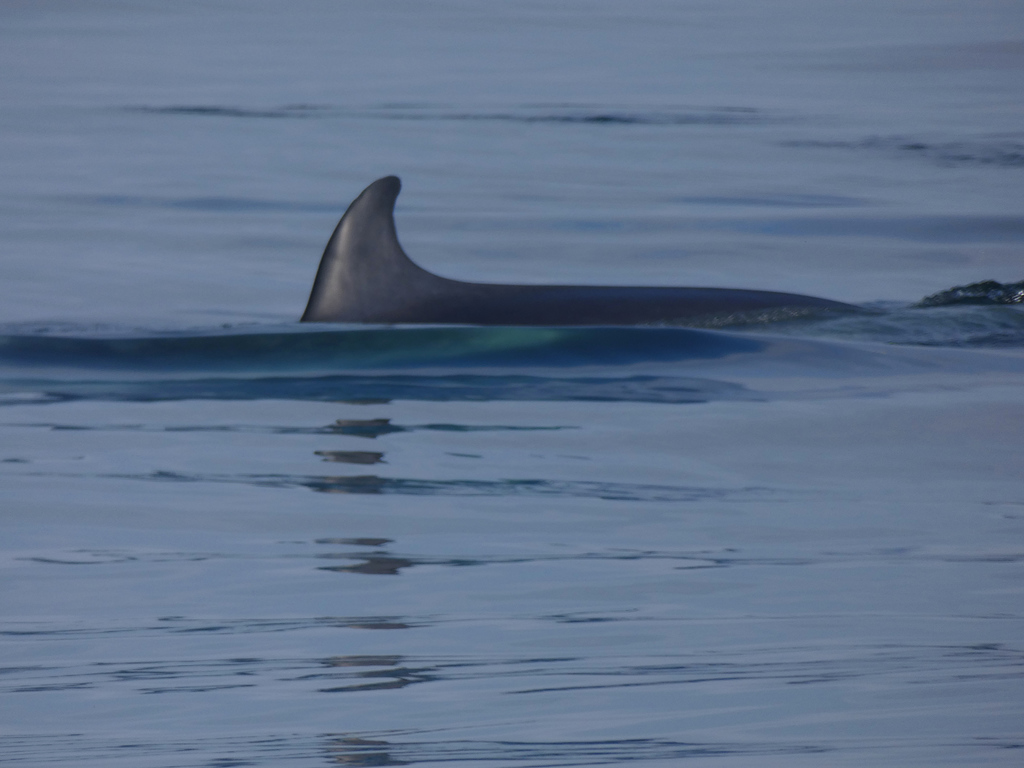
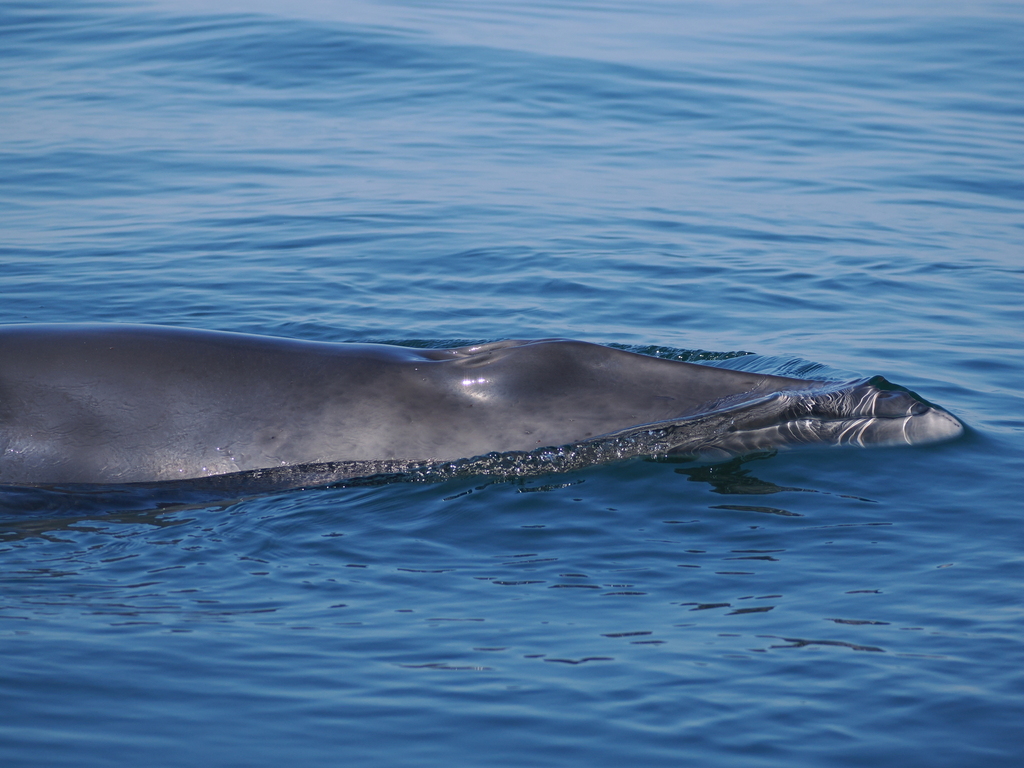
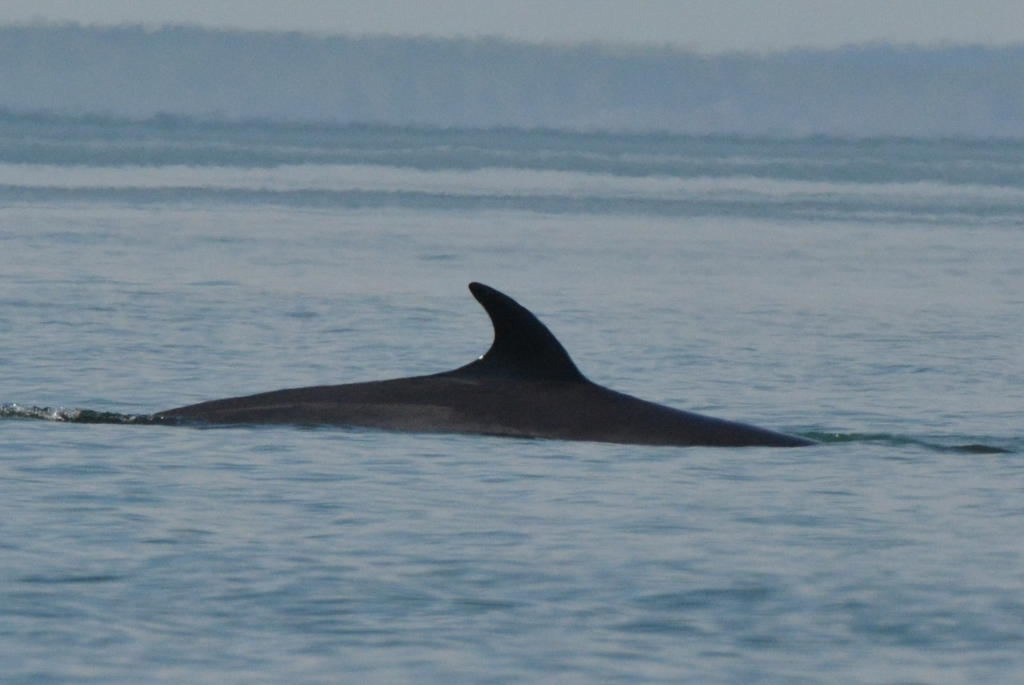
Photos show the species, not always the places on this page.
Length
Usually about 8 to 9 m (26 to 30 ft); largest about 10.7 m (35 ft)
Weight
Up to about 9 tonnes (20,000 lb); typical weight not given
Next to a person
About five adults lying head to toe; the largest about six
What it eats
Krill and small schooling fish; in the North Atlantic mainly capelin, herring, sandeels, mackerel and haddock, depending on the area.
Around people
Calm, give space
How it lives
Common minke whales feed opportunistically, lunging sideways into schools of fish and taking whatever prey is plentiful locally. They are usually seen alone or in twos and threes, though loose feeding groups can be larger, and some come close to boats. Females mature at about 3 to 8 years, carry a calf for 10 to 11 months and nurse it for 4 to 6 months.
Where it goes
Most make seasonal movements between northern summer feeding grounds and warmer waters further south in winter. Some stay at high latitudes through the winter. Where they feed in summer depends on where prey gathers.
We only draw a journey on the map when scientists have tracked it or clearly documented it. For this animal we have not found one yet.
Populations
North Atlantic minkes (B. a. acutorostrata) have a larger white patch on the flipper; North Pacific minkes (B. a. scammoni) have a smaller one. Southern Hemisphere dwarf minkes are smaller, about 6.5-7.2 m against about 8-8.8 m for northern forms. The Antarctic minke is a separate species.
Meet it respectfully
Follow the local legal boat distances, which differ by country. In US waters, NOAA guidance asks boats to stay at least 100 yards (about 90 m) away. Approach slowly and from the side, never chase or cut across a whale's path, and give extra space to feeding whales. We do not swim with minke whales.
Fun fact
Tap the bulb to light it up.
Not every minke leaves the north in winter; some stay at high latitudes all year.
North Atlantic minkes have a white band across each flipper.
Recent genetic studies suggest North Atlantic minkes may form one broad breeding stock.
At Stellwagen Bank, off Massachusetts, scientists tracked 18 minke whales just by listening. The whales used seven types of pulse trains, sometimes chaining 3-4 call types in a set order.
Source: NOAA Northeast Fisheries Science Center (Risch et al., 2014, Behaviour), via ScienceDaily
Minke whales had never been recorded by sound in the North Sea until underwater microphones off eastern Scotland heard them from May to November, calling more at night.
Common minke whale (North Atlantic) in the Ocean Atlas
Places we have researched where this animal is recorded. It is never guaranteed, and some places are for watching from the boat only.
Travel with usComing soonTrusted referralExploringOn pause, story onlyEthics pass
Country colour: pink where we travel, blue where we are exploring or refer, grey for story only.
 Anguilla
 Argentina
 Australia
 The Bahamas
 Belgium
 Brazil
 Canada
 Chile
Chile Denmark
 Ecuador
 Faroe Islands
 France
 French Polynesia
 Germany
 Greenland
 Guadeloupe
 Iceland
 Ireland
 Japan
Japan Martinique
 Mexico
 Netherlands
 New Caledonia
 Norway
 Portugal
 Russia
 Spain
Spain Sweden
 United Kingdom
 United States
Sources for this page
Facts checked 26 September 2026. Photos: Unsplash licence, or Creative Commons as shown on each photo.
Work in ocean travel?
We are always happy to hear from exceptional local operators, accommodation, conservation organisations and destination experts. If your work fits responsible, small-group ocean travel, we would love to learn more.
Partner with Ocean CallingNew: mobula rays in La Ventana, May 2027
CHF 2,720