
Great hammerhead
Sphyrna mokarran
The great hammerhead's tall fin and wide head make it one of the ocean's most distinctive sharks. Seeing one calmly patrol the sand is special.
Critically Endangered (IUCN, 2019) means it is at extremely high risk of extinction in the wild.


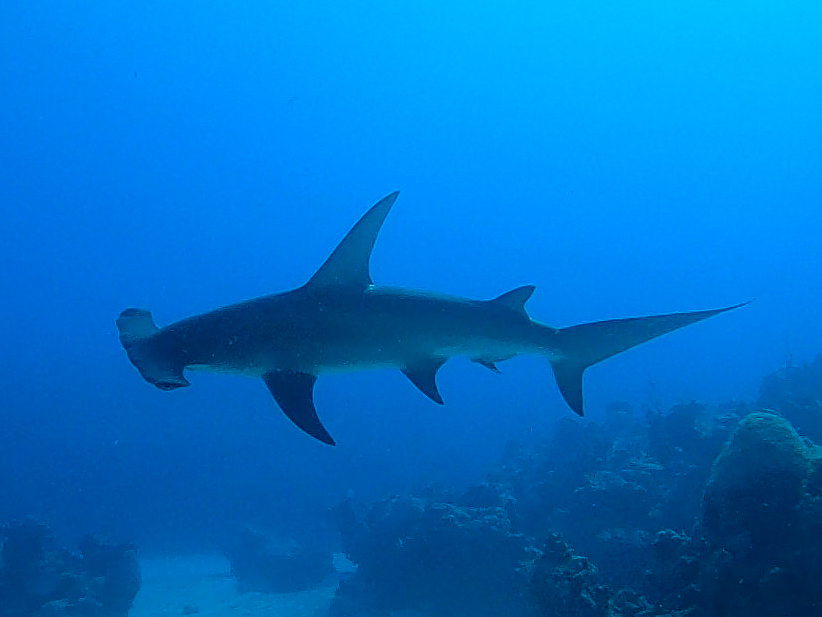
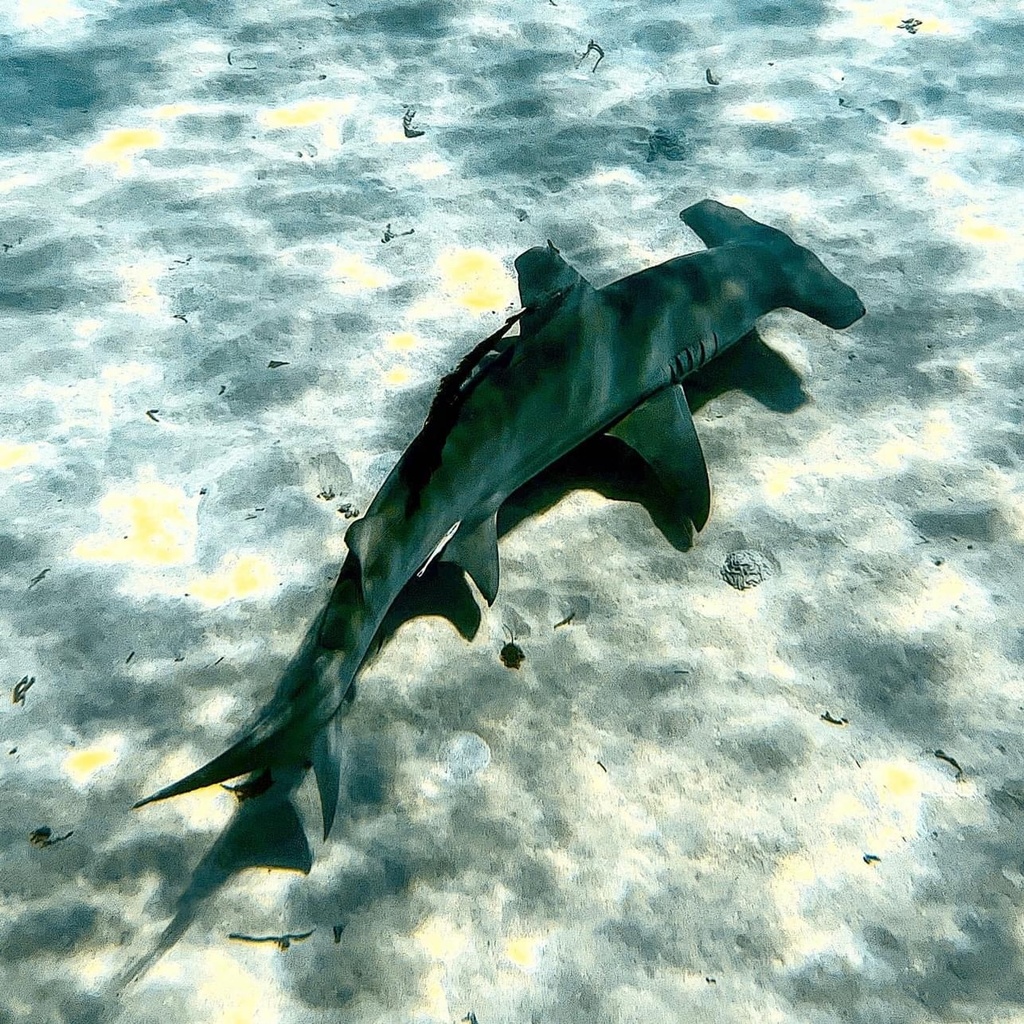
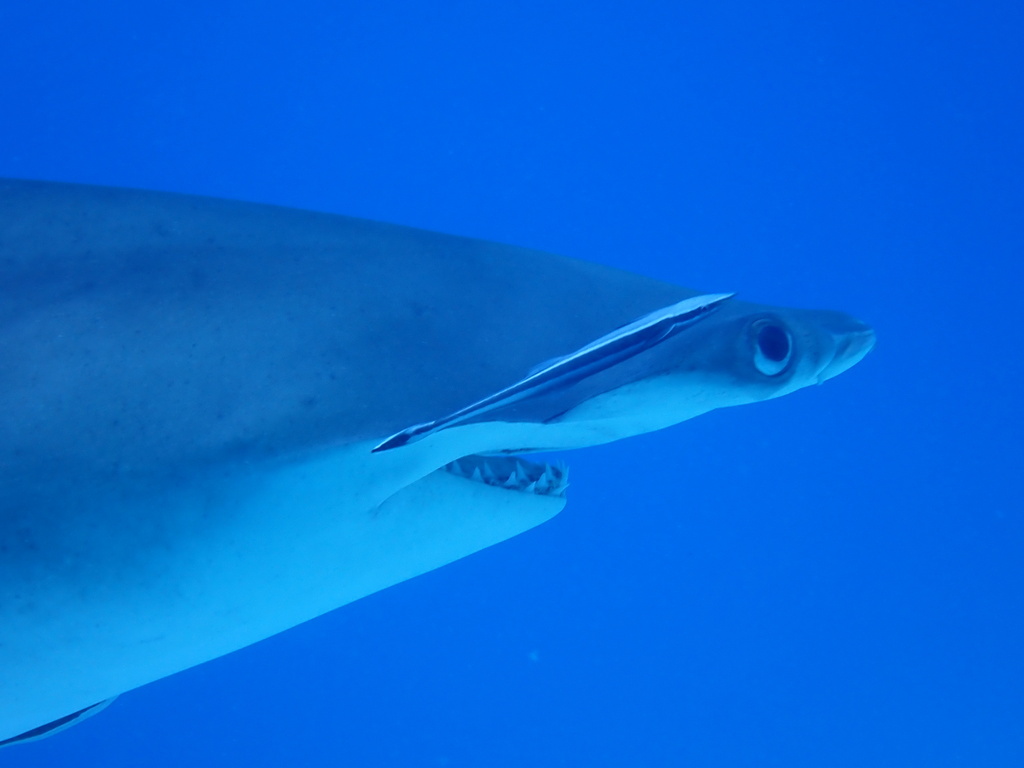
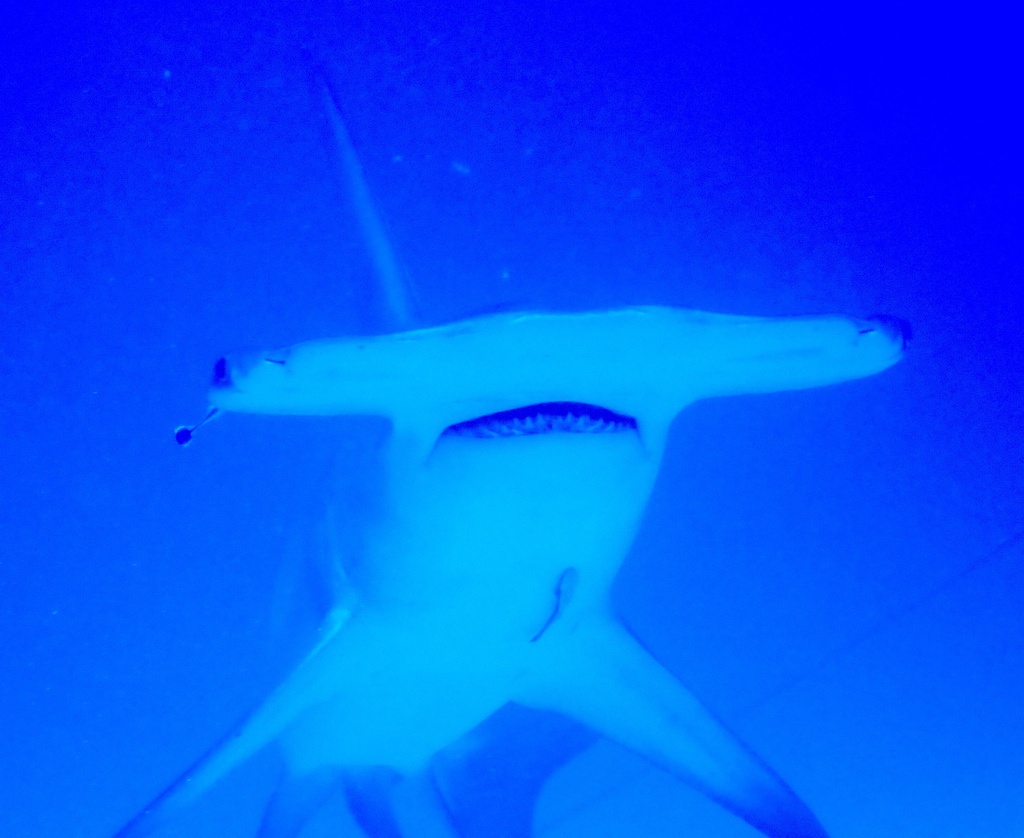
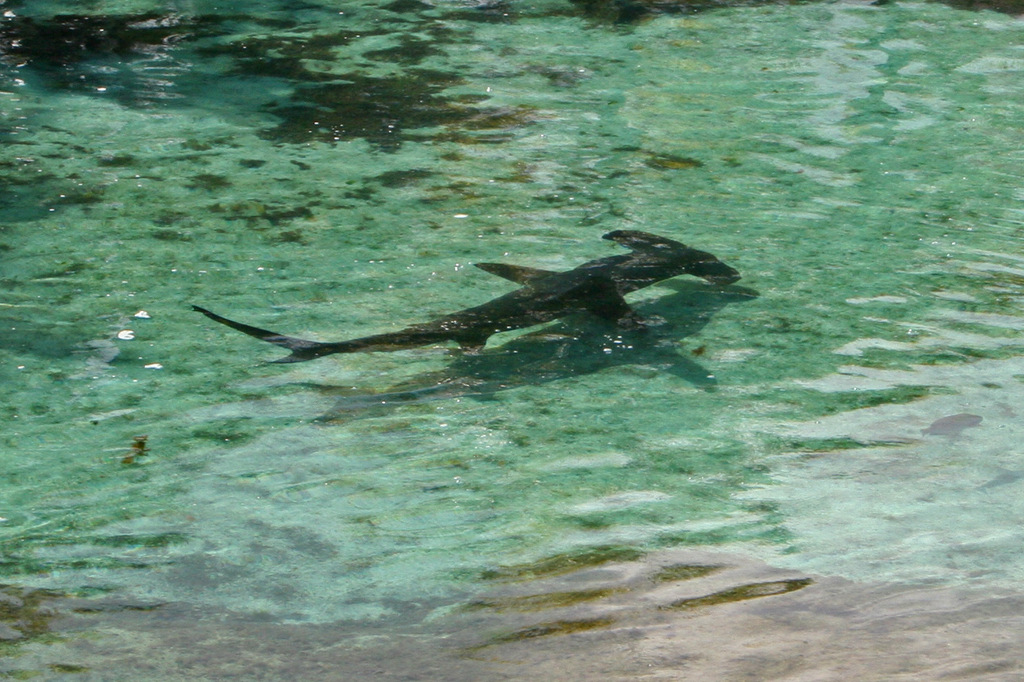
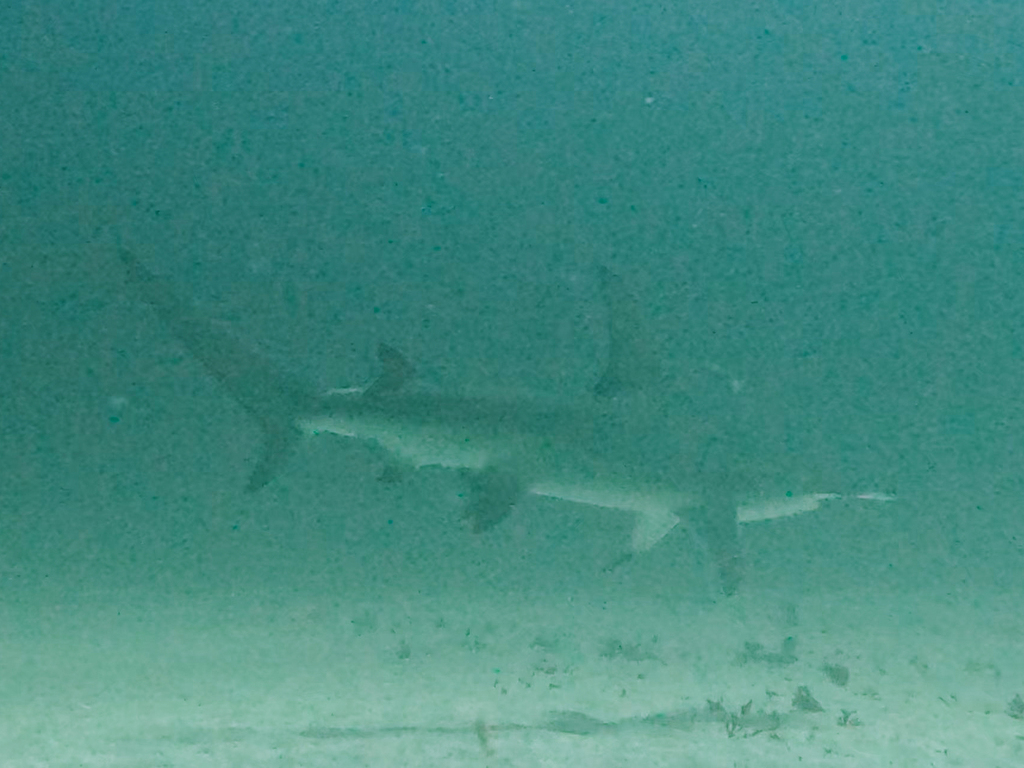
Photos show the species, not always the places on this page.
Length
Commonly about 3.7 m (12 ft); largest recorded 6.1 m (20 ft)
Weight
Typical adult weight not reliably measured; heaviest published about 449.5 kg (991 lb)
Next to a person
About twice as long as an adult person, and heavier than three adults
What it eats
Mostly stingrays, plus other rays, bony fish, other sharks and invertebrates.
Around people
Potentially dangerous, respect
How it lives
The great hammerhead is an active hunter with a strong taste for stingrays, and it also eats other rays, fish, sharks and invertebrates. Females give birth to 6 to 42 live pups every two years, after about 11 months of pregnancy. Some populations move to cooler waters in summer.
Where it goes
Some great hammerheads travel between the Bahamas and the US coast, while others stay close to home. Sharks from Bimini and Jupiter, Florida, left in April and May, some going as far as Virginia and back, about 3,000 km. Off Andros, most tagged sharks stayed in Bahamian waters all year, but one female twice left via Bimini for Florida's Gulf coast.
Populations
Great hammerheads live in warm seas worldwide, from the western Atlantic and Gulf of Mexico to the Indian Ocean, Japan, New Caledonia, French Polynesia and Pacific Mexico. Western Atlantic, northern Indian Ocean and Australian or Indo-Pacific populations mix very little. Australian sharks are probably one stock, distinct from those in the Red Sea. There are no named subspecies.
Meet it respectfully
Great hammerheads are large, powerful predators. Stay calm, keep the shark in view and give it a clear path. Let the shark choose how close to come, and never touch, block, chase or feed it. At Bimini, great hammerhead dives use bait to bring sharks close, so what you see there is not natural behaviour, and we do not offer these dives. Feeding fish while diving is not allowed in Florida waters.
Fun fact
Tap the bulb to light it up.
Great hammerheads often swim rolled onto one side, which cuts drag and saves energy.
They love stingrays, barbs and all: one shark had 96 stingray barbs stuck in its mouth.
It is a different species from the scalloped hammerhead.
Not all great hammerheads migrate. Some stay close to home all year.
Tagged great hammerheads spent up to 90% of their swimming time rolled 50-75 degrees onto one side. This clever posture cuts drag, and energy use, by about 10%.
Great hammerheads really do love stingrays, barbs and all. One large shark caught off Florida had 96 stingray barbs stuck in its mouth, throat and tongue.
Source: ReefQuest Centre for Shark Research, Sandy Plains: Great Hammerhead Shark
Some great hammerheads stay loyal to one small area. Off Andros, Bahamas, three tagged sharks were found again less than 1 km from where they were first caught, up to 40 months later.
Source: Guttridge et al., 2025, Frontiers in Marine Science, great hammerheads off Andros
Bimini, Bahamas, is famous for great hammerheads in winter and spring. Researchers once knew more than ten regular sharks there, but recent seasons had only three, and several tagged regulars were last detected off the Carolinas and Florida in 2020 and 2021.
Source: Save Our Seas Foundation, 2023, The missing great hammerheads of Bimini
Great hammerheads may not be taken in Florida state waters, where they are on the prohibited species list. They are still caught in federal waters further offshore.
Source: Florida Fish and Wildlife Conservation Commission, Great hammerhead
Follow its journey
Choose a journey and watch it travel. Every line comes from satellite tracking or documented research, and the source is named.
StartEndJourney (the line joins documented areas; real paths vary)
Great hammerhead in the Ocean Atlas
Places we have researched where this animal is recorded. It is never guaranteed, and some places are for watching from the boat only.
Travel with usComing soonTrusted referralExploringOn pause, story onlyEthics pass
Country colour: pink where we travel, blue where we are exploring or refer, grey for story only.
 Australia
 The Bahamas
 Brazil
 Cayman Islands
 Colombia
 Egypt
Egypt Faroe Islands
 French Polynesia
 Japan
Japan Maldives
 Mexico
 Mozambique
 New Caledonia
 Nicaragua
 Saudi Arabia
 South Africa
 Sri Lanka
 United Arab Emirates
 United Kingdom
 United States
Read more about the great hammerhead
Sources for this page
- Florida Museum of Natural History, 2026
- FishBase, 2018
- Florida Museum of Natural History, 2026
- The Shark Trust, 2026
- Marine & Freshwater Research, 2024
- Guttridge et al., 2017
- Guttridge et al., 2025
- Casselberry et al., 2025
- Save Our Seas Foundation, 2023, The missing great hammerheads of Bimini
- Florida Fish and Wildlife Conservation Commission, Great hammerhead
- Florida Fish and Wildlife Conservation Commission, fish feeding rule
Facts checked 26 September 2026. Photos: Unsplash licence, or Creative Commons as shown on each photo.
Work in ocean travel?
We are always happy to hear from exceptional local operators, accommodation, conservation organisations and destination experts. If your work fits responsible, small-group ocean travel, we would love to learn more.
Partner with Ocean CallingNew: tiger sharks in Fuvahmulah, January or March 2027
from CHF 2,900