
Pygmy cormorant
Microcarbo pygmaeus
A small dark cormorant perched over a quiet wetland is a gentle sight, and no sighting is ever a promise.
Least Concern (IUCN) means it is not at high risk of extinction at present, and BirdLife International's 2025 figures list 87,300 to 113,000 birds with an increasing trend.
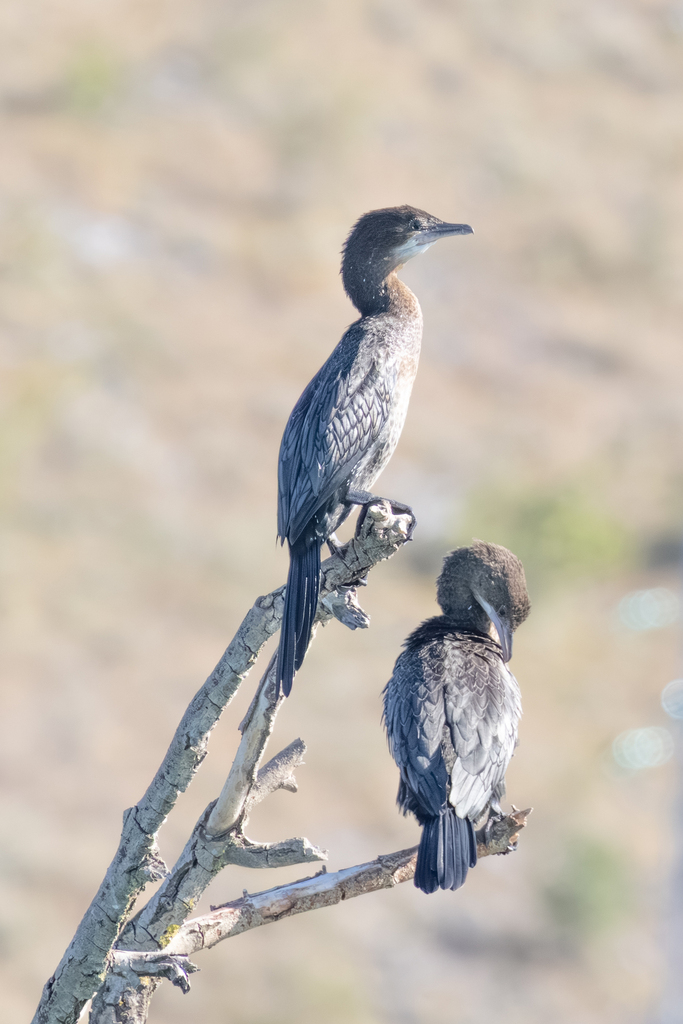
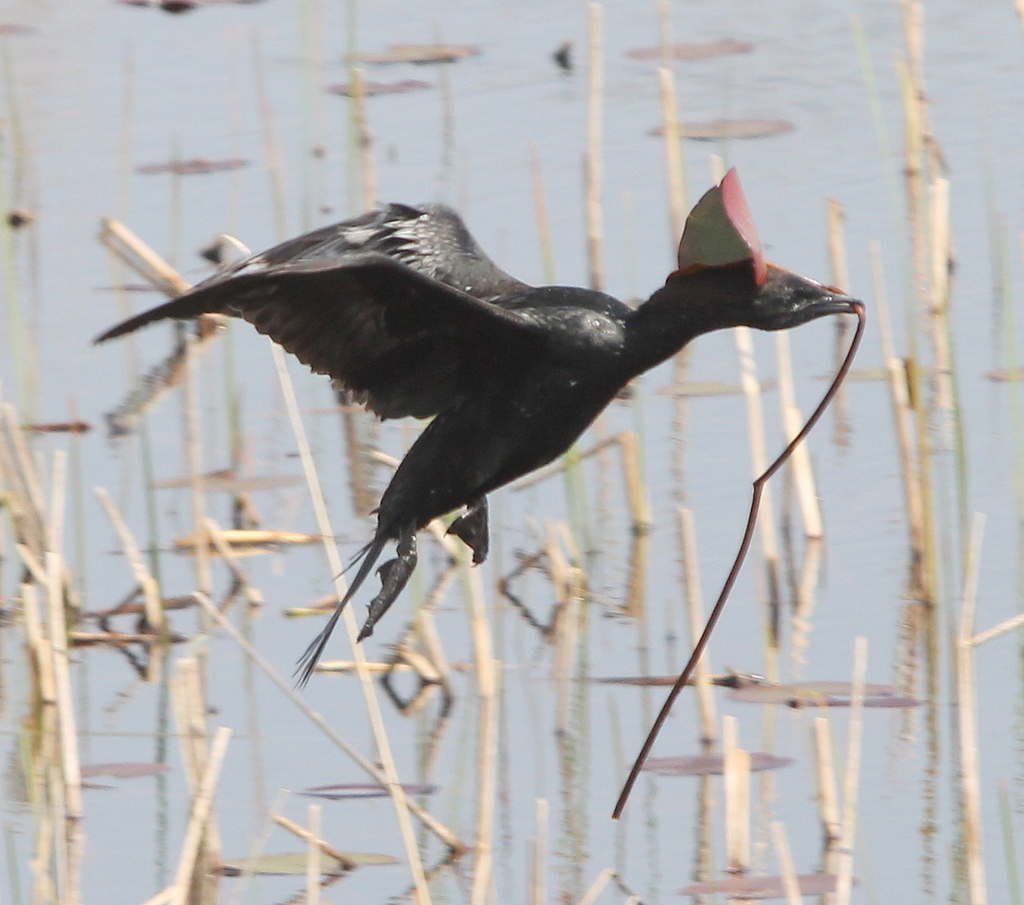
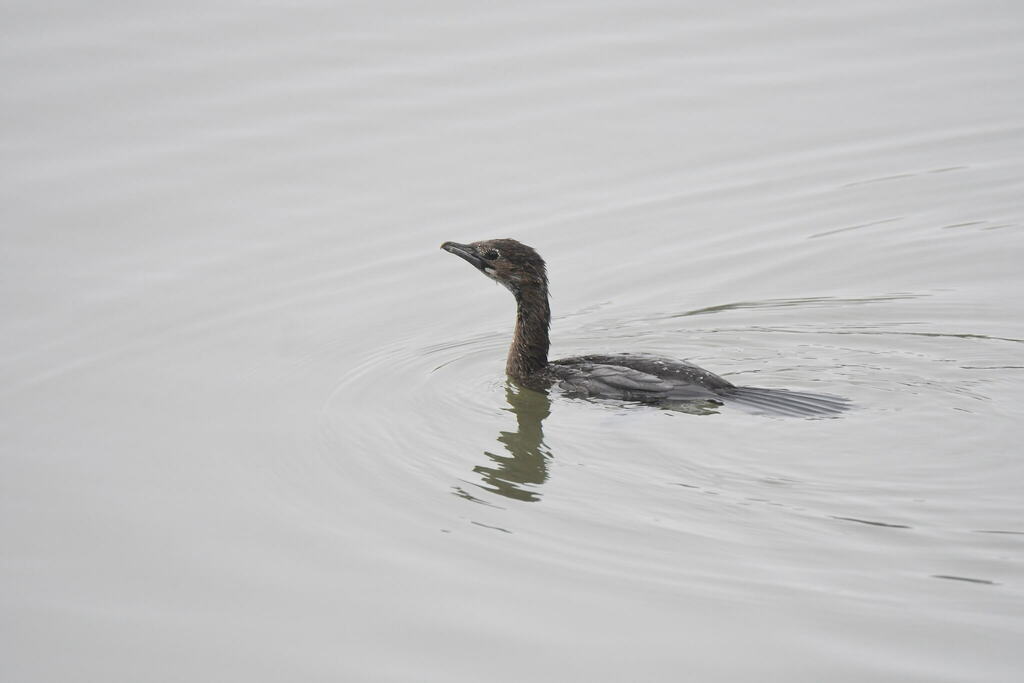
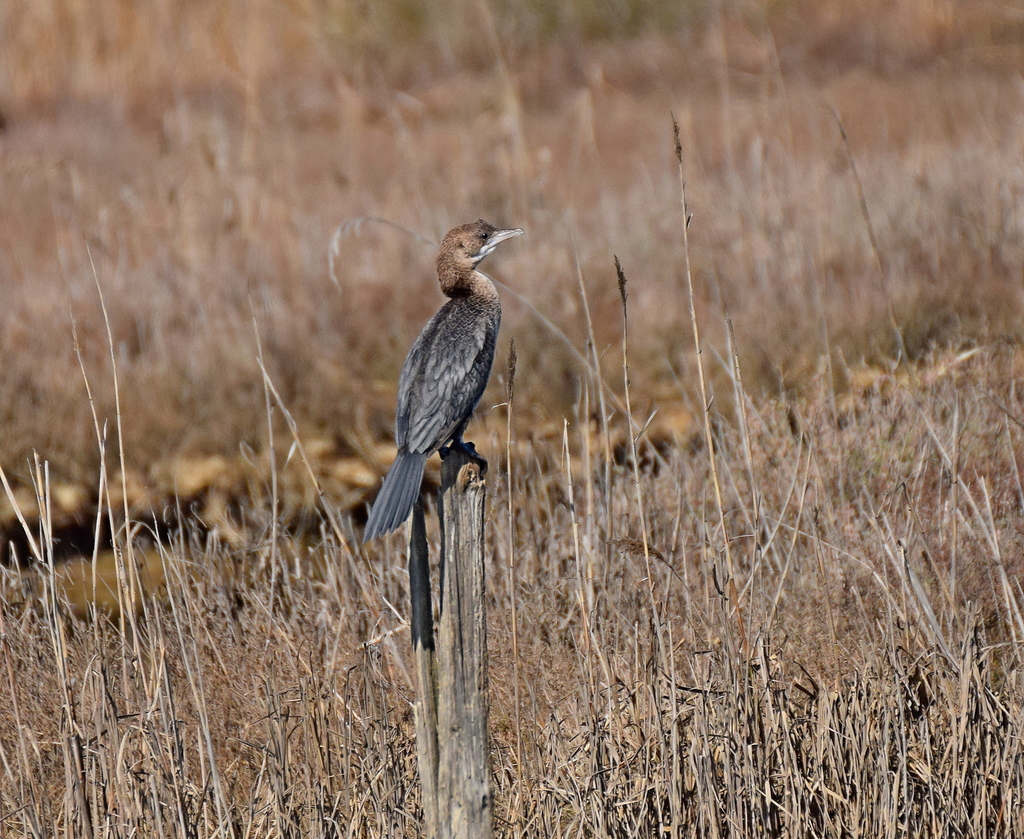
Photos show the species, not always the places on this page.
Length
Sources differ: about 45 to 55 cm (18 to 22 in) in one and 64 to 78 cm (25 to 31 in) in another; wingspan about 80 to 90 cm (31 to 35 in)
Weight
About 565 to 870 g (1.2 to 1.9 lb) in the one source that gives it
Next to a person
About as long as an adult's arm, and lighter than a 1 kg bag of sugar
What it eats
Mainly fish, such as perch, bass, carp, wrasses and pike, weighing about 7 to 71 g. One source gives prey up to about 15 cm (6 in) long. It hunts by diving, alone or in groups, and often perches in trees between fishing trips.
Around people
Quiet, keep distance
How it lives
It lives on vegetated pools, lakes, river deltas and reedy wetlands. It nests in colonies, usually with other waterbirds, in dense trees, shrubs or reeds, about 2 to 2.5 m (6.5 to 8 ft) above the ground. Breeding runs from about April to July. Clutches are 3 to 7 eggs. Both parents incubate for 27 to 30 days. Chicks fledge at about 44 days and become independent at about 70 days. Birds mature at about 3 years.
Where it goes
Partly migratory. Northern birds move south after breeding, mostly within the breeding range. Birds from the Caspian region leave in late August and return by March or April. In winter many go to estuaries or lakes with saltier water and gather at shared roosts.
We only draw a journey on the map when scientists have tracked it or clearly documented it. For this animal we have not found one yet.
Populations
Wikipedia lists 87,300 to 113,000 birds (BirdLife International, 2025) with an increasing trend. Between 74 and 94 percent live in Europe, mostly in the south-east. The biggest colony is in the Danube Delta, about 4,000 pairs. Romania has about 9,400 to 10,500 breeding pairs. A winter roost in Belgrade holds about 4,000 birds, about 2 percent of the world population, and gained protected habitat status in Serbia in March 2022. Romanian numbers fell sharply in the past because of wetland drainage. Threats now include wetland loss, pollution, persecution and drowning in fishing nets.
Meet it respectfully
Watch from a distance, ideally from a public path or hide. Never chase, feed or bait the birds, and keep away from nesting colonies, where disturbance can make adults leave eggs and chicks. Roosts at dusk are best watched quietly from afar. Follow local rules and your guide. Sightings are never promised.
Fun fact
Tap the bulb to light it up.
Between 74 and 94 percent of the world's pygmy cormorants live in Europe.
A winter roost in Belgrade holds about 4,000 birds, around 2 percent of the world population.
Chicks become independent about 70 days after hatching.
Pygmy cormorant in the Ocean Atlas
Places we have researched where this animal is recorded. It is never guaranteed, and some places are for watching from the boat only.
Travel with usComing soonTrusted referralExploringOn pause, story onlyEthics pass
Country colour: pink where we travel, blue where we are exploring or refer, grey for story only.
 Albania
 Belgium
 China
China Croatia
 Denmark
 Finland
 France
 Georgia
 Germany
 Greece
 Iran
Iran Iraq
Iraq Israel
 Italy
Italy Jordan
 Montenegro
 Netherlands
 Palestine
 Poland
 Romania
 Russia
 Slovenia
 Spain
Spain Sweden
 Türkiye
 Ukraine
Sources for this page
- Wikipedia, Pygmy cormorant, 2026
- Oiseaux-Birds, Pygmy cormorant, 2026
- APNV, Pygmy Cormorant, 2026
- Birding Places, Pygmy Cormorant Winter Roost Flyover, 2026
- Wikipedia, List of Suliformes by population (BirdLife International, 2025)
- GBIF, IUCN Red List category, 2026
Facts checked 5 October 2026. Photos: Unsplash licence, or Creative Commons as shown on each photo.
Work in ocean travel?
We are always happy to hear from exceptional local operators, accommodation, conservation organisations and destination experts. If your work fits responsible, small-group ocean travel, we would love to learn more.
Partner with Ocean Calling