
Red-tailed tropicbird
Phaethon rubricauda
A white bird with two red streamers crosses the sky above the cliffs. Tropicbirds come and go as they please, and no sighting is a promise.
Least Concern (IUCN, listing checked October 2026) means it is not close to being threatened worldwide. I could not open the IUCN page for the assessment year.
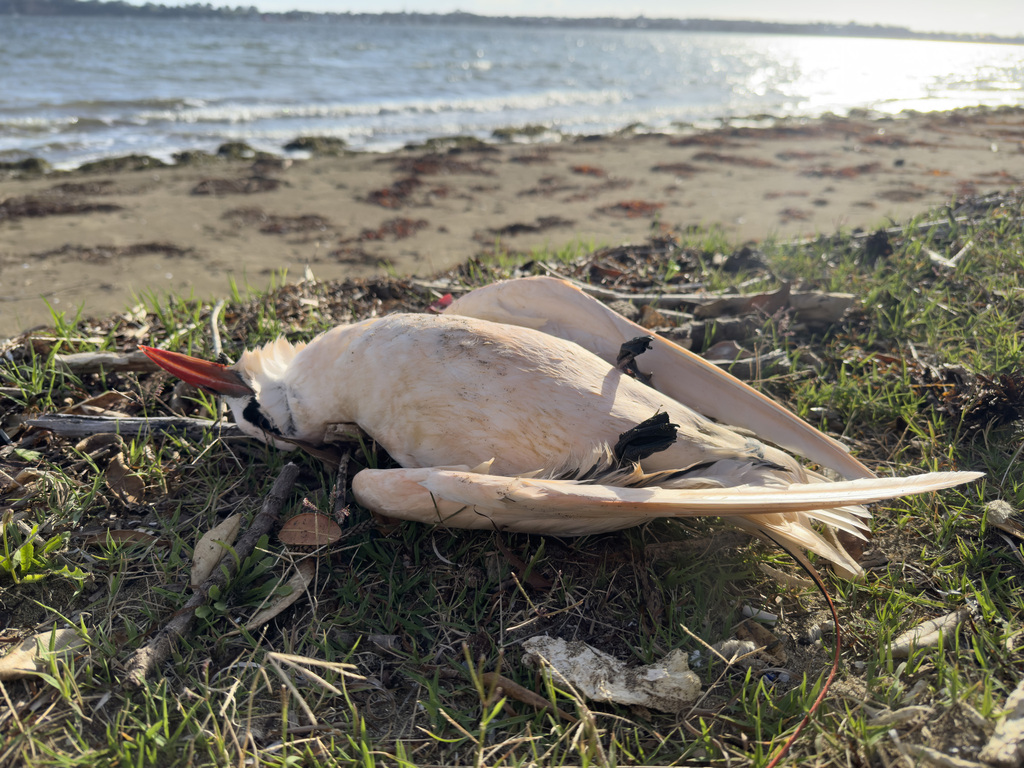
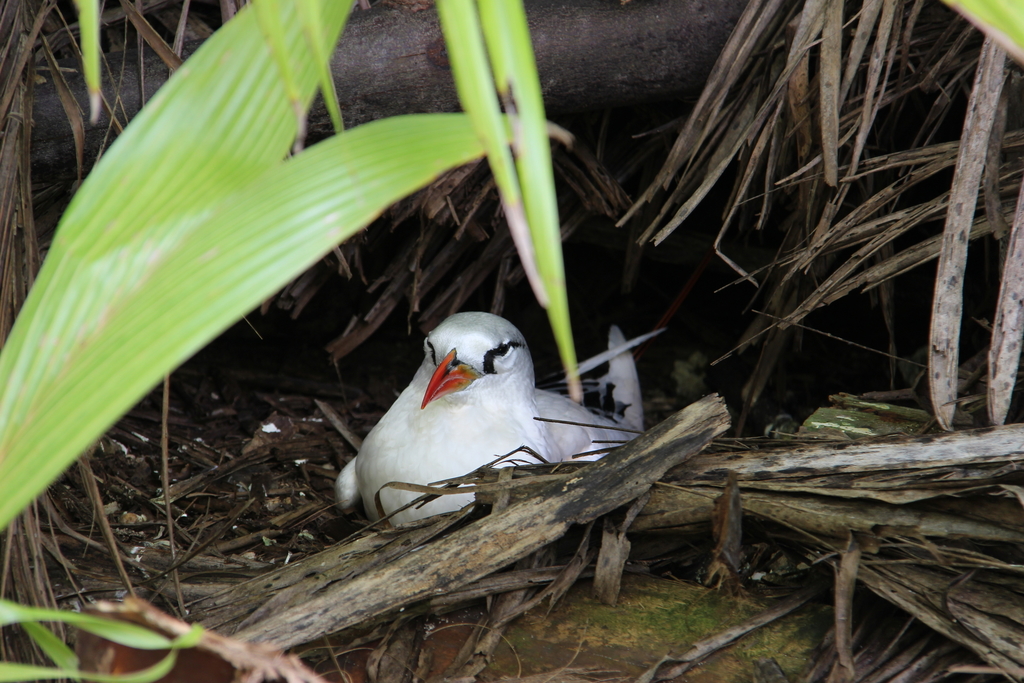
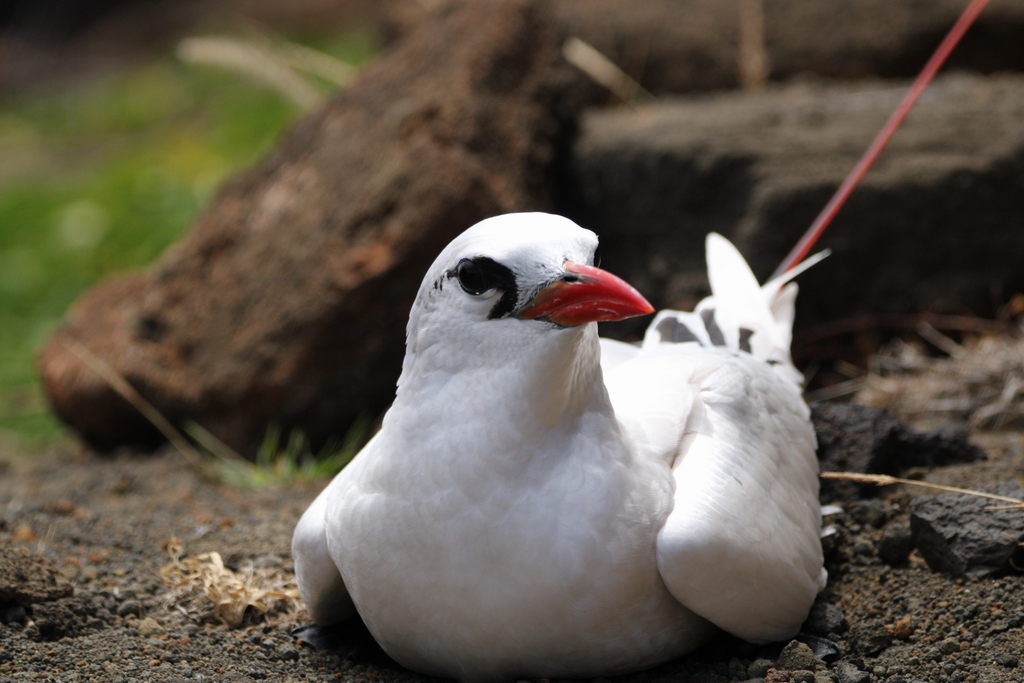
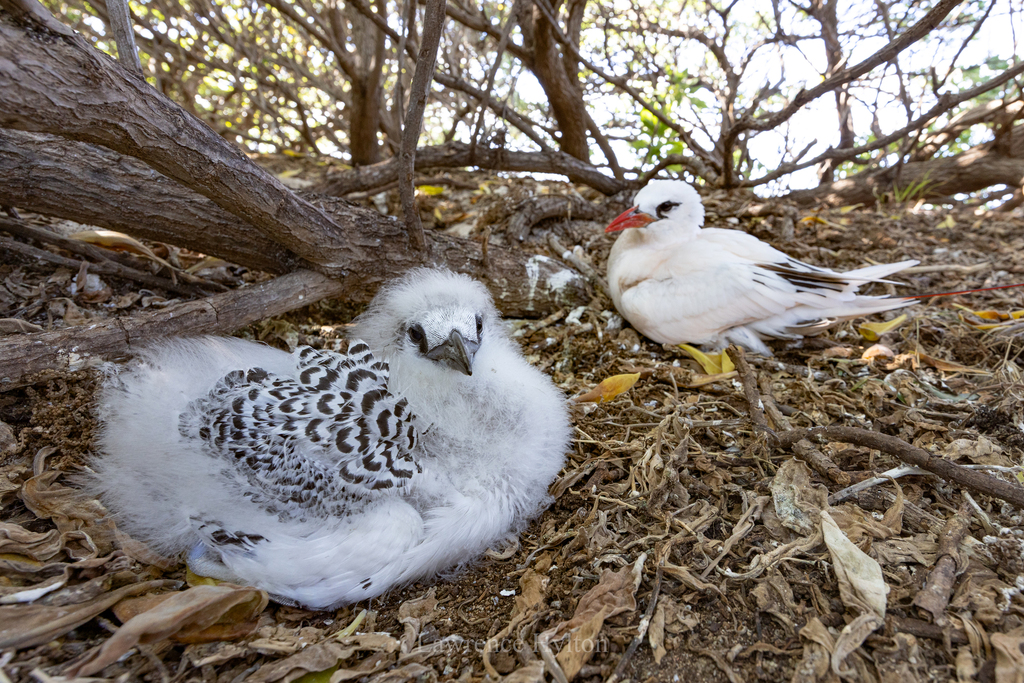
Photos show the species, not always the places on this page.
Length
About 95 to 104 cm (37 to 41 in) including the tail streamers; wingspan about 111 to 119 cm (44 to 47 in)
Weight
About 800 g (1.8 lb), as given in one general source
Next to a person
Wingspan about as wide as an adult's outstretched arms, and a little lighter than a 1 kg bag of sugar
What it eats
Mostly flying fish and squid, caught by plunge-diving from about 6 to 50 m above the water to depths of about 4.5 m. It sometimes takes flying fish in the air.
Around people
Quiet, watch from afar
How it lives
Pairs are monogamous and nest in loose colonies on oceanic islands. The nest is a shallow scrape in shaded sand, a rock crevice or under a shrub, usually within about 1 m of the shade edge. One egg is incubated by both parents for about 42 to 46 days, and the chick flies after about 67 to 91 days.
Where it goes
The species ranges from East Africa through Indonesia to Hawaii and Chile and breeds on many oceanic islands. The sources I read do not describe set seasonal routes.
We only draw a journey on the map when scientists have tracked it or clearly documented it. For this animal we have not found one yet.
Populations
Globally the IUCN lists it as Least Concern. In Australia it is described as near threatened because of declines and introduced pests such as rats, cats and yellow crazy ants. Phillip Island near Norfolk Island is one of 12 seabird breeding sites listed there. I found no global population count.
Meet it respectfully
Watch from a distance, especially near nesting sites. Never approach, touch or flush birds from nests or chicks, and never feed them. Introduced predators and human contact are known problems for this species, so follow biosecurity and park rules. I did not read visitor rules for Phillip Island, so follow your guide.
Fun fact
Tap the bulb to light it up.
It is quiet in flight, with a short squawk to its mate at the nest and a low growl as a warning.
In courtship, birds fly in large circles with sharp cackling calls.
Parents share chick care: one makes short trips to feed the chick while the other makes longer trips to feed itself.
Red-tailed tropicbird in the Ocean Atlas
Places we have researched where this animal is recorded. It is never guaranteed, and some places are for watching from the boat only.
Travel with usComing soonTrusted referralExploringOn pause, story onlyEthics pass
Country colour: pink where we travel, blue where we are exploring or refer, grey for story only.
 Australia
 Chagos (British Indian Ocean Territory)
 Chile
Chile Christmas Island
 Cocos (Keeling) Islands
 Cook Islands
 Fiji
Fiji French Polynesia
 Indonesia
 Japan
Japan Kiribati
 Madagascar
 Marshall Islands
 Mauritius
 Mexico
 Micronesia (FSM)
 New Caledonia
 New Zealand
 Norfolk Island
 Northern Mariana Islands
 Pitcairn Islands
 Réunion
 Seychelles
 South Africa
 Taiwan
 Tonga
Tonga United States
 Wallis and Futuna
Sources for this page
- Wikipedia, Red-tailed tropicbird, 2026
- Wikipedia, Phillip Island (Norfolk Island), 2026
- IUCN Red List category via GBIF, 2026
- Animal Diversity Web, Phaethon rubricauda, 2026
Facts checked 5 October 2026. Photos: Unsplash licence, or Creative Commons as shown on each photo.
Work in ocean travel?
We are always happy to hear from exceptional local operators, accommodation, conservation organisations and destination experts. If your work fits responsible, small-group ocean travel, we would love to learn more.
Partner with Ocean Calling7-day freediving course in Coron, Palawan
CHF 1,480