
Round ribbontail ray
Taeniurops meyeni
Round ribbontail rays are huge, mottled reef stingrays. We give them space and let a resting ray stay undisturbed.
Vulnerable (IUCN, 2023) means it is at high risk of extinction in the wild.
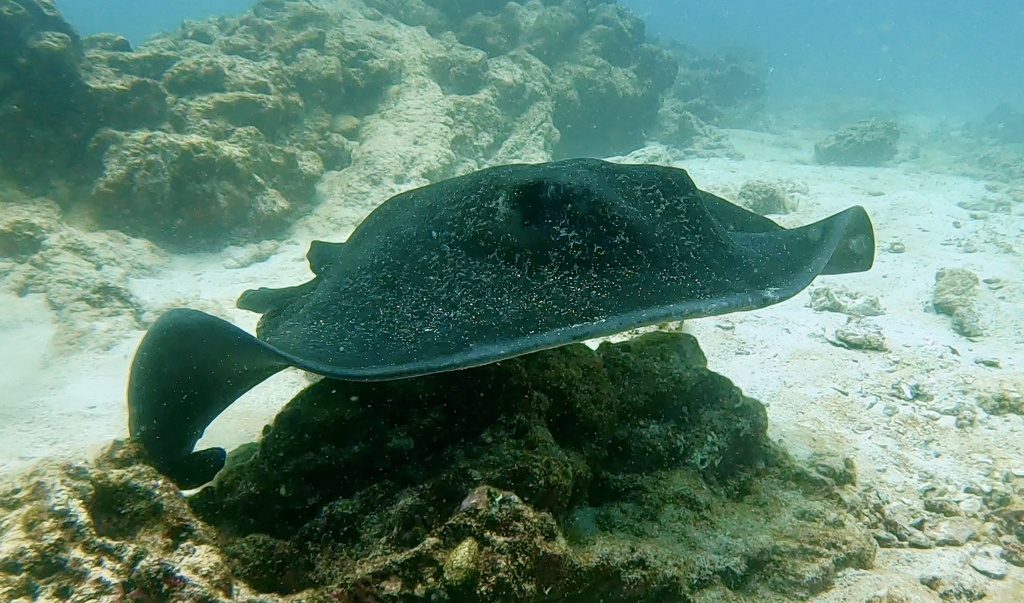
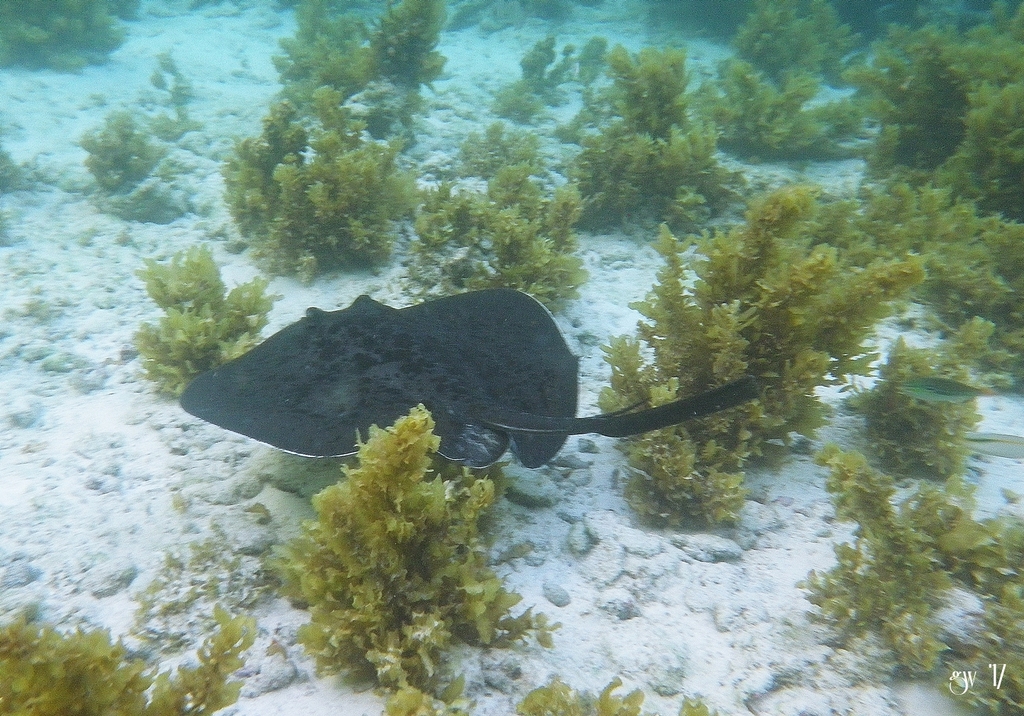
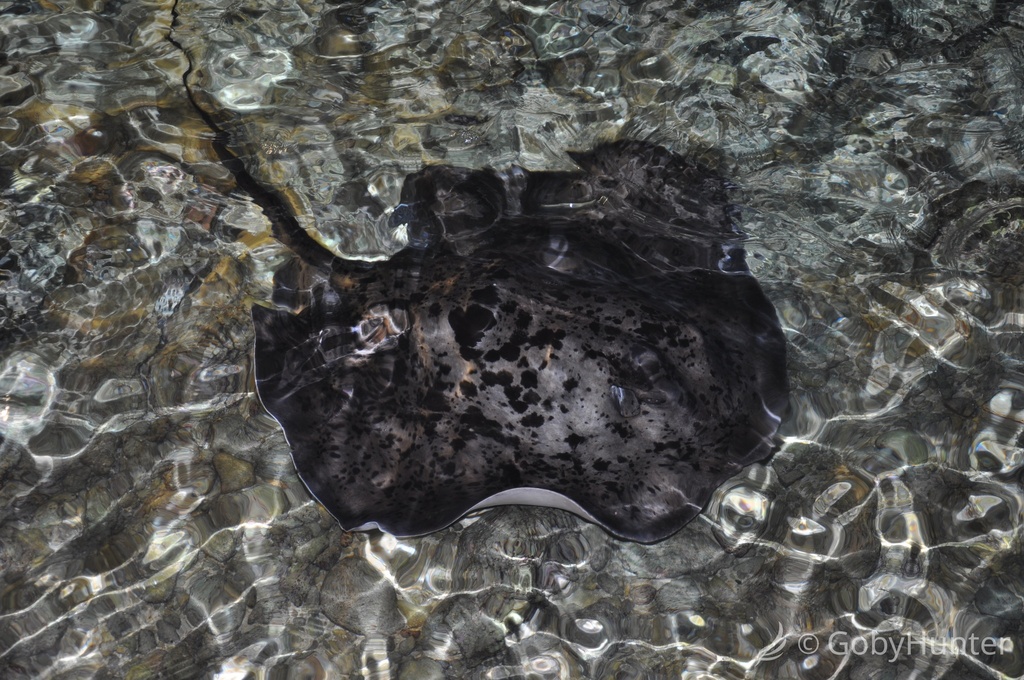
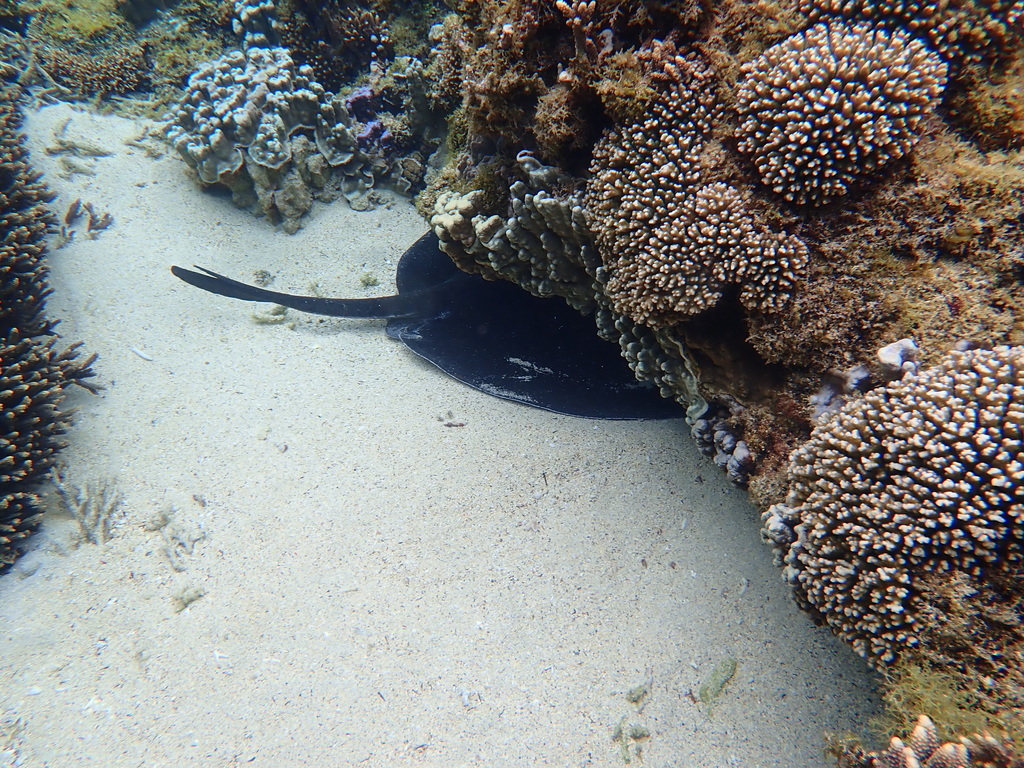
Photos show the species, not always the places on this page.
Length
Up to about 3.3 m (10.8 ft) long including the tail; the disc can be over 1.8 m (5.9 ft) across. Typical adult size not reliably measured
Weight
Typical weight not reliably measured; largest published about 150 kg (331 lb)
Next to a person
About as long as two adults lying end to end, tail included
What it eats
Bottom fish, clams and other bivalves, crabs and shrimps.
Around people
Defensive if pressured
How it lives
This large stingray lives from shallow lagoons to outer reef slopes, most often at 20 to 60 m. It rests on sand or under ledges, alone or in groups, and jacks and cobia often swim with it. Females give birth to live young, up to seven pups.
Where it goes
No long distance migration has been verified, and its movements are not well studied.
We only draw a journey on the map when scientists have tracked it or clearly documented it. For this animal we have not found one yet.
Populations
Found across the Indo-West Pacific, from the Red Sea and East Africa to southern Japan, Micronesia and tropical Australia. In the eastern Pacific it lives only at the oceanic islands of Cocos and the Galápagos.
Meet it respectfully
It is usually calm, but its tail carries venomous spines, and a human death has been recorded. Never touch, ride, block or corner it. Keep several metres away and do not hover right above a resting ray.
Fun fact
Tap the bulb to light it up.
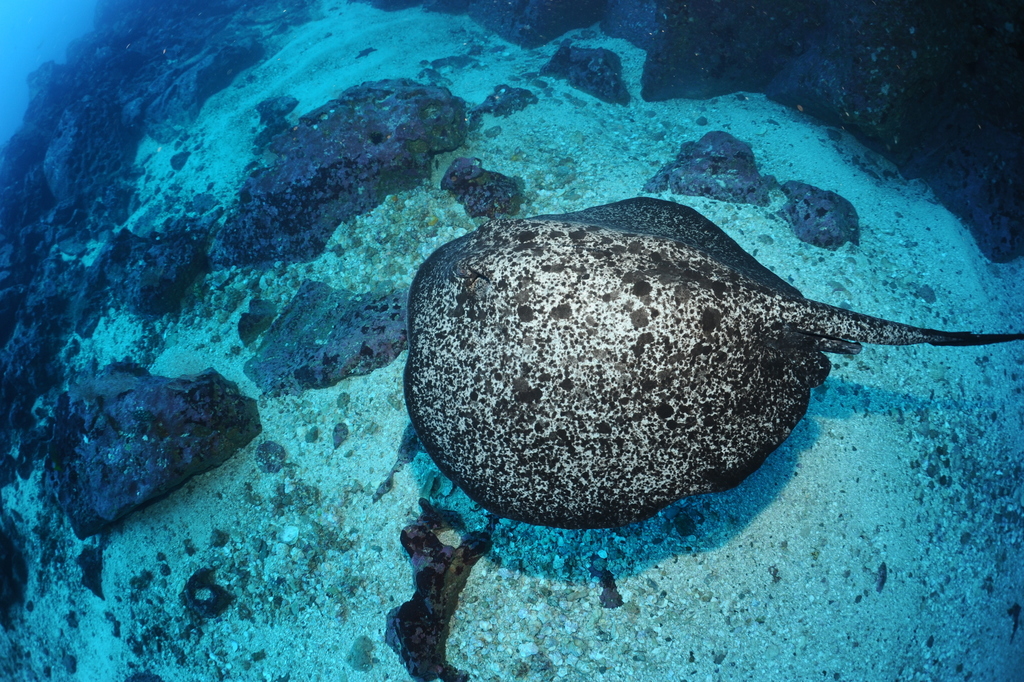
It has a huge round disc with bold black and white marbling.
A deep skin fold under the tail runs almost to the tip.
It is a different species from the small blue spotted ribbontail ray.
Round ribbontail ray in the Ocean Atlas
Places we have researched where this animal is recorded. It is never guaranteed, and some places are for watching from the boat only.
Travel with usComing soonTrusted referralExploringOn pause, story onlyEthics pass
Country colour: pink where we travel, blue where we are exploring or refer, grey for story only.
 Australia
 Costa Rica
 Ecuador
 Guam
Guam Hong Kong
 India
India Indonesia
 Japan
Japan Maldives
 Mozambique
 New Caledonia
 Northern Mariana Islands
 Oman
Oman Philippines
 Réunion
 Seychelles
 South Africa
 Taiwan
Sources for this page
- FishBase, Taeniurops meyeni
- Florida Museum of Natural History, Blotched fantail ray
- Save Our Seas Foundation, 2014, All ray species now protected in the Maldives
- iNaturalist research-grade records, Taeniurops meyeni, checked 25 Sep 2026
- FishBase field guide, Taeniurops meyeni
Facts checked 26 September 2026. Photos: Unsplash licence, or Creative Commons as shown on each photo.
Work in ocean travel?
We are always happy to hear from exceptional local operators, accommodation, conservation organisations and destination experts. If your work fits responsible, small-group ocean travel, we would love to learn more.
Partner with Ocean Calling