
Silvertip shark
Carcharhinus albimarginatus
Silvertips are reef predators of the deep edge, with bright white borders on nearly every fin. They often patrol offshore drop-offs and isolated reefs, and many stay close to home.
Vulnerable (IUCN, 2016) means it is at high risk of extinction in the wild.
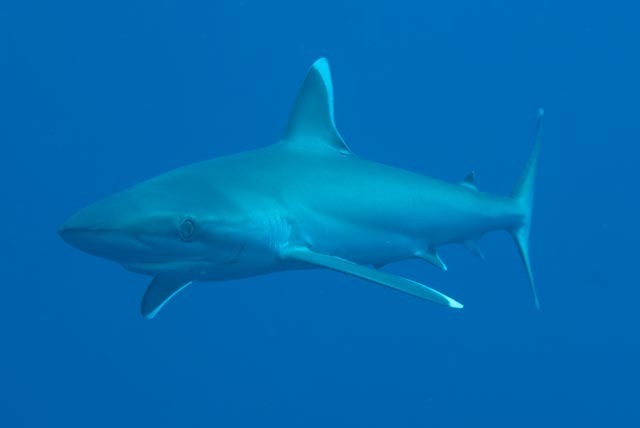
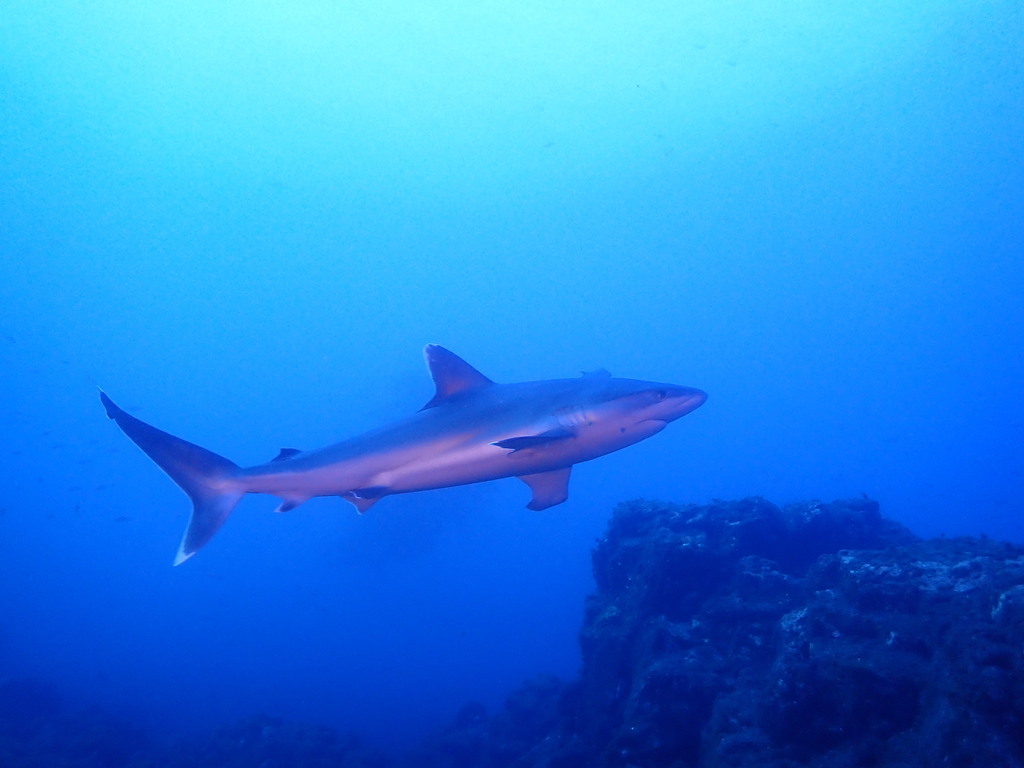
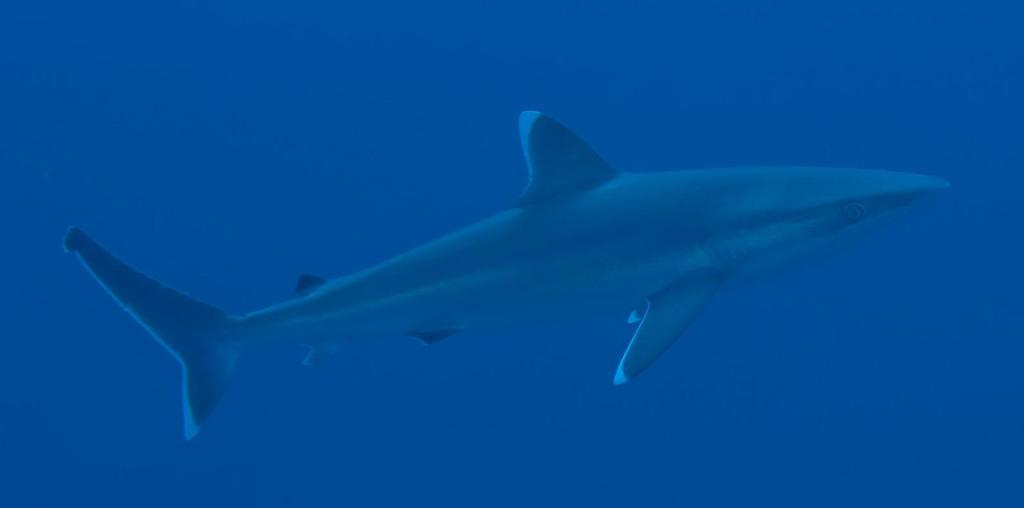
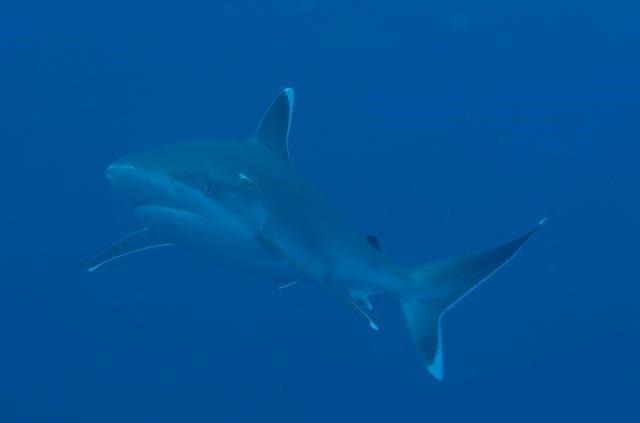
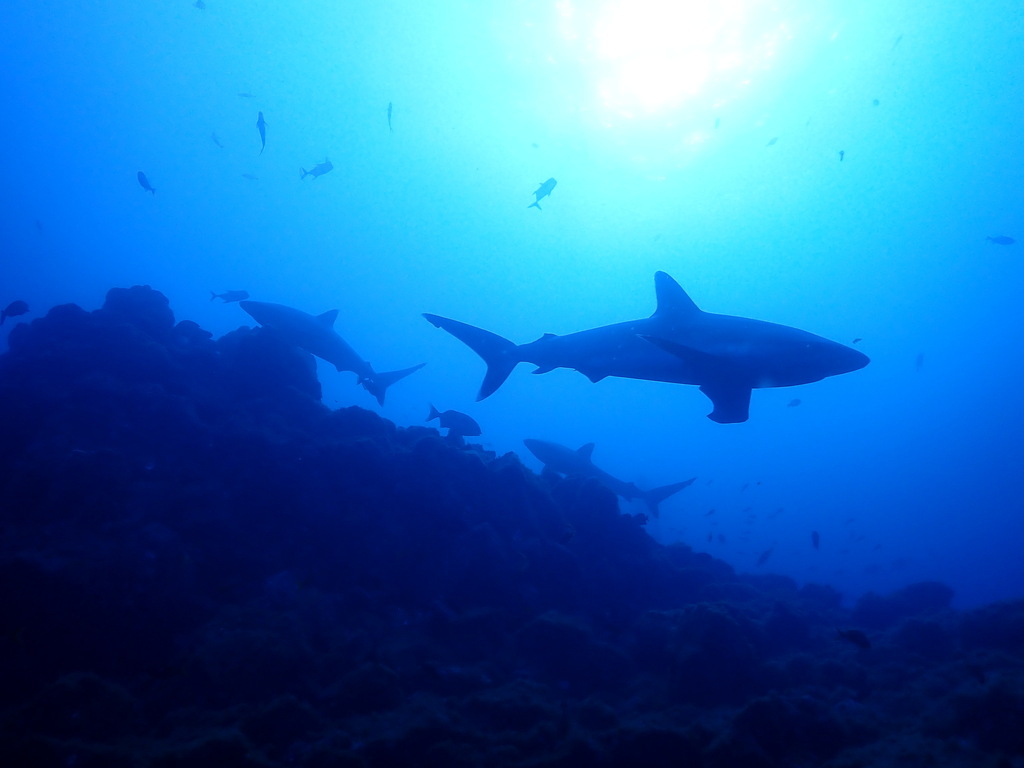
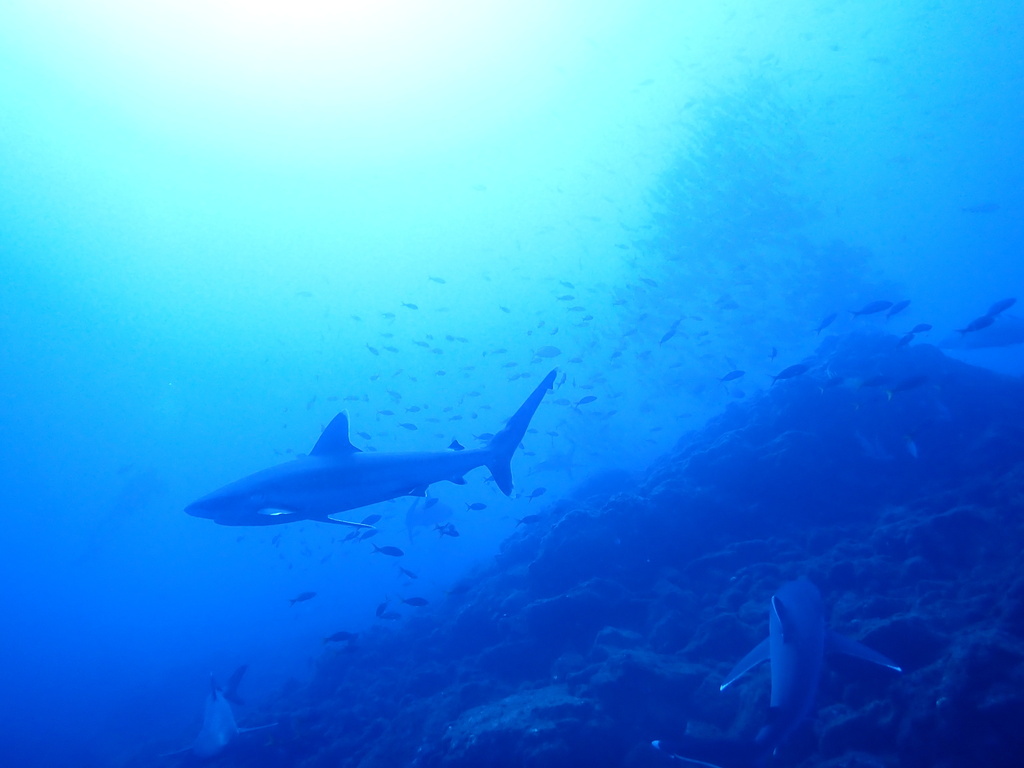
Photos show the species, not always the places on this page.
Length
Usually 2 to 2.5 m (6.6 to 8.2 ft); largest published about 3 m (9.8 ft)
Weight
Typical adult weight not reliably measured; heaviest published 162.2 kg (358 lb)
Next to a person
About one-and-a-quarter to one-and-a-half times as long as an adult person; the heaviest recorded weigh about as much as two adults
What it eats
Reef and midwater fish (including tuna and wahoo), eagle rays, small sharks, octopus and squid.
Around people
Defensive if pressured
How it lives
Silvertip sharks live around offshore islands, reef drop-offs and banks, and often dominate other sharks, even larger ones, at food. They mate in pairs in summer, and females give birth to 1 to 11 live pups after about 12 months. The young stay in shallow reef areas, then move deeper as they grow.
Where it goes
Young silvertips stay in shallow reef areas and move deeper as they grow. Adults often stay near their home reefs, but some travel tens to hundreds of kilometres between islands, for example at Revillagigedo.
We only draw a journey on the map when scientists have tracked it or clearly documented it. For this animal we have not found one yet.
Populations
Silvertips often stay close to home, so regional populations differ genetically; for example, Seychelles sharks are strongly separated from those of Papua New Guinea and eastern Australia. There are no subspecies, and numbers at each site vary with how isolated the reef is.
Meet it respectfully
Silvertips usually keep their distance, but food can quickly make them bold and change their behaviour. Never feed, bait, chase or block them, and never carry speared fish. We avoid baited dives. Stay calm, keep the shark in view and give it plenty of room.
Fun fact
Tap the bulb to light it up.
Silvertips are often seen along reefs, but they can live as deep as 800 m.
Its scientific name, albimarginatus, means white border in Latin.
It is a different species from the whitetip reef shark and the oceanic whitetip.
Silvertip sharks are often seen along reefs, but they can live as deep as 800 m (2,625 feet).
Source: Florida Museum of Natural History, Silvertip shark profile
Its scientific name, albimarginatus, means white border in Latin. It describes the bright white tips and edges on every one of its fins.
Source: Florida Museum of Natural History, Silvertip shark profile
Silvertip shark in the Ocean Atlas
Places we have researched where this animal is recorded. It is never guaranteed, and some places are for watching from the boat only.
Travel with usComing soonTrusted referralExploringOn pause, story onlyEthics pass
Country colour: pink where we travel, blue where we are exploring or refer, grey for story only.
 Australia
 Chagos (British Indian Ocean Territory)
 Costa Rica
 Ecuador
 Egypt
Egypt Faroe Islands
 Fiji
Fiji France
 French Polynesia
 Germany
 Iceland
 India
India Indonesia
 Japan
Japan Madagascar
 Maldives
 Marshall Islands
 Mauritania
 Mexico
 Micronesia (FSM)
 Mozambique
 Myanmar
 New Caledonia
 Papua New Guinea
 Seychelles
 South Africa
 Sudan
Sudan United Kingdom
Read more about the silvertip shark
Sources for this page
- Florida Museum of Natural History, 2026
- FishBase, 2023
- Georgia Aquarium, 2026
- Espinoza et al., 2019, Marine and Freshwater Research
Facts checked 26 September 2026. Photos: Unsplash licence, or Creative Commons as shown on each photo.
Work in ocean travel?
We are always happy to hear from exceptional local operators, accommodation, conservation organisations and destination experts. If your work fits responsible, small-group ocean travel, we would love to learn more.
Partner with Ocean CallingSwim with humpback whales in Moʻorea, September 2027
from CHF 4,500