
Small-spotted catshark (lesser spotted dogfish)
Scyliorhinus canicula
A small spotted shark resting on the seabed is an easy thing to miss, and no sighting is ever a promise.
Least Concern (IUCN, assessed 2020) means it is not at high risk of extinction at present, as there is no evidence that the global population has declined significantly.
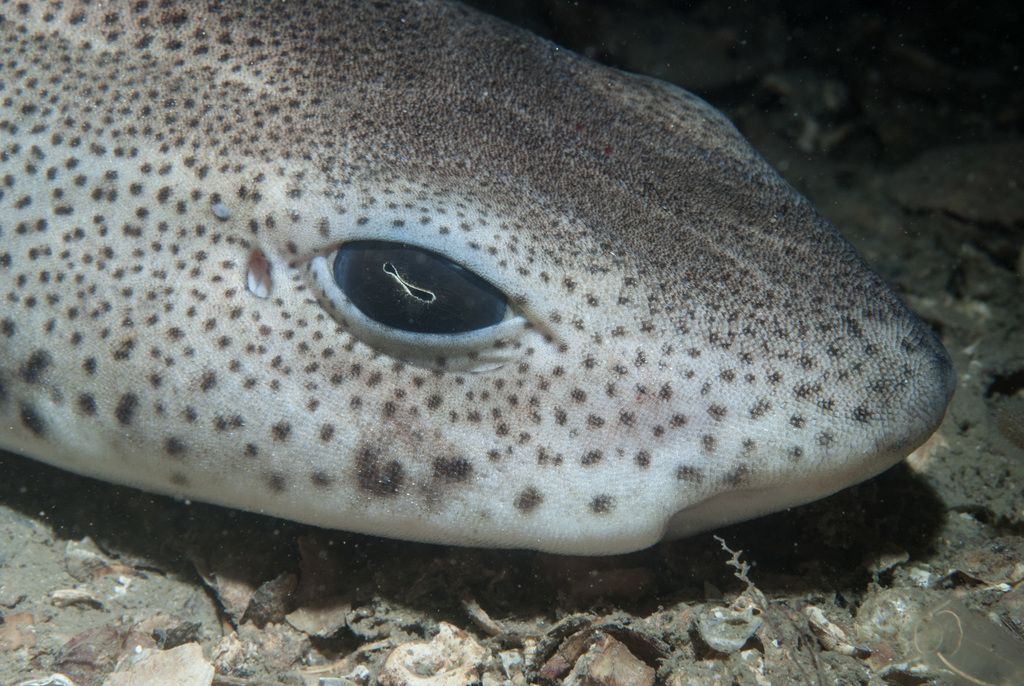
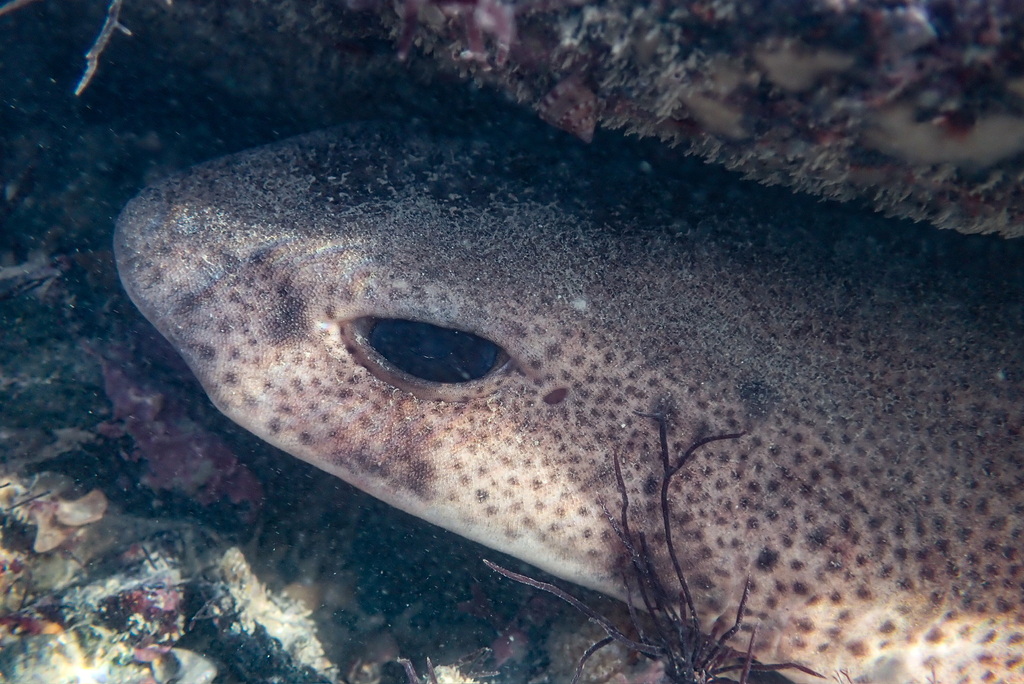
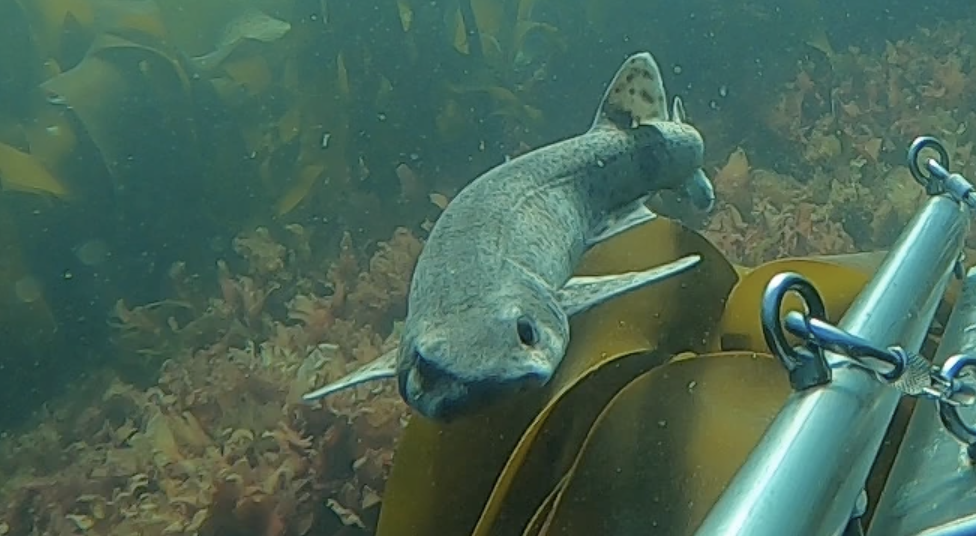
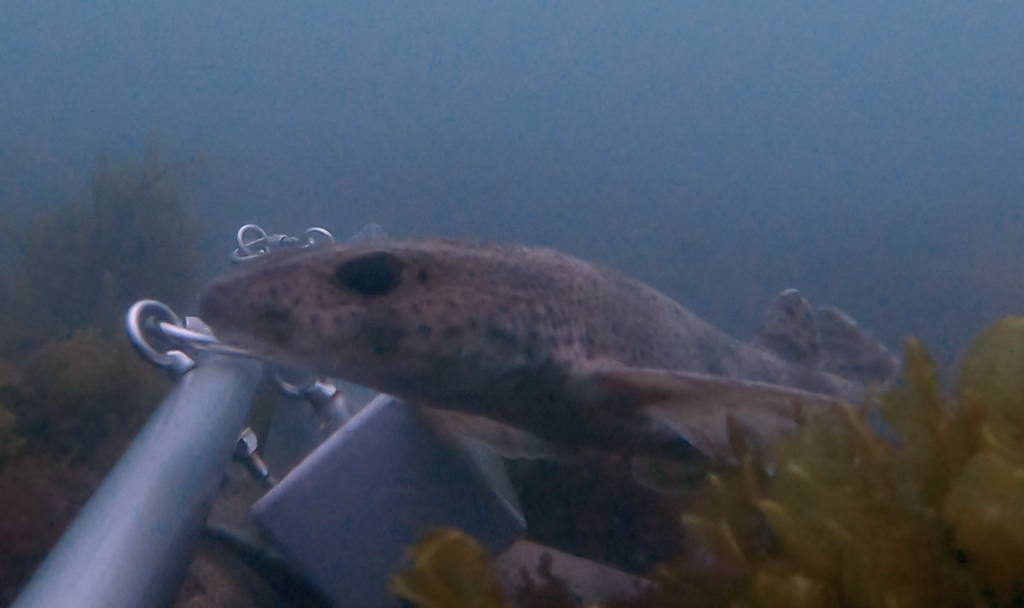
Photos show the species, not always the places on this page.
Length
Usually up to about 75 cm (30 in); common length about 60 cm (24 in); maximum about 1 m (3 ft 3 in)
Weight
Up to about 2 kg (4.4 lb) in most sources; FishBase lists a maximum of 3.7 kg (8.2 lb)
Next to a person
Usually about as long as an adult's arm, and about as heavy as two 1 kg bags of sugar
What it eats
Bottom-living animals: molluscs, crustaceans, small cephalopods, worms and small bony fish. Young sharks prefer small crustaceans. Older ones take more hermit crabs and molluscs.
Around people
Calm, hands off
How it lives
It lays eggs. Each egg is in a leathery case, about 5 to 7 cm (2 to 2.8 in) long, with curly tendrils that cling to seaweed. Empty cases wash up on beaches and are known as mermaid's purses. Eggs are laid from about January to June and take about 5 to 11 months to hatch, depending on water temperature. Hatchlings are 8 to 10 cm (3 to 4 in) long. It reaches maturity at about 36 to 49 cm (14 to 19 in) in one source, while FishBase gives 50 cm (range 35 to 64 cm). FishBase lists a maximum age of 12 years, and a longer record of at least 14 years has been reported.
Where it goes
The sources I read do not describe long migrations. It rests on the seabed by day and hunts at night. Males rest on the bottom and females shelter in shallow caves in daylight. Depth is usually 10 to 780 m, most often about 80 to 100 m in the north-east Atlantic.
We only draw a journey on the map when scientists have tracked it or clearly documented it. For this animal we have not found one yet.
Populations
Least Concern globally (IUCN, assessed 2020). The IUCN assessment, as quoted on Wikipedia, found no evidence that the global population has declined significantly. It is among the most common sharks around Britain and Ireland, and numbers in Scottish waters are described as unknown. It is mostly a fishing bycatch and is often discarded, and survival after release can be high. Norway also lists it as Least Concern. I did not find counts by country.
Meet it respectfully
Watch from a calm, neutral position and let the shark rest. Never chase, grab, lift, feed or bait it, and do not touch the seabed or kelp around it. Do not pick egg cases off the seabed or tear them from seaweed. Empty cases washed up on a beach can be photographed and recorded. Follow local rules and your guide. Sightings are never promised.
Fun fact
Tap the bulb to light it up.
Its eggs are laid in leathery cases called mermaid's purses, which hatch after 5 to 11 months.
It is nocturnal, and spends much of the day resting on the seabed.
It can detect weak electric fields.
Small-spotted catshark (lesser spotted dogfish) in the Ocean Atlas
Places we have researched where this animal is recorded. It is never guaranteed, and some places are for watching from the boat only.
Travel with usComing soonTrusted referralExploringOn pause, story onlyEthics pass
Country colour: pink where we travel, blue where we are exploring or refer, grey for story only.
 Algeria
 Belgium
 Cameroon
 Côte d'Ivoire
 Croatia
 Denmark
 Egypt
Egypt France
 Gabon
Gabon Germany
 Ghana
Ghana Greece
 Ireland
 Italy
Italy Liberia
 Malta
Malta Morocco
 Netherlands
 Nigeria
 Norway
 Portugal
 Sierra Leone
 Spain
Spain Sweden
 United Kingdom
Sources for this page
- FishBase, Scyliorhinus canicula, 2026
- Wikipedia, Small-spotted catshark, 2026
- MarLIN, Small-spotted catshark, 2026
- Shark Trust, Smallspotted catshark, 2026
- Institute of Marine Research (Norway), Small-spotted catshark, 2026
- State of the Coast Scotland, Small-spotted Catshark, 2026
- GBIF, IUCN Red List category, 2026
Facts checked 5 October 2026. Photos: Unsplash licence, or Creative Commons as shown on each photo.
Work in ocean travel?
We are always happy to hear from exceptional local operators, accommodation, conservation organisations and destination experts. If your work fits responsible, small-group ocean travel, we would love to learn more.
Partner with Ocean CallingGili Trawangan in 5 days
from CHF 790