
Tiger shark diving in Fuvahmulah, Maldives
Dive with wild tiger sharks around a quiet local island in the far south of the Maldives.
Fuvahmulah is a single island in the southern Maldives, known for tiger sharks that are seen there all year. This is a small scuba week for experienced divers, six guests at most, with Rocío as your host. You dive with a licensed local dive centre, stay in a simple guesthouse on a local island and eat where you like. We are honest about how the tiger dive works, and we never promise what the ocean will show us.

- 5.00 from 33 public reviews on BookRetreats · Read guest stories
- Small group, six guests at most
- Dives led by guides from a licensed local dive centre
- Travel insurance required (water-activity cover from your own policy or the dive centre’s insurance)
- Pause or skip any activity, any time
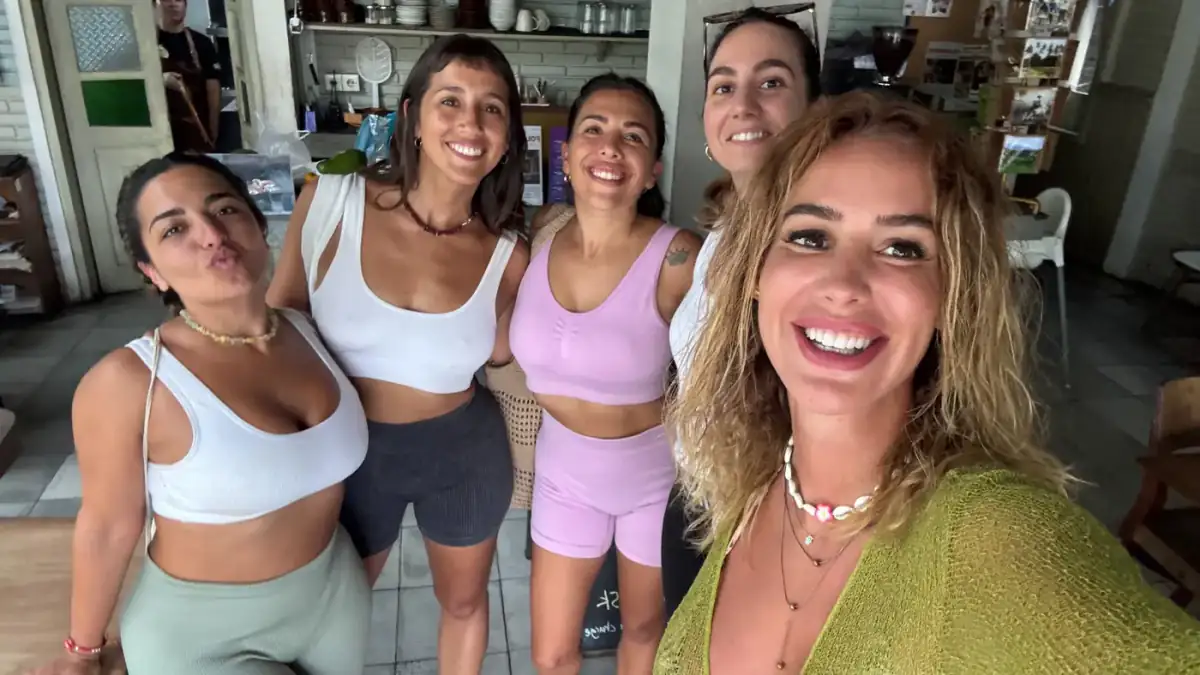
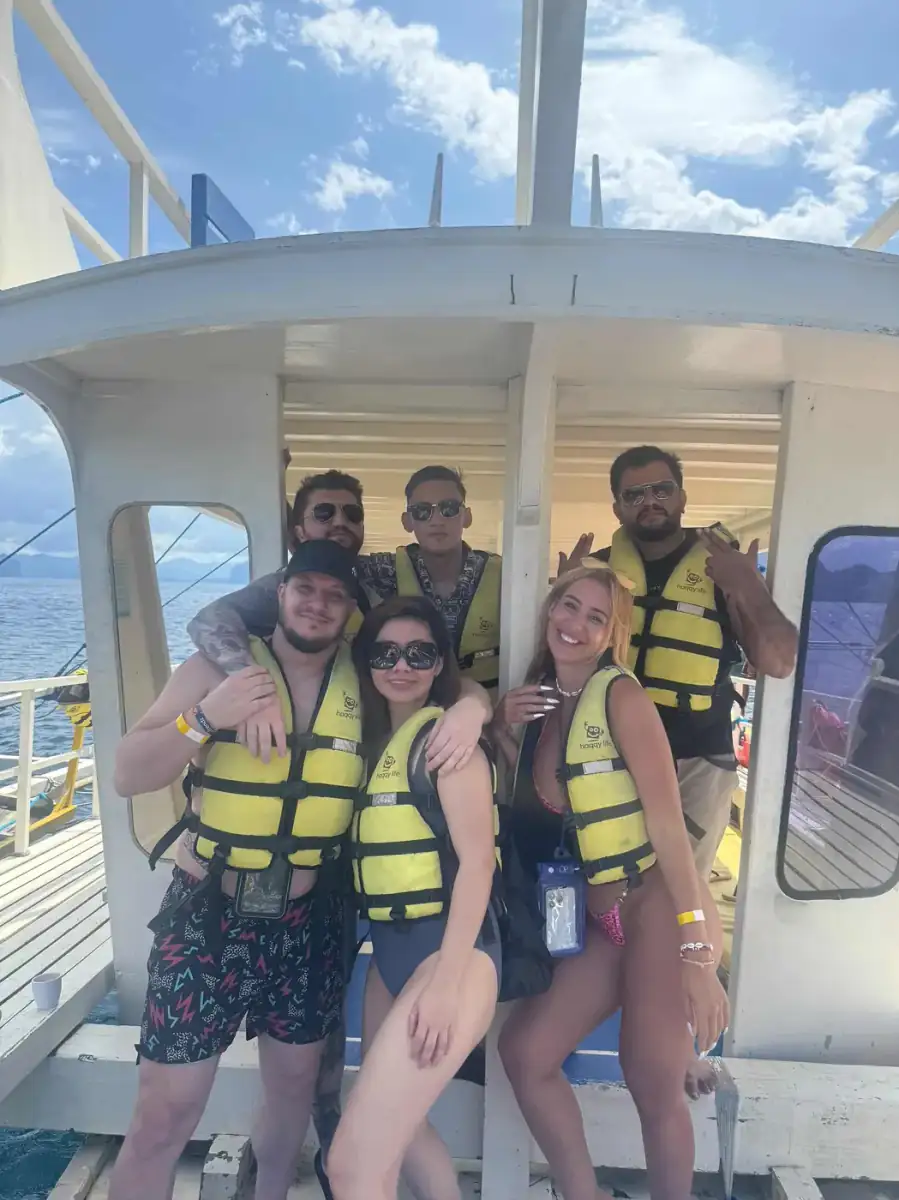
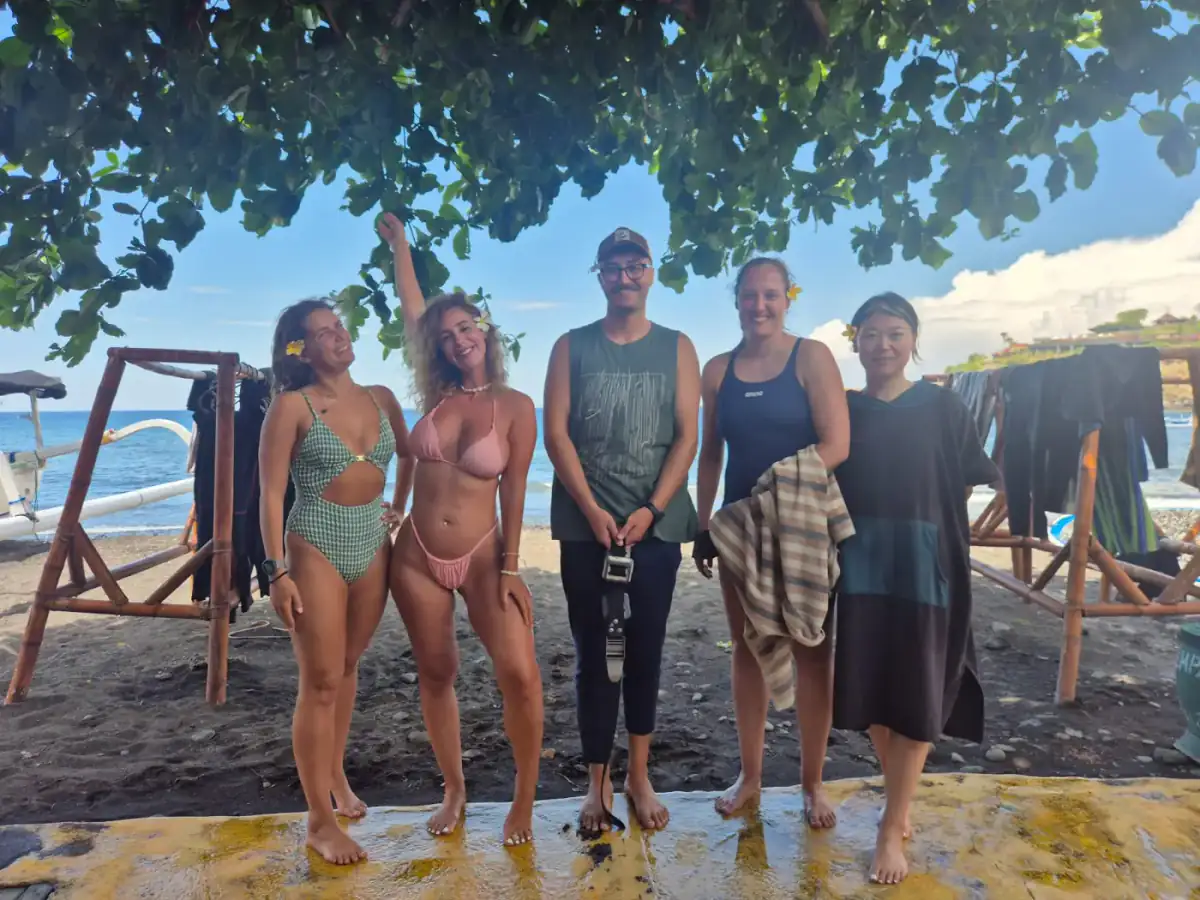
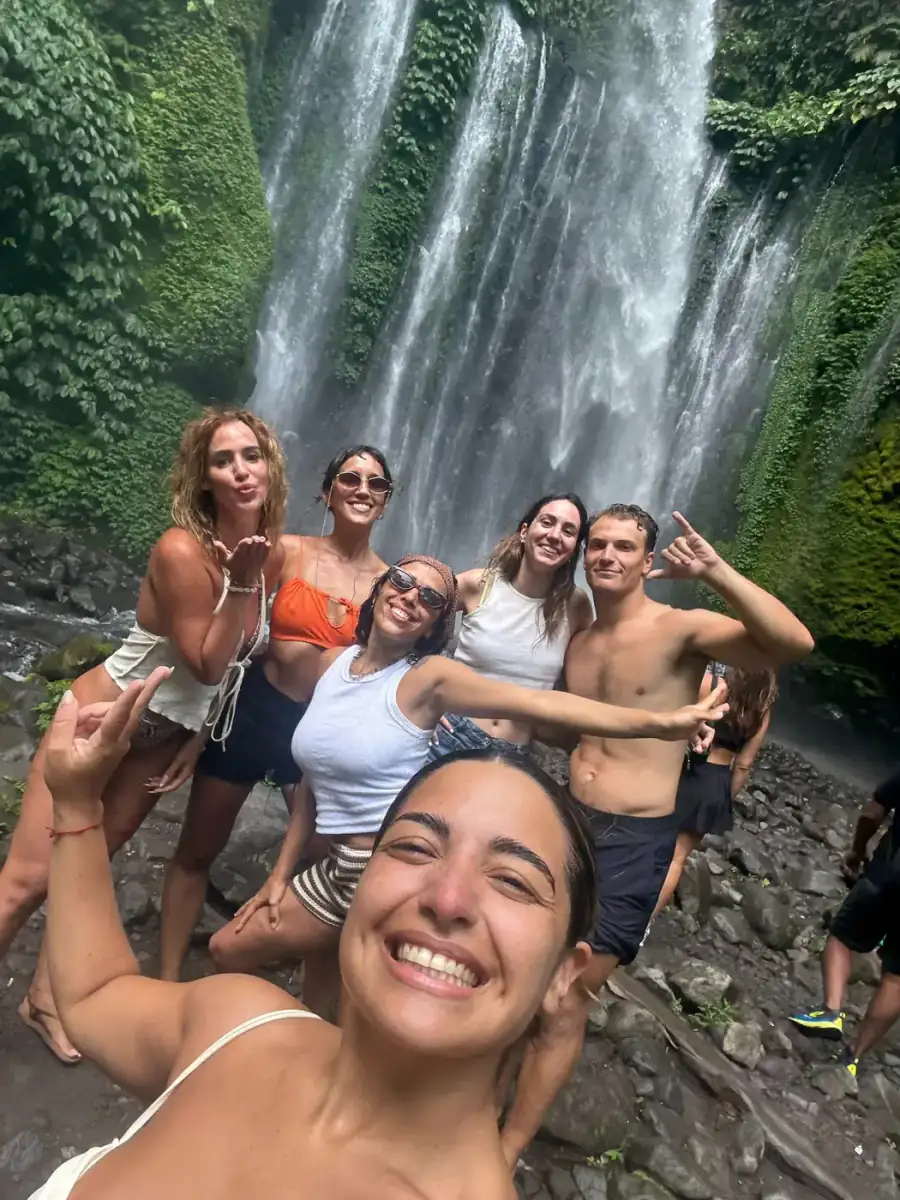
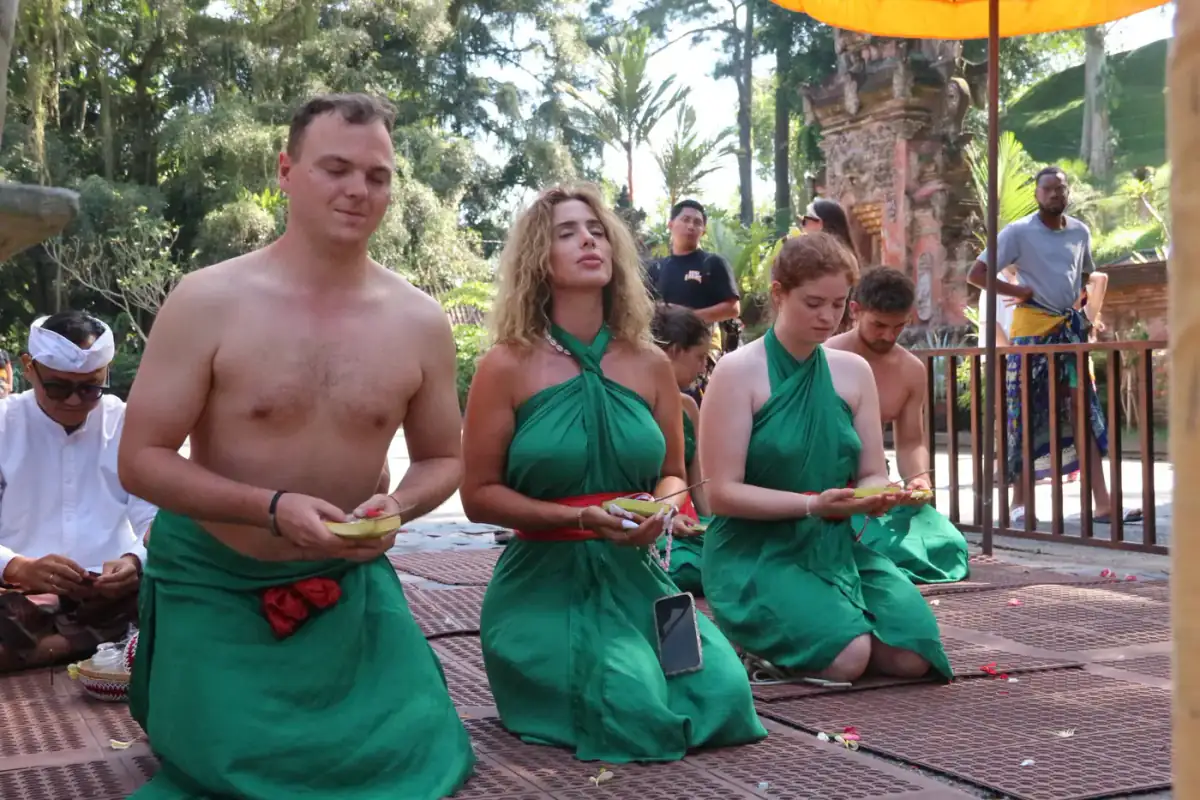
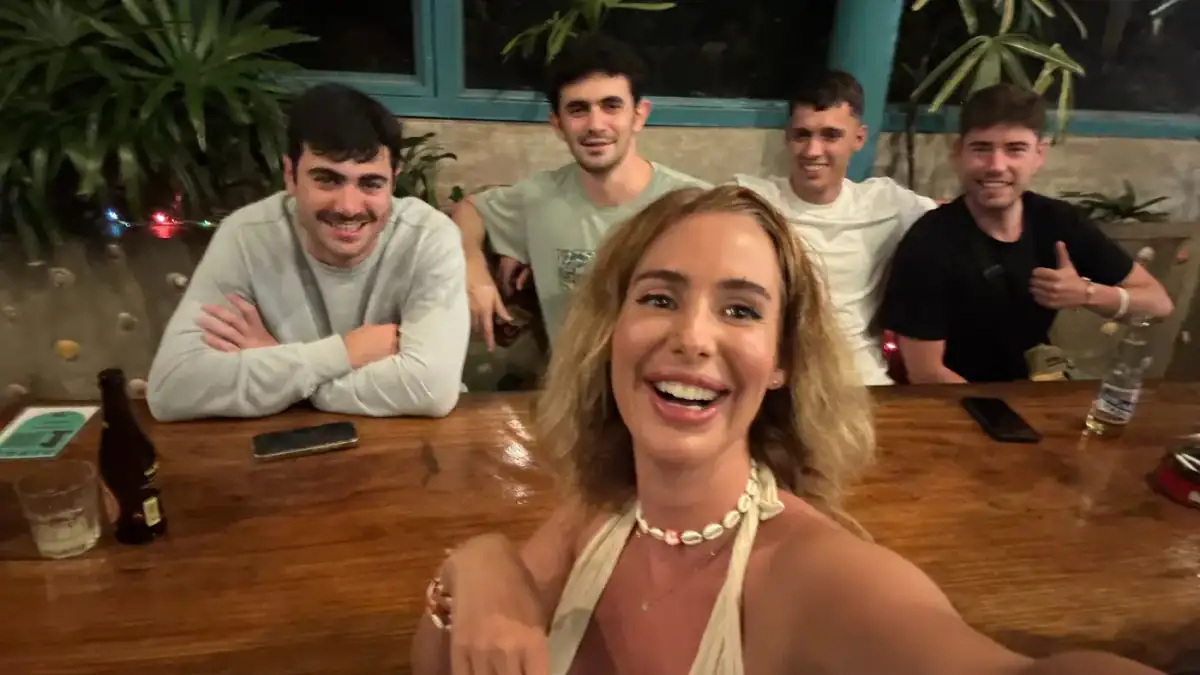 Real guests on past trips
“Rocío is amazing at organizing trips and ocean experiences. Everything was very well planned, and she helped find great diving spots. I highly recommend Ocean Calling Retreats.”
“Highly recommended! Rocio is an excellent guide and very knowledgeable about the best locations.”
Quotes are copied as written from public reviews on BookRetreats. See all guest photos · Read all reviews
At a glance
CHF 3,250 per person (3 to 10 Jan 2027) or CHF 2,900 per person (29 Mar to 5 Apr 2027). Maximum 6 guests. Write to Rocío to book your place. She confirms your spot and how to pay, and answers every message personally.
Real guest reviews: Google · BookRetreats
Why Adventurous? The tiger dive itself is shallow, but the rest of the week means open-ocean walls and blue water, with currents that can be strong, and up to three dives a day on five dive days.
Who it is for. Certified, experienced divers who want a small, respectful week with tiger sharks and are happy on a quiet local island. It is not for new divers or non-divers.
Where you stay
The rooms, the pool and the kitchen of the place we suggest for this trip, plus a glimpse of the days on the water.
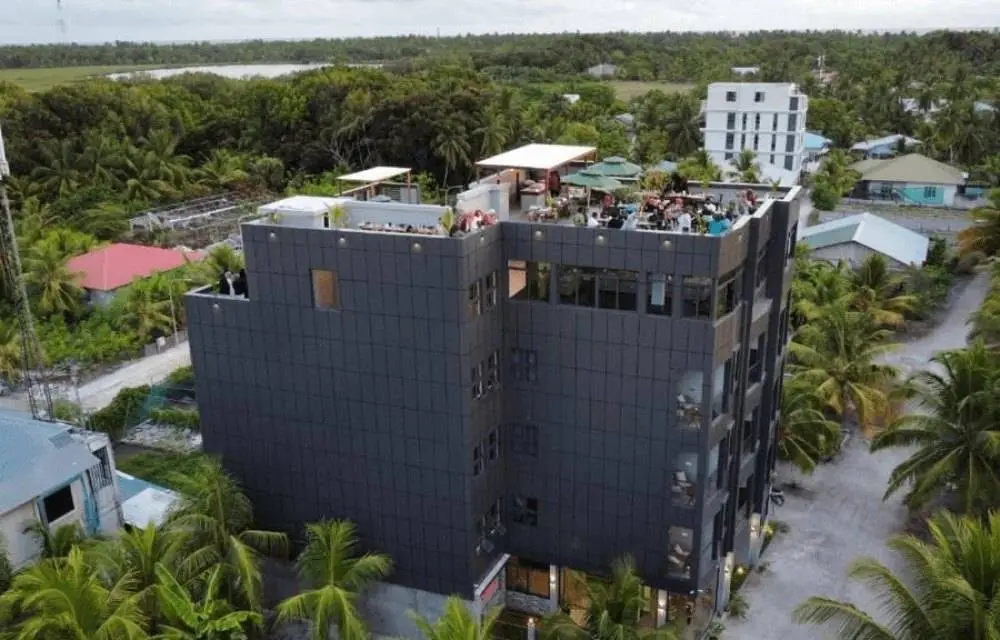
The hotel from above, among the palms of Fuvahmulah
A haven for mama tiger sharks 🦈💙
In May 2024, scientists used an underwater ultrasound on free-swimming tiger sharks at Tiger Harbour. Of the 28 adult females they scanned, 26 were pregnant. That is 93%. They describe the site as the first known gestation ground for tiger sharks in the Central Indian Ocean: a calm, warm place where mothers-to-be spend time.
The point of this dive is love and learning, not thrills. We hope that when you meet a calm tiger shark with your own eyes, fear turns into respect. You learn how scientists tell each shark apart, why pregnant females need quiet water, and why sharks keep the ocean healthy. Sharks are protected in the Maldives since 2010, but around the world overfishing is still the main reason shark numbers are falling.
What you can do after the trip: say no to shark fin and shark products, support shark protection and no-fishing zones, and share what you learned with the people you love. Love them, protect them. 🦈💙
Sources: Sulikowski et al. 2024, Frontiers in Marine Science; Vossgaetter et al. 2024, Scientific Reports; Pacoureau et al. 2021, Nature. Checked 26 September 2026.
Your first day, step by step
- Arrive in Malé and take the domestic flight south to Fuvahmulah. Transfer to your guesthouse and settle in.
- Your guide explains the plan and the signals before anything starts in the water.
- You choose your pace. You can pause, rest or skip any activity, at any moment, with no pressure to continue.
- Nobody chases, touches or baits an animal. The animals decide whether they come close.
Questions beginners ask
What if I feel nervous in the water?
What if I cannot clear my ears?
Will I hold the group back?
Do I need to be fit or experienced?
Highlights
- A haven for mama sharks: 26 of the 28 adult females scientists scanned here were pregnant (93%)
- Tiger sharks, often seen all year at a shallow site just outside the harbour
- Science you can feel: researchers have identified 239 individual tiger sharks here, most of them female
- Reef and wall dives with grey reef sharks, silvertips, turtles and schools of tuna and jacks
- A chance of hammerheads, threshers, whale sharks and, in late March, oceanic manta rays
- Warm water of about 28-30°C / 82-86°F
- A real Maldivian local island, not a resort
The rhythm of your days
- Arrive in Malé and take the domestic flight south to Fuvahmulah. Transfer to your guesthouse and settle in.
- Five dive days, with up to three dives a day. Each day includes the tiger shark dive, plus reef and wall dives chosen by the dive centre for the conditions.
- Daily transfers between the guesthouse and the dive centre are included.
- Lunch and dinner at island restaurants of your choice, with quiet evenings on the island.
- Transfer to the airport and fly back to Malé for your onward journey.
Trip details
- Departures
- 3 to 10 January 2027 or 29 March to 5 April 2027
- Investment
- CHF 3,250 per person for 3 to 10 January 2027, or CHF 2,900 per person for 29 March to 5 April 2027, sharing a double room. Maximum 6 guests.
- Deposit
- Non-refundable. Rocío confirms the amount when you book.
- Final balance
- The balance is due 60 days before departure. Where possible, it can be paid in monthly instalments, with the last one paid by that date. Rocío confirms your schedule when you book. Cancellations within 60 days of departure are non-refundable.
Included
- 7 nights in a guesthouse room (shared double occupancy)
- Breakfast every day
- Return domestic flights Malé – Fuvahmulah – Malé
- Arrival and departure transfers on the island
- 5 dive days with up to 3 dives a day, including the tiger shark dive each day
- Daily transfers between the guesthouse and the dive centre
- Taxes stated in the package
- Rocío as your host for the week
Not included
- International flights to Malé
- Lunches and dinners
- Dive equipment rental, nitrox and larger tanks
- Tips
- Travel and dive insurance, including hyperbaric treatment and medical evacuation (required)
- Personal expenses
Deposits are non-refundable. Read the cancellation policy.
Photo gallery
Some of the animals you may meet. Photos show the species, not always this exact place.


Animals you may meet
Never guaranteed, never chased. Tap an animal to see how it lives, where it travels and a fun fact.
 Tiger sharkGaleocerdo cuvierSeen in 24 countries in the AtlasNear Threatened
 Grey reef sharkCarcharhinus amblyrhynchosSeen in 17 countries in the AtlasEndangered
 Whitetip reef sharkTriaenodon obesusSeen in 18 countries in the AtlasVulnerable
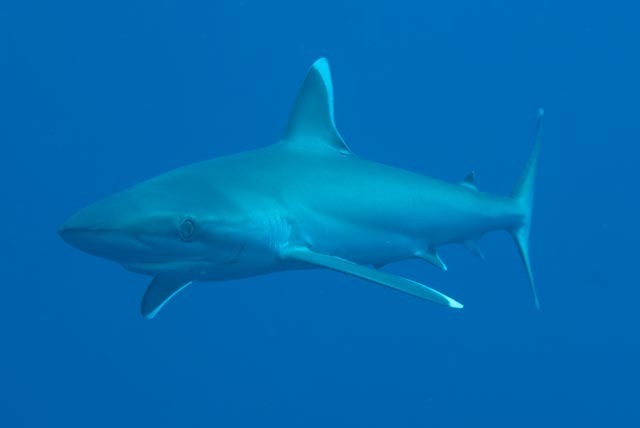 Silvertip sharkCarcharhinus albimarginatusSeen in 4 countries in the AtlasVulnerable
 Scalloped hammerheadSphyrna lewiniSeen in 23 countries in the AtlasCritically Endangered
 Hawksbill turtleEretmochelys imbricataSeen in 40 countries in the AtlasCritically Endangered
 Oceanic manta ray (giant manta)Mobula birostrisSeen in 10 countries in the AtlasEndangered
 Pelagic thresherAlopias pelagicusSeen in 3 countries in the AtlasEndangered
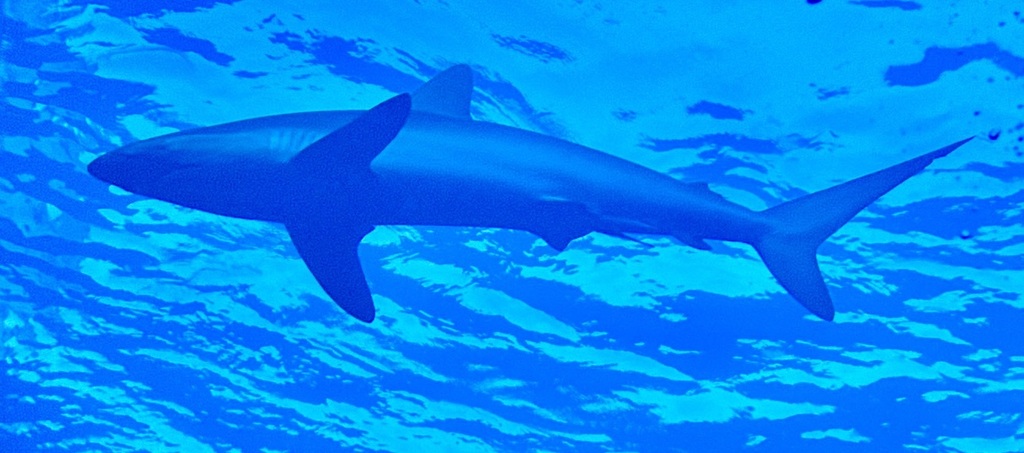 Silky sharkCarcharhinus falciformisSeen in 1 country in the AtlasVulnerable
 Whale sharkRhincodon typusSeen in 27 countries in the AtlasEndangered
 Spotted eagle ray (ocellated eagle ray)Aetobatus ocellatusSeen in 11 countries in the AtlasEndangered
 RareOceanic whitetip sharkCarcharhinus longimanusSeen in 8 countries in the AtlasCritically Endangered
 RareGreat hammerheadSphyrna mokarranSeen in 12 countries in the AtlasCritically Endangered
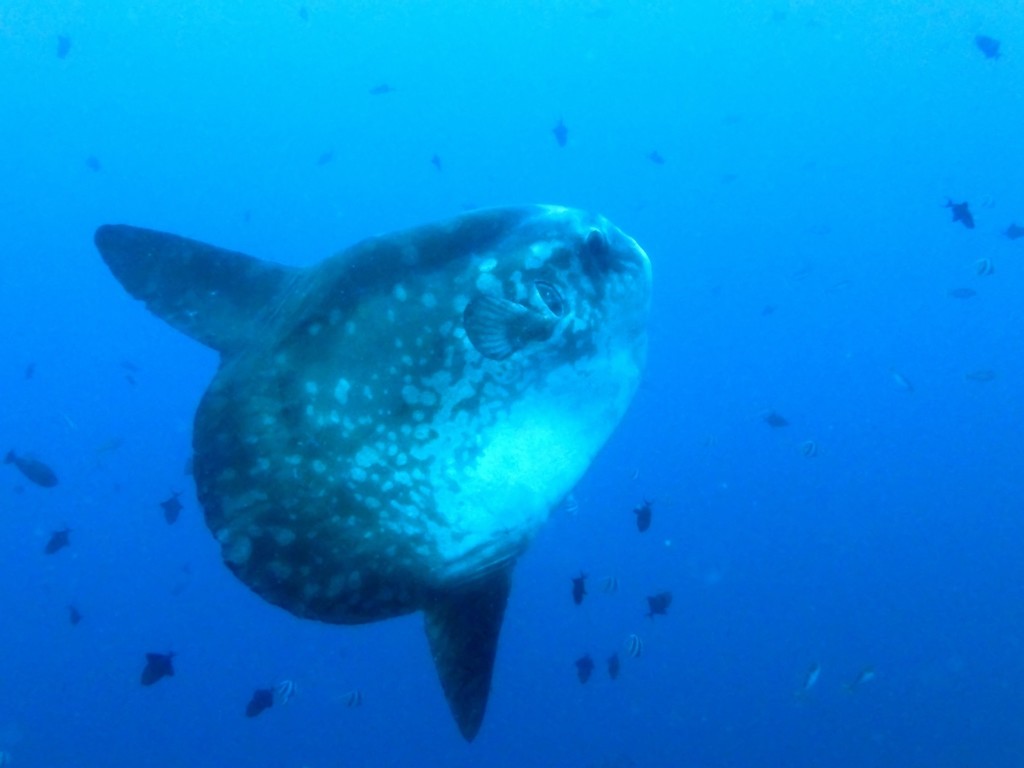 RareOcean sunfish (mola)Mola molaSeen in 12 countries in the AtlasVulnerable
 RareShort-finned pilot whaleGlobicephala macrorhynchusSeen in 9 countries in the AtlasLeast Concern
 RareFalse killer whalePseudorca crassidensSeen in 8 countries in the AtlasNear Threatened
Animals marked Rare are recorded here, but seen only now and then.
Before you choose Fuvahmulah, southern Maldives
An honest look at food, noise, smells, heat and local customs, so you can decide calmly. If something matters to you, tell Rocío. She will check it for you.
EasyPossible with planningAsk Rocío
Vegetarian and vegan
Possible with planningLocal food is mostly tuna and fish, but vegetable curries, rice and fruit are usually available, and guesthouses can help if you tell them in advance. Vegan meals need more planning.
Gluten free
Ask RocíoWe could not confirm gluten free options on Fuvahmulah. Please tell Rocío early so she can ask the guesthouse.
Noise and crowds
Possible with planningThe island is generally quiet, and the call to prayer is heard five times a day. Dive boats can be shared with other divers, normally around 12 people on board. Night noise at the guesthouse is not yet confirmed.
Smells, smoke and air
Ask RocíoWe did not find any documented haze or smoke problem for Fuvahmulah. A single air quality reading in September 2026 was rated good, but there is no long-term data.
Heat and humidity
Possible with planningIn January and March to April, days are about 29 to 30°C (84 to 86°F) with humidity around 72 to 81%. The sun is extremely strong, and January can have regular showers.
Predictable days and quiet breaks
Possible with planningThis is a small group of up to 6. The dive plan is full, with up to 5 days and up to 3 dives a day, so you can skip a dive and rest whenever you need.
Getting around and mobility
Possible with planningYou fly from Malé to Fuvahmulah, about 70 to 85 minutes, and may wait 2 to 3 hours or overnight in Malé first. On the island people walk or use scooters. Diving is from boats, some sites have strong currents, and you need an Advanced Open Water level.
Breathing and health
Ask RocíoIt is hot and humid with very strong sun. Dengue is a risk in the Maldives, so use mosquito protection. There is a local hospital, but no decompression chamber is confirmed on the island; the nearest confirmed one is in Malé, a flight away. Divers with asthma need a dive medical check first.
Local customs
- This is a local Muslim island, not a resort. In town, cover your shoulders and knees and avoid short or tight shorts. Swimwear is for the boat or a bikini beach only.
- Alcohol and pork are not allowed on local islands. Being drunk or carrying alcohol outside resorts can lead to arrest.
- The call to prayer sounds five times a day. Keep quiet near mosques. Friday midday prayer makes the streets quieter.
- Always ask before taking photos of people, especially women. A simple greeting is “Assalaamu Alaikum”, and “Shukuriyaa” means thank you.
- During Ramadan, do not eat, drink or smoke in public in daylight. Drug laws are extremely strict. Do not take coral or tortoiseshell out of the country.
Ethics and safety
- How this fits our no-baiting rule: tiger shark diving in Fuvahmulah runs under local dive-centre protocols, and some centres use fish waste to bring the sharks close. Ocean Calling guests never bait, feed, touch or chase any animal, and we keep a respectful distance at all times.
- All sharks have been protected in the Maldives since 2010, and the reef area of Farikede on Fuvahmulah has been a Marine Protected Area since 2020.
- The whole story, openly: tiger sharks first gathered at this shallow site outside the harbour because of waste from the local tuna fishery, long before dive tourism, and some dive centres here still use fish waste to bring them close. Ocean Calling comes to Fuvahmulah to learn about these sharks. We do not bait, feed or use fish waste. Tiger sharks are very likely to come, but we cannot promise them, and the site itself is not bait-free.
- Guests are not allowed to feed, bait, touch or chase a shark. You stay with your guide, keep good buoyancy and follow every briefing.
- Some sellers promise a 100% tiger shark guarantee. We do not. Tiger sharks are often seen, but wildlife is wildlife.
- Local codes of conduct for shark diving are still developing, with work for the Fuvahmulah City Council on codes and guide training. We follow the current local rules and ask the dive centre for its written protocol.
Practical details
- Getting there: fly into Velana International Airport, Malé (MLE). There are no international flights to Fuvahmulah, so take the domestic flight to Fuvahmulah (FVM), usually about 70-85 minutes. Allow at least 2-3 hours between flights, or stay one night in Malé.
- Entry: most visitors, including from the EU, UK and US, get a free tourist visa on arrival when conditions are met. Complete the free IMUGA traveller declaration within 96 hours before you arrive, and check the official immigration page before you travel.
- Water and weather: water about 28-30°C / 82-86°F, air about 29-30°C / 84-86°F, high humidity and very strong sun. A skin suit or 3 mm wetsuit is enough. Short showers are possible in both windows.
- What to bring: certification card, logbook, dive computer, reef-safe sun protection, seasickness tablets, insect repellent (dengue is a risk in the Maldives), modest clothes for town and some US dollars in cash.
- Safety: there is no confirmed working decompression chamber on Fuvahmulah. The nearest confirmed unit is in Malé, so dive insurance with hyperbaric treatment and evacuation cover is required.
Why we choose slower boats
Speed is one of the simplest things a boat captain controls, and it matters a lot to the animals we visit. Research from many oceans shows the same pattern: a slower boat is less likely to hit a whale, turtle or manatee, gives animals time to move away, and makes less noise under the water.
Slower ships kill fewer whales
A study of 47 recorded ship strikes on large whales found the chance of a deadly injury was 21 per cent at 8.6 knots but 79 per cent at 15 knots. Below 11.8 knots, a strike is more likely to be survived than not.
A 10 knot limit works for right whales
Since 2008, the United States has required vessels 65 feet (about 20 metres) or longer to travel at 10 knots or less in set areas and seasons along the East Coast, to protect North Atlantic right whales. A later study estimated these limits cut the risk of deadly ship strikes by 80 to 90 per cent.
Turtles cannot escape fast boats
In Moreton Bay, Queensland, Australia, researchers watched 1,890 green turtle encounters. 60 per cent of turtles moved away from a boat going 4 km/h, but only 22 per cent at 11 km/h and 4 per cent at 19 km/h.
Slow zones save manatees
In Sykes Creek and the Barge Canal on Merritt Island, Florida, eight manatees were killed by boats in the 42 months before year-round slow speed was enforced. In the 42 months after, only one was killed.
Faster boats are louder
Recordings of 1,582 ships in Haro Strait, between Washington State and British Columbia, showed that most ships get about 1 decibel louder for every extra knot of speed. This noise reaches the high sounds that killer whales use to find food.
Going slow gives whales quiet time to feed
When ships in Haro Strait were asked to slow to 11 knots, underwater noise fell by 2.5 decibels, about 44 per cent less sound energy. Scientists estimated this cut the feeding time killer whales lose to noise by 22 per cent.
Questions
How much does it cost?
Are tiger sharks guaranteed?
Do you use bait or fish waste on the tiger dive?
Which certification do I need?
Will our group have its own boat?
What is life like on the island?
Can a non-diver come along?
CHF 3,250 per person (3 to 10 Jan 2027) or CHF 2,900 per person (29 Mar to 5 Apr 2027). Maximum 6 guests. Write to Rocío to book your place. She confirms your spot and how to pay, and answers every message personally.
Real guest reviews: Google · BookRetreats
Sources for this page
- Scientific Reports 2024: tiger shark population at Fuvahmulah (239 individuals, 84.5% female)
- Maldives protected areas: Farikede Marine Protected Area
- President’s Office, Maldives: protected area announcement (2020)
- Maldives Immigration: tourist visa
- IMUGA traveller declaration
- ADK Hospital Hyperbaric Treatment Unit, Malé
Shop with Ocean Calling
Visit the Ocean Calling storefront on Amazon.
As an Amazon Associate I earn from qualifying purchases. You are not only choosing products that respect the ocean, you are also helping us keep going: paying our local partners fairly and keeping our retreats ethical, sustainable and honestly priced for you. 💗