
Whitetip reef shark
Triaenodon obesus
Whitetip reef sharks often spend the day resting under reef ledges, then hunt in reef crevices after dark. Many return to the same shelters again and again.
Vulnerable (IUCN, 2020) means it is at high risk of extinction in the wild.

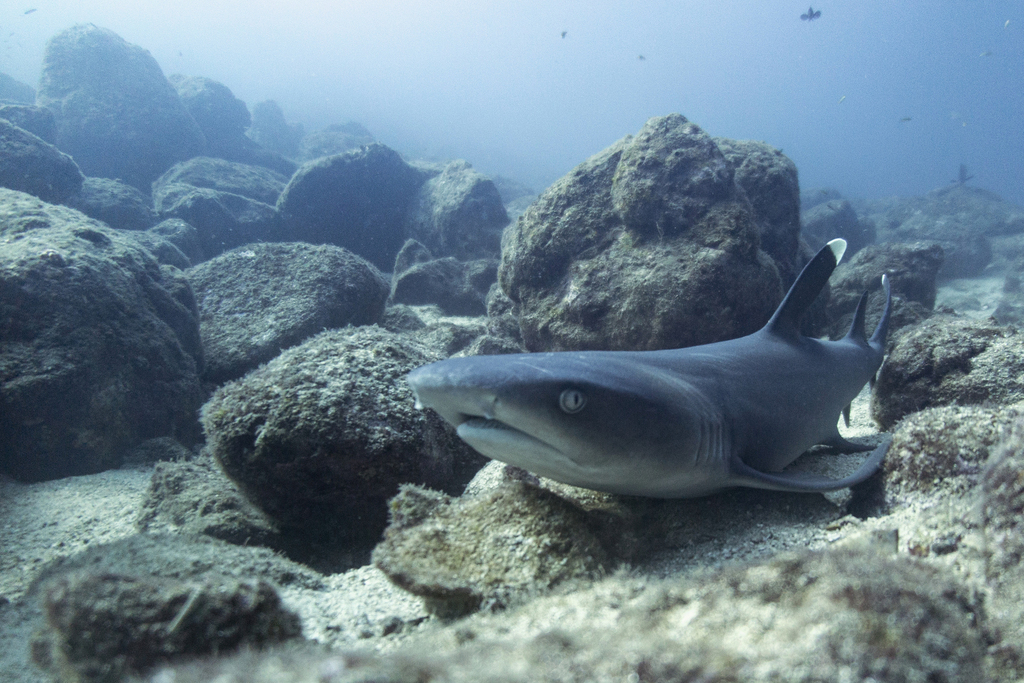
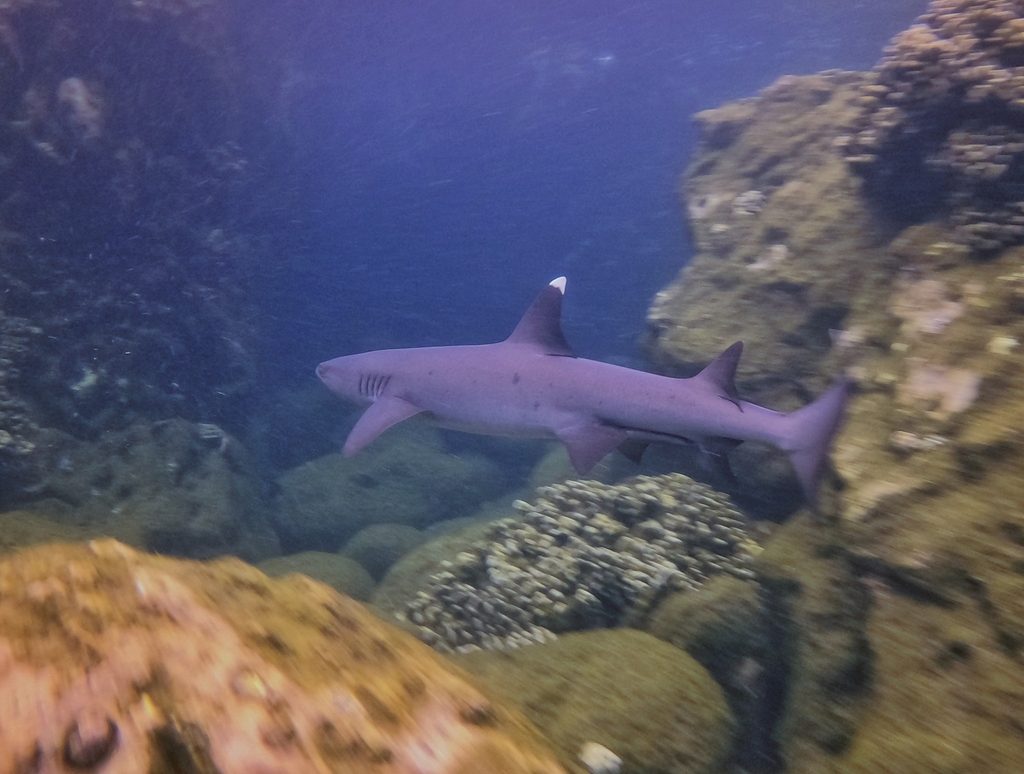
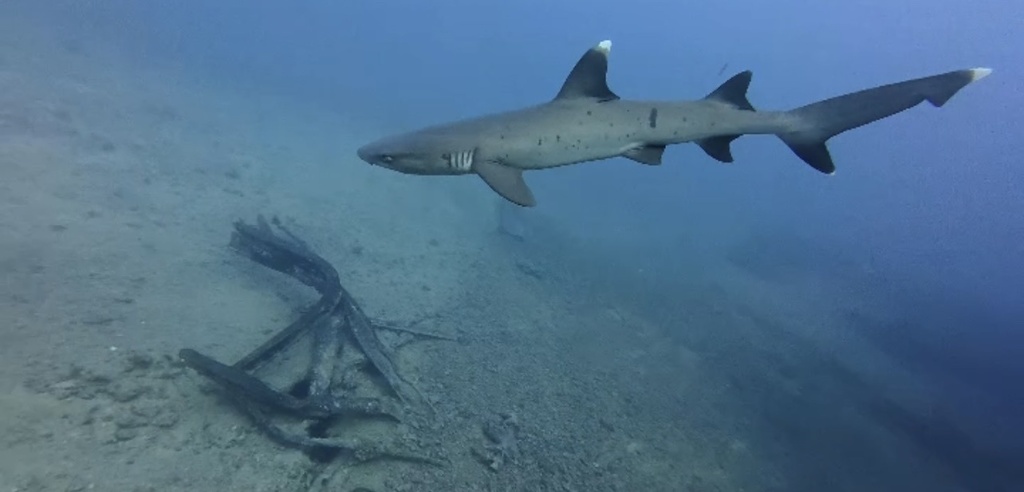
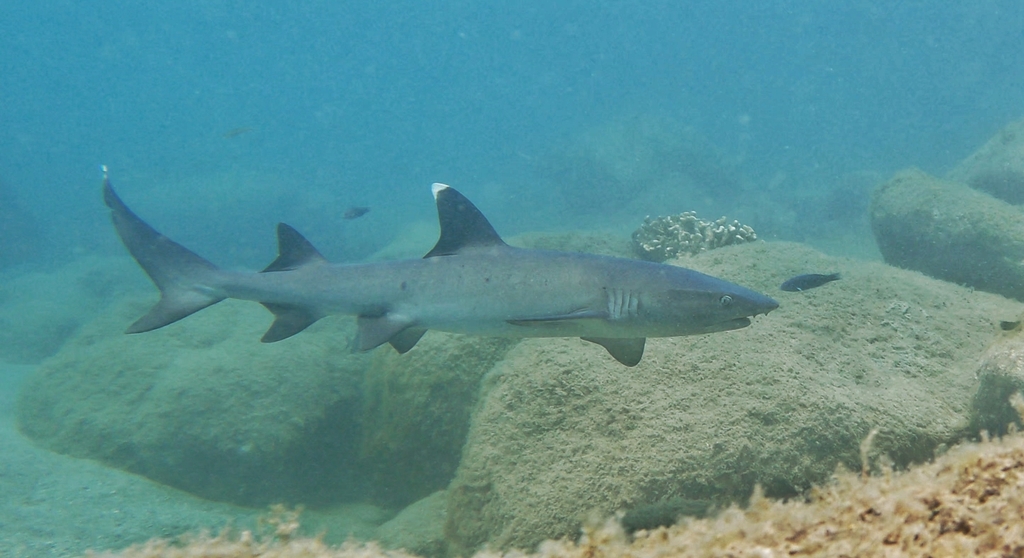
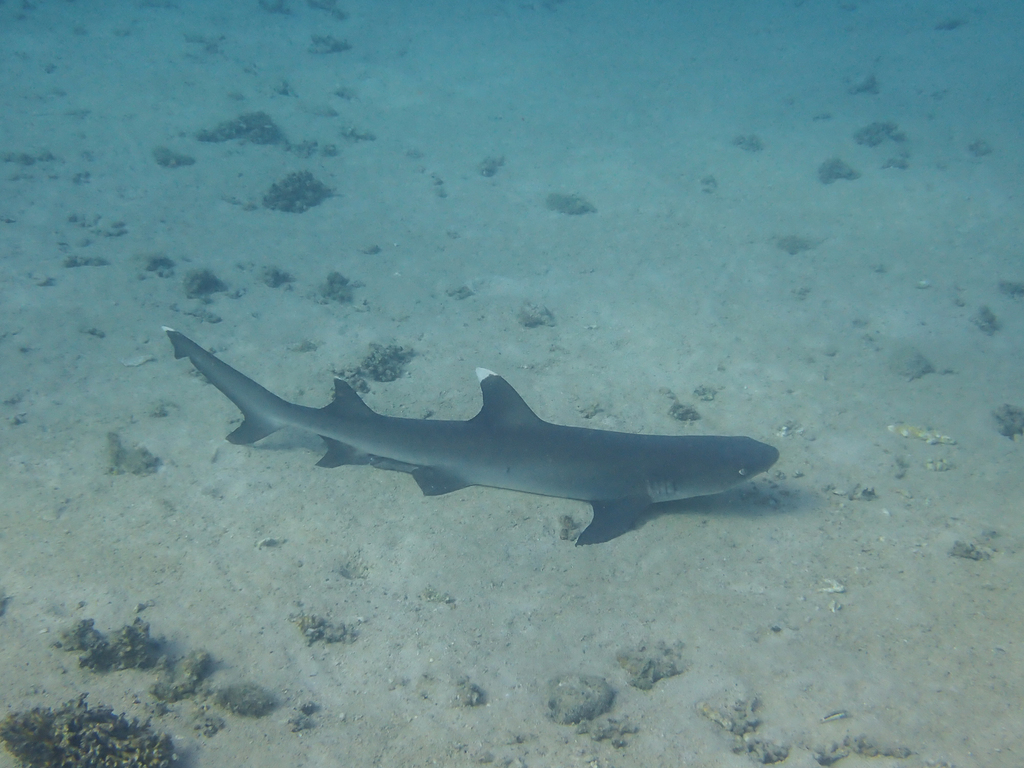
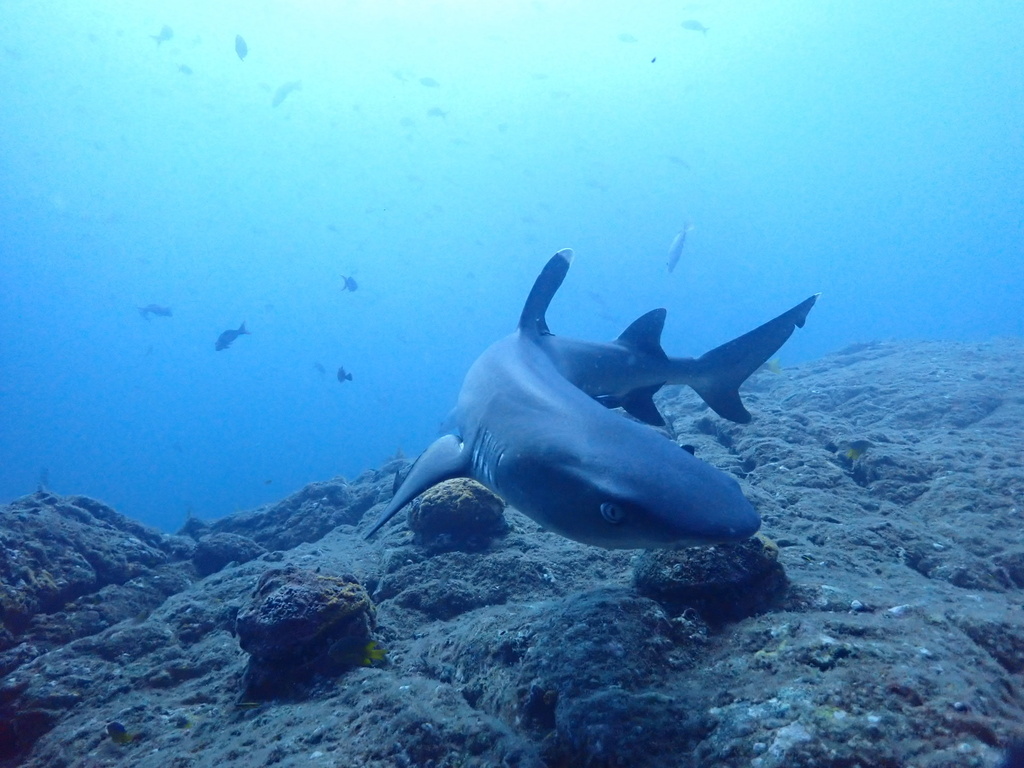
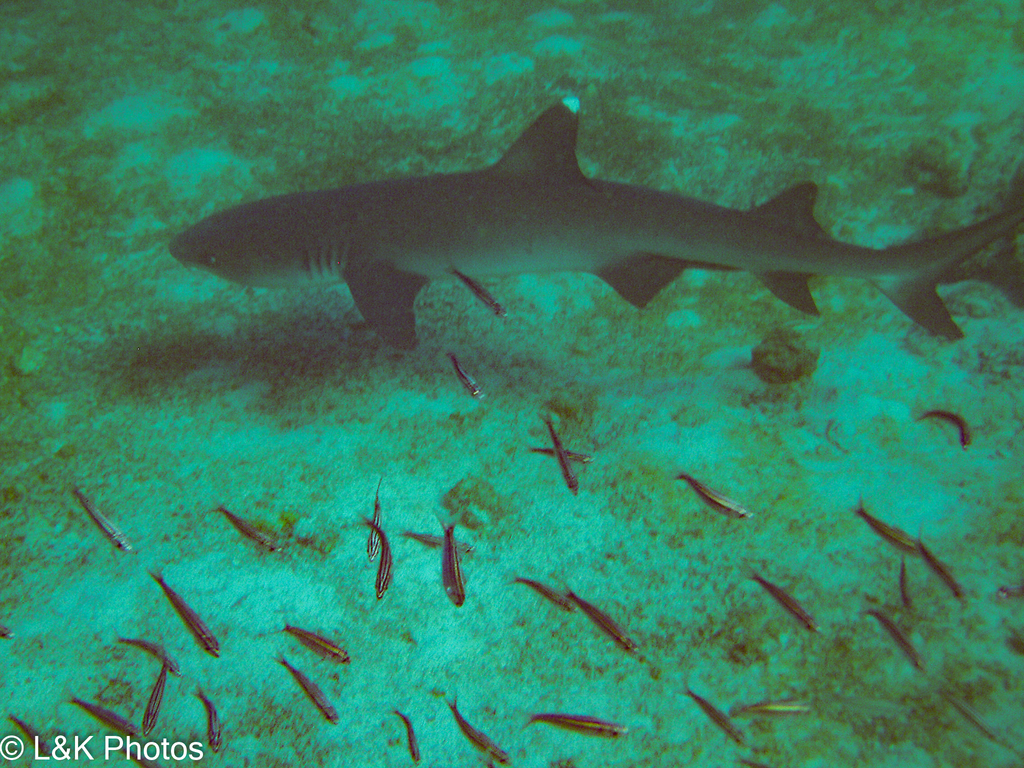
Photos show the species, not always the places on this page.
Length
Usually about 1.6 m (5.2 ft); largest recorded 2.13 m (7 ft)
Weight
Typical adult weight not reliably measured; heaviest published about 18.3 kg (40 lb)
Next to a person
About as long as a person is tall, but only about a quarter of the weight
What it eats
Bottom-living reef fish, octopus, spiny lobsters and crabs.
Around people
Calm, give space
How it lives
Whitetip reef sharks rest in caves or under ledges by day, often in small groups, and hunt at night, squeezing into reef crevices that other sharks cannot reach. They are social and not territorial, and return to the same caves for months or even years. Females give birth to 1 to 5 live pups.
Where it goes
Whitetip reef sharks are strongly resident. In Hawaiʻi, photos from divers identified at least 178 sharks; the longest move seen was 26.4 km, and one shark was photographed 13 times over up to 7 years. At Cocos Island, Costa Rica, eight tagged sharks stayed in Chatham and Wafer bays almost all the time in 2014 and 2015.
We only draw a journey on the map when scientists have tracked it or clearly documented it. For this animal we have not found one yet.
Populations
At Gili Trawangan it was the most common shark in 2019, making up 46% of shark and ray sightings. Surveys counted 2.38 per dive at Shark Point, 1.71 at Halik and 1.06 at Sunset Point, with young sharks at Halik. Around Amed and Tulamben in Bali it is seen occasionally.
Meet it respectfully
Do not crowd sharks resting in caves, enter their caves or block their way out. Never touch, chase or feed them, and keep speared or struggling fish away, as these can make the sharks a risk. Watch from a distance and let the shark choose how close it comes.
Fun fact
Tap the bulb to light it up.
Unlike many sharks, the whitetip reef shark does not need to keep swimming to breathe.
It grows slowly and can live to about 25 years.
It is a different species from the oceanic whitetip shark.
Unlike many sharks, the whitetip reef shark does not need to keep swimming to breathe. It can rest quite still on the sea floor.
Source: Florida Museum of Natural History, Triaenodon obesus profile
This shark takes life slowly. It grows only about 2.1-4.2 cm a year and can live to about 25 years.
Source: Florida Museum of Natural History, Triaenodon obesus profile
In Hawaiʻi, one whitetip reef shark was photographed by divers 13 times over up to 7 years, often in the same area. Females stay closer to home than males.
Source: Whitney et al., 2012, Environmental Biology of Fishes
At Cocos Island, Costa Rica, eight tagged whitetip reef sharks were detected 278,706 times in one year, nearly always in the same two bays.
Source: Revista de Biologia Tropical, whitetip reef shark residency at Isla del Coco
Whitetip reef shark in the Ocean Atlas
Places we have researched where this animal is recorded. It is never guaranteed, and some places are for watching from the boat only.
Travel with usComing soonTrusted referralExploringOn pause, story onlyEthics pass
Country colour: pink where we travel, blue where we are exploring or refer, grey for story only.
 American Samoa
 Australia
 Christmas Island
 Cocos (Keeling) Islands
 Colombia
 Cook Islands
 Costa Rica
 Ecuador
 Egypt
 Fiji
 French Polynesia
 Guam
 India
 Indonesia
 Japan
 Kenya
 Kiribati
 Malaysia
 Maldives
 Marshall Islands
 Mauritius
 Mexico
 Micronesia (FSM)
 Mozambique
 Myanmar
 New Caledonia
 Niue
 Northern Mariana Islands
 Palau
 Panama
 Papua New Guinea
 Philippines
 Saudi Arabia
 Seychelles
 Solomon Islands
 South Africa
 Sri Lanka
 Sudan
 Thailand
 Tonga
 Tuvalu
 United States
 Vanuatu
Sources for this page
- Florida Museum of Natural History, 2026
- FishBase, 2020
- Galapagos Conservation Trust, 2026
- Aquarium of the Pacific, 2026
- Florida Museum of Natural History, 2026
- Whitney et al., 2012, Environmental Biology of Fishes
- Revista de Biologia Tropical, whitetip reef shark residency at Isla del Coco
Facts checked 26 September 2026. Photos: Unsplash licence, or Creative Commons as shown on each photo.
Work in ocean travel?
We are always happy to hear from exceptional local operators, accommodation, conservation organisations and destination experts. If your work fits responsible, small-group ocean travel, we would love to learn more.
Partner with Ocean CallingNot sure where to go? Get your Ocean Match
from CHF 19